
Modular firearms: flexibility, benefits, and user insights

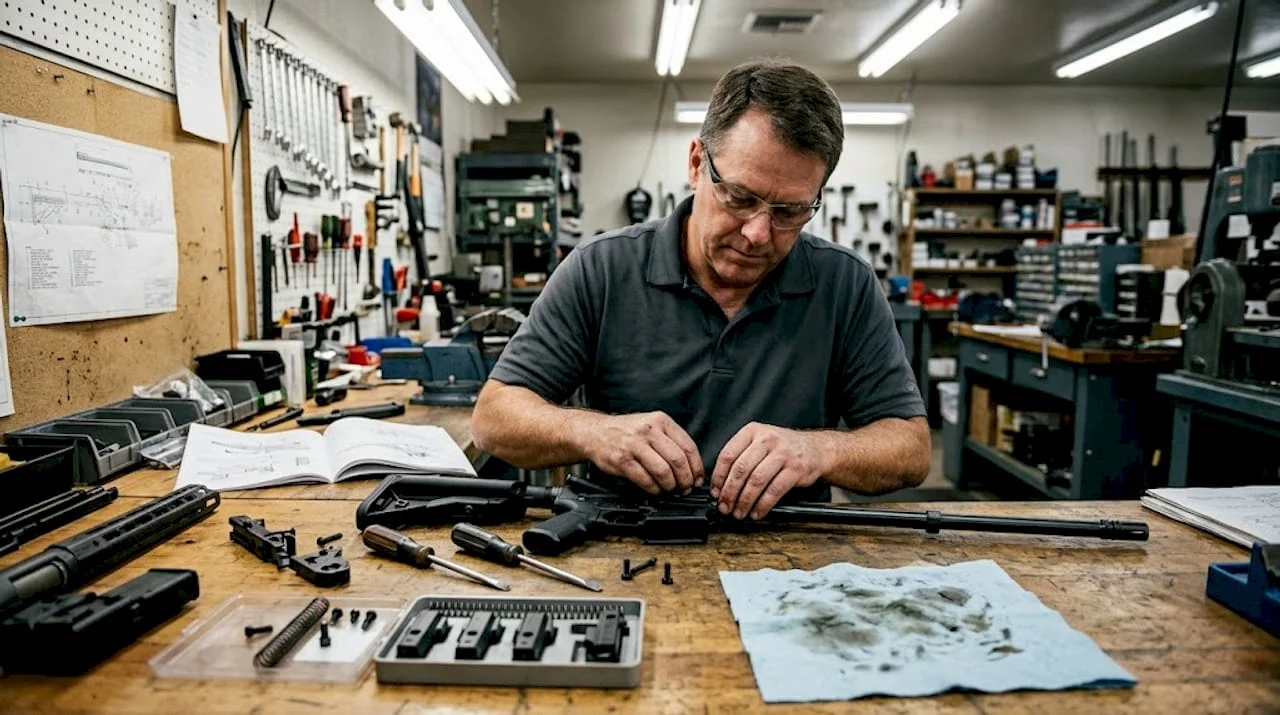
Most gun owners assume a rifle is a single-purpose tool. One caliber, one role, one configuration. But a modular weapon system can swap barrels, stocks, and calibers in minutes, turning a home-defense carbine into a precision hunting platform before lunch. That’s not marketing talk. It’s a fundamental shift in how firearms are designed and used. This guide breaks down what makes a firearm truly modular, how these systems work mechanically, and what the real-world advantages and trade-offs look like. Whether you’re building your first modular setup or evaluating an upgrade, you’ll have the clarity to make a smart decision.
Table of Contents
- What makes a firearm truly modular?
- How modular systems work: Mechanics and popular examples
- Advantages of modular firearms in civilian, tactical, and hunting roles
- Considerations and trade-offs: Cost, complexity, and legal issues
- A closer look: Why modularity keeps pushing the tactical envelope
- Building your perfect modular firearm with Tungsten Creek Tactical
- Frequently asked questions
Key Takeaways
| Point | Details |
|---|---|
| Versatility wins | Modular firearms let you swap calibers, barrels, and stocks for unmatched flexibility. |
| User-driven evolution | From tactical to hunting needs, modularity supports a wide range of missions and upgrades. |
| Cost versus complexity | While offering customization, modular systems require higher investment and awareness of legal issues. |
| Know the trade-offs | Reliability can match the best, but more parts and features mean added responsibility for owners. |
What makes a firearm truly modular?
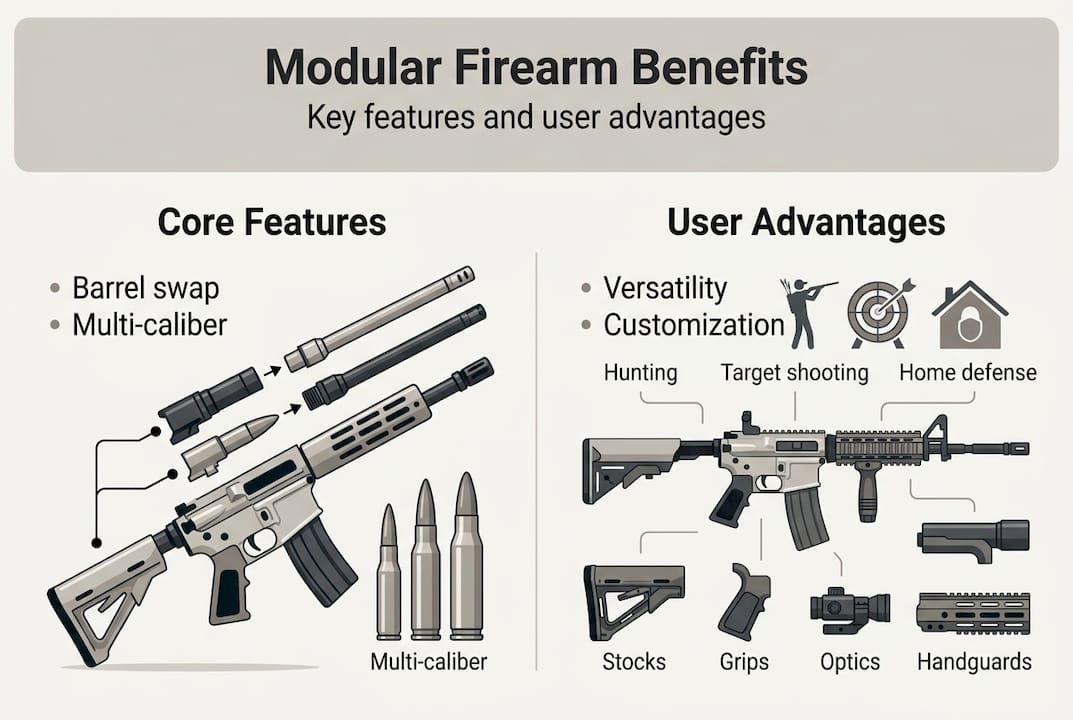
Now that we’ve challenged some assumptions, let’s get specific about what makes a firearm modular. At its core, a modular firearm is a weapon system built around interchangeable components. We’re talking barrels, stocks, handguards, trigger groups, and upper receivers. The idea is one lower receiver or chassis acting as the foundation, while everything else adapts to the task at hand.
Traditional firearms are purpose-built. A bolt-action deer rifle does one thing well. A dedicated home-defense carbine does another. Modular systems collapse that division. Think of it like selecting the right blend for your morning coffee: same ritual, different result based on what you swap in.
The key difference from simply adding accessories is standardization. Modular platforms use:
- Standardized attachment points (Picatinny, M-LOK, or proprietary rail systems)
- Quick-change barrel mechanisms that require no gunsmithing
- Compatible trigger group housings that accept multiple fire control options
- Folding or adjustable stock interfaces that mount without tools
This isn’t a new concept. The Stoner 63, developed in the 1960s, was one of the earliest purpose-designed custom gun configurations built around a modular philosophy. Eugene Stoner’s design allowed the same core action to function as an assault rifle, light machine gun, or carbine depending on the configuration. Decades later, the SIG MCX modern modular rifle carries that same DNA forward with modern manufacturing precision.
The defining trait of a modular firearm isn’t accessory compatibility. It’s the ability to change core function without changing the serialized receiver.
That distinction matters legally and practically. It’s what separates a modular platform from an AR-15 with a scope and a sling.
How modular systems work: Mechanics and popular examples
With a solid understanding of the basics, let’s explore exactly how these firearms achieve their adaptability and what brands lead the way. The mechanics behind modular firearms vary by design, but several common approaches define the category.
Core mechanical approaches include:
- Quick-change barrel systems: The LMT MRP uses a monolithic upper that allows barrel swaps in under a minute without a barrel nut wrench
- Short-stroke piston vs. direct impingement: Piston systems (SIG MCX) reduce heat and fouling in the upper receiver, aiding reliability during rapid reconfigurations
- Monolithic upper receivers: A single machined piece replacing a standard upper and handguard, improving rigidity and zero retention under Picatinny rail accessories
- Ambidextrous controls: Standard on most modern modular designs, critical when reconfiguring for different shooters
Here’s how leading modular platforms compare:
| Model | Barrel swap | Caliber options | Stock type | Primary use |
|---|---|---|---|---|
| LMT MRP | Tool-free, under 60 sec | 5.56, 6.5 Creedmoor, others | Fixed/collapsible | Tactical/military |
| SIG MCX | Quick-detach | 5.56, 300 BLK, 7.62×39 | Folding | SOF/civilian |
| Blaser R8 | Push-button | Multiple hunting calibers | Fixed | Precision hunting |
| Stoner 63 | Tool-required | 5.56 | Fixed/folding | Military (historical) |
The SIG MCX and LMT MRP represent what modern modularity looks like in practice. The SIG MCX’s folding stock reduces overall length for vehicle operations or storage, while the LMT MRP’s monolithic upper ensures consistent barrel return-to-battery accuracy after each swap.
For civilian shooters looking to explore this space, the S&W M&P FPC folding carbine offers a practical entry point into adaptable platform design. If pistol-caliber modularity interests you, the Canik Mete MC9LS demonstrates how modular thinking has moved into the handgun space. For precision rifle builds, the Christensen Arms Evoke shows what modern chassis-based rifle design looks like at the premium level.
Advantages of modular firearms in civilian, tactical, and hunting roles
Understanding how these firearms work shines a light on why they’re prized. Let’s dig into their biggest advantages across scenarios.
Benefits by user type:
- Civilian owners: One platform covers home defense (short barrel, 300 BLK suppressed) and range days (longer 5.56 barrel, magnified optic)
- Hunters: Swap calibers between seasons without buying a second rifle, a clear cost advantage over time
- Tactical operators: Reduced logistics, faster field repairs, role flexibility without carrying multiple long guns
- Competitors: Fine-tune trigger, barrel length, and weight distribution for specific match rules
The performance data supports the reputation. The SIG MCX was adopted by US Special Operations Forces, citing versatility across missions, suppressor compatibility, and reliability in adverse conditions. The same design philosophy that drives military adoption applies directly to serious civilian users.
| Advantage | Civilian | Hunter | Tactical |
|---|---|---|---|
| Multi-caliber capability | High value | Essential | High value |
| Suppressor compatibility | Optional | Useful | Critical |
| Folding/compact storage | Moderate | Low | Essential |
| Quick repair in the field | Low | Moderate | Critical |
The LMT MRP logged 500-plus rounds without a single malfunction during testing, while holding 1.75 MOA groups at 100 yards after barrel swaps. That kind of consistency after reconfiguration is what separates a true modular platform from a rifle that just accepts accessories.

Suppressor compatibility is worth highlighting separately. A suppressed .22 LR platform demonstrates how integral suppression fits into the modular ecosystem. Many military modular weapons are now designed suppressor-first, meaning the host firearm is built to accept a can without additional threading or adapter work.
Pro Tip: If you’re competing or training regularly, invest in a dedicated barrel for each role rather than one shared barrel. Your zero stays consistent and you reduce wear on the locking interface.
Considerations and trade-offs: Cost, complexity, and legal issues
While modularity offers advantages, every innovation brings trade-offs. It’s smart to look at both sides before investing.
The most immediate issue is cost. Premium pricing and added complexity are the two most common barriers that limit civilian adoption of modular platforms. An entry-level AR-15 might run $700. A quality modular platform starts around $1,500 and climbs quickly when you add caliber conversion kits, additional barrels, and compatible optics.
Common trade-offs to consider:
- Higher upfront cost: The platform itself plus conversion components
- Forward-heavy balance: Monolithic uppers and piston systems add weight forward of the receiver
- More potential failure points: Every interface between modules is a point where fit, timing, or wear can cause issues
- Steeper maintenance curve: More components means more surfaces to clean, inspect, and torque correctly
Legal complexity is real and varies significantly by jurisdiction. Modularity complicates legal tracking because a single serialized receiver can become multiple firearm configurations. Some states treat specific barrel lengths or caliber combinations as separate legal categories. If you’re adding a suppressor, NFA regulations layer on top of that.
Before you buy any modular component, verify your local and state laws on short-barreled rifles, suppressors, and pistol-to-rifle conversions. The rules are not uniform.
Fit and feel matter, too. A standard AR-15 with a fixed stock and carbine barrel is predictable, balanced, and familiar. A modular platform in a reconfigured state can feel different enough to affect your shooting mechanics until you reacclimate.
Pro Tip: Work with a trusted dealer or gunsmith when planning custom modular builds. They can flag compatibility issues, verify legal compliance for your state, and help you sequence your component purchases to avoid expensive mistakes.
A closer look: Why modularity keeps pushing the tactical envelope
Weighing all these facts leads to a deeper question: what does modularity really change for serious users? Our take is that it fundamentally rewires how you think about your firearm collection.
The tactical ecosystem has reorganized itself around plug-and-play upgrades. Optics, suppressors, stocks, and barrels are now designed with interoperability in mind. That creates a compounding benefit: every quality component you buy works across multiple platforms rather than being tied to one gun.
Monolithic designs deliver superior zero retention and better accuracy repeatability after barrel swaps. That’s not a minor detail for anyone shooting at distance or competing. A rifle that returns to zero after a barrel change is a rifle you can trust. A piston-driven modular system adds weight but excels in fouling resistance, making it the right call for high-volume use or adverse environments.
Here’s the contrarian note worth considering: a well-built standard AR-15 may still be the better choice for many experienced owners. If your use case is defined and doesn’t require reconfiguration, you’re paying a premium for capability you’ll never use. Modularity is aspirational when your workflow doesn’t demand it.
That said, for anyone whose needs span roles, seasons, or environments, premium modularity isn’t a trend. It’s becoming the baseline expectation. Explore custom modular options when you’re ready to build around your actual use case, not the most popular configuration on the shelf.
Building your perfect modular firearm with Tungsten Creek Tactical
With all these insights in mind, it’s only natural to consider where to build or upgrade your own modular system. At Tungsten Creek Tactical, we make that process straightforward and transparent.

Our in-house custom gun services are built for shooters who want a modular platform dialed in from the start, not pieced together through trial and error. Whether you want to build a custom modular firearm from the ground up or start with a proven platform and build from there, we can guide you through caliber selection, component compatibility, and legal considerations. You can also explore modular options like the S&W M&P FPC folding carbine to jumpstart your first adaptable build. Quality gear, honest advice, and a platform designed around your real-world needs. That’s what we’re here to deliver.
Frequently asked questions
What are examples of popular modular firearms?
The Stoner 63, LMT MRP, SIG MCX, and Blaser R8 are well-known modular firearms used by both civilians and special operations forces across multiple roles.
Is a modular firearm more reliable than a traditional one?
Some platforms like the LMT MRP logged 500-plus rounds without malfunctions, but added complexity brings more potential failure points compared to simpler bolt-action designs.
Do modular firearms face legal restrictions?
Yes. Modularity complicates legal tracking and categorization in ways that vary significantly by state and country, especially for short barrels, suppressor hosts, and pistol-to-rifle conversions.
Are modular firearms worth the extra cost?
For shooters who need genuine role flexibility, yes. But higher cost and complexity mean the premium may not deliver real value if your use case stays consistent and narrow.
Recommended
- Custom Guns | Precision-Built Firearms & More | (689) 686-9321 | Tungsten Creek Tactical
- SMITH & WESSON M&P FPC FDE 16.25" THRD MLOK O.R. 1-17RD & 2-23RD MAGS CARRY BAG INCLUDED | Tungsten Creek Tactical
- Canik HG7883BD-N Mete MC9LS 9mm 3.63" 17+1 Optic Ready Two-Tone FDE/Black | Tungsten Creek Tactical
- Gunsmithing | Professional Firearm Repair & More | (689) 686-9321 | Tungsten Creek Tactical
Related Post

Discover the 5 ways
An introduction to Tactical Luxury Guns & Coffee We founded
Top 5 Best PCC’s
In 2026, the Pistol Caliber Carbine (PCC) market is no