
Firearm Safety Tips Every Responsible Owner Should Know

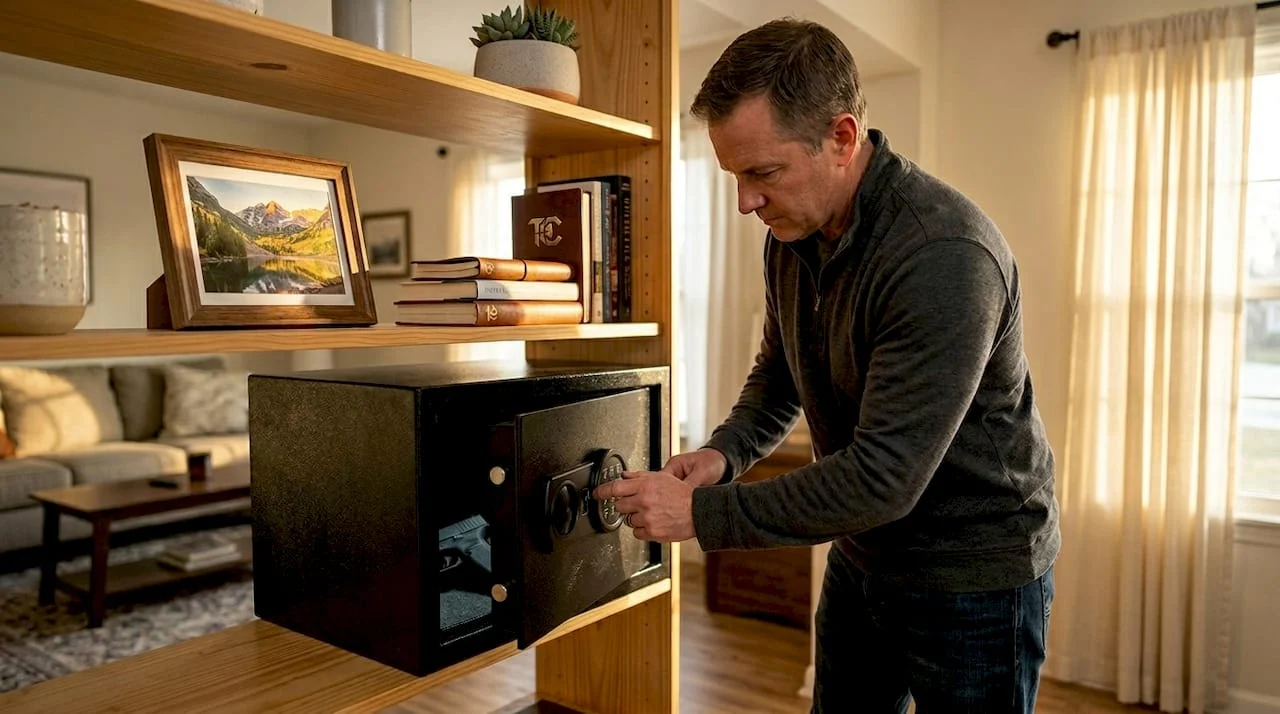
Most accidental firearm injuries are preventable. That’s not a motivational statement — it’s a measurable fact backed by public health data. Gun-related deaths in the US reached 44,447 in 2024, and a significant share of those tragedies trace back to handling errors, improper storage, and preventable lapses in protocol. Too many owners rely on instinct, habit, or the idea that “nothing bad has happened yet” as their safety system. That thinking carries real risk. This article cuts through the noise and delivers evidence-based firearm safety tips you can put into practice starting today.
Table of Contents
- Top 7 essential firearm safety tips
- Safe storage solutions compared
- Safe handling and unloading procedures
- Special considerations for homes with children
- Why real safety demands more than common sense
- Take your firearm safety practices to the next level
- Frequently asked questions
Key Takeaways
| Point | Details |
|---|---|
| Always secure firearms | Lock up all firearms unloaded and keep ammunition stored separately for optimal safety. |
| Practice strict handling | Treat every firearm as if loaded and follow safe handling rules every time. |
| Childproof your storage | Make access codes and keys inaccessible to children and never rely solely on teaching safety. |
| Double-check unloading | Always conduct both visual and physical safety checks twice when handling or cleaning firearms. |
| Embrace ongoing diligence | Firearm safety is a continuous commitment, not a one-time checklist. |
Top 7 essential firearm safety tips
With the scale of preventable incidents in mind, let’s break down the most effective safety strategies you can implement immediately. These aren’t suggestions for beginners only. Even seasoned owners benefit from revisiting fundamentals, because habits erode and complacency is one of the most dangerous forces in firearm ownership.
The ATF’s firearm safety guidance anchors these rules in law enforcement and industry best practices. Here are the seven you need to internalize:
-
Treat every firearm as if it is loaded. This is the foundation. Even when you’ve personally cleared a firearm and watched someone else do the same, you handle it as if it could fire. The moment you make an exception, you introduce a margin of error.
-
Keep the muzzle pointed in a safe direction at all times. A safe direction means no person or valuable property could be injured or damaged if the firearm discharged unexpectedly. This is non-negotiable during loading, unloading, cleaning, and storage.
-
Keep your finger off the trigger until you are ready to shoot. Your trigger finger belongs outside the trigger guard and resting along the frame. This applies even when drawing from a holster, clearing a malfunction, or transitioning between targets.
-
Always identify your target and what is beyond it. Bullets travel. A round that misses or passes through a target doesn’t stop. In a home defense scenario or at the range, knowing what’s beyond your target is just as important as knowing your target itself.
-
Store firearms locked, unloaded, and separated from ammunition. This is where a lot of otherwise careful owners fall short. Locking a loaded firearm inside a quick-access safe still leaves that firearm a loaded weapon in your home. Unloaded and locked, with ammo in a separate secured location, is the standard.
-
Use proper child safety locks and keep access codes and keys secure. A trigger lock or cable lock is one layer. But the access point to that lock, whether a key, a code, or a biometric, must itself be inaccessible to children. A key left on the kitchen counter defeats the purpose entirely.
-
Follow all safety rules during cleaning and maintenance. More negligent discharges happen during cleaning than most people realize. Always clear the firearm completely before any maintenance, set up in a safe direction, and never dry-fire unless you’ve verified the chamber twice.
“Safety isn’t a step you take once — it’s a discipline you practice every time you pick up a firearm.”
Pro Tip: Consider integrating trust and firearms safety into how you evaluate every product, retailer, and accessory. Reliable information and verified expertise matter just as much as reliable hardware.
Safe storage solutions compared
Now that you know the top safety fundamentals, it’s critical to evaluate the best way to store your firearms and keep them inaccessible to unauthorized users. Not all storage methods are equal, and choosing the right one depends on your household, your firearms, and your access needs.
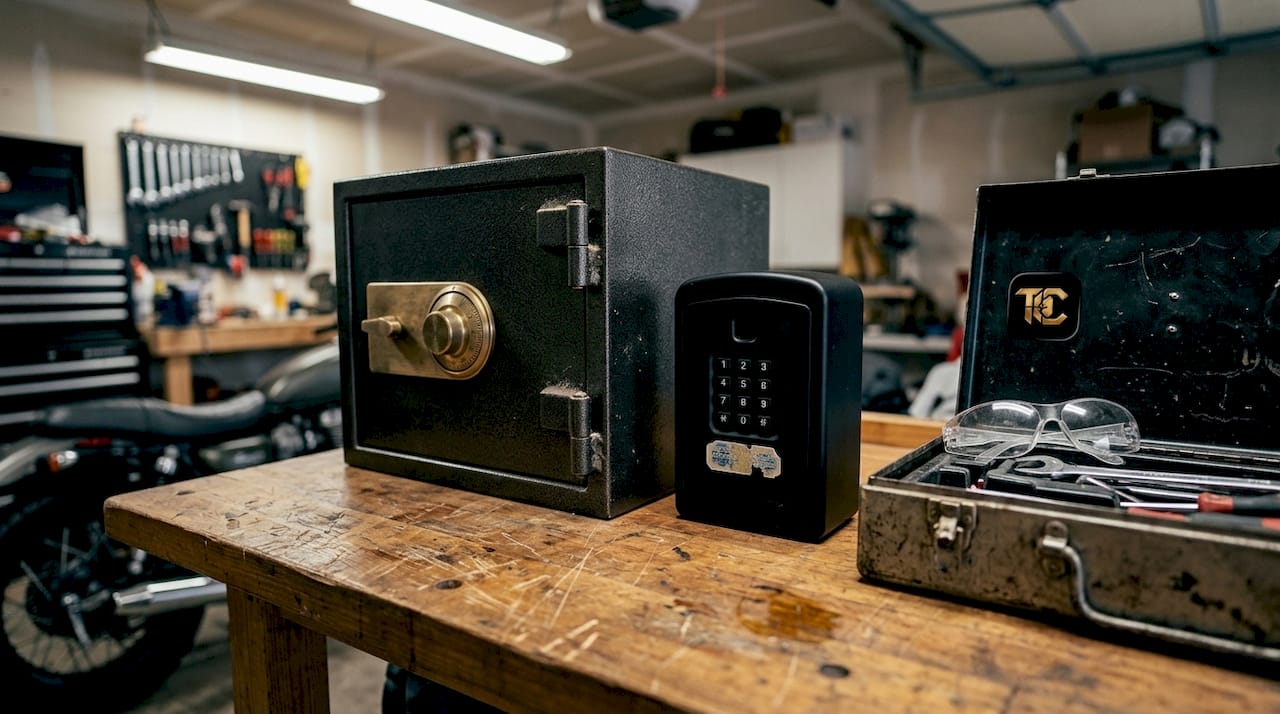
Here’s how the leading storage options compare:
| Storage method | Security level | Child resistance | Quick access | Best for |
|---|---|---|---|---|
| Full gun safe (steel) | Very high | Excellent | Moderate | Long guns, multiple firearms |
| Quick-access lockbox | High | Good | Fast | Bedside handguns |
| Cable lock | Low to moderate | Fair | Slow | Transport, backup layer |
| Trigger lock | Low | Fair | Very slow | Temporary storage only |
| Ammunition locker | High (for ammo) | Excellent | N/A | Separate ammo storage |
Less than half of gun owners store all their guns safely, which tells you the gap between knowing the rules and applying them is significant. A trigger lock alone is not a storage strategy. It’s a supplemental measure.
Explore the full range of top firearm storage solutions to find options that fit your specific situation, whether you have one handgun or an extensive collection.
Key distinctions worth knowing:
- Gun safes offer the strongest combination of theft resistance, fire protection, and child security. A quality steel safe with a pry-resistant door is the gold standard for home storage.
- Quick-access lockboxes balance security with speed. Biometric or keypad models allow fast access in an emergency without leaving a firearm unsecured on a nightstand.
- Cable locks are useful during transport or as a secondary measure but shouldn’t be your primary home storage solution.
- Trigger locks add a layer of protection but can be defeated with the right tools and should not be considered equivalent to locked storage.
- Ammunition storage needs to be locked and kept in a separate location from firearms at all times. CDC guidance is explicit that “out of sight” does not equal secure.
Pro Tip: Look into secure storage innovations if you’re ready to upgrade your current setup. Modern biometric safes, wall-mounted options, and RFID-enabled lockboxes offer practical solutions for every room in your home.
Safe handling and unloading procedures
Even with ideal storage, safe handling remains essential every time you interact with your firearm — especially when unloading or cleaning. The majority of in-home incidents happen during transitions: when a firearm moves from storage to hand, or from loaded to unloaded status.
Follow this step-by-step unloading procedure every time:
- Point the muzzle in a safe direction. Before you do anything else, establish a safe direction and maintain it throughout the entire process.
- Remove the magazine or cylinder. For semi-automatic pistols, drop the magazine first. For revolvers, open the cylinder and eject all cartridges.
- Lock the slide or action open. Pull the slide back and lock it open to expose the chamber visually.
- Perform a visual check. Look directly into the chamber under good lighting. Confirm it is empty.
- Perform a physical check. Insert your pinky finger into the chamber if the geometry allows, or use a chamber flag. Confirm by touch what you’ve already confirmed by sight.
- Repeat both checks. Do not skip this step. The ATF’s clearing and unloading method requires verification twice, and this redundancy has prevented countless accidents.
- Place the firearm down safely before proceeding with maintenance. Never hold a firearm while reaching for cleaning supplies or tools.
“Memory is not a safety mechanism. Verify the chamber every single time, regardless of what you think you remember about your last handling session.”
The table below shows common handling errors and their consequences:
| Handling error | Risk level | Common scenario |
|---|---|---|
| Skipping chamber check | Critical | Cleaning or storage after range session |
| Finger on trigger during draw | High | Concealed carry holster draw |
| Loaded firearm during cleaning | Critical | Maintenance after home defense use |
| Muzzle flagging during unloading | High | Rushed unload in unfamiliar environment |
| Assuming unloaded by feel or memory | Critical | Returning firearm to storage |
For a detailed overview of the full firearm buying and handling process, including what you should know before you even bring a new firearm home, take the time to review the full process so your safety habits start at purchase, not just at the range.
Special considerations for homes with children
Responsible storage protocols become even more vital when children are present in the home. And the scale of the risk is serious. A child’s curiosity is not predictable. Children who are aware of a firearm’s location will explore, regardless of what they’ve been told.
Expert public health guidance is consistent on this: locked, unloaded storage with a separately locked ammunition supply is the minimum acceptable standard in homes with children. Teaching a child about firearm safety is valuable, but it is not a substitute for physical security measures.
Here’s what responsible ownership looks like in a household with children:
- Lock every firearm, every time. No exceptions based on convenience, frequency of access, or a child’s age. Lock it.
- Store ammunition in a separate locked location. Even if a child manages to access a firearm, separated ammunition adds a critical layer of protection.
- Never rely on a “hide and seek” strategy. Children find things. Placed on a high shelf, in a closet, or under a mattress is not secure storage by any recognized standard.
- Keep all access codes, keys, and combinations completely inaccessible. That means not written on a sticky note in a kitchen drawer, not stored on an unlocked phone. Treated like a bank PIN.
- Perform routine checks. Storage can fail. Safes can be left open by accident. Make it a weekly habit to verify every storage unit is properly locked.
Pro Tip: Talk to your children about firearms in age-appropriate ways, but never let that conversation replace your physical storage protocols. The two work together, not as substitutes for each other.
A critical statistic worth noting: safe storage research from Johns Hopkins shows fewer than half of gun-owning households store all of their firearms safely, meaning children in millions of homes have potential access to unsecured firearms. That number should prompt every owner to take a hard look at their current setup.
Explore child-safe storage solutions that combine fast-access technology for adults with child-resistant locking mechanisms. The two goals are not mutually exclusive.
Why real safety demands more than common sense
Here’s a perspective you don’t hear often enough: common sense is not a reliable safety system for firearms. It’s actually one of the biggest vulnerabilities in responsible ownership.
Common sense tells most people that a firearm stored in a drawer, placed out of sight, is “probably fine.” Common sense says that if you’ve owned firearms for 30 years without an incident, your habits must be solid. Common sense can’t measure how often a chamber check gets skipped because you’re tired or distracted.
The “out of sight, out of mind” approach is dangerously outdated, and CDC prevention guidance makes this explicit. Being out of sight or out of reach is not sufficient. It never was. The reason this myth persists is that most unsafe practices go unchallenged until a tragedy occurs, and then the response is shock that it happened to someone who “always knew what they were doing.”
Real firearm safety is a practiced discipline. It’s closer to a professional trade than a casual habit. A master craftsman doesn’t eyeball measurements on a critical cut. A surgeon doesn’t skip a sterilization step because the procedure looks routine. The same standard applies here.
The next evolution in responsible ownership involves embracing modern safety technology. Biometric quick-access safes, RFID-enabled storage, smart gun technology, and app-connected monitoring systems are not gimmicks. They’re tools that close the gaps that human complacency leaves open. Adopting new technology doesn’t mean admitting weakness — it means recognizing that the goal is zero incidents, and every additional layer that supports that goal is worth considering.
The owners who make the biggest difference in their households are the ones who treat safety as an ongoing practice. Not a checklist they completed once at their first gun safety class.
Take your firearm safety practices to the next level
If you’re committed to going beyond the basics, here are resources and products to elevate your approach. Knowing the rules is step one. Having the right tools, training, and gear to back them up is where real ownership comes together.

At Tungsten Creek Tactical, we build our catalog around the same principles you’ve read throughout this article — transparency, functionality, and gear that earns your trust. Whether you’re looking into custom guns and upgrades to improve ergonomics and reliability, or you want to sharpen your knowledge of firearm maintenance practices that keep your firearm performing safely, our team is here to help. You can also explore how firearm technology and safety innovations are reshaping what responsible ownership looks like in 2026. Browse our full lineup and use the Tungsten Creek Tactical app to scan products, compare options, and unlock exclusive VIP access — all built to support the kind of informed, confident ownership you’re after.
Frequently asked questions
What is the safest way to store firearms at home?
Store firearms unloaded in a locked safe or lockbox, with ammunition locked separately and keys or codes completely inaccessible to children. Out-of-sight placement is not an acceptable substitute.
Do child safety locks replace the need for a gun safe?
No. Child safety locks are a supplemental measure, not a replacement. Locked, unloaded storage in a secure safe, with ammunition locked separately, remains the standard for homes with children.
How often should I check the status of stored firearms?
Check weekly at minimum. Verify every storage unit is properly locked and that access codes, keys, and combinations remain inaccessible and secured from unauthorized users.
Is placing guns out of sight considered safe storage?
No. A firearm placed out of sight or out of reach is not securely stored. Only locked, unloaded storage with separately secured ammunition meets the accepted safety standard.
What is the main reason for strict firearm storage rules?
Strict storage rules prevent accidental injuries, theft, unauthorized use, and suicide. Evidence-based safe storage significantly reduces these risks by ensuring firearms are locked, unloaded, and inaccessible to unauthorized individuals every single time.
Recommended
Related Post

Discover the 5 ways
An introduction to Tactical Luxury Guns & Coffee We founded
Top 5 Best PCC’s
In 2026, the Pistol Caliber Carbine (PCC) market is no