
Firearms ownership and social responsibility: A practical guide
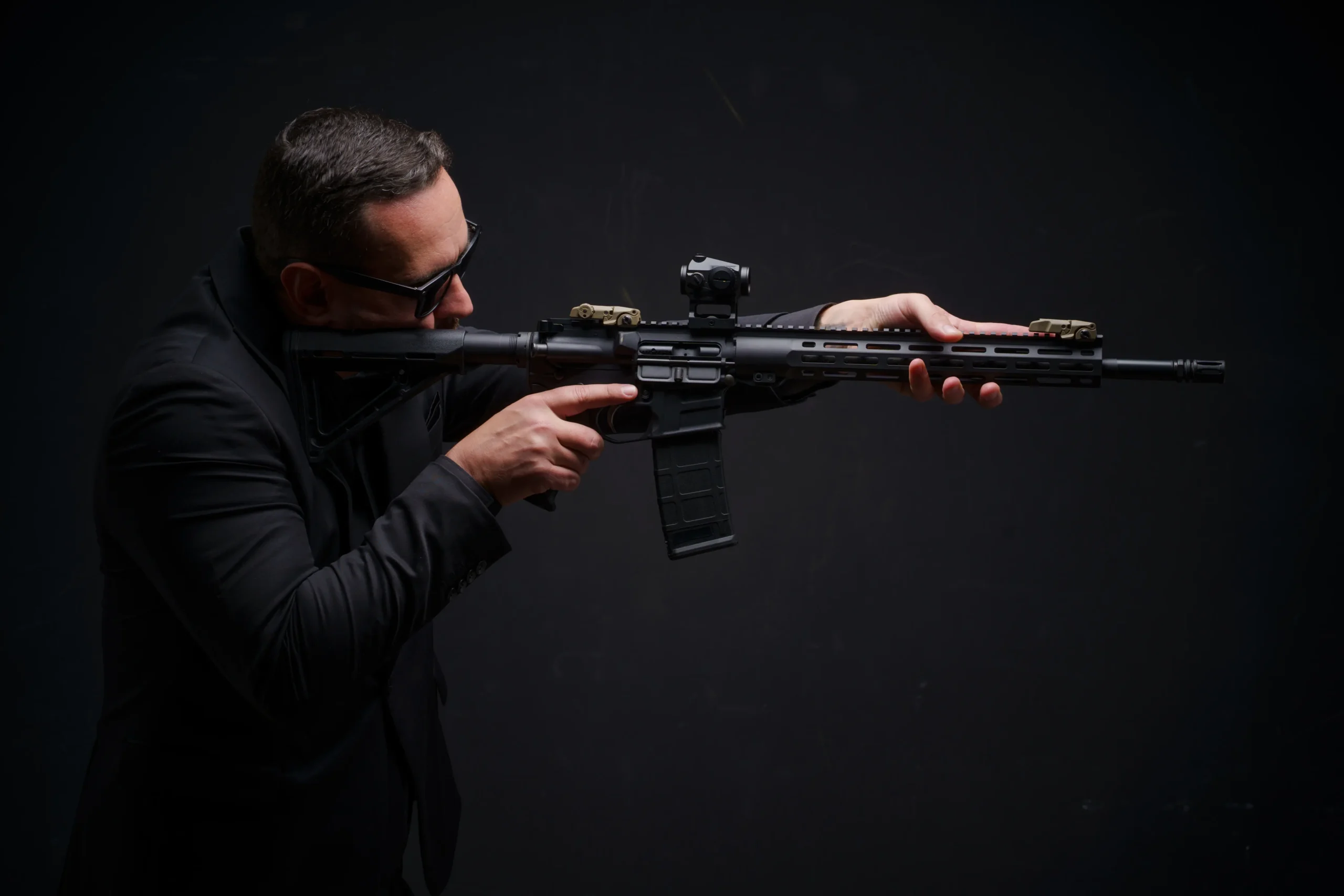
Most firearm owners in America point to protection as their primary reason for owning a gun. In fact, 78.8% of US firearm owners cite protection as their main motivation, with women and minority communities increasingly joining those ranks. Yet the actual use of a firearm in self-defense situations is surprisingly rare. That gap between motivation and reality is exactly where social responsibility lives. Owning a firearm comes with obligations that go well beyond the decision to purchase, and this guide will walk you through what those obligations actually look like when applied to everyday life.
Table of Contents
- What does social responsibility mean for firearm owners?
- Responsible storage: Why safe handling matters
- Education and training: Are they making a difference?
- Protection and defensive gun use: Statistics and realities
- A deeper look: Where social responsibility goes beyond the basics
- Connect with responsible firearms solutions
- Frequently asked questions
Key Takeaways
| Point | Details |
|---|---|
| Safe storage essential | Locking and unloading firearms significantly reduces risks for families and communities. |
| Training isn’t everything | Formal safety programs alone don’t guarantee responsible storage—ongoing self-assessment matters more. |
| Protection versus practice | Most owners cite protection, but defensive gun use is rare, making preparation important but not all-consuming. |
| Manufacturer responsibility | Leading brands partner on safety, but their duty extends to ethical design and messaging. |
| Community impact | Individual choices influence the wider firearm community’s reputation and social trust. |
What does social responsibility mean for firearm owners?
Building on the motivations for firearm ownership, let’s examine what social responsibility truly means in this community. The phrase gets used a lot, but it rarely gets defined with any precision. That matters, because vague principles lead to vague behavior.
At its core, social responsibility for firearm owners means recognizing that your choices with a firearm affect people beyond yourself. It means making decisions grounded in ethics, safety, and community awareness, not just legal compliance. You can follow every law on the books and still fall short of genuine responsibility.
There are two major perspectives worth understanding here, and both carry weight.
The pro-gun community, represented by organizations and manufacturers alike, tends to frame social responsibility through the lens of education and empowerment. Colt’s partnership with the NRA and similar programs from Beretta reflect this view: train people well, arm them with knowledge, and responsible behavior follows naturally. This is a reasonable position, especially when the data shows that informed owners tend to make safer choices.
A more critical perspective holds that manufacturers themselves carry a precautionary duty. Researchers at the University of Colorado argue that manufacturers have a duty to address design and marketing decisions that may contribute to misuse, rather than simply disclaiming liability after the fact. Both perspectives reflect genuine concerns worth considering.
Here is what responsible firearms ownership actually looks like in practice:
- Continuous education: Staying current on safety practices, state laws, and evolving technology
- Proper training: Seeking formal instruction and regular practice, not just a one-time course
- Ethical storage: Keeping firearms secured from children, unauthorized users, and situations where emotion might override judgment
- Community modeling: Setting an example for newer owners and advocating for safety standards in your circle
“Social responsibility in firearms ownership is not a destination. It is a practice, maintained through daily decisions, ongoing learning, and genuine accountability to your community.”
Understanding the role of firearms technology and safety in modern ownership helps sharpen that practice. And it starts with recognizing that the most trustworthy owners are the ones who take that responsibility seriously before a problem arises, not after. The foundation of responsible firearms sales is built on exactly this principle.
Responsible storage: Why safe handling matters
With social responsibility defined, let’s look at how safe storage practices protect individuals and communities. This is one area where data tells a clear and actionable story.
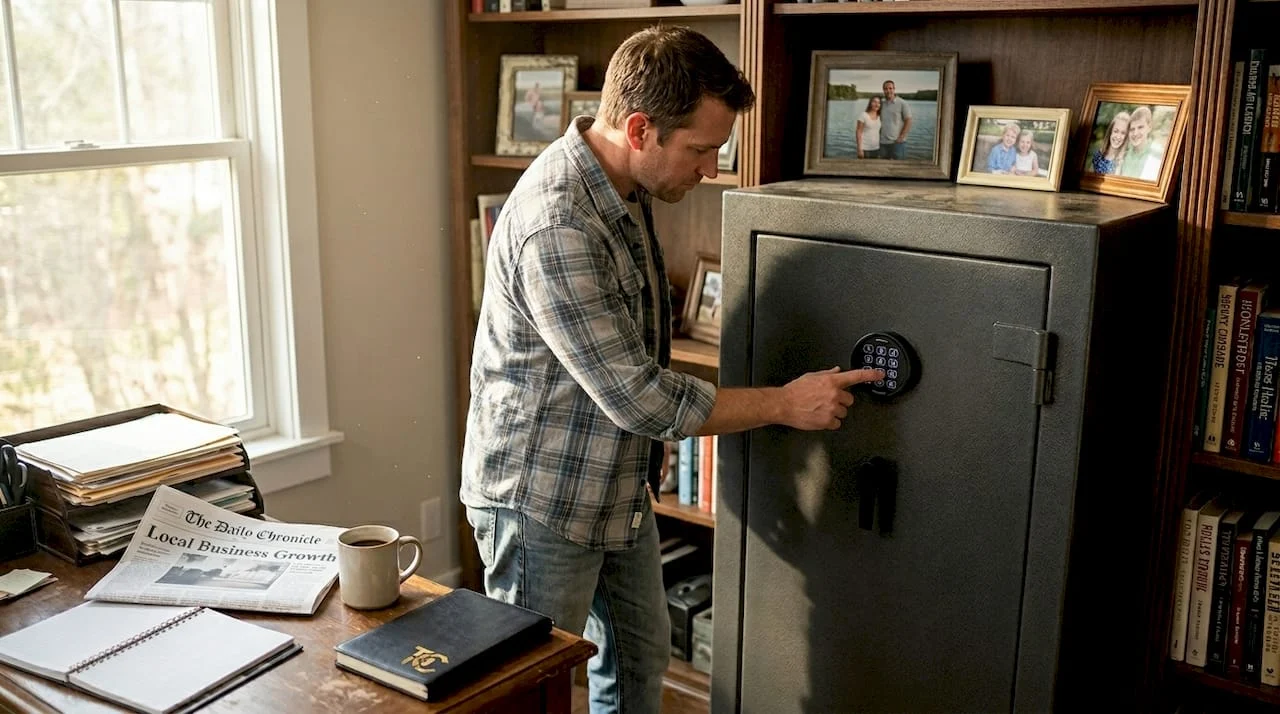
Safe storage directly reduces risk of suicide, unintentional injury, and unauthorized access. Keeping a firearm locked and unloaded when not in active use is one of the single most impactful choices you can make as a responsible owner. It is not about distrust of yourself. It is about eliminating variables in unpredictable situations.

The good news is that behavior is trending in the right direction. Secure storage increased from 34.9% to 48.8% in Washington State households between 2013 and 2022. That is meaningful progress. But it also means that just over half of households in that survey were still not storing firearms securely by 2022, which represents a significant gap.
The gaps are not random. Rural owners are 11% more likely to store loaded firearms in an unlocked state compared to urban owners, and male owners are statistically less likely to secure firearms than female owners. These patterns suggest that the default assumptions many owners carry, including the belief that quick-access storage is always more important than secure storage, need to be honestly examined.
| Storage method | Risk reduction | Accessibility tradeoff |
|---|---|---|
| Locked safe, unloaded | Highest | Requires access code or key |
| Lockbox with quick-release | High | Faster access, still secured |
| Trigger lock only | Moderate | No ammo separation |
| Unlocked, loaded | Lowest | Immediate access but maximum risk |
Pro Tip: If you live alone and have no children in the home, you may feel secure storage is unnecessary. But consider visitors, mental health crises, theft scenarios, and emergency situations. A quick-access biometric lockbox gives you both security and speed without sacrificing either.
Actionable storage practices every owner should implement:
- Store firearms and ammunition separately when possible
- Use a gun safe rated by an independent organization, not just a decorative cabinet
- Install a quick-access lockbox for your carry firearm if you need rapid access at night
- Audit your storage setup annually, especially after major life changes like moving or having children visit
Exploring top firearm storage solutions gives you a realistic look at what the market offers at every price point. For those newer to ownership, a thorough look at firearm storage options can simplify the decision. If you are still navigating the basics, the buying process for first timers also covers storage as an essential step.
Education and training: Are they making a difference?
Beyond storage, education and training shape responsible behaviors. But is the current approach effective? The answer is more nuanced than most advocates on either side are willing to admit.
Manufacturers have invested meaningfully in this space. Colt’s partnership with the Second Amendment Foundation reflects a broader industry commitment: safety education and training programs promoted through organizations that emphasize safe handling, storage, and responsible ownership. These programs reach millions of owners annually. That is not a small contribution.
But the empirical evidence complicates the picture. RAND’s analysis found no strong association between formal safety training and improved storage behavior. In some studies, trained owners were actually less likely to store firearms safely, possibly because training increases their confidence and reduces their perception of risk. That is a counterintuitive finding, but it points to something important: knowledge alone does not change behavior. Context, accountability, and community norms do.
| Training type | Behavior impact | Limitations |
|---|---|---|
| Formal certification course | Builds foundational skills | Does not reliably improve storage behavior |
| Range practice and repetition | Improves handling and accuracy | Does not address home safety habits |
| Community-based programs | Stronger peer accountability | Less standardized |
| Ongoing education and mentorship | Most sustainable change | Requires commitment and access |
Here is a practical framework for getting more out of your training:
- Choose training that includes scenario-based practice, not just range time. Situational judgment matters more than speed.
- Review and revisit safe storage as part of your training, not as an afterthought. Ask your instructor directly what they recommend.
- Join a shooting club or local community group where peer accountability reinforces habits between formal courses.
- Track your own behavior over time. Are you actually storing your firearm the same way you were trained to? Honest self-assessment is the missing variable in most training programs.
The benefits of shooting clubs go well beyond marksmanship. The community dimension is where sustained responsible behavior takes root, and it is often the most underrated factor in long-term firearm safety.
Protection and defensive gun use: Statistics and realities
With training and education in mind, it’s critical to align motivations, especially protection, with practical realities.
Protection is the top motivation for American firearm owners, cited by nearly 79% of them. Among women and minority communities, that number is even more pronounced, driven by real and documented concerns about personal safety in specific contexts. That motivation is valid. It is also worth grounding in honest statistics.
The reality of defensive gun use is strikingly different from what popular culture and news coverage suggest. Over 91.7% of firearm owners have never used a firearm defensively in their lifetime. Less than 1% report a defensive gun use in the past year. And when defensive use does occur, it most commonly involves simply displaying the firearm rather than firing it.
This is not an argument against owning a firearm for protection. It is an argument for putting that motivation in its proper context. Consider what these statistics mean in practical terms:
- The vast majority of firearm owners will never need to draw their weapon in a genuine defensive situation
- The skills that matter most are discipline, judgment, and safe handling, not rapid response
- A firearm secured in a lockbox is accessible in a real emergency, and the statistical likelihood of that emergency is far lower than most owners assume
- Overconfidence in defensive scenarios can lead to poor decision-making in ambiguous situations
Think of your carry firearm the way a seasoned outdoorsman thinks about a well-maintained piece of gear: it should be reliable, properly cared for, and ready when genuinely needed. But readiness is not the same as anticipation of conflict. The distinction shapes your mindset in ways that actually improve safety.
Choosing the right setup for personal defense starts with the fundamentals, including understanding your personal defense ammunition guide so that if the day ever does come, every element of your system performs as intended.
A deeper look: Where social responsibility goes beyond the basics
Most articles in this space stop at storage and training. Follow the rules, take a class, buy a safe. Done. But that framing treats social responsibility like a checklist, and responsible ownership is not a checklist. It is a posture.
Here is what the data actually tells us when you look at it honestly. Protection motivates ownership, but DGU is rare, safe storage is improving but inconsistent, and formal training does not reliably change behavior. Each of those findings points to the same conclusion: compliance is not the same as accountability.
What separates genuinely responsible owners from those who simply meet the legal minimum is self-awareness. It means asking uncomfortable questions. Am I storing this firearm responsibly even when no one is checking? Am I carrying because it gives me confidence I haven’t fully earned through training? Is my motivation for ownership calibrated to the actual risks I face, or to the risks I imagine?
The firearm community has a reputation at stake with every interaction its members have with the broader public. When a responsible, trained owner conducts themselves with visible discipline and integrity, that matters. It sets a standard. It also pushes back against narratives that paint all gun owners with the same broad stroke. That is not idealism. It is a practical argument for why individual behavior has collective consequences.
True responsibility also means being honest about the limits of your own preparedness. A firearm you carry without regular practice is not a safety tool. It is a liability. A gun stored under your mattress because you haven’t gotten around to buying a safe is not a defense. It is an unnecessary risk. The gap between intention and action is where most of the real danger lives, not in the laws or the policies.
Regular firearm maintenance and responsibility is part of this equation too. A neglected firearm is an unreliable one, and an unreliable firearm is a hazard in any scenario. Keeping your equipment in peak condition is not just about performance. It reflects the kind of owner you are.
Connect with responsible firearms solutions
For those ready to apply responsible principles, here are resources and services to support your journey.

At Tungsten Creek Tactical, we believe that the most prepared owners are the most informed ones. Whether you are evaluating your current storage setup, looking to upgrade your carry configuration, or exploring custom firearms expertise to optimize your firearm for your specific needs, we are here to support every step of that process. Our team brings real knowledge to every conversation, with no pressure and no shortcuts. Protecting firearm performance is central to what we do, because we know that well-maintained gear is safer, more reliable, and more effective. Use our mobile app to scan products, compare pricing, and unlock VIP benefits designed for owners who take this seriously.
Frequently asked questions
What are the safest ways to store a firearm at home?
Use a locked, unloaded storage solution such as a safe, gun cabinet, or lockbox to minimize risks of accidents and unauthorized access. Safe storage reduces risk of suicide, unintentional injury, and unauthorized access, making it one of the highest-impact choices you can make.
Does formal safety training improve responsible storage behavior?
Formal training does not always lead to safer storage, and the evidence shows mixed results across multiple studies. No strong association exists between training completion and improved storage practices, which is why ongoing community accountability matters just as much as formal coursework.
How common is defensive gun use among firearm owners?
Defensive gun use is rare, with the overwhelming majority of owners never using a firearm for defense across their lifetime. Over 91.7% of owners report no lifetime defensive gun use, and past-year incidents represent less than 1% of the owner population.
Are rural owners less likely to store firearms securely?
Yes, rural owners consistently show lower secure storage rates compared to urban owners across multiple studies. Rural owners are 11% more likely to keep loaded firearms unlocked, a gap that reflects both cultural norms and access to storage resources in less densely populated areas.
Recommended
Related Post
Discover the 5 ways
An introduction to Tactical Luxury Guns & Coffee We founded
Top 5 Best PCC’s
In 2026, the Pistol Caliber Carbine (PCC) market is no