
Storage: How to choose your #1 firearm storage solution
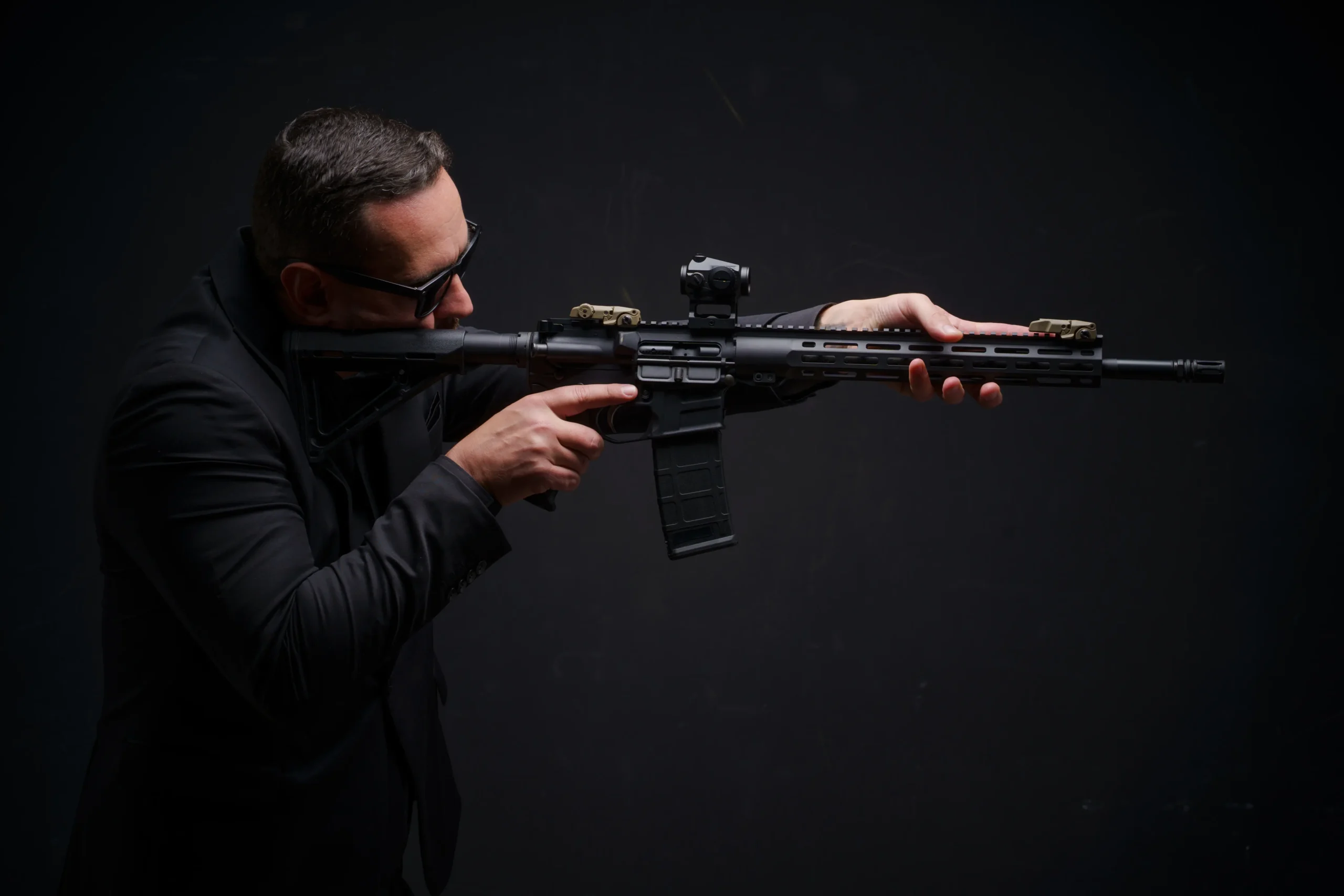
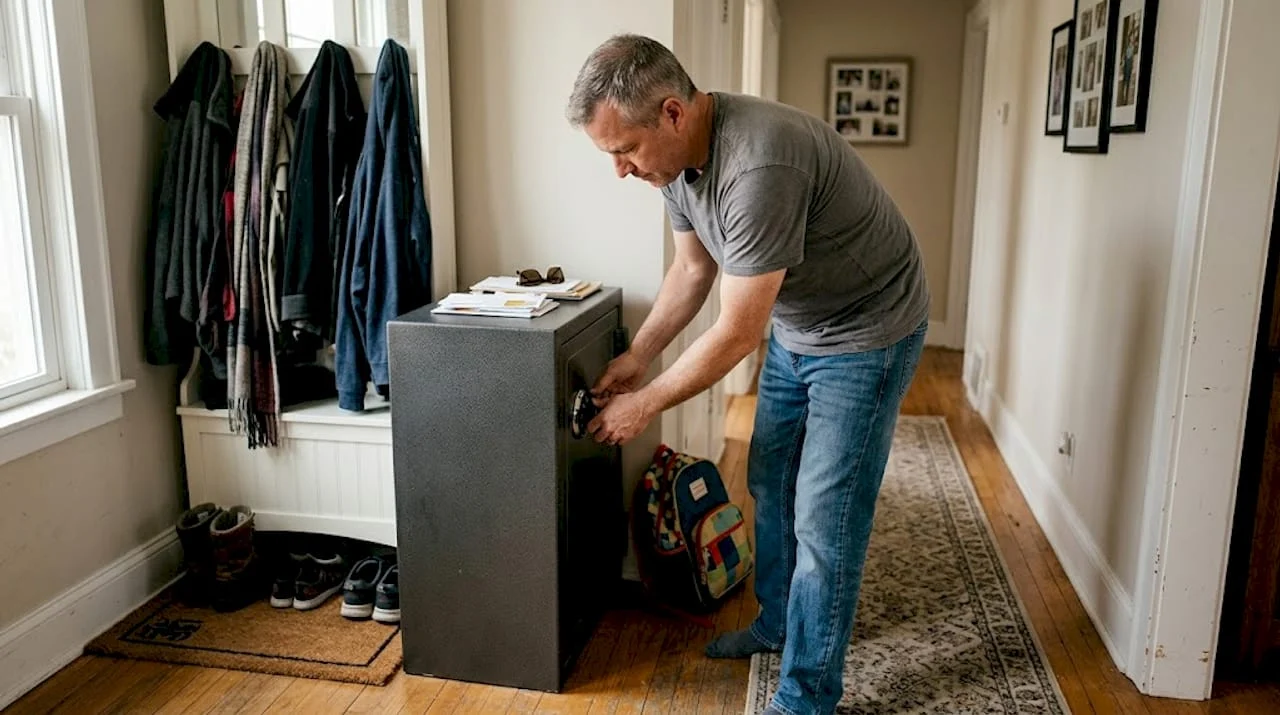
Choosing the right firearm concealment solution is one of the most consequential decisions you’ll make as a gun owner. The stakes are real: you need fast access when it matters, but you also need to keep firearms away from children, guests, and anyone who shouldn’t have them. There’s no single perfect answer, and no safe is truly impenetrable since secure storage is primarily a delay tactic. What separates responsible owners from the rest is the deliberate, ongoing process of matching the right solution to their specific household, habits, and risk profile. This guide walks you through exactly that.
Table of Contents
- Evaluating storage solutions: What matters most
- Top firearm storage solutions: Pros, cons, and best uses
- Head-to-head comparison: Which solution fits your needs?
- Safety for every situation: Special recommendations
- Beyond the basics: Why best practices are evolving
- Next steps: Gear up for safer, smarter storage
- Frequently asked questions
Key Takeaways
| Point | Details |
|---|---|
| No solution is perfect | Every storage method involves trade-offs between speed, security, and cost. |
| Biometric safes need maintenance | Keep sensors clean and prints updated for reliable access. |
| Custom risk matters | Adapt your strategy based on household, mental health, and legal needs. |
| Culture of safety is crucial | Regularly review practices and train everyone in the home for ongoing security. |
Evaluating storage solutions: What matters most
With clear intent for safe storage, let’s explore what criteria matter most before you spend a dollar on any product.
The first factor is your household composition. A home with young children, frequent guests, or roommates with unpredictable behavior demands a fundamentally different approach than a single-occupant dwelling. Children are naturally curious, and even a firearm stored “out of reach” can become accessible with a chair and a few minutes of unsupervised time. Think about who enters your home regularly, not just who lives there.
The second factor is your access requirement. Quick access for self-defense and secure storage for long-term safety sit on opposite ends of the spectrum. A bedside biometric safe optimizes for speed. A 600-pound gun safe optimizes for resistance. Most owners need both, which means layering solutions rather than relying on one.
Third, check your local regulations. Some states and municipalities have mandatory storage laws, especially if minors are present. Knowing the legal baseline in your area isn’t optional; it’s the floor you build from.
Fourth, consider physical attack resistance and fire protection. A quality safe should resist drilling, prying, and cutting for a meaningful amount of time. Fire ratings (typically measured in minutes at a specific temperature) matter if you’re storing irreplaceable documents alongside firearms. Look for UL-listed ratings when evaluating safes.
Fifth, evaluate technology features. Biometrics, electronic keypads, and redundant mechanical backups each have real-world trade-offs. General secure storage principles apply here: redundancy is not a luxury, it’s a requirement. If your biometric scanner fails at 2 a.m., you need a backup that works.
Research shows that high-risk gun owners often store loaded or unlocked firearms despite fully understanding the risks. Awareness alone doesn’t change behavior. The right storage system removes the temptation to cut corners.
- Assess household composition and visitor patterns
- Define your access speed requirements
- Research local laws
- Prioritize physical resistance and fire rating
- Choose technology features with redundancy in mind
Pro Tip: If your household includes someone with a mental health concern or elevated suicide risk, consider dedicated custom gun owners storage strategies that go beyond standard lock-and-key approaches, including lock-out protocols and third-party storage options.
Top firearm storage solutions: Pros, cons, and best uses
Now that you know what matters in storage criteria, let’s look at the top solutions available and when to use them.
Heavy-duty gun safes are the gold standard for long-term security. They’re heavy, often bolted to the floor or wall, and can store multiple firearms with room for documents and valuables. The downside is access speed. Under stress, fumbling a combination lock or keypad is a real risk. These are best for storing firearms you don’t need daily.
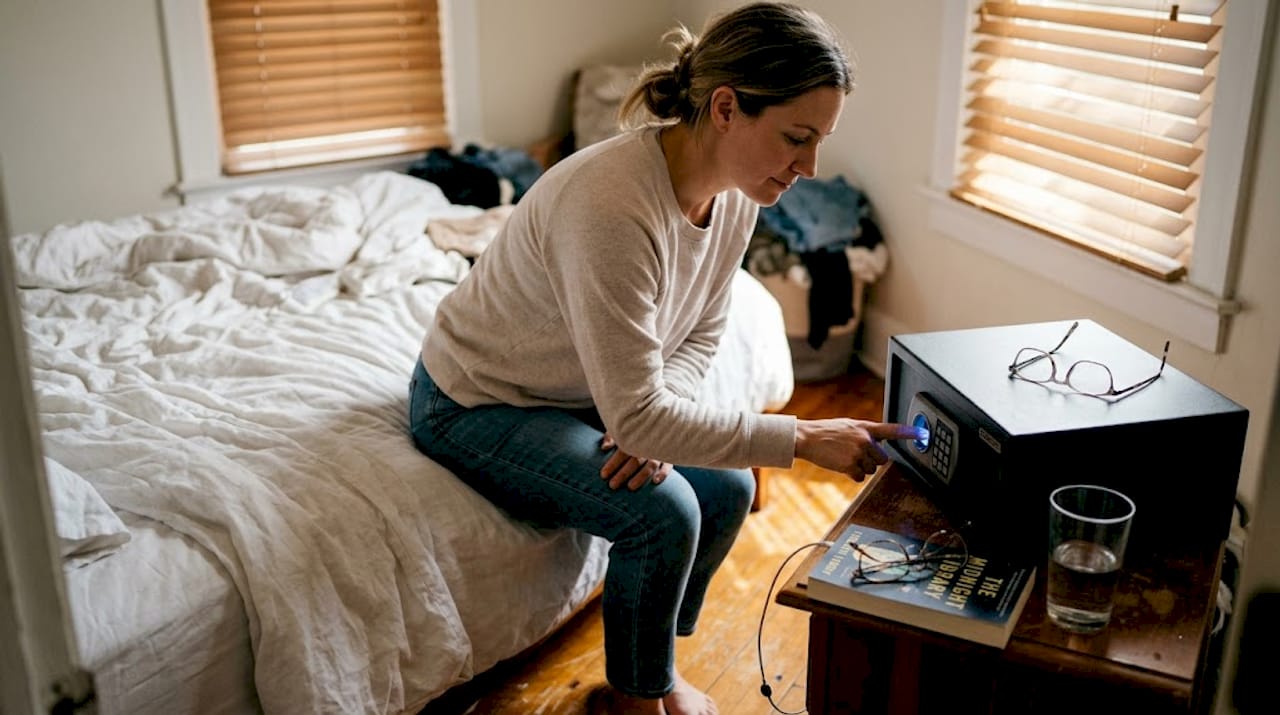
Quick-access biometric safes solve the speed problem. A clean finger on a quality sensor can open the safe in under two seconds. However, biometric safes can fail when fingers are sweaty, dirty, or cut, which means regular maintenance and re-registration of prints is essential. Always have a PIN or key backup.
Lock boxes and cable locks are affordable and portable. They’re ideal for travel, vehicles, or temporary concealment. The trade-off is lower resistance to physical attack. A determined person with basic tools can defeat most cable locks in under a minute. Use them as a supplement, not a primary solution.
Smart storage systems add remote alerts, access logs, and app connectivity. You can receive a notification if your safe is opened or tampered with. The limitation is tech dependency: dead batteries, lost connectivity, or software failures can create problems. Like any tech, these systems need regular updates and checks.
Hidden furniture and diversion safes offer discretion. A bookshelf with a concealed compartment or a mirror with a locking back panel keeps firearms out of plain sight. The security level is generally lower, but the psychological deterrent of concealment is real. These work best paired with a more robust primary safe.
No exact solution offers both maximum access speed and ultimate security at the same time. Every choice involves a trade-off, and the best owners design a layered system rather than searching for a single perfect product.
For safe conceal carry options, pairing a quick-access bedside safe with a heavy-duty safe for your collection covers most scenarios. If you travel frequently, a portable handgun case adds a critical layer of secure residential storage on the road.
Pro Tip: Match each firearm to a storage solution based on its role. Your daily carry pistol belongs in a quick-access safe. Your hunting rifles belong in a heavy-duty safe. Don’t force one solution to do everything.
Head-to-head comparison: Which solution fits your needs?
It can be difficult to pick the right fit, so let’s compare your top options side by side.
| Storage type | Access speed | Security level | Cost range | Maintenance |
|---|---|---|---|---|
| Heavy-duty gun safe | Slow | Very high | $400 to $2,000+ | Low |
| Quick-access biometric | Fast | Moderate | $80 to $400 | Moderate |
| Lock box / cable lock | Fast | Low | $20 to $100 | Low |
| Smart system | Fast | Moderate to high | $150 to $600 | High |
| Hidden furniture safe | Moderate | Low to moderate | $100 to $500 | Low |
As the research confirms, all storage solutions are delay tactics. Nothing is truly impenetrable. The goal is to make unauthorized access slow enough that it becomes impractical.
For flexible secure storage in varied situations, here’s how to decide based on your priorities:
- Home with children: Heavy-duty safe plus quick-access biometric for your carry firearm
- Solo apartment: Quick-access biometric safe is often sufficient for a single firearm
- Travel and transport: Lock box or portable case with a cable anchor
- High-risk environment: Multi-lock redundancy, third-party locks, or trigger locks in addition to a safe
- Law enforcement or first responder: Quick-access safe optimized for speed with a robust backup method
If you have custom firearm needs or a collection that includes rare or high-value pieces, a heavy-duty safe with a fire rating is non-negotiable. For those prioritizing options for carry pistols, a biometric safe staged near your sleeping area is the practical choice.
Safety for every situation: Special recommendations
Even the best solution needs fine-tuning when your situation is unique. Here’s how to adapt for extra safety.
Households with children require placement discipline as much as hardware. A safe bolted inside a closet at adult height is far more effective than the same safe sitting on a nightstand. Out of sight and out of reach together create a meaningful barrier. Teach children that firearms are not toys, but don’t rely on education alone.
Mental health considerations are one of the most underaddressed areas in firearm safety. High suicide risk correlates strongly with loaded and unlocked storage, even when owners are fully aware of the danger. If someone in your household is going through a crisis, consider temporary third-party housing, trigger locks in addition to a safe, or giving a trusted person temporary custody of the key or combination.
Shared homes introduce the challenge of multiple users with different habits and risk levels. Regular audits of your setup, clear communication about protocols, and multi-lock systems that require more than one person to open can all reduce risk. Consider custom safety strategies that account for every person in the home.
| Situation | Recommended solution | Key mitigation |
|---|---|---|
| Children present | Heavy-duty safe, high placement | Combine with education |
| Mental health risk | Unloaded storage, third-party custody | Remove access temporarily |
| Shared household | Multi-lock, access logs | Regular audits |
| Solo adult | Quick-access biometric | Monthly battery checks |
- Always store firearms unloaded when not in active use
- Use trigger locks as a secondary layer inside the safe
- Conduct a monthly audit to check locks, batteries, and access logs
- Connect with local firearm safety courses for hands-on training
- Review your storage setup any time your household situation changes
Community training resources, including local range safety courses and national programs like the NRA’s Eddie Eagle curriculum for children, add a human layer that hardware alone can’t replicate. Safe storage is a habit, not a one-time purchase.
Beyond the basics: Why best practices are evolving
Having reviewed the facts, let’s consider what experience in responsible ownership actually teaches us.
The firearm storage conversation tends to focus on products: which safe has the best rating, which biometric sensor is fastest. That framing misses something important. The owners who maintain the safest households aren’t necessarily the ones with the most expensive gear. They’re the ones who review their setup regularly, train with it under stress, and adjust when their life circumstances change.
A safe you haven’t opened in six months may have a dead battery. A biometric scanner you registered three years ago may not recognize your fingerprint reliably anymore. Technology is only as good as the habits surrounding it. Think of it like a well-maintained firearm: the tool is only reliable when you treat it that way.
True innovation isn’t just about new features. It’s about pairing the right old and new solutions together and reassessing them often. Your responsible carry choices should be matched by equally deliberate concealment choices, reviewed at least annually or after any major life change.
Next steps: Gear up for safer, smarter storage
If you want to put these insights into action, there are reliable resources to help.
At Tungsten Creek Tactical, we’ve built our approach around transparency and practical expertise, not just product listings. Whether you’re looking to upgrade your current setup or starting from scratch, our team can help you match the right storage solution to your specific household and carry needs.

Explore our custom gun solutions to find safes and build options tailored to your firearm collection. And if you want to understand the full scope of what we offer, visit our tactical expertise page to see how we approach every aspect of responsible ownership. The right strategy is out there. We can help you build it.
Frequently asked questions
What storage solution is fastest for emergency access?
Biometric safes typically offer the quickest access, but sensors can fail when fingers are wet or dirty, so always maintain a PIN or key backup.
Are any firearm storage solutions completely tamper-proof?
No. All solutions function as delay tactics; the goal is to slow unauthorized access long enough to make it impractical.
How can I reduce firearm suicide risk in my home?
Use locked storage, keep firearms unloaded, and if elevated suicide risk is present, consider temporary third-party locks or removing access entirely.
What maintenance does tech-based safes require?
Check batteries monthly, update biometric fingerprints periodically, and confirm your biometric scanner reads reliably under varied conditions including wet or dirty hands.
Recommended
Related Post

Discover the 5 ways
An introduction to Tactical Luxury Guns & Coffee We founded
Top 5 Best PCC’s
In 2026, the Pistol Caliber Carbine (PCC) market is no