Top benefits of joining shooting clubs: community, skills, and more
Most people assume a shooting club is just a place to practice marksmanship. That assumption sells the experience short by a wide margin. Formal safety training reaches roughly 61% of US firearm owners, yet research finds no strong connection between completing that training and consistently safe storage habits at home. That gap tells you something important: a certificate on the wall doesn’t automatically build lasting, responsible behavior. Shooting clubs do something different. They offer ongoing education, real relationships, competitive growth, and a culture that keeps responsible ownership alive long after any single class ends. This guide breaks down exactly why membership is worth serious consideration.
Table of Contents
- The role of shooting clubs in firearms education
- Community, camaraderie, and mentorship opportunities
- Skill development: competitions, training, and personal growth
- Responsible ownership and positive firearms culture
- Why most people underestimate shooting clubs: our take
- Explore firearms solutions with Tungsten Creek Tactical
- Frequently asked questions
Key Takeaways
| Point | Details |
|---|---|
| Ongoing education | Shooting clubs provide ongoing training and reinforce safe, responsible firearm practices. |
| Community support | Shooting clubs create a welcoming community for mentorship, networking, and accountability. |
| Skill progression | Members benefit from structured skill development through competitions and expert-led classes. |
| Positive culture | Clubs cultivate a culture of safe ownership, encouraging best practices and advocacy. |
The role of shooting clubs in firearms education
Training once is a starting point, not a destination. Think of it like brewing a single great cup of coffee: the experience is worthwhile, but you don’t stop there if you want to make it a consistent habit. 61% of firearm owners have completed formal safety training, yet the data shows little correlation with actual safe storage habits at home. The problem isn’t that training is bad. It’s that a one-time course rarely changes long-term behavior on its own.
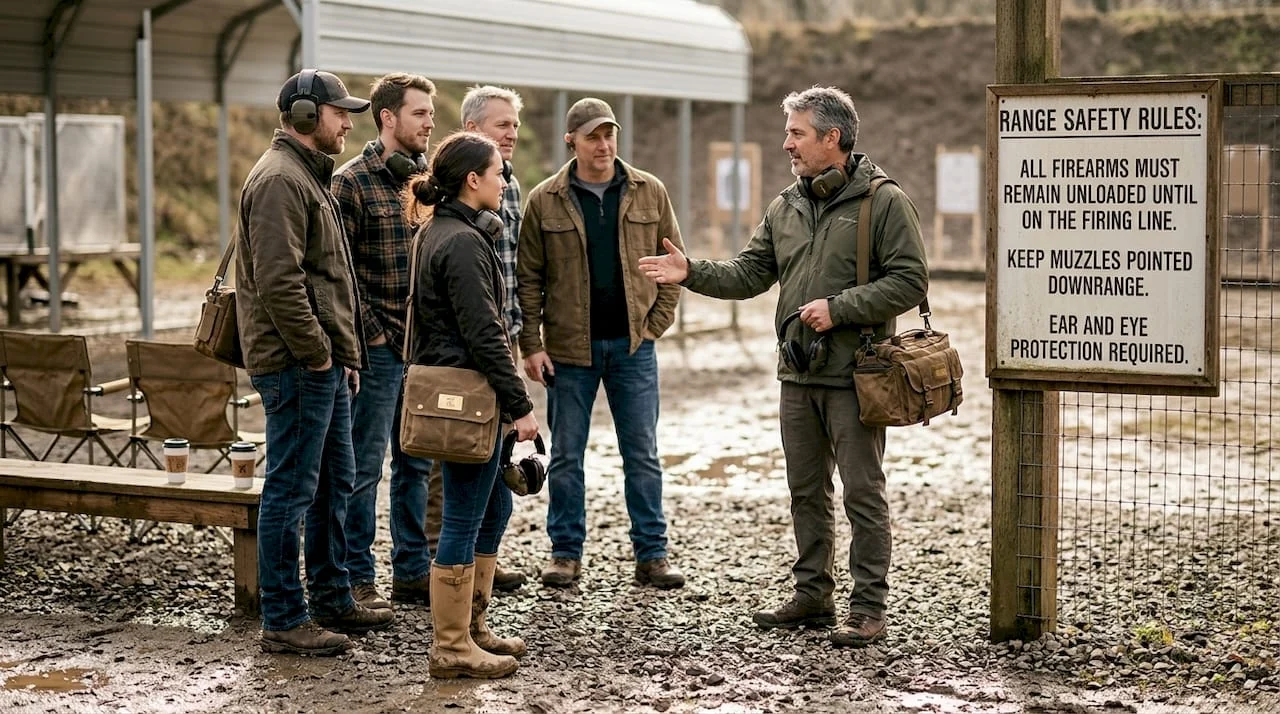
Shooting clubs address this by embedding education into a regular schedule. Range days, safety briefings before every session, and structured workshops mean members encounter core principles repeatedly, not just once. Repetition in a practical environment is how habits actually form. You don’t just hear about muzzle discipline; you practice it every week with people who expect you to get it right.
The difference between going solo and participating in a club is meaningful:
| Training type | Frequency | Accountability | Breadth of skills |
|---|---|---|---|
| Solo/formal course | One-time or rare | Self-directed | Narrow |
| Club membership | Ongoing | Peer and instructor | Broad and progressive |
| Online-only learning | Variable | None | Theoretical |
| Private instruction | Periodic | Instructor only | Moderate |
Beyond the schedule, clubs reinforce community standards. When an experienced member demonstrates correct storage protocols or flags a handling error in real time, the lesson sticks. That kind of immediate, peer-driven feedback is something no workbook can replicate. It’s also why exploring technology and firearm safety alongside a club environment creates compounding benefits: you get the best of modern information tools plus real-world reinforcement.
“The most reliable safety culture isn’t built in a classroom. It’s built on a range, around people who hold each other accountable every single session.”
Clubs also introduce members to topics they might never seek out independently: proper cleaning techniques, storage best practices, understanding local regulations, and responsible transportation. For a deeper look at how to set up your home safely, firearm storage solutions offer practical guidance that pairs well with what clubs teach in person.
- Weekly safety briefings that reinforce core rules
- Peer observation that catches and corrects bad habits early
- Access to experienced instructors beyond initial certification
- Ongoing workshops on storage, transport, and local law compliance
The cumulative effect is substantial. Members who attend regularly absorb safety standards so deeply that responsible handling becomes automatic. That’s the real goal of firearms education, and clubs are uniquely positioned to deliver it.
Community, camaraderie, and mentorship opportunities
Firearms ownership can feel isolating if your network doesn’t share your interests. Shooting clubs change that equation entirely. They create a structured environment where people of different backgrounds and experience levels come together around a shared purpose. The social dimension isn’t a bonus feature; it’s one of the most practically valuable aspects of membership.
Research consistently shows that peer-enforced culture matters far more than formal education alone when it comes to sustaining safe practices. When the people around you treat responsible handling as the default, you internalize that standard. It’s similar to being part of a serious gym: the environment itself raises your baseline.
Here are the top three ways shooting clubs actively build community:
-
Structured mentorship programs. Many clubs pair new members with experienced shooters who guide them through everything from range etiquette to choosing the right firearm for their goals. This relationship often extends well beyond the range, turning into a genuine friendship with real-world benefits.
-
Group events and social gatherings. Clubs host barbecues, club nights, and charity shoots that bring members together outside a strictly training context. These events lower barriers for newcomers and create the social glue that keeps members engaged year after year.
-
Inclusive onboarding for beginners. Reputable clubs build welcoming environments where asking questions is encouraged rather than penalized. That culture makes it easier for people new to firearms to get started safely, with guidance from people who genuinely want them to succeed.
The mentorship angle deserves special attention. A first-time gun owner navigating the world of calibers, platforms, and accessories can feel overwhelmed quickly. A knowledgeable club member who has already been through that process can cut the learning curve dramatically. They can point you toward a professional gunsmithing service when you need expert work done, or simply advise you on the most reliable brands for your use case. That kind of trusted referral has real value.
Pro Tip: Don’t wait for the club to assign you a mentor. Introduce yourself at your first few sessions, ask questions openly, and show genuine interest in learning. Experienced members respond well to enthusiasm, and those early conversations often turn into long-term mentoring relationships without any formal structure needed.
The camaraderie you build at a shooting club also serves as a reliable information network. When regulations shift, when new products hit the market, or when safety recall notices go out, a connected community hears about it faster and discusses it more practically than any newsletter can match.
Skill development: competitions, training, and personal growth
A shooting club isn’t just a social outlet. It’s a structured environment where your skills actually progress. If you’ve ever shot at a static paper target for months without any measurable improvement, you understand the value of structure. Clubs provide exactly that: organized progression, real feedback, and benchmarks you can track.
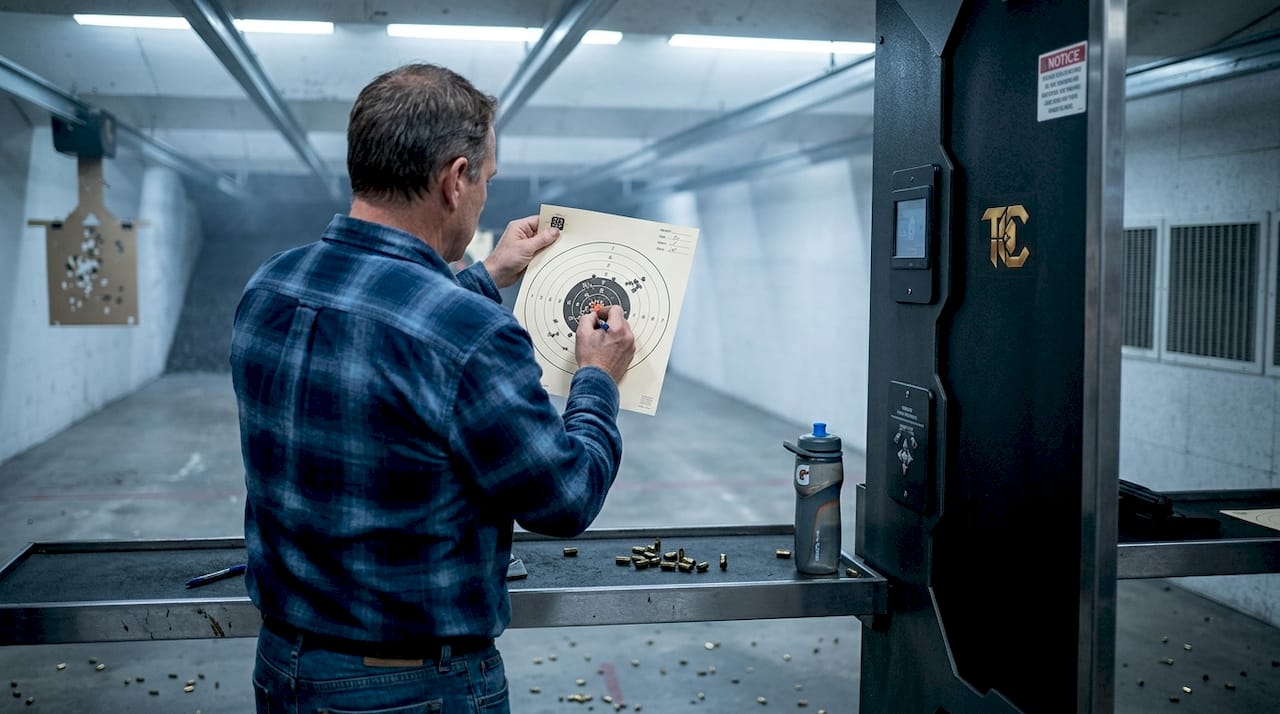
Most clubs organize their training around skill levels, moving members through a defined pathway:
| Skill level | Typical club activities | Key milestones |
|---|---|---|
| Beginner | Safety courses, basic marksmanship drills, supervised range time | Safe handling, consistent groupings at 7 yards |
| Intermediate | Timed drills, club-level competitions, scenario-based exercises | Target acquisition speed, accuracy at 15-25 yards |
| Advanced | Regional matches, advanced instructor certifications, tactical courses | Precision under pressure, competition placements |
Ongoing training sessions offered by clubs set them apart from certification-only approaches. That steady cadence is what drives measurable improvement. Think of it like maintaining a precision firearm: consistent attention and small adjustments keep everything performing at its best, as covered in any solid firearm maintenance guide. The same logic applies to your skills as a shooter.
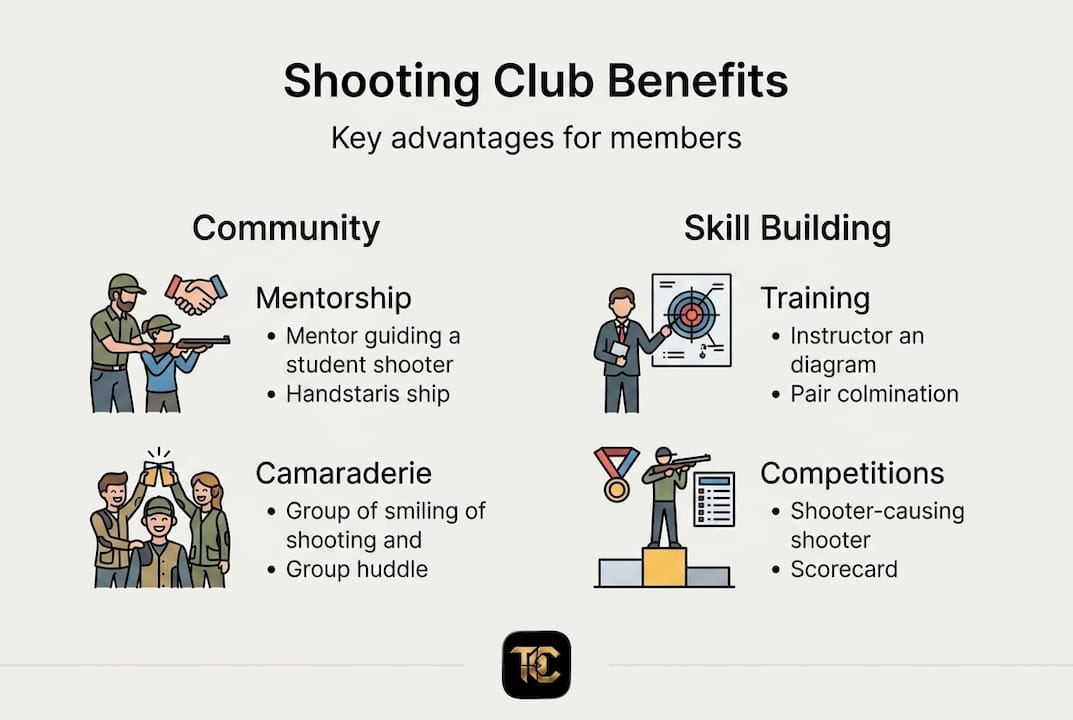
Competitive events are particularly effective for growth. When you shoot a timed stage in front of others, you discover weaknesses that solo practice never surfaces. Stage design forces you to move, make decisions, manage transitions, and perform under mild pressure. That experience is irreplaceable.
Practical skills improved through regular club participation include:
- Accuracy at varying distances from short defensive ranges to longer precision shots
- Rapid and deliberate target acquisition under realistic timing
- Malfunction drills that train confident, safe clearance procedures
- Reload efficiency with both speed and control emphasized
- Shooting from positions including cover, low-profile, and strong/weak hand only
There’s also a psychological benefit to club-level competition that often goes unmentioned. Competing with peers builds confidence and composure. The first time you complete a match stage cleanly, even at a beginner level, is a milestone that reinforces your commitment to improvement. Clubs create those moments consistently.
For shooters who want to take customization seriously, understanding modular firearm benefits becomes more relevant as your skills develop. Advanced club members routinely experiment with platform configurations that match specific disciplines, and that knowledge is shared freely within a well-run club environment.
Responsible ownership and positive firearms culture
Skills and social connection matter, but a shooting club’s most underappreciated contribution is cultural. Clubs shape how members think about firearms ownership beyond the range. They establish a peer standard for responsible behavior that follows members home and into every firearms-related decision they make.
Safety training alone is not strongly associated with safe storage practices. Culture is. When the people you respect treat secure storage as non-negotiable, you treat it the same way. That’s not compliance; it’s genuine internalization of a shared value. A good club makes responsible ownership the obvious default.
Cultural benefits extend in several directions:
- Reduced stigma around responsible gun ownership. Clubs demonstrate publicly that firearms culture is built on discipline, respect, and community, not recklessness. Members who speak openly about club involvement help shift public perception.
- Intergenerational education. Many clubs actively involve youth programs and family members, passing responsible habits to the next generation in a structured, supervised context. The values learned early tend to stick.
- Civic advocacy and legal awareness. Active members stay current on legislation, state regulations, and policy changes. Clubs often facilitate conversations about advocacy, helping members participate responsibly in public discourse around firearms rights and responsibilities.
- Accountability that extends beyond the range. When you know fellow club members, you’re more likely to make thoughtful decisions about transportation, storage, and handling because those decisions reflect on your community.
Pro Tip: Use your club network to stay current on state and local firearms laws. Regulations change frequently, and an engaged club member who follows legislative updates is one of the most reliable early-warning systems you’ll find. Many clubs bring in legal experts or law enforcement liaisons annually specifically for this purpose.
If you’re just beginning the ownership journey, understanding the full firearm buying process before you join a club helps you arrive informed. New members who understand the basics contribute more effectively to group discussions and get more from early mentorship conversations.
Responsible ownership isn’t a static achievement. It’s an ongoing practice, and clubs provide the environment that makes that practice sustainable over time.
Why most people underestimate shooting clubs: our take
Most discussions about shooting clubs focus on what they teach. We think the deeper value is what they reinforce. There’s a meaningful difference between knowing the rules and living by them consistently, and that gap is where clubs do their most important work.
People talk about mandatory safety courses, range rules, and certification requirements as the foundation of responsible ownership. Those things matter. But rules only hold up when real people in real situations uphold them together. A strong club creates exactly that kind of mutual accountability, the kind you can’t replicate with an online module or a single weekend course.
We’ve seen it play out: a shooter who completed every required course still develops careless habits when practicing alone. Put that same person in a club environment for six months, and the habits shift. Not because someone lectured them, but because the culture around them treats careful handling as standard. That’s the positive peer pressure that changes behavior for good.
The relationships built in a club also carry practical weight. They connect you to experienced voices, quality resources, and a shared sense of purpose. To understand where we’re coming from, read about our tactical journey and what drives our commitment to this community.
If you’ve been considering a club, stop sitting on the fence. The return on that investment is larger than most people expect.
Explore firearms solutions with Tungsten Creek Tactical
If this guide has reinforced your interest in getting more out of your firearms experience, Tungsten Creek Tactical is ready to support that next step.

We offer custom firearms solutions built for shooters who take their craft seriously, whether you’re preparing for club competition or simply want a platform configured to your exact needs. Our team also provides expert advice on gear, maintenance, and responsible ownership. A good starting point is our firearm care guide, which covers the maintenance habits that keep your firearms competition-ready and reliable at every range session. Explore our catalog and connect with our team when you’re ready to move forward.
Frequently asked questions
Does joining a shooting club make you a safer gun owner?
While 61% of firearm owners receive formal training, club membership adds ongoing accountability and a safety-focused peer environment that formal courses alone cannot replicate, making responsible habits significantly more consistent over time.
What are typical activities at a gun club?
Most clubs host a regular mix of training sessions, timed competitions, beginner workshops, social events, and educational seminars covering topics from storage to local regulations, all organized around different skill levels.
Can beginners join shooting clubs?
Yes, most clubs actively welcome newcomers and pair them with experienced members who provide hands-on guidance, making it easier to develop safe habits and build confidence from the very first session.
Is safe storage taught at shooting clubs?
Many clubs cover safe storage in their programming, and while no strong association exists between training alone and safe storage behavior, consistent club involvement and peer culture do reinforce responsible habits more effectively over time.
Do shooting clubs offer competitive events?
Nearly every established club runs competitions and leagues, from beginner-friendly club matches to regionally recognized events, giving members clear benchmarks and meaningful goals to work toward as their skills progress.
Recommended
Related Post
Discover the 5 ways
An introduction to Tactical Luxury Guns & Coffee We founded
Top 5 Best PCC’s
In 2026, the Pistol Caliber Carbine (PCC) market is no