What Is a Tactical Flashlight? Your 2026 Guide
A tactical flashlight is defined as a purpose-built lighting device engineered for high-stress reliability, rapid deployment, and durability in demanding scenarios including self-defense, law enforcement, and outdoor emergencies. Unlike a standard consumer flashlight, a tactical model is built around function under pressure, not convenience on a nightstand. The industry term you will see used interchangeably is “tac light,” though tactical flashlight remains the standard descriptor. Tungstencreektactical carries purpose-built options that reflect exactly what this category demands: real performance when conditions get hard. If you are researching what is a tactical flashlight and whether one belongs in your gear kit, this guide gives you the full picture.
What is a tactical flashlight and how does it differ from a regular one?
A tactical flashlight is not simply a brighter version of the flashlight in your kitchen drawer. Purpose-built for high-stress reliability, these lights output anywhere from 500 to over 2,000 lumens and are constructed from aircraft-grade aluminum. That material choice matters because it absorbs impact without cracking and resists corrosion in wet environments.
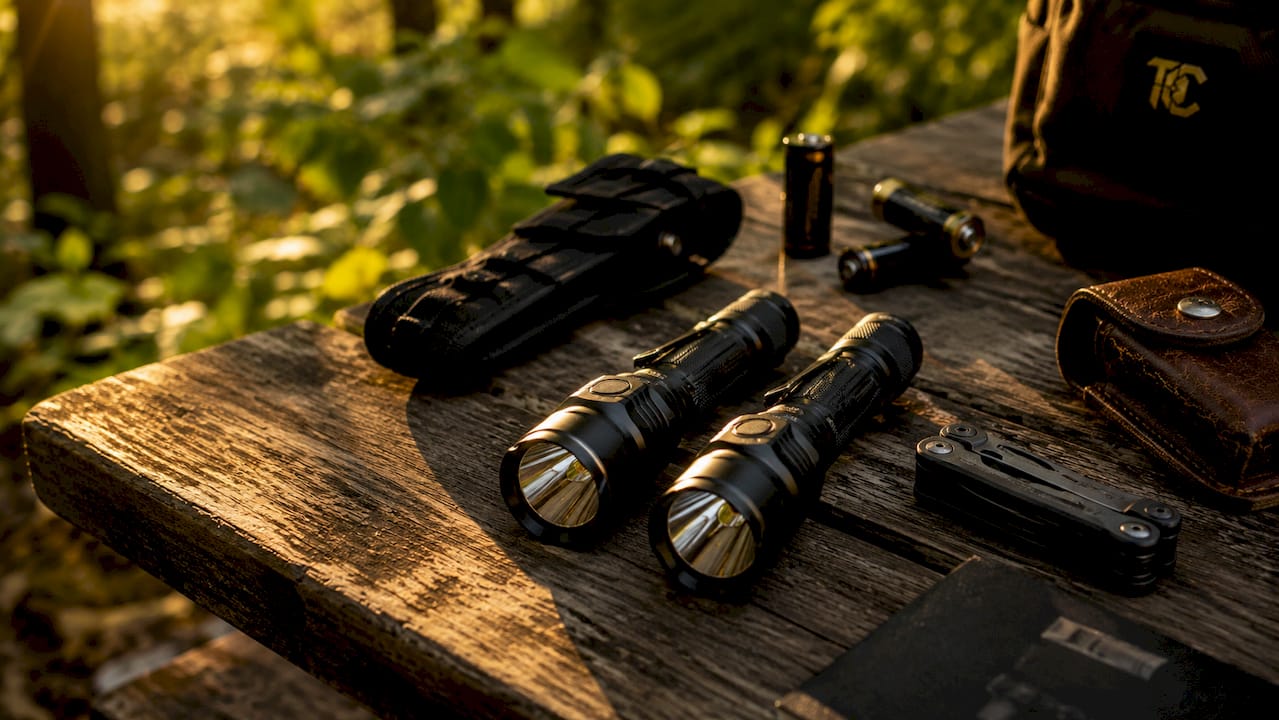
Standard consumer flashlights prioritize battery life and cost. Tactical models prioritize failure-proof function. Shock-resistant electronics and weapon-mount compatibility are standard features on duty-rated lights, not optional upgrades. A regular flashlight will not survive the recoil of a firearm or a hard drop onto concrete. A tactical model is designed to do exactly that.
The price difference reflects the engineering gap. Duty-rated tactical flashlights typically run $80 to over $300, with many well-regarded models landing in the $100–$150 range. Top-tier models push 3,000+ lumens. That is not a luxury price point. It is the cost of a tool that works every single time.
Key features that make a flashlight truly tactical
The features below separate a genuine tactical flashlight from a consumer light with a black body and a high price tag.
- Aircraft-grade aluminum body: This construction absorbs drops, resists corrosion, and tolerates firearm recoil without cracking or deforming.
- Tailcap switch: A rear-mounted switch gives you immediate, one-handed activation. Tailcap switches with press-harder-for-high functionality eliminate the need to cycle through modes under stress.
- Momentary-on mode: Pressing the switch halfway activates the light only while pressure is applied. This is critical for tactical use because it prevents giving away your position unnecessarily.
- Strobe mode: A rapid strobe output disorients and temporarily blinds an attacker. This is a core self-defense feature, not a gimmick.
- Weapon-mount compatibility: A standard bezel diameter, typically 1 inch, allows the light to mount on a Picatinny or M-LOK rail system.
- Waterproofing and shock resistance: IPX ratings indicate water resistance. A light rated IPX7 survives submersion up to 1 meter for 30 minutes. Shock resistance ratings confirm the light survives drops from a specified height.
- Lumen output: Tactical models start at 500 lumens for everyday carry and climb past 2,000 lumens for professional use.
Pro Tip: Avoid any tactical flashlight that requires cycling through low, medium, and high modes to reach maximum output. Under stress, you will not have the mental bandwidth to click through a sequence. Press once, get full power.
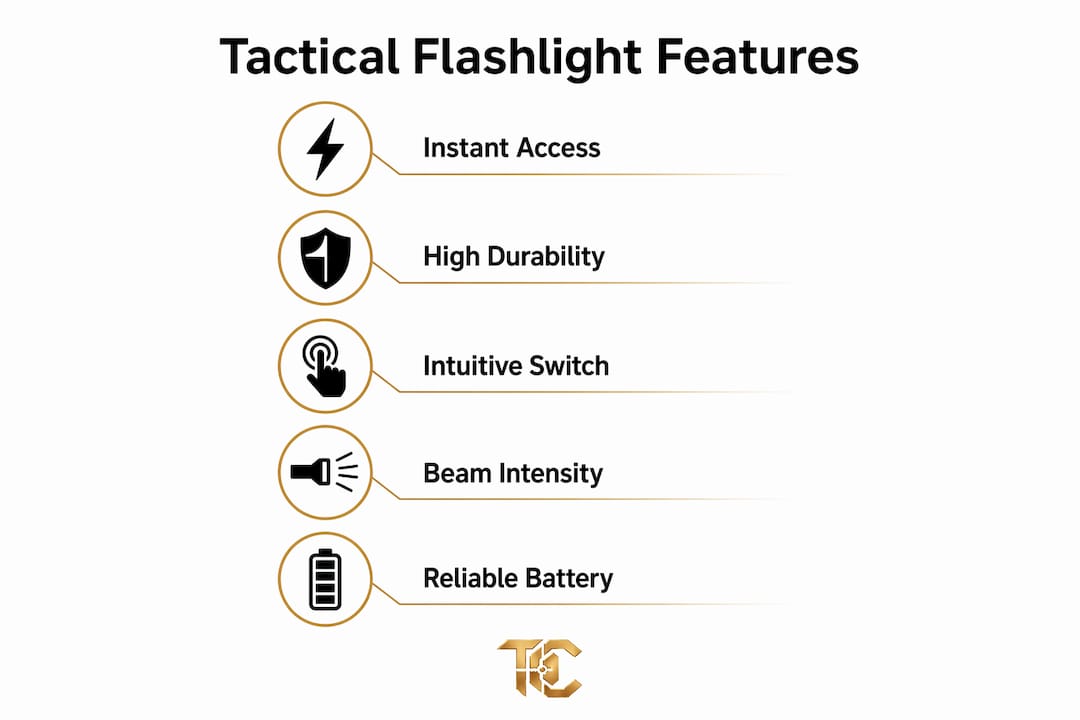
The user interface is where many budget lights fail. Cycling brightness modes is unreliable in high-stress moments. The best tactical flashlights give you maximum output on the first press, every time.
Lumens vs. candela: why beam intensity matters more than brightness
Lumens and candela are not the same measurement, and confusing them is the most common mistake buyers make. Lumens measure total light output, the overall volume of light a flashlight produces. Candela measures beam intensity at the hotspot, which determines how far and how tightly the beam throws usable light.
Candela is the critical metric for tactical distance effectiveness, with performance models citing 20,000 to 100,000+ candela. A light with high lumens but low candela floods a room but washes out quickly at distance. A light with focused candela cuts through darkness at 100 yards or more.
The practical difference is significant. A 500-lumen light with 30,000 candela throws a usable beam past 100 yards. A 2,000-lumen light with only 10,000 candela floods a room effectively but loses definition at 40 yards. For home defense, a flood beam works well in tight spaces. For outdoor use or threat identification at distance, you need high candela.
| Use Case | Recommended Lumens | Recommended Candela |
|---|---|---|
| Everyday carry (EDC) | 500–800 | 10,000–20,000 |
| Home defense | 800–1,500 | 15,000–30,000 |
| Outdoor / search | 1,000–2,000+ | 30,000–100,000+ |
| Firearm-mounted | 1,000–2,000 | 20,000–60,000 |
Pro Tip: When comparing two lights, check the candela spec before the lumen spec. A focused 800-lumen beam with 40,000 candela will outperform a floody 2,000-lumen light in any scenario where distance matters.
How are tactical flashlights used for personal safety and outdoor activities?
Tactical flashlights serve a wider range of practical roles than most buyers realize before they own one. The benefits of tactical flashlights extend well beyond simply seeing in the dark.
Self-defense and personal safety
- Temporary blindness: A high-lumen burst aimed at an attacker’s eyes creates temporary visual disruption, giving you time to react or escape. Strobe mode amplifies this effect significantly.
- Non-lethal deterrence: Tactical flashlights provide non-lethal self-defense through strobe modes and durable strike bezels. They are legal to carry in many areas where other defensive tools are restricted.
- Threat identification: Before drawing a firearm, you need to identify what you are looking at. A high-candela beam lets you confirm a threat at distance without closing the gap.
Firearm-mounted vs. handheld use
Owning both a weapon-mounted light and a handheld model provides redundancy and versatility. A weapon-mounted light keeps both hands on the firearm during a home defense situation. A handheld light lets you search, navigate, and identify without pointing your muzzle at everything you look at. These are not competing tools. They serve different roles in the same kit.
Outdoor and emergency applications
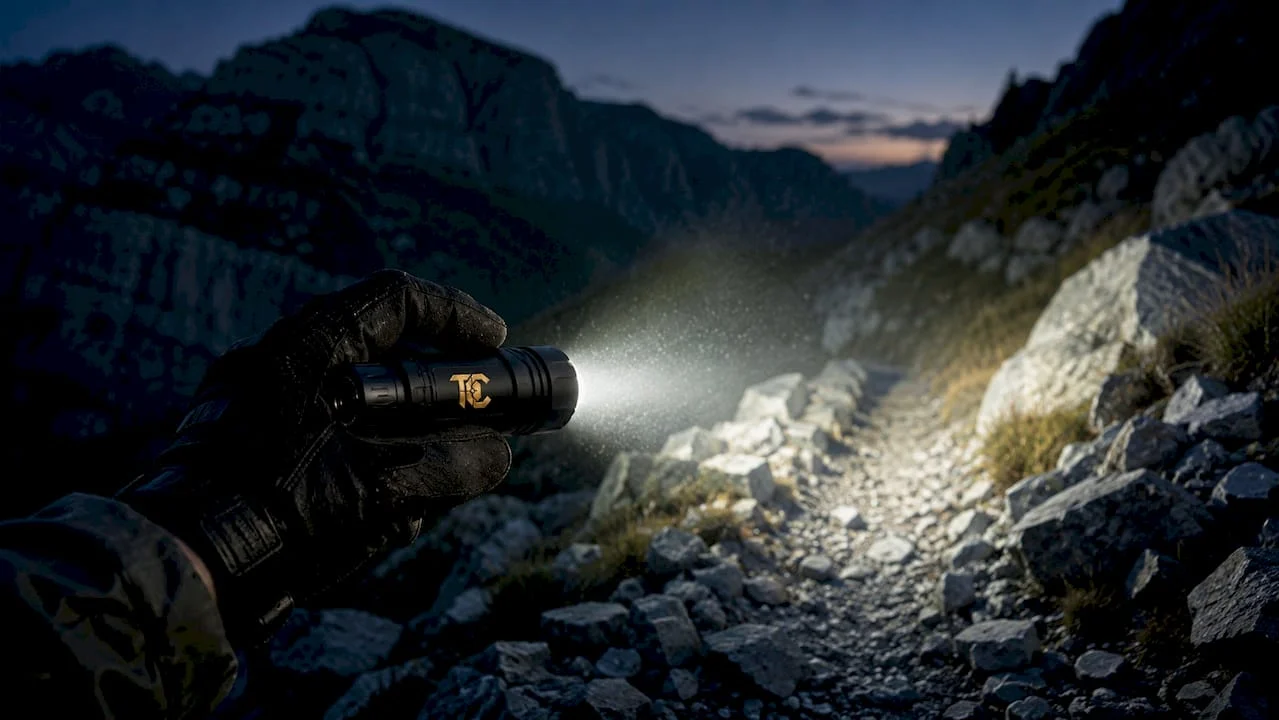
- Navigation in low-light or no-light environments during camping, hiking, or hunting
- Emergency signaling using strobe mode, which is visible at significant distance
- Vehicle breakdown situations where a durable, waterproof light outperforms a consumer flashlight
- Search and rescue support, where beam throw and battery reliability are non-negotiable
The durability advantage of aircraft-grade aluminum construction means a tactical light survives the conditions that destroy consumer lights: rain, drops, mud, and cold temperatures. For anyone who spends time outdoors, that reliability is worth the price difference on its own.
How to choose a tactical flashlight that fits your actual needs
Choosing the best tactical flashlight comes down to matching the tool to the job. Here is what to evaluate before you buy.
- Switch type first: Prioritize a tailcap switch with momentary-on and direct-to-high access. Any light that requires mode cycling is the wrong choice for defensive use.
- Build quality check: Look for aircraft-grade aluminum construction and an IPX7 or higher waterproof rating. Anything less is a consumer light in a tactical package.
- Battery type: CR123A lithium primary cells are the professional standard for tactical flashlights. They tolerate extreme temperatures and hold a charge in long-term storage without the self-discharge issues that affect some rechargeable lithium-ion cells. If your light sits in a glove box or go-bag for months, CR123A cells will be ready when you need them.
- Size and weight: A light that is too heavy or too long becomes a burden in daily carry. Most quality EDC tactical lights run 4–6 inches in length and weigh under 5 ounces without batteries.
- Lumen and candela specs: Match the specs to your primary use case using the table in the previous section. Do not pay for 3,000 lumens if your primary use is home defense in a 1,200 square foot house.
- Price vs. reliability: The $80–$150 range covers most serious buyers well. Spending less often means compromising on switch quality, electronics durability, or build material.
The most common mistake buyers make is prioritizing maximum lumen output over everything else. True tactical readiness depends on durability under stress, including drops, water submersion, and firearm recoil. A light that produces 3,000 lumens but fails after a hard drop is not a tactical flashlight. It is an expensive consumer light.
You can also review Tungstencreektactical’s guidance on selecting tactical accessories to see how a tactical light fits into a broader defensive gear setup.
Key Takeaways
A tactical flashlight’s defining value is not maximum brightness. It is failure-proof reliability, an intuitive interface, and the durability to perform under drops, water, and recoil.
| Point | Details |
|---|---|
| Candela beats lumens | Beam intensity determines effective range; prioritize candela for distance and threat identification. |
| Switch design is critical | A tailcap switch with direct-to-high access outperforms any mode-cycling interface under stress. |
| CR123A cells for storage | Lithium primary cells hold charge in long-term storage and perform in extreme temperatures. |
| Build quality defines the category | Aircraft-grade aluminum and IPX7 waterproofing separate genuine tactical lights from consumer imitations. |
| Match specs to use case | EDC, home defense, and outdoor use each require different lumen and candela combinations. |
Why I think most buyers overthink the lumen number
After spending years around tactical gear, I have watched the same mistake repeat itself. Someone researches tactical flashlights, fixates on the highest lumen count they can find, and buys a light that cycles through five modes before reaching full output. Then they wonder why it feels awkward under pressure.
The switch design is the most important feature on any tactical flashlight, and it is the one most buyers skip past in the spec sheet. A simple tailcap press that delivers maximum output immediately is worth more than 1,000 extra lumens on a light that makes you think before you can use it. Think of it like a well-built carry pistol: the best one is the one you can draw and operate without thinking.
I also believe most people underestimate the value of owning both a handheld and a weapon-mounted light. They are not redundant. They solve different problems. The handheld goes everywhere with you. The mounted light stays on your home defense firearm. Together, they cover every scenario without compromise.
One more thing: check your batteries on a schedule. A tactical flashlight with a dead CR123A cell is just a piece of aluminum. Set a reminder every six months. It takes two minutes and it is the difference between a tool and a paperweight.
— Brian
Tungstencreektactical and your tactical gear setup
Tactical lighting is one piece of a well-considered personal defense and preparedness kit. Tungstencreektactical brings together firearms, tactical accessories, and expert guidance under one roof, built around the principle that quality gear and honest information belong together.
Whether you are building out a home defense setup or adding a reliable EDC light to your carry kit, Tungstencreektactical’s tactical accessories guide walks you through every decision point. For readers who want to pair their lighting setup with a purpose-built firearm, the custom guns service delivers precision-built options matched to your specific needs. Gear that works together, from the light on your rail to the firearm in your hand, is gear you can trust.
FAQ
What is the difference between lumens and candela?
Lumens measure total light output from the source. Candela measures beam intensity at the hotspot, which determines how far the beam throws usable light at distance.
Are tactical flashlights legal to carry for self-defense?
Tactical flashlights are legal to carry in most areas of the United States, including many locations where other defensive tools face restrictions. Always verify local regulations before carrying any defensive tool.
What battery type is best for a tactical flashlight?
CR123A lithium primary cells are the professional standard. They hold a charge in long-term storage and perform reliably in extreme temperatures, making them the right choice for a light kept in a go-bag or vehicle.
How many lumens does a good tactical flashlight need?
A quality tactical flashlight for everyday carry starts at 500 lumens. Home defense and outdoor use benefit from 800–2,000 lumens, paired with a high candela rating for effective beam throw.
Can a tactical flashlight be used without a firearm?
A tactical flashlight is a fully capable standalone tool for self-defense, navigation, emergency signaling, and outdoor use. Firearm mounting is one application, not a requirement.
Recommended
Related Post

Discover the 5 ways
An introduction to Tactical Luxury Guns & Coffee We founded
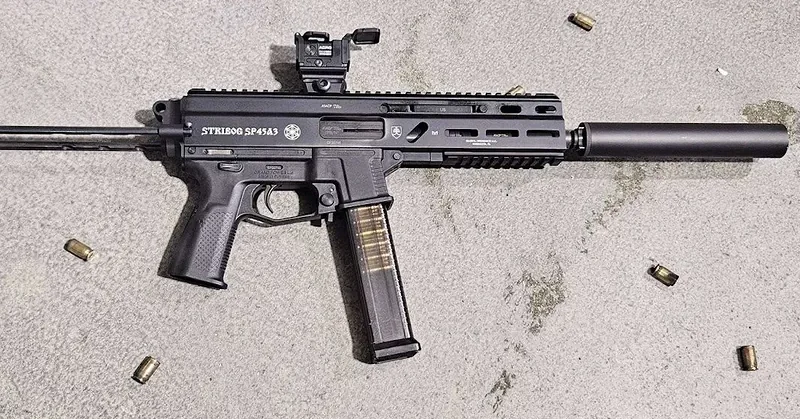
Top 5 Best PCC’s
In 2026, the Pistol Caliber Carbine (PCC) market is no