
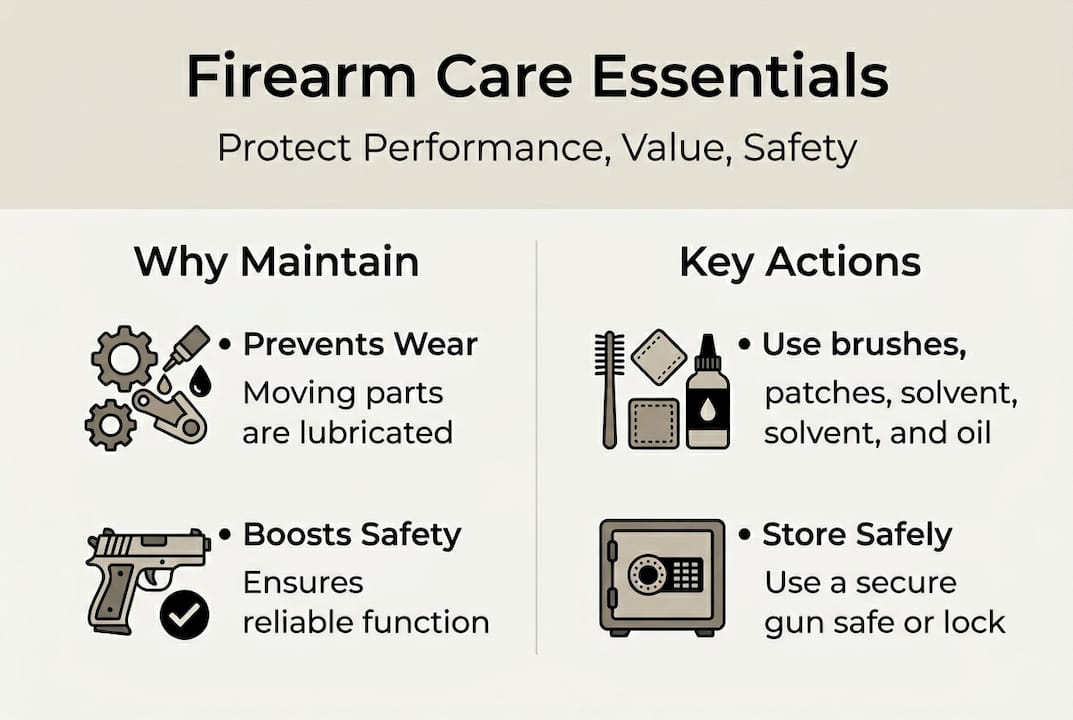
Why maintain firearms? Protect performance, value, and safety


Even premium firearms lose precision and reliability when they go without care. Many owners assume that modern metallurgy, advanced coatings, or minimal use make regular upkeep optional. That assumption is wrong. Neglecting firearm maintenance leads to loss of accuracy, increased malfunctions, and reduced safety across every platform, from a daily carry pistol to a prized long gun. This article gives you the knowledge to understand exactly why maintenance is non-negotiable, when to do it, and how to build a routine that protects your performance, your safety, and the long-term value of every firearm you own.
Table of Contents
- Why firearm maintenance matters: Beyond the basics
- Common risks of neglecting firearm maintenance
- Essential firearm maintenance routines for every owner
- Protecting your investment: Storage and environmental factors
- Our take: Firearm maintenance is a responsibility, not a chore
- Upgrade your gear and maintenance with Tungsten Creek Tactical
- Frequently asked questions
Key Takeaways
| Point | Details |
|---|---|
| Regular care ensures safety | Consistent cleaning and inspection prevent malfunctions and keep you and others safe. |
| Maintenance protects your investment | Properly maintained firearms retain value and can be passed down for generations. |
| Storage matters as much as cleaning | Controlling environment and using proper cases or safes is crucial for long-term protection. |
| Right tools make a difference | Using specialized products and equipment simplifies the process and delivers better results. |
Why firearm maintenance matters: Beyond the basics
Think of your firearm like a well-selected cigar or a properly brewed cup of coffee. The quality is built in, but the experience depends on how well you care for it from start to finish. A firearm that performs when you need it most is one that has been consistently maintained, not just occasionally wiped down.
Here is why regular care is critical for every responsible owner:
- Performance: Carbon residue, powder fouling, and corrosion all compromise accuracy and cycling reliability. A dirty bore shifts your point of impact. A gummed-up action causes failures to feed or eject.
- Safety: Build-up inside the action, trigger group, or barrel can cause dangerous malfunctions. Regular cleaning and upkeep significantly reduce the risk of accidental discharges and malfunctions.
- Value retention: A well-maintained firearm lasts generations. Collectors and buyers pay a premium for firearms that show care. Neglect destroys both function and resale value.
- Legal responsibility: Responsible ownership includes keeping your firearms in safe, working condition. It is not just a best practice. It is part of the standard you hold yourself to as an owner.
“A firearm is a precision tool. Treat it like one, and it will serve you reliably for decades. Ignore it, and it will fail you at the worst possible moment.”
Proper care also builds deeper skill. When you field strip and inspect your firearm regularly, you learn how it works. You notice when something feels off before it becomes a problem. That knowledge is power, and it separates confident owners from those who hope for the best.
Pro Tip: If you are unsure about inspecting internal components or encounter unusual wear, consult professional gunsmithing rather than guessing. A qualified gunsmith catches issues that visual checks miss.
The bottom line is this: consistent maintenance is not about following a checklist. It is about respecting the tool you depend on and the responsibility that comes with owning it.
Common risks of neglecting firearm maintenance
To truly understand why maintenance cannot wait, consider the real risks of letting it slide. These are not hypothetical scenarios. They happen to owners across every experience level, often because the firearm looked fine on the outside while the damage built up quietly inside.
Rust and corrosion are the most destructive silent threats. Moisture gets trapped in the bore, on metal surfaces, and inside the action. Once oxidation begins, it eats into the metal and impairs every moving part it touches. Rust and fouling result in nearly 50% of all gunsmith repairs, making corrosion the single most preventable cause of firearm damage.
Jamming and cycle failures come from fouling. Carbon and powder residue accumulate in the chamber, extractor groove, and feed ramp. When buildup reaches a certain point, the firearm cannot complete its cycle reliably. Stoppages during training are frustrating. Stoppages in a defensive situation are dangerous.
Reduced accuracy follows bore debris. Even a thin layer of copper fouling or carbon caking inside the barrel shifts your bullet’s path. What was a consistent three-inch group at fifty yards can open up noticeably with a neglected bore.
| Risk | Cause | Consequence |
|---|---|---|
| Rust and corrosion | Moisture and neglect | Metal damage, impaired function |
| Jamming | Carbon and fouling buildup | Cycle failures and stoppages |
| Reduced accuracy | Bore debris | Inconsistent point of impact |
| Safety failure | Mechanical degradation | Misfires and accidental discharge |
Safety failures are the most serious consequence. Mechanical degradation from prolonged neglect can cause firing pin issues, trigger malfunctions, and unpredictable behavior. These are not situations you want to discover at the range or in a defensive moment.
If corrosion or damage has already set in, custom firearm restoration can bring a neglected firearm back to reliable service. Prevention, however, is always the better path.
Essential firearm maintenance routines for every owner
Knowing the consequences of neglect, how do you build a maintenance routine that is effective without consuming your weekend? The answer is structure. Like any discipline, consistency beats intensity every time.
Step-by-step maintenance framework:
- Field strip after every use. Disassemble the firearm to its major components and wipe down each part with a clean patch or cloth. Remove visible fouling from the barrel, slide, frame, and recoil spring.
- Clean the bore. Run a bore brush through the barrel several times, then follow with solvent-soaked patches until they come out clean. Finish with a dry patch and a light application of oil.
- Inspect and lubricate key components. Apply firearm-specific oil to the slide rails, barrel hood, trigger group, and any friction points. Less is more. A thin, even coat does the job without attracting extra debris.
- Perform a function check. After reassembly, check the trigger reset, safety engagement, and magazine release. Confirm everything moves correctly before storage.
- Schedule periodic deep cleans. Every few months or after high-volume range sessions, routine cleaning after every use and periodic deep cleaning are industry best practices. A deep clean reaches areas that field stripping misses.
| Maintenance task | Frequency | Tools needed |
|---|---|---|
| Field strip and wipe down | After every use | Cleaning cloth, solvent |
| Bore cleaning | After every use | Bore brush, patches, solvent |
| Full lubrication | Every 300-500 rounds | Firearm oil, applicator |
| Deep clean and inspection | Every 3-6 months | Full cleaning kit, gunsmith if needed |
Pro Tip: Protect your firearm’s metal surfaces with Cerakote finishes, a ceramic polymer coating that resists corrosion, abrasion, and chemical exposure better than standard bluing or parkerizing.
Using the right products matters as much as the routine itself. Quality solvents break down carbon and copper fouling without damaging polymer frames or wood grips. For owners managing concealed carry pistol care, consistent maintenance is especially critical since these firearms are exposed to body heat, sweat, and lint every single day.
Protecting your investment: Storage and environmental factors
With routines in place, keeping your firearms safe between uses is just as important as cleaning them after use. Environmental factors cause more damage than most owners realize, particularly when a firearm sits untouched for weeks or months.
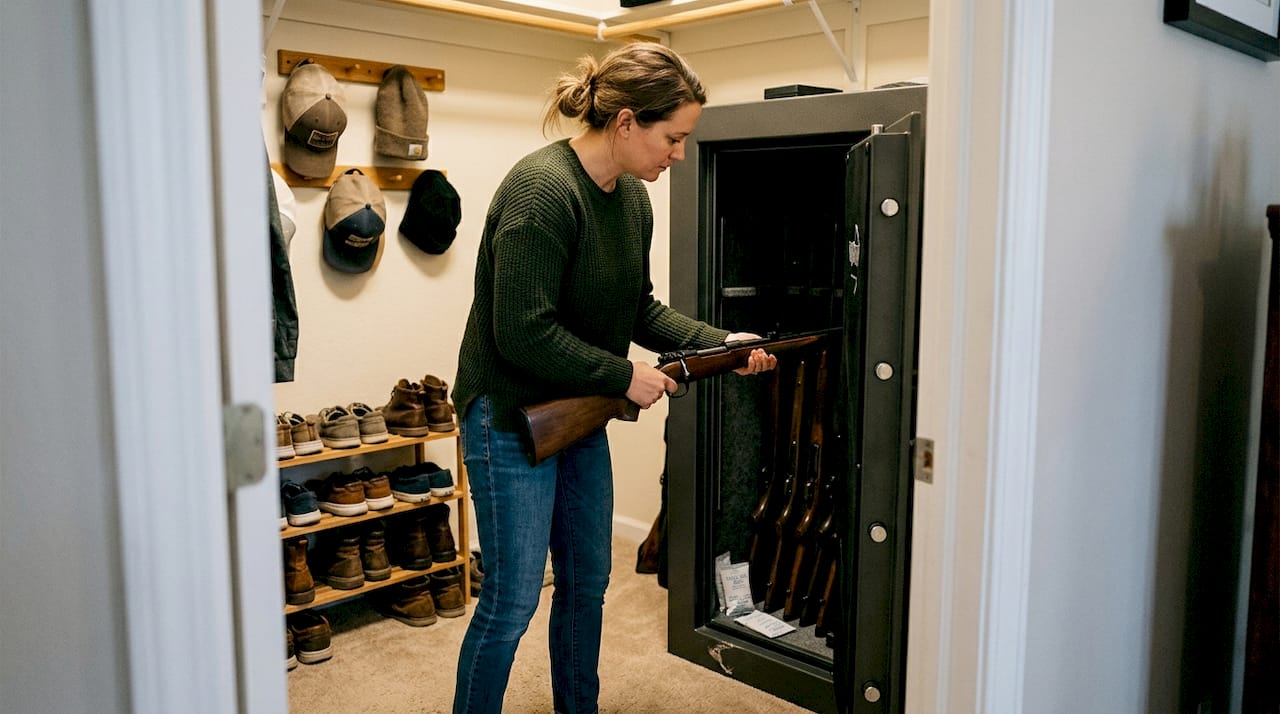
Humidity is the primary threat. Even moderate moisture in the air condenses on cold metal surfaces, especially when temperature swings occur, like moving a firearm from a cool safe to a warm room. That condensation is invisible and relentless. Secure, climate-controlled storage is vital to prevent rust and premature wear, making your safe or storage solution as important as any cleaning tool you own.
Other storage threats include:
- Dust and debris: Accumulate inside actions and bores during long-term storage, requiring cleaning before the next use.
- Insects and pests: Can nest inside stocks, cases, or safe corners, causing unexpected damage to wood and finishes.
- Temperature extremes: Repeated heating and cooling cycles stress metal components and can cause finishes to crack or bubble over time.
- Soft cases: Trap moisture against the firearm’s surface. Hard cases with foam and desiccants are a far better choice for any storage beyond a quick trip to the range.
Pro Tip: Place silica gel desiccant packs inside your safe and replace them every six months. For added protection, consider protective storage cases that are rated for moisture resistance and impact protection.
Do not forget your magazines. Springs under constant compression weaken over time, and magazine storage solutions that rotate your stock keep springs fresh and feeding reliably. A routine check every three to six months, even for firearms that have not been fired, prevents long-term storage from turning into a restoration project.
Our take: Firearm maintenance is a responsibility, not a chore
Here is the honest truth that most articles skip over: routine maintenance is not just about avoiding breakdowns. It is about how you carry yourself as an owner. The person who knows their firearm inside and out, who cleans it consistently and stores it properly, operates with a level of confidence that cannot be faked. That confidence comes from preparation, not luck.
We believe maintenance is an expression of pride in ownership, the same way a premium tactical setup reflects a broader standard you hold in all areas of your life. A neglected firearm tells a story, and it is not a good one.
Maintenance also builds skill. Every time you strip, clean, and inspect your firearm, you become more familiar with how it functions. You catch wear before it becomes failure. You notice when something is off. That is a real-world advantage that separates responsible owners from the casual crowd. When you need expert gunsmith support, you will also have a clearer picture of what to ask and what to look for. That is not a small thing.
Upgrade your gear and maintenance with Tungsten Creek Tactical
If you are ready to keep your collection performing at its best, Tungsten Creek Tactical has the services and expertise to back you up at every stage. From routine care to complete rebuilds, we are built for owners who take their firearms seriously.

Whether you want to explore custom guns to restore a neglected piece or you are shopping for your next precision build, our team brings real gunsmithing knowledge and hands-on experience to every project. You can also learn about Tungsten Creek and discover how our premium tactical lifestyle brand supports responsible owners at every level. From protective finishes to expert consultations, we are your long-term partner in firearm care.
Frequently asked questions
How often should I clean my firearm if I don’t use it regularly?
Even safe-stored firearms should be checked and lightly cleaned every three to six months to prevent corrosion and dust buildup. Routine cleaning prevents corrosion even for rarely used guns and takes just a few minutes to complete.
Does modern coating like Cerakote mean I can clean my gun less often?
Protective finishes help resist corrosion and wear, but they do not eliminate the need for regular cleaning. Coatings offer extra protection but do not replace routine care for safe, reliable operation.
What are the most common mistakes with firearm storage?
Storing firearms in damp or unventilated areas and skipping moisture control are the top mistakes that lead to preventable damage. Improper storage is a leading cause of firearm degradation that is entirely avoidable with the right setup.
Can I use household oil to lubricate my firearm?
Household oils like WD-40 or cooking oils may seem convenient, but they attract dirt and break down under heat. Use firearm-specific lubricants for consistent performance and to avoid creating more problems than you solve.
Recommended
Related Post

Discover the 5 ways
An introduction to Tactical Luxury Guns & Coffee We founded
Top 5 Best PCC’s
In 2026, the Pistol Caliber Carbine (PCC) market is no