Why Carry Non-Lethal Options: A Smart Safety Guide
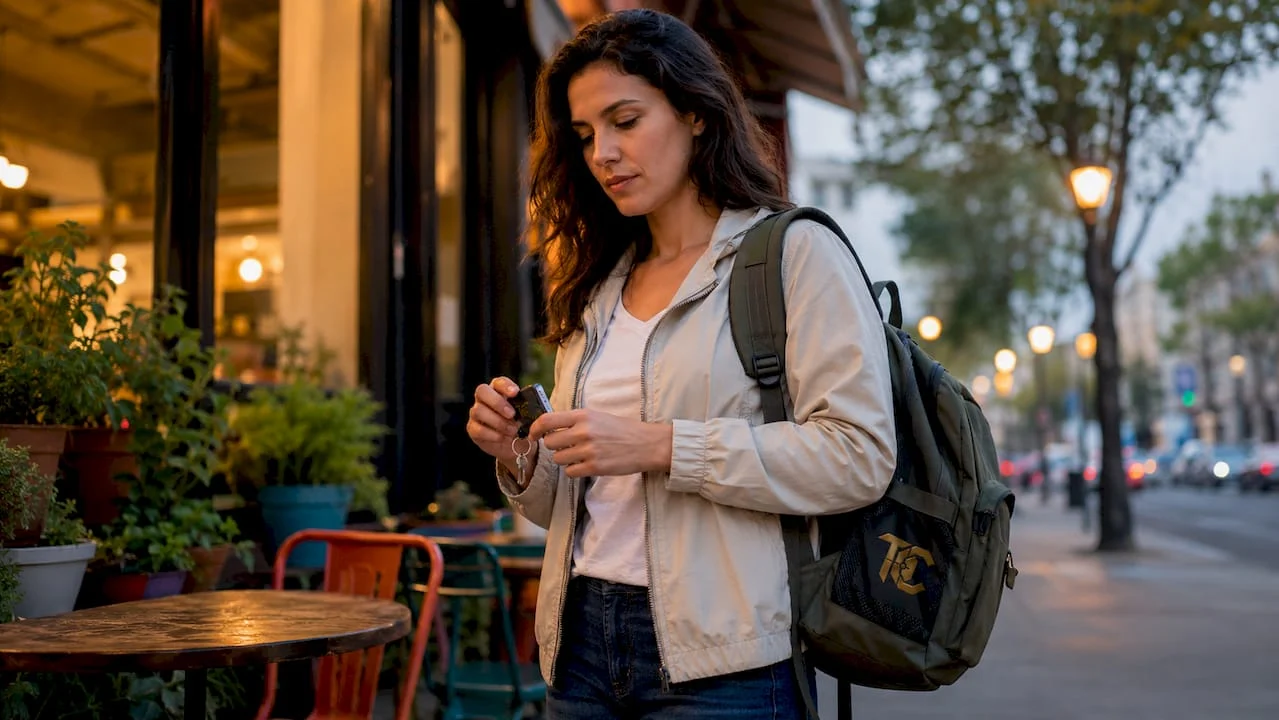
Non-lethal self-defense tools are defined as devices designed to incapacitate a threat temporarily without causing permanent injury or death. Understanding why carry non-lethal options matters comes down to three things: legal protection, proportional response, and practical effectiveness. Tools like TASER devices, SABRE pepper spray, and pyrotechnic pepper gel systems give you a force continuum that a firearm alone cannot provide. The industry term for this category is “less-lethal” rather than “non-lethal,” because no tool is guaranteed to be completely harmless. Both terms are used throughout this guide, reflecting how the self-defense community actually talks about them.
Why carry non-lethal options: core benefits over firearms
Non-lethal tools offer a legally and morally distinct alternative to firearms, especially in environments where lethal force is prohibited or disproportionate. That distinction matters more than most people realize.
Legal and Moral Advantages
- Carry is permitted in many locations where firearms are not, including schools, government buildings, and certain states with strict gun laws.
- A proportional response to an ambiguous threat reduces your legal exposure significantly.
- Less-lethal tools fill the gap between verbal de-escalation and deadly force, giving you options that a firearm does not.
- Non-lethal weapons incapacitate temporarily while minimizing permanent harm, which reduces both moral burden and civil liability.
Standoff Distance: The Tactical Core
The primary tactical reason to carry less-lethal tools is standoff distance. TASER devices provide a 15–25 foot range, while pepper spray typically creates a 5–12 foot buffer. That distance disrupts an attacker’s decision cycle and gives you time to escape without firing a single round. Think of it like the space between a chess player and the board. More distance means more time to think and act.
| Factor | Firearm | Non-Lethal Tool |
|---|---|---|
| Legal carry locations | Restricted in many venues | Broader access in most states |
| Proportional response | High force only | Scalable from low to moderate |
| Standoff range | Effective at distance | 5–25 feet depending on tool |
| Legal aftermath risk | High | Significantly lower |
| Permanent injury risk | High | Minimal to moderate |
What types of non-lethal tools are available?
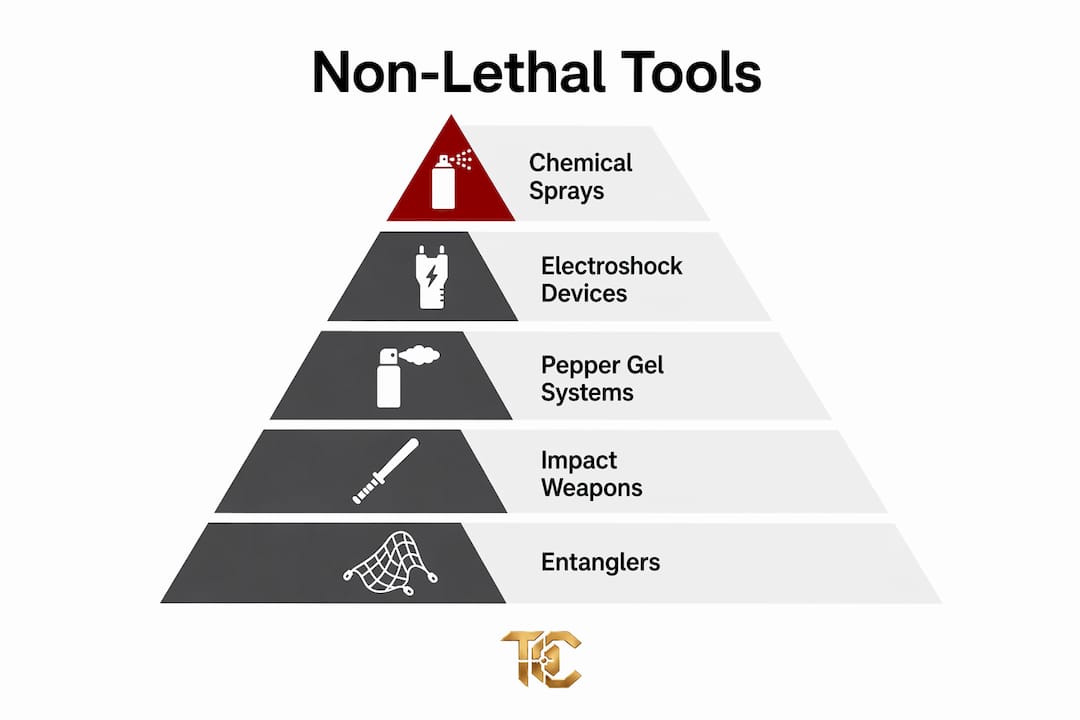
Non-lethal self-defense options fall into five main categories. Each has a distinct use case, range, and set of trade-offs.
Chemical sprays
Pepper spray is the most widely carried less-lethal tool in the United States. SABRE Red and Defense Technology OC sprays are the most recognized brands among law enforcement and civilians. Standard aerosol sprays work at 5–12 feet but carry a real risk of self-contamination indoors due to drift. Aerosol sprays risk self-contamination in confined spaces, making gel-based formulas the better choice for home or vehicle use. Gel sticks to the target, reduces airborne particles, and is far less likely to blow back on you.
Electroshock devices
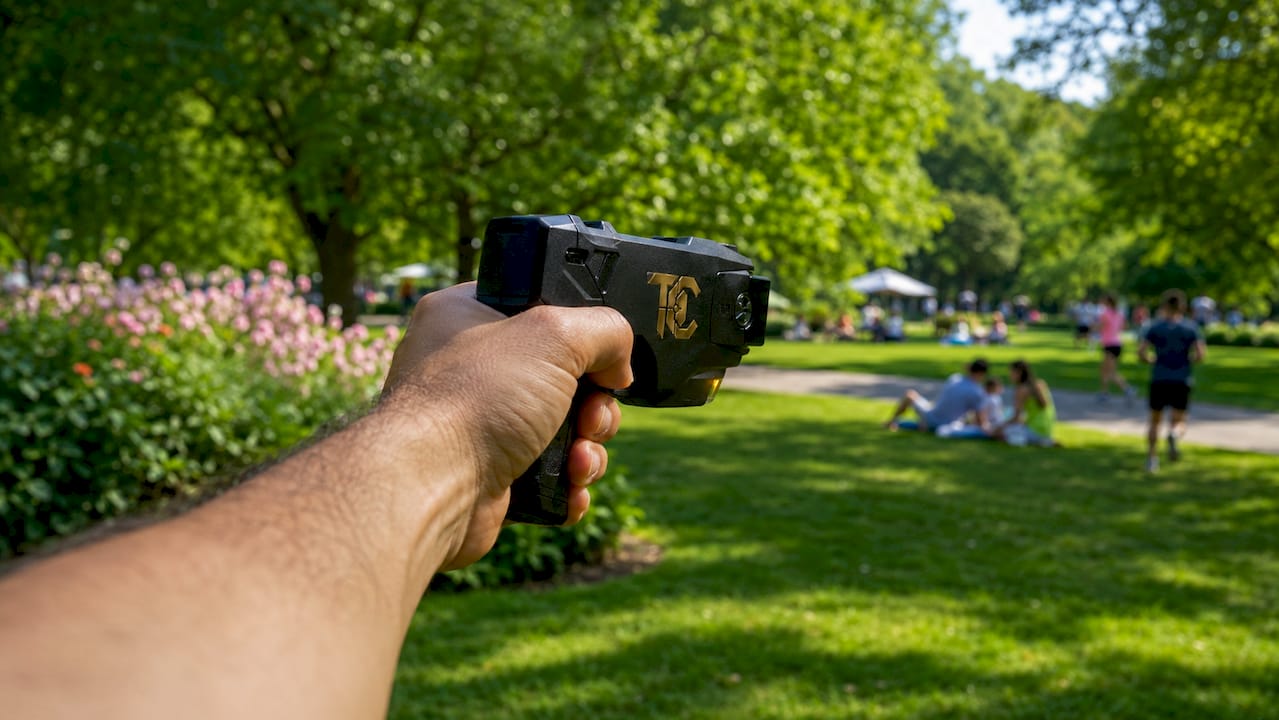
TASER devices and stun guns represent the electroshock category. A TASER fires two probes on wires and delivers neuromuscular incapacitation from up to 25 feet away. A stun gun requires direct contact, which limits its tactical value. TASER’s Pulse+ model is designed specifically for civilian carry and includes a built-in alarm and smartphone notification feature. Electroshock tools are highly effective but require a clean probe deployment to work, so training matters.
Pyrotechnic pepper gel systems
This is the category most people overlook. Advanced pyrotechnic pepper gel systems can disable an attacker for up to 45 minutes, firing particles at roughly 112 mph. That velocity improves accuracy and reduces environmental drift significantly. The extended incapacitation window gives law enforcement time to arrive and gives you time to get clear. These systems are more expensive than standard sprays but offer a meaningful upgrade in effectiveness.
Impact weapons and entanglers
Expandable batons, kubotan keychains, and tactical flashlights like the Streamlight ProTac fall into the impact category. These tools require close range and physical skill to deploy effectively. Entanglers, such as net launchers, are less common for civilian carry but are used in law enforcement. Impact weapons are legal in most states but check your local laws before carrying a baton, as restrictions vary widely.
| Tool Type | Effective Range | Indoor Safety | Skill Required | Typical Cost |
|---|---|---|---|---|
| Pepper spray (aerosol) | 5–12 feet | Moderate risk | Low | $10–$30 |
| Pepper gel | 10–18 feet | Low risk | Low | $15–$40 |
| TASER Pulse+ | Up to 25 feet | Safe | Moderate | $300–$400 |
| Stun gun | Contact only | Safe | Low | $20–$80 |
| Expandable baton | Contact range | Safe | High | $30–$100 |
| Pyrotechnic pepper gel | 15–25 feet | Low risk | Moderate | $50–$120 |
Pro Tip: If you carry pepper spray indoors regularly, switch to a gel formula like SABRE Gel. It dramatically cuts the risk of contaminating yourself or bystanders in a closed room.
How does training shape the effectiveness of less-lethal carry?
Training determines whether your less-lethal tool works when you need it or stays in your pocket. Scenario-based rehearsals are essential and can take months to master. That timeline surprises most people who assume a spray or TASER is grab-and-go ready.
Stress-induced hesitation is the primary failure point. Under adrenaline, fine motor skills degrade and decision-making slows. Practitioners who train with their tools under realistic conditions, including low light, movement, and time pressure, perform far better than those who only read the instructions. Rapid deployment training under realistic conditions is the single most important factor in real-world effectiveness.
A layered protection strategy is the standard recommendation among serious self-defense instructors. Non-lethal tools work best as part of layered self-defense, not as standalone fixes. That means combining situational awareness, verbal de-escalation, a less-lethal tool, and, where legal and appropriate, a firearm. Each layer covers a gap the others cannot.
- Practice drawing your spray or TASER from its carry position at least weekly.
- Run through verbal challenge scenarios out loud. Hesitation in speech translates to hesitation in action.
- Train with a partner when possible to simulate realistic stress and movement.
- Review your concealed carry tactics regularly to keep your full defensive plan current.
Pro Tip: Set a monthly calendar reminder to do a 10-minute dry-run deployment drill with your less-lethal tool. Consistency builds the muscle memory that stress will otherwise erase.
What practical factors should guide your daily carry choice?
Choosing the right less-lethal tool for daily carry is less about finding the most powerful option and more about finding the one you will actually use. The most effective self-defense tool is one legally permitted and mentally prepared for deployment, not the most technologically advanced. A TASER sitting in your bag because it feels too bulky is worth nothing in a real situation.
Work through these considerations before committing to a tool:
- Check your local laws first. Pepper spray is legal in all 50 states but some states restrict canister size or OC concentration. TASER devices are restricted or banned in a handful of states. Stun guns have their own patchwork of local ordinances. Verify before you buy.
- Match the tool to your environment. If you work in an office building, a gel spray is more practical than a baton. If you commute on foot in an urban area, a TASER Pulse+ gives you the range advantage you need.
- Prioritize concealability and accessibility. A tool you cannot reach quickly is a tool that will not help you. Keychain sprays like SABRE’s personal alarm combo are discreet and fast to deploy. Larger canisters offer more capacity but require deliberate carry positioning.
- Account for maintenance and shelf life. Pepper spray has a typical shelf life of 2–4 years. TASER cartridges and batteries need periodic checks. Build a maintenance schedule into your routine the same way you would clean a firearm.
- Assess your comfort and confidence level honestly. Carrying unfamiliar or bulky gear reduces actual usage effectiveness in emergencies. If you are not confident with a tool in a calm setting, you will not use it effectively under stress.
For most people starting out, a SABRE Red gel canister or a TASER Pulse+ covers the majority of realistic threat scenarios. If you already carry a firearm, adding a less-lethal option gives you a backup weapon option that handles situations where lethal force would be legally or morally inappropriate.
Key takeaways
Non-lethal self-defense tools are most effective when they are legally permitted, regularly trained with, and integrated into a layered personal safety strategy rather than carried as a standalone solution.
| Point | Details |
|---|---|
| Standoff distance is the core benefit | TASER devices reach 15–25 feet; pepper spray covers 5–12 feet to disrupt attacker timing. |
| Legal access is broader than firearms | Less-lethal tools are permitted in many venues where firearms are prohibited. |
| Gel beats aerosol indoors | Pepper gel reduces self-contamination risk and is the better choice for home or vehicle carry. |
| Training determines real-world outcome | Scenario-based rehearsals over months build the muscle memory stress will otherwise eliminate. |
| Choose what you will actually carry | A simple, familiar tool deployed confidently outperforms a complex device left unused. |
The honest case for less-lethal tools in your kit
I have talked with a lot of responsible carriers over the years, and the same misconception comes up repeatedly. People assume that adding a TASER or pepper spray to their kit is a sign they are not serious about self-defense. That thinking gets it exactly backwards.
Carrying a less-lethal option is not a concession. It is a recognition that most threatening situations do not call for lethal force, and that having only one tool forces every problem to look like a nail. A firearm is the right answer in a narrow set of circumstances. A SABRE gel or a TASER Pulse+ covers a much wider range of everyday encounters, from aggressive panhandlers to parking lot confrontations that need to be shut down fast without anyone dying.
What I have found is that the people who resist less-lethal tools are often the same people who have not thought through the legal aftermath of a defensive shooting. The social responsibility that comes with firearms ownership includes knowing when not to shoot. Less-lethal tools give you that option in a tangible, deployable form.
The gear matters less than the mindset and the training. Pick a tool that fits your life, train with it consistently, and reassess your setup every six months as your environment and legal landscape change. That is the standard I hold myself to, and it is the one I would recommend to anyone serious about personal protection.
— Brian
Build your defense kit with Tungstencreektactical
Tungstencreektactical is built for responsible owners who take their personal safety seriously without cutting corners on quality or legal compliance. Whether you are rounding out your carry setup with tactical accessories or looking at precision-built custom firearms to anchor your defense strategy, the selection and guidance at Tungstencreektactical is designed to help you make informed decisions. The Tungstencreektactical mobile app lets you scan products, compare pricing, and unlock VIP benefits so you always know you are getting the right gear at the right value. Explore the full range of tactical accessories for firearm owners and build a kit that covers every layer of your personal protection plan.

FAQ
What does “less-lethal” mean compared to “non-lethal”?
“Less-lethal” is the accurate industry term, acknowledging that tools like pepper spray and TASER devices can cause serious harm in rare cases. “Non-lethal” is the common public term but is technically imprecise.
Is pepper spray or a TASER better for everyday carry?
Pepper spray is lighter, more affordable, and legal in all 50 states, making it the easier starting point. A TASER Pulse+ offers greater range at up to 25 feet and stronger incapacitation, but costs more and has state-level restrictions.
Can i carry non-lethal tools where firearms are prohibited?
In most cases, yes. Pepper spray and stun guns are permitted in many venues that ban firearms, but laws vary by state and location. Always verify local regulations before carrying any defensive tool.
How often should i replace my pepper spray?
Most pepper spray canisters have a shelf life of 2–4 years. Check the expiration date on your canister and replace it on schedule, since expired OC spray loses potency and pressure.
Do i still need training if i carry pepper spray?
Training is required for any defensive tool to be effective under stress. Scenario-based rehearsals, including drawing from your carry position and verbal challenge practice, are the standard recommendation from self-defense instructors like those at SABRE and USCCA.
Recommended
Related Post

Discover the 5 ways
An introduction to Tactical Luxury Guns & Coffee We founded
Top 5 Best PCC’s
In 2026, the Pistol Caliber Carbine (PCC) market is no