What Is a Tactical Sling? Types, Uses, and Best Practices
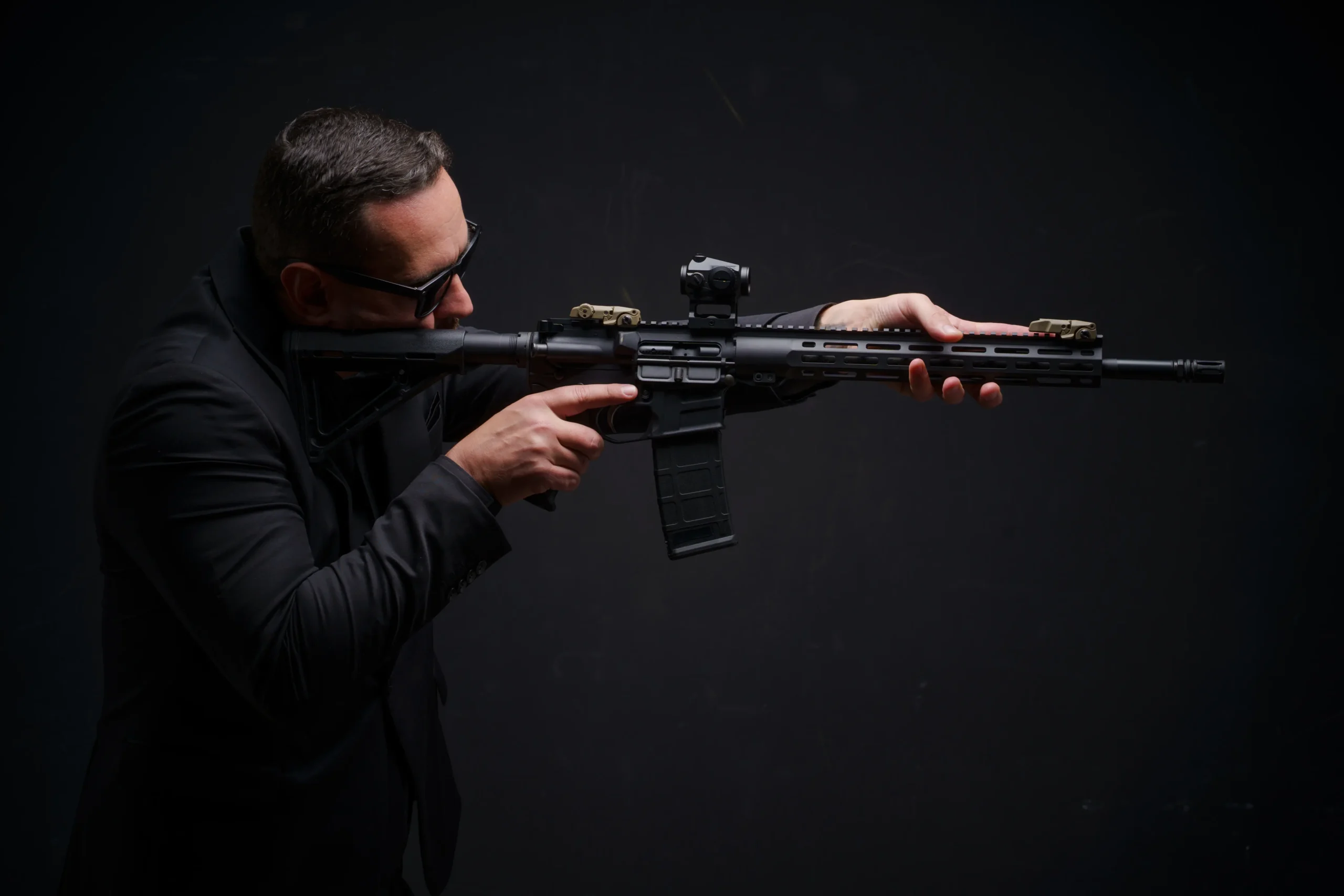
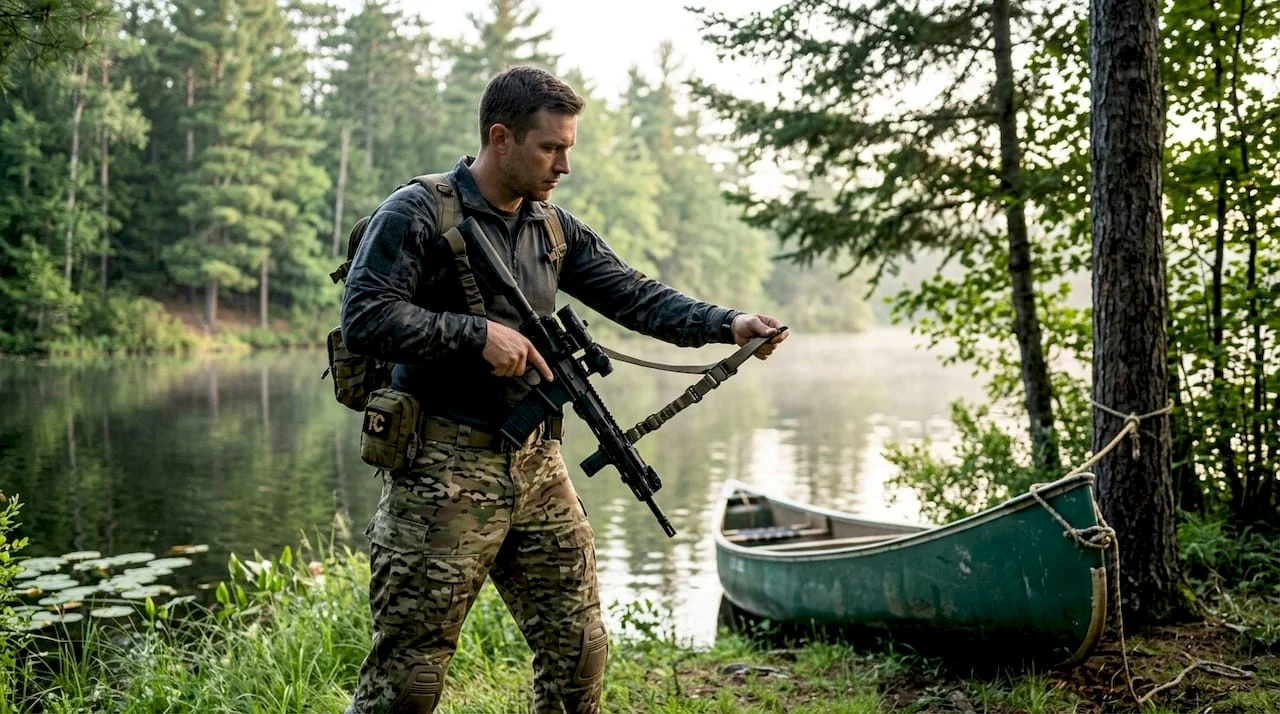
A tactical sling is a firearm carrying and stabilization accessory that attaches a rifle, shotgun, or carbine to the shooter’s body, enabling secure carry, quick weapon access, and improved shooting stability. Unlike a standard hunting strap, a tactical sling is purpose-built for dynamic use. It serves military personnel, law enforcement officers, hunters, and civilian shooters who need their hands free without losing control of their weapon. The three main configurations are single-point, two-point, and three-point slings. Well-known systems like the Vickers Sling from Blue Force Gear have set the standard for what a quality tactical sling can do in real-world conditions.
What is a tactical sling, and what are the main types?
Tactical slings fall into three distinct categories, and each one solves a different problem. Choosing the wrong type for your activity is one of the most common mistakes firearm owners make.
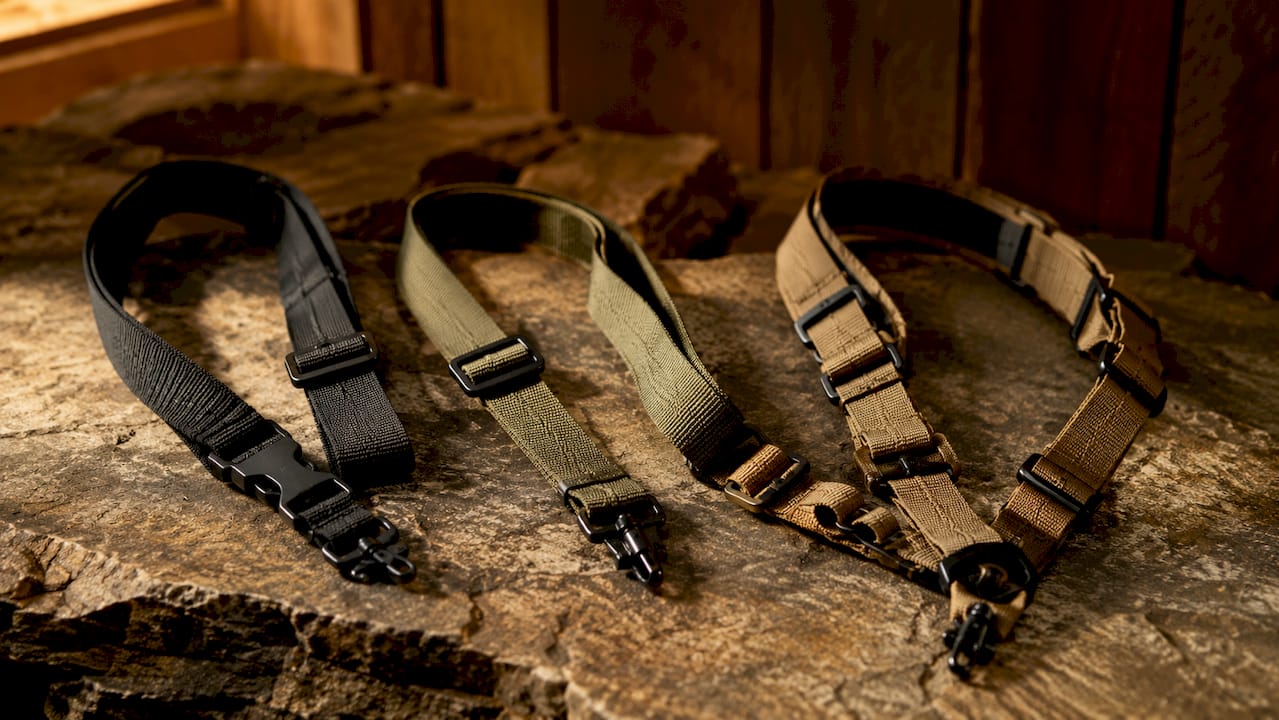
Single-point slings attach at one point, typically at the rear of the receiver or buffer tube. They give you maximum freedom of movement and allow fast shoulder transitions from left to right. Single-point slings excel in CQB (Close Quarters Battle) environments where speed matters more than stability. The tradeoff is that the rifle hangs freely and can swing into your body or legs during movement.
Two-point slings attach at two points, usually the front and rear of the rifle. Two-point slings are the most versatile option, useful across the widest range of operational scenarios due to their superior stability and carry options. They distribute the rifle’s weight across your body, reduce fatigue on long carries, and create a stable shooting platform. Blue Force Gear’s Vickers Combat Application Sling is one of the most recognized two-point designs on the market.
Three-point slings use a loop system that wraps around both the rifle and the shooter’s torso. They offer strong weapon retention but add complexity. Most experienced shooters have moved away from three-point designs because the extra webbing can tangle during fast movements.
| Sling type | Stability | Mobility | Rapid access | Best use case |
|---|---|---|---|---|
| Single-point | Low | High | Very fast | CQB, vehicle operations |
| Two-point | High | Moderate | Fast | Patrol, hunting, range |
| Three-point | Moderate | Low | Moderate | Static security roles |
What are the real advantages of tactical slings in the field?
Tactical slings provide four core functions: hands-free carrying, improved weapon stability for aiming, quick transitions from carry to firing position, and weapon retention that prevents disarmament. Each function matters in a different context, and together they make a sling one of the most practical accessories you can add to a rifle.
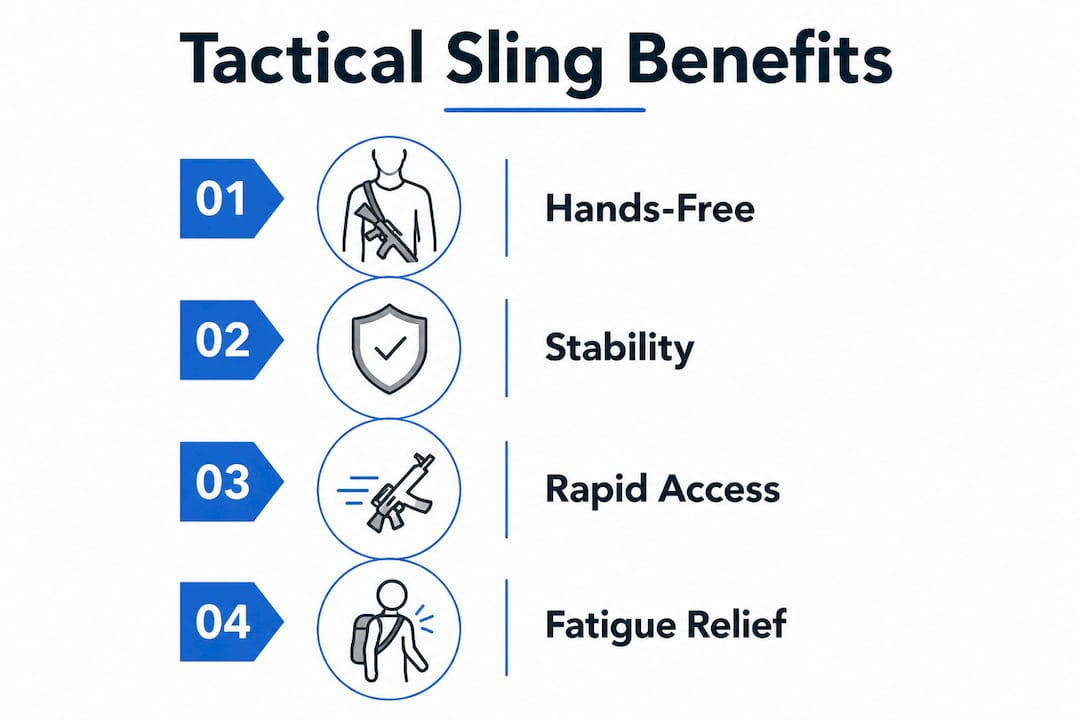
The hands-free benefit is underappreciated by shooters who only use their rifle at the range. In the field, slings free your hands for tasks like traversing brush, glassing with binoculars, or rendering aid to another person. A hunter crossing a creek or climbing a fence needs both hands. Without a sling, the rifle becomes a liability.
The stability benefit is where two-point slings genuinely shine. Pressing your support arm into the sling creates tension that builds a solid shooting platform in off-hand or standing positions. Think of it like a camera strap pulled tight against your body before you take a shot. The tension reduces wobble and keeps your muzzle on target.
Key advantages of tactical slings at a glance:
- Weapon retention: A sling keeps the rifle attached to your body if you trip, fall, or need to release the grip suddenly.
- Reduced fatigue: Distributing rifle weight across your torso prevents arm and shoulder strain during long carries.
- Faster transitions: A properly fitted sling lets you drop the rifle to your chest and draw a sidearm without setting the rifle down.
- Safety in rough terrain: The rifle stays controlled even when both hands are occupied.
Pro Tip: If you carry a rifle for more than 30 minutes at a time, a sling is not optional. Fatigue from unsupported carry degrades your shooting performance and your situational awareness.
How to use a tactical sling: techniques and best practices
Proper sling use starts with fit. Sling tension must balance security and mobility. Too loose and the rifle swings and bounces. Too tight and you cannot get the rifle up to your shoulder quickly. The right tension keeps the rifle close to your body during movement but allows a smooth, unobstructed presentation to your firing position.
Learning to select tactical accessories that fit your carry style is the first step. Once you have the right sling, follow these steps to use it correctly:
- Set your initial tension. Put the sling on and adjust it so the rifle rests at mid-chest with the muzzle angled slightly downward. You should be able to raise the rifle to your shoulder without fighting the sling.
- Practice the “swimming” technique. Swimming the support arm means rotating your arm out of the sling loop during transitions. This prevents entanglement when you need to move fast or change positions.
- Learn your carry positions. Sling positions signal readiness and intent. Low Carry keeps the rifle accessible at a semi-ready state. Rear Carry moves the rifle behind your shoulder for extended non-shooting periods. Front Carry keeps the muzzle forward for immediate engagement.
- Dry-fire with the sling on. Practice raising the rifle from each carry position to your firing position at least 20 repetitions per session. Muscle memory built in dry-fire transfers directly to live-fire performance.
- Adjust for layering. Body armor, heavy jackets, and plate carriers all change how a sling sits. Re-fit your sling every time your clothing or gear changes significantly.
Pro Tip: Firearms instructors consistently emphasize that sling handling under stress requires deliberate practice. Entanglement during a critical moment is a self-inflicted problem that dry-fire drills eliminate.
Sling use also connects directly to firearm accuracy. A well-tensioned sling in a standing position can substitute for a rest, giving you a steadier hold than unsupported shooting allows.
Which sling setup works best for your activity?
The right sling configuration depends on what you are doing with the rifle. A setup that works perfectly for a deer hunter in thick timber performs poorly for a patrol officer in an urban environment.
Hunters benefit most from two-point slings with quick-adjust sliders. Hands-free carry is the priority when you are covering miles of rough terrain. A sling that lets you go from carry to ready in under two seconds handles most hunting scenarios. Modular slings from companies like Magpul or Blue Force Gear offer tool-free length adjustment that works even with gloves on.
Military and law enforcement users prioritize weapon retention and rapid transitions. Two-point slings with quick-detach (QD) swivel attachments allow the sling to be removed or reconfigured without tools. This matters when transitioning to a sidearm or working in confined spaces. Single-point slings remain popular for vehicle operations and CQB where shoulder transitions happen constantly.
Sport shooters and precision rifle competitors use slings primarily as a stability aid. A tight two-point sling in a standing position improves shot consistency. Pairing a quality sling with solid rifle zeroing technique produces measurable accuracy gains at distance.
| Activity | Recommended sling type | Key feature needed |
|---|---|---|
| Hunting | Two-point | Quick-adjust slider, lightweight |
| Law enforcement | Two-point with QD | Weapon retention, fast transition |
| Military CQB | Single-point | Rapid shoulder transition |
| Precision shooting | Two-point | Tension stability for standing shots |
| Outdoor recreation | Two-point | Hands-free carry, durability |
Modular slings that convert between single-point and two-point configurations offer flexibility for shooters who operate across multiple environments. Brands like Magpul and Blue Force Gear both produce convertible designs worth considering. Pair your sling choice with quality outdoor gear knowledge if you spend serious time in the field.
Key Takeaways
A tactical sling is the single most functional accessory you can add to a rifle, delivering hands-free carry, shooting stability, and weapon retention in one piece of gear.
| Point | Details |
|---|---|
| Two-point slings lead in versatility | They work across the widest range of scenarios and provide the best stability for most shooters. |
| Sling tension is a skill | Proper adjustment balances security during movement with fast, unobstructed weapon presentation. |
| “Swimming” prevents entanglement | Rotating the support arm out of the sling loop is the key technique for safe, fast transitions. |
| Carry position signals readiness | Low Carry, Rear Carry, and Front Carry each serve a distinct tactical purpose. |
| Dry-fire builds sling competency | Practicing sling manipulation without live ammunition builds the muscle memory needed under stress. |
Why most shooters underestimate what a sling actually does
Most shooters treat a sling like a carrying strap, the same way you would carry a guitar case. That framing misses the point entirely. A sling is a shooting aid first and a carrying tool second.
I have watched experienced shooters at the range struggle with unsupported standing shots that they could have steadied significantly with a properly tensioned two-point sling. The technique is not complicated. You press your support arm forward into the sling, create tension, and your hold tightens. It is the same principle as a hasty sling position used by military marksmen for decades.
The other mistake I see constantly is beginners buying a sling and never practicing with it. A sling that you have not trained with is a liability. It can catch on gear, slow your draw, or tangle your support arm at the worst moment. Twenty minutes of dry-fire practice per week eliminates every one of those problems.
My honest recommendation: start with a quality two-point sling from Blue Force Gear or Magpul, fit it properly, and spend two weeks doing nothing but dry-fire transitions before you take it to the range. You will shoot better, carry more comfortably, and handle your rifle with noticeably more confidence. Sling selection should match your mission, just like you would not choose the same boots for a day hike and a three-week patrol.
— Brian
Gear up with Tungstencreektactical

Tungstencreektactical carries a curated selection of tactical accessories built for firearm owners who take their setup seriously. Whether you are outfitting a precision rifle build or looking for the right sling to complement your carry system, the team at Tungstencreektactical brings the same standard of quality to gear that they apply to every custom firearm build in their shop. Use the Tungstencreektactical mobile app to scan products, compare options, and unlock VIP pricing before you buy. The right sling paired with the right rifle is a combination worth getting correct the first time. Browse the full tactical accessories selection and find the setup that fits your mission.
FAQ
What is a tactical sling used for?
A tactical sling secures a rifle to the shooter’s body for hands-free carry, improves shooting stability through tension, and enables quick transitions between carry and firing positions. It also prevents accidental drops and resists disarmament.
What is the best type of tactical sling for most shooters?
Two-point slings are the best choice for most shooters because they offer superior stability, comfortable weight distribution, and fast weapon presentation across the widest range of activities.
How do I adjust a tactical sling correctly?
Set the sling so the rifle rests at mid-chest with the muzzle angled slightly down. The tension should keep the rifle close during movement without slowing your ability to raise it to your shoulder.
What is the “swimming” technique in sling use?
Swimming refers to rotating your support arm out of the sling loop during transitions. This technique prevents entanglement and keeps your movements fast and controlled under stress.
Do hunters need a tactical sling?
Yes. Tactical slings are valuable for hunters because they provide hands-free carry in rough terrain, reduce fatigue on long treks, and prevent accidental drops when both hands are needed for climbing or glassing.
Recommended
Related Post
Discover the 5 ways
An introduction to Tactical Luxury Guns & Coffee We founded
Top 5 Best PCC’s
In 2026, the Pistol Caliber Carbine (PCC) market is no