
What Is a Tactical Wallet? Your 2026 Buying Guide
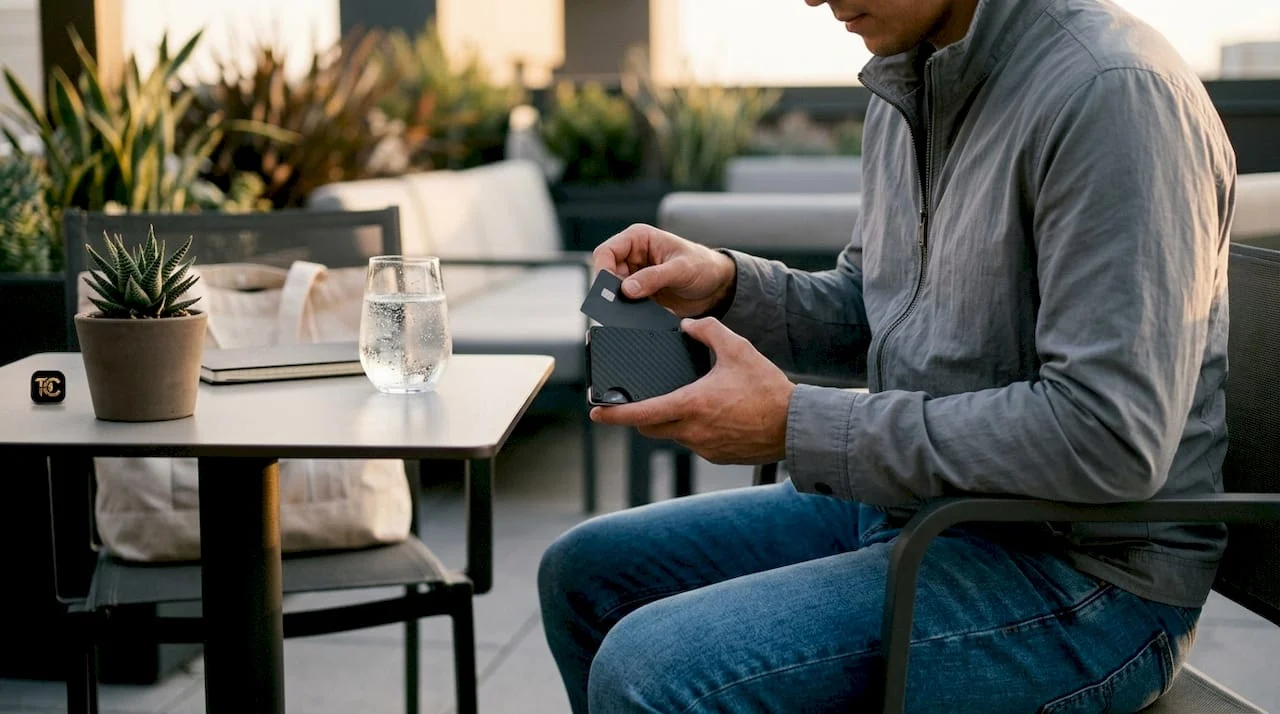
A tactical wallet is defined as a compact, structured everyday carry (EDC) wallet built from high-durability materials like aerospace-grade 6061-T6 aluminum, carbon fiber, or ballistic nylon, designed to hold 4–12 essential cards with built-in RFID protection. Unlike a standard leather bifold, a tactical wallet prioritizes performance, security, and fast access over bulk. The “tactical” label signals a performance-focused design philosophy built for demanding real-world conditions, not just military use. If you carry a firearm or spend time outdoors, your wallet should be as capable as the rest of your gear.
What features define a tactical wallet?
A tactical wallet earns its name through specific materials, mechanisms, and security layers that standard wallets simply do not include. Each feature serves a function, and none of them are decorative.
Materials and construction set the foundation. The most capable designs use aerospace-grade aluminum such as 6061-T6, which delivers structural rigidity without adding weight. Carbon fiber offers a similar strength-to-weight ratio with a lower profile. Ballistic nylon provides flexibility and abrasion resistance for softer-shell designs. Each material choice reflects a different balance between rigidity, weight, and feel.
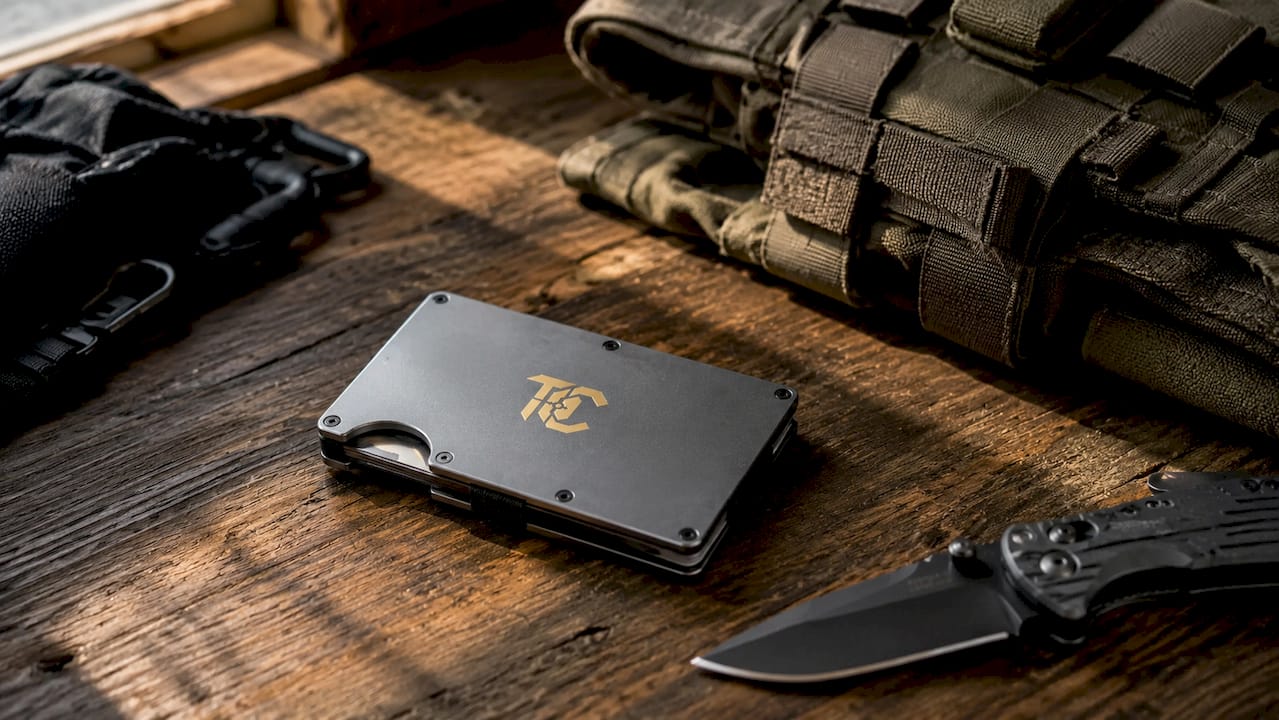
RFID blocking is the security core of any serious tactical wallet. Metal casings and shielding layers block the radio frequencies that digital thieves use to scan credit cards and IDs in crowded spaces like airports and subway stations. RFID protection is not a premium add-on. It is a baseline requirement for any wallet you carry in public.
Key features to look for in a tactical wallet:
- Pop-up card ejectors: One-touch mechanisms that push cards up for instant access. Some systems are tested for over 30,000 presses to guarantee long-term reliability.
- ID windows: Clear panels that allow fast, contactless identity verification at security checkpoints without removing the card.
- Money clips or cash straps: Slim retention systems that hold folded bills flat without adding bulk.
- Elastic or rigid card slots: Elastic bands hold cards snugly without stretching out; rigid slots keep cards protected from bending.
- Minimalist capacity: Most tactical wallets hold 4–12 cards, which forces you to carry only what you actually need.
Pro Tip: Before buying, count the cards you actually use in a week. Most people use fewer than six. Match your wallet’s capacity to that number, not to the maximum you could theoretically carry.
How do tactical wallets compare to traditional wallets?
A traditional leather bifold and a tactical wallet solve the same problem in fundamentally different ways. The differences go beyond aesthetics.
Traditional wallets are flexible, inexpensive, and familiar. They hold a large number of cards, receipts, and cash. The problem is that most people overfill them. A thick wallet in your back pocket creates a pressure point that causes spinal misalignment and back pain over time. Slim, rigid tactical wallets eliminate that issue entirely.
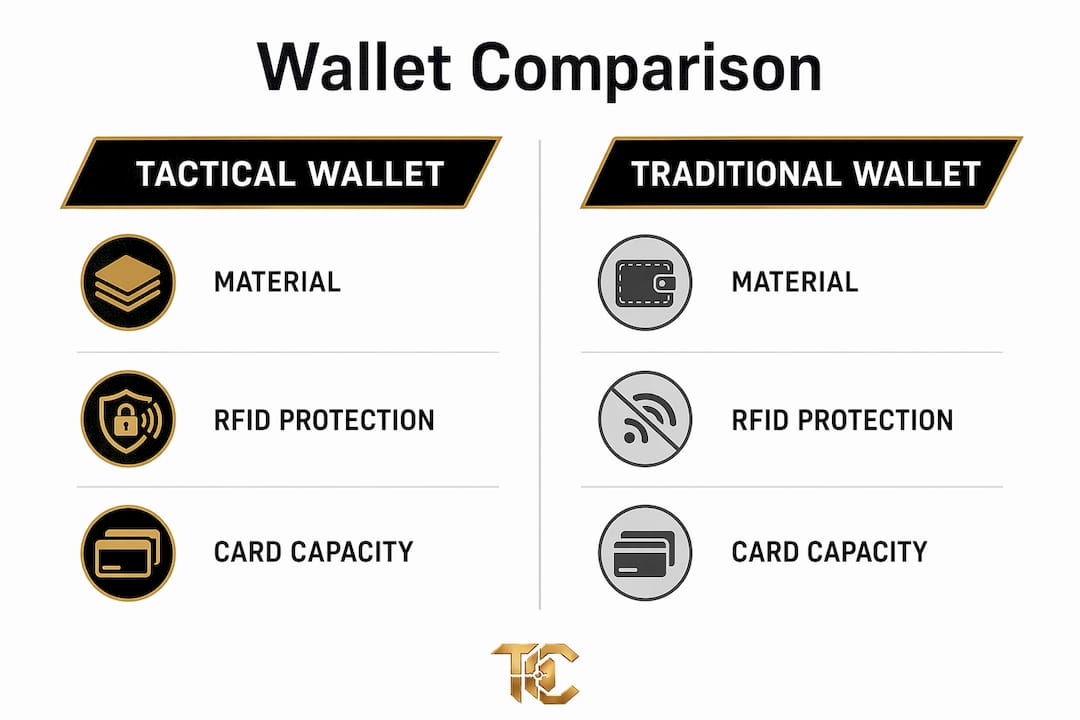
| Feature | Tactical wallet | Traditional wallet |
|---|---|---|
| Material | Aluminum, carbon fiber, ballistic nylon | Leather, synthetic fabric |
| RFID protection | Built-in metal shielding or blocking layer | Rarely included |
| Card capacity | 4–12 cards (curated) | 10–20+ cards (often overfilled) |
| Access speed | One-touch ejector or quick-pull slot | Manual thumb-through search |
| Weather resistance | High: water, dust, and impact resistant | Low: leather degrades with moisture |
| Ergonomic impact | Slim profile, front-pocket friendly | Back-pocket bulk causes posture issues |
| Durability | Tested for thousands of use cycles | Stitching and leather wear over time |
Tactical wallets also outperform traditional designs in rain, dust, and impact scenarios. A leather wallet soaks through in a downpour. An aluminum or carbon fiber wallet does not. For anyone who works outdoors, shoots at the range, or travels frequently, that difference matters every single day.
What are the practical benefits of using a tactical wallet?
The benefits of a tactical wallet show up in small, daily moments. Faster card access at a checkout line. No fumbling at a security checkpoint. No back pain after a long day on your feet.
Speed and efficiency are the most immediate gains. A pop-up ejector delivers your card in one motion. You do not search through a stack of cards. You do not bend or flex the wallet to get a grip. That efficiency compounds across hundreds of transactions per year.
Security is the benefit most people underestimate until they need it. RFID skimming is a real threat in dense urban environments. Thieves use handheld scanners to read card data through fabric at close range. A metal casing or RFID-blocking layer stops that scan before it starts. For more on how signal-blocking technology works in everyday carry gear, RFID blocking technology provides a useful technical breakdown.
Additional benefits worth noting:
- Reduced weight and bulk: Most tactical wallets weigh around 80 grams or less. Your pocket stays flat and your carry stays comfortable.
- Durability for demanding environments: Whether you are at the range, hiking, or traveling, the wallet holds up without cracking, warping, or wearing through.
- Forced organization: Carrying only 4–8 cards means you curate your essentials and stop accumulating cards you never use.
- ID window convenience: Built-in ID windows let you present identification at airports and secure facilities without removing anything from the wallet.
Pro Tip: Carry your tactical wallet in your front pocket, not your back pocket. Front-pocket carry is faster, more secure against pickpockets, and eliminates the posture problem entirely.
What should you consider when choosing the best tactical wallet?
Choosing the right tactical wallet comes down to five practical decisions. Work through each one before you buy.
-
Material preference. Metal wallets (aluminum, titanium) offer maximum durability and RFID blocking through the casing itself. Carbon fiber wallets are lighter and slightly more flexible. Ballistic nylon wallets are the most compact and work well in soft-shell configurations. Your choice depends on how hard you are on gear and how much weight you want to carry.
-
Card capacity. Count your essential cards first. If you carry five cards daily, a 6-card wallet is the right fit. Buying a 12-card wallet “just in case” defeats the minimalist purpose. Most users settle comfortably in the 4–8 card range.
-
Access mechanism. Pop-up ejectors are the fastest option for frequent card users. Side-pull slots work well for people who prefer a simpler design. Elastic band systems offer flexibility but require more manual effort. Match the mechanism to how often you actually pull cards out.
-
Additional features. An ID window is worth having if you travel or work in access-controlled environments. A built-in money clip handles cash without a separate accessory. Some wallets include a loop or attachment point for a GPS tracker tile, which adds a recovery option if the wallet is lost.
-
Budget and build quality. Entry-level tactical wallets in aluminum or nylon start at a reasonable price point and perform well for daily use. Premium builds with titanium frames, laser-engraved finishes, or custom configurations cost more but last significantly longer. For guidance on selecting tactical accessories that match your full carry setup, Tungstencreektactical covers the key criteria in detail.
How do you transition from a traditional to a tactical wallet?
Switching wallets is a behavioral change as much as a gear change. The physical swap takes seconds. The mental adjustment takes about one to two weeks.
The first step is a card audit. Pull everything out of your current wallet and sort it into two groups: cards you used in the past month, and cards you did not. Only the first group goes into the new wallet. Most people are surprised to find they carry six or more cards they have not touched in months.
Tips for a smooth transition:
- Start with your five most-used cards. Add a sixth only if you find yourself genuinely needing it in the first week.
- Practice the access mechanism at home. Pop-up ejectors and side-pull slots feel unfamiliar at first. A few minutes of practice makes the motion automatic.
- Store backup cards at home or in your car. You do not need to carry every card every day. Keep rarely used cards accessible but off your person.
- Integrate the wallet into your full EDC setup. A tactical wallet pairs naturally with a concealed carry setup and other front-pocket gear. Consistency in placement builds muscle memory fast.
After the 1–2 week adaptation period, most users report that returning to a traditional wallet feels slow and disorganized. The efficiency gain is real, and it sticks.
Key Takeaways
A tactical wallet is the most practical upgrade to your everyday carry because it combines RFID security, durable materials, and fast card access in a package that weighs under 80 grams.
| Point | Details |
|---|---|
| Definition and materials | Tactical wallets use 6061-T6 aluminum, carbon fiber, or ballistic nylon for durability and structure. |
| RFID protection is non-negotiable | Metal casings and shielding layers block digital skimming in crowded public spaces. |
| Access speed matters | Pop-up ejectors tested for 30,000+ presses deliver cards faster than any traditional wallet. |
| Ergonomic advantage | Slim, rigid wallets eliminate back-pocket bulk and reduce the posture strain caused by thick bifolds. |
| Transition takes 1–2 weeks | A short card audit and brief practice period leads to long-term efficiency gains. |
Why I think most people wait too long to make the switch
I carried a leather bifold for years longer than I should have. It was overstuffed, worn through at the corners, and sat in my back pocket like a small brick. The switch to a tactical wallet felt like a minor decision at the time. It turned out to be one of the more practical gear changes I have made.
What surprised me most was not the RFID protection or the card ejector. It was the forced discipline. When your wallet only holds six cards, you stop carrying cards you do not need. That sounds trivial until you realize how much mental clutter comes from carrying things “just in case.” A tactical wallet makes you decide what actually matters in your daily carry. That clarity carries over into how you think about the rest of your gear.
The material choice matters more than most reviews acknowledge. Aluminum is rigid and satisfying, but it can feel cold in winter and adds a hard edge to your pocket. Carbon fiber splits the difference well. Ballistic nylon is underrated for people who want a soft-shell option that still holds its shape. There is no universally correct answer. The right material is the one that fits how you actually use your gear, not how you imagine you will use it.
If you are already building out a serious EDC setup, a tactical wallet is not optional. It is the piece that ties the rest of your carry together.
— Brian
Gear up with Tungstencreektactical
Tungstencreektactical is built for people who take their carry seriously. Whether you are selecting your first tactical wallet or rounding out a full EDC setup, the same principles apply: materials matter, function comes first, and quality gear pays for itself over time.
Tungstencreektactical carries precision-built firearms, tactical accessories, and custom gear for responsible owners who want performance they can count on. If you are ready to go beyond the wallet and build a complete carry setup, the custom firearms and gear at Tungstencreektactical are worth a close look. Every product is selected with the same standard: does it perform when it counts?
FAQ
What is a tactical wallet made of?
Tactical wallets are most commonly built from aerospace-grade 6061-T6 aluminum, carbon fiber, or ballistic nylon. Each material offers a different balance of rigidity, weight, and weather resistance.
Do tactical wallets actually block RFID?
Yes. Metal casings and dedicated shielding layers block the radio frequencies used by RFID scanners. This protects credit card and ID data from digital skimming in crowded public spaces.
How many cards does a tactical wallet hold?
Most tactical wallets hold between 4 and 12 cards. The design intentionally limits capacity to encourage a curated, essentials-only carry approach.
Is a tactical wallet better for your back?
Slim tactical wallets eliminate the back-pocket bulk that causes spinal misalignment and lower back pain over time. Front-pocket carry is the recommended method for both comfort and security.
How long does it take to get used to a tactical wallet?
The adjustment period is typically 1–2 weeks. Most users adapt quickly once they complete a card audit and practice the access mechanism a few times at home.
Recommended
Related Post

Discover the 5 ways
An introduction to Tactical Luxury Guns & Coffee We founded
Top 5 Best PCC’s
In 2026, the Pistol Caliber Carbine (PCC) market is no