
Double Action Explained: Mechanics, Variants, and Use
In firearms, double action means the trigger performs two jobs in a single pull: it cocks the hammer (or striker) and then releases it to fire the cartridge. That one mechanical fact shapes everything about how a firearm handles, how you train with it, and whether it fits your carry or home-defense setup.
Key implications at a glance:
- First-shot pull is longer and heavier than in a single-action or striker-fired system
- Subsequent shots may feel different depending on whether the design is DA/SA or Double-Action Only
- Mechanical resistance is a real safety feature, but it never replaces proper trigger discipline
- Both revolvers and semi-automatic pistols can use double-action mechanisms
Table of Contents
- What is double action, and how does the trigger work?
- What are the main double-action variants?
- How does double action differ from single action and semi-automatic?
- Advantages and disadvantages of double-action designs
- How do you identify a double-action firearm?
- What experts and authoritative sources say about double-action designs
- Key Takeaways
- Why the double-action debate is more nuanced than most guides admit
- Useful sources for further reading
What is double action, and how does the trigger work?
The trigger both cocks and releases the hammer in one continuous rearward stroke. That is the entire definition. Where single-action requires the hammer to be pre-cocked manually (or by the slide), double action builds that cocking step into the trigger pull itself.
The revolver sequence
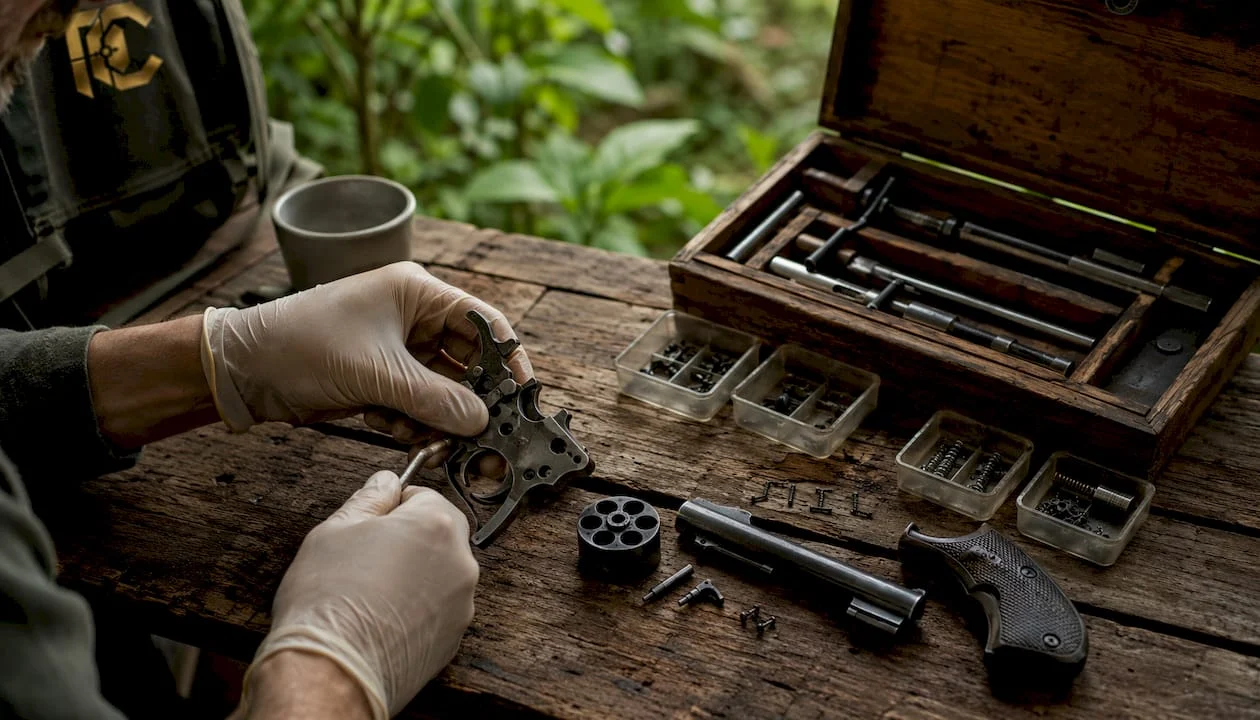
In a double-action revolver, pulling the trigger sets off a coordinated chain of events. The trigger moves rearward, rotating the cylinder so a fresh chamber aligns with the barrel. Simultaneously, the hammer is drawn back against spring tension. At the end of the stroke, the sear releases the hammer, which falls and strikes the firing pin. Revolver timing depends on the pawl, the hand, and the hammer’s “fly” all working in sync — wear in any one component can cause misfires or timing failures.

What you feel: a long, consistent pull from start to fire, with no separate cocking step required. You can also thumb-cock the hammer first for a lighter single-action shot, but the double-action stroke is always available.
The DA/SA semi-automatic sequence
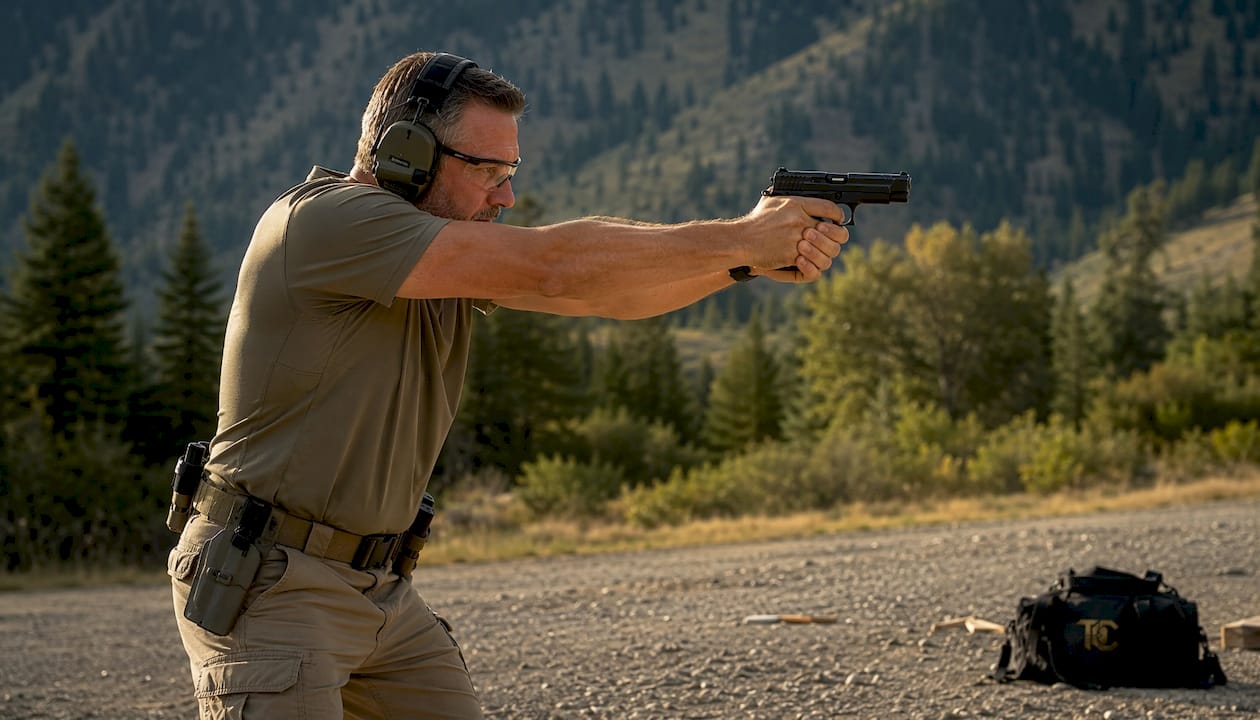
The first shot from a decocked DA/SA pistol uses the full double-action stroke — long, heavy, and deliberate. After the cartridge fires, the slide travels rearward under blowback energy, ejects the spent case, chambers a fresh round, and leaves the hammer cocked. Every shot after the first is now single-action, with a shorter, lighter trigger pull. That shift in feel catches many new shooters off guard, especially under stress.
A decocker, when present, lets you safely lower the hammer without firing, returning the pistol to its double-action starting state.
What are the main double-action variants?
Double-action is not a single design. Three distinct variants appear across the U.S. market, each with different trigger behavior and practical trade-offs.
-
DA/SA (Traditional Double-Action/Single-Action): The first shot is double-action from a decocked hammer; subsequent shots are single-action after the slide cycles. Most classic full-size service pistols follow this pattern. The trade-off is two distinct trigger feels in the same string of fire.
-
Double-Action Only (DAO): Every shot uses the full double-action stroke. The hammer (or striker) returns to its decocked position after each cycle, so pull weight and length stay consistent from the first shot to the last. DAO designs sacrifice a lighter follow-up pull in exchange for predictability.
-
DAK (Double-Action Kellermann): A lightened double-action variant developed for law enforcement that reduces pull weight compared to standard DAO while keeping a consistent stroke. You may encounter it on certain duty pistols; it occupies the middle ground between DAO consistency and DA/SA lightness.
-
Striker-fired DAO-style: Many modern striker-fired pistols partially pre-tension the striker during slide cycling, producing a consistent, medium-weight pull that mimics DAO behavior without a traditional hammer. Technically not a hammer-fired double-action, but the trigger feel and safety logic are similar enough that they often replace DAO designs in duty and carry roles.
Pro Tip: If you pick up an unfamiliar pistol, check whether the hammer is exposed or internal, then dry-fire it (safely, on an unloaded and verified firearm) to feel whether the pull is consistent shot to shot. Consistency tells you DAO or striker-fired; a dramatic change after the first pull tells you DA/SA.
How does double action differ from single action and semi-automatic?
These three terms describe different things, and mixing them up creates real confusion at the counter and at the range.
| System | What the trigger does | Hammer/striker state before first shot | Typical pull weight | Pull consistency |
|---|---|---|---|---|
| Traditional DA/SA pistol | First shot: cocks + releases; subsequent: releases only | Decocked | Heavy first, light follow-up | Inconsistent across a string |
| DAO pistol | Cocks + releases every shot | Decocked after each cycle | Moderate to heavy | Consistent every shot |
| Single-action pistol | Releases a pre-cocked hammer only | Must be cocked manually or by slide | Light | Consistent |
| Striker-fired pistol | Releases a partially pre-tensioned striker | Partially tensioned by slide | Medium | Consistent |
“Semi-automatic” describes the feeding and cycling behavior, not the trigger action. A semi-auto ejects a spent case and chambers a fresh round automatically after each shot. That cycling process can leave the hammer cocked (DA/SA) or return it to decocked (DAO), depending on design. Field & Stream puts it plainly: classification hinges on trigger function, not on whether the firearm is a revolver or a pistol. A revolver can be single-action only; a semi-auto can be DAO. The two axes are independent.
Advantages and disadvantages of double-action designs
Where double action works in your favor
- Built-in first-shot resistance: The long, heavy pull of a double-action trigger requires deliberate intent to fire, which historically made DA and DAO designs attractive for law enforcement carry.
- DAO consistency: Every pull feels the same, which simplifies training and removes the cognitive load of managing two different trigger feels mid-string.
- Revolver reliability: DA revolvers have fewer parts to fail and no magazine to malfunction; that mechanical simplicity suits shooters who want a low-maintenance option.
- Decocker safety: DA/SA pistols with a decocker let you carry hammer-down without a manual safety lever, reducing the chance of a negligent discharge during reholstering.
Where double action works against you
- First-shot accuracy: A heavier, longer pull demands more trigger control. Without deliberate practice, that first shot tends to pull low and left for right-handed shooters.
- DA/SA transition: The shift from a heavy double-action first pull to a light single-action follow-up is a genuine training challenge. Shooters who do not practice the transition often flinch or over-correct on the second shot.
- Trigger weight under stress: Fine motor skills degrade under adrenaline. A heavy DA pull that feels manageable at the range can feel like a wall in a high-stress situation without sufficient repetitions.
Pro Tip: Dry-fire practice with a DA trigger is one of the highest-return training investments you can make. Ten minutes of deliberate dry-fire per day builds the muscle memory to manage that first pull without disturbing your sight picture. Always verify the firearm is unloaded before any dry-fire session, and review firearm safety tips before you start.
Mechanical resistance is a supplement to safe handling, not a substitute. DAO designs were adopted by some police agencies specifically for that heavy-pull buffer, but muzzle awareness and trigger finger discipline remain the primary safety disciplines regardless of action type.
How do you identify a double-action firearm?
A few quick checks tell you what you are holding before you ever look at the manual.
- Does pulling the trigger move the hammer rearward? If yes, the firearm has at least a double-action capability.
- Does the hammer stay cocked after the slide cycles? If yes, you likely have a DA/SA design. If the hammer drops back to a decocked position, you have DAO.
- Is there a decocker lever? Its presence almost always signals a DA/SA design.
- Is the hammer internal or shrouded? Many DAO revolvers and pistols use a shrouded or internal hammer to prevent snagging on a draw — a strong indicator of DAO intent.
The owner’s manual is the definitive source. Look for the terms “double-action only,” “traditional double-action,” or “DA/SA” in the action description. NIJ firearms examiner training materials include practical inspection points for identifying action type, and those same checkpoints apply to safe handling inspections.
Always unload and visually verify the chamber before any inspection or dry-fire check. Proper gun storage practices also matter: a firearm stored correctly is easier to inspect safely when you need to.
A “double-action 9mm” is simply a 9mm pistol with a double-action trigger mechanism. The caliber and the action type are independent specifications. Historical high-capacity 9mm pistols used traditional DA systems, which is why the phrase became common shorthand, but it carries no unique technical meaning beyond that.
What experts and authoritative sources say about double-action designs
The expert consensus is consistent: double-action designs offered real value for law enforcement, but the industry has largely moved toward striker-fired platforms for duty and carry use.
- American Handgunner documents the historical law-enforcement preference for DA first-shot resistance and the subsequent shift toward striker-fired designs driven by consistent trigger feel and simplified training.
- NIJ training materials confirm that action-type identification is a standard forensic and handling checkpoint, reinforcing that understanding your trigger mechanism is a baseline competency, not an advanced topic.
- Training experts are direct: mechanical resistance from a heavy DA trigger does not substitute for trigger discipline. Safe handling rules — muzzle awareness, trigger finger off the trigger until ready to fire — are always primary.
Practical training recommendations from expert sources:
- Build proficiency with the heavy first pull through deliberate dry-fire before live-fire sessions
- If you carry a DA/SA pistol, practice the DA-to-SA transition explicitly — do not assume it will manage itself under stress
- Use your owner’s manual and manufacturer specs to confirm your firearm’s action type before modifying your training approach
- Consult concealed carry selection guidance when action type is a factor in your carry decision
Key Takeaways
A double-action trigger both cocks and releases the hammer or striker in one pull, producing a heavier first shot that demands deliberate training to manage well.
| Point | Details |
|---|---|
| Core definition | The trigger cocks and releases the hammer or striker in a single pull, unlike single-action where the trigger only releases. |
| Variants matter | DAO gives consistent pull weight every shot; DA/SA shifts from heavy first to light follow-up after the slide cycles. |
| Training implication | The DA-to-SA transition in DA/SA pistols requires explicit practice; do not assume the shift manages itself under stress. |
| Safety context | Mechanical resistance supplements safe handling but never replaces muzzle awareness and trigger finger discipline. |
| Verification step | Confirm action type in the owner’s manual before training or carrying; look for “DA/SA,” “DAO,” or “double-action” in the action description. |
Why the double-action debate is more nuanced than most guides admit
Most articles frame double action as a binary choice: old-school DA/SA versus modern striker-fired. That framing misses the point. The real question is whether you have the training to manage the trigger your firearm actually has.
A DA/SA pistol in the hands of a shooter who has drilled the transition hundreds of times is a precise, reliable tool. The same pistol in the hands of someone who has only practiced on a striker-fired platform is a liability on the first shot. The mechanism does not make the shooter; the training does.
What gets underestimated is how much the DA trigger rewards patience. That long, deliberate pull forces a level of trigger control that, once built, transfers well to any platform. Shooters who learned on a heavy DA revolver often develop cleaner trigger mechanics than those who started on a light striker-fired pistol, because there is nowhere to hide a flinch.
The law-enforcement shift toward striker-fired designs was driven by training economics, not by any mechanical superiority. Consistent trigger feel reduces training time and error rates across large agencies. For an individual shooter with the time and discipline to train the DA pull properly, the trade-off looks very different.
Choose your action type based on how you will actually train, not on what is currently popular.
Useful sources for further reading
- NIJ Firearms Examiner Training — Handguns Module: The authoritative U.S. government training resource for action-type identification, inspection procedures, and mechanical definitions. Start here for forensic-grade accuracy.
- Wikipedia — Double Action: A reliable encyclopedic overview of DA variants, mechanical descriptions, and historical context. Useful for cross-referencing definitions and variant terminology.
- American Handgunner: Expert commentary on law-enforcement usage trends, DA/SA vs. striker-fired debates, and practical shooting context.
- HandgunsMag — Double-Action Done Right: Practical context for the “double-action 9mm” phrase and historical DA platform usage.
- Field & Stream — What Is a Double-Action Pistol?: A clear, accessible explainer that reinforces the trigger-function-first classification framework.
- Tungstencreektactical — Firearms Comparison Guide: Tungstencreektactical’s own resource for comparing action types and platform categories when making a selection decision.
- Tungstencreektactical — Custom Guns: For readers considering a precision-built firearm or customized trigger work tailored to their action-type preference.

This article is general information about firearm mechanics, not legal or professional advice. Confirm current laws and regulations with the ATF, your state authority, or a qualified firearms professional for your specific situation.
Recommended
Related Post

Discover the 5 ways
An introduction to Tactical Luxury Guns & Coffee We founded
Top 5 Best PCC’s
In 2026, the Pistol Caliber Carbine (PCC) market is no