
What Is Tactical Layering? A Field-Ready Guide
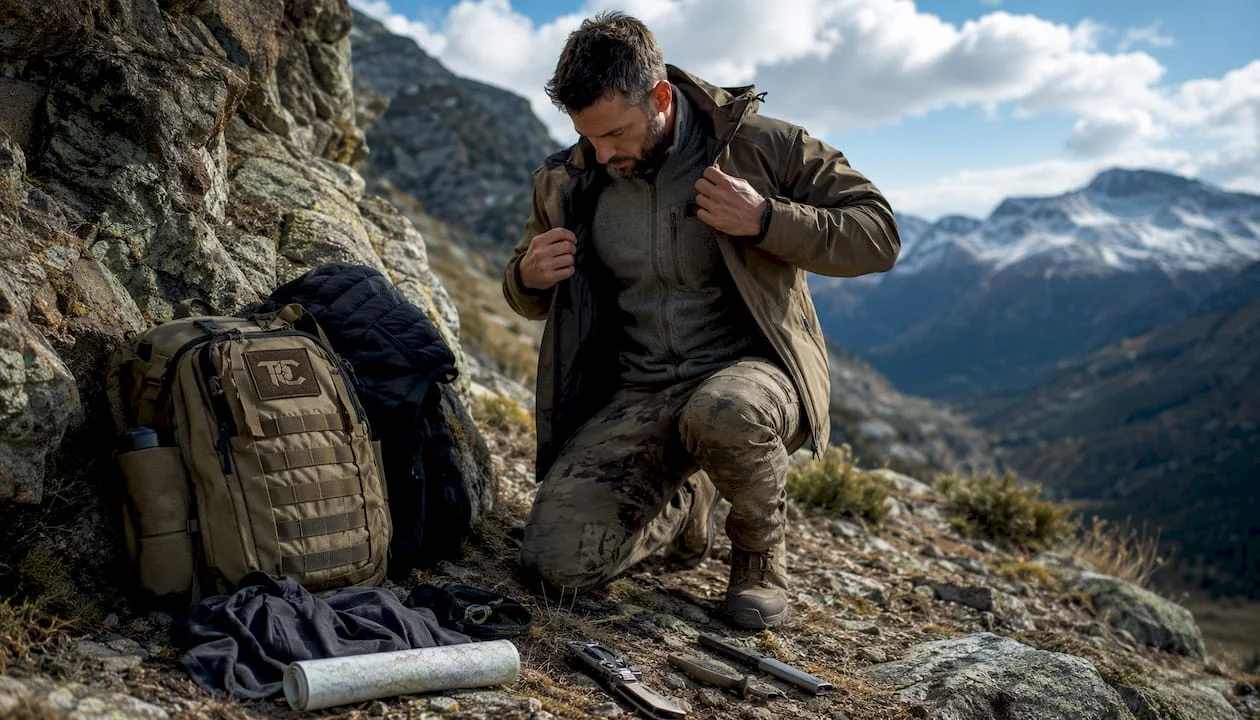
Tactical layering is a modular clothing strategy that controls your skin microclimate by combining a moisture-wicking base layer, an insulating mid-layer, and a protective outer shell. The goal is not maximum warmth. It is the ability to regulate temperature, manage sweat, and adapt your kit in real time as exertion levels and weather shift. The US Army ECWCS doctrine formalizes this into a seven-level modular system, but the underlying logic applies to any operator, first responder, or firearms owner moving through variable conditions.
Three essentials define every effective system:
- Wicking base: pulls sweat off your skin before it chills you
- Insulating mid: traps warm air close to your body
- Protective shell: blocks wind and precipitation while letting vapor escape
Pro Tip: Think of your layering system the way you think about a well-configured firearm: every component has a specific job, and the system only works when each piece is doing its part without interfering with the others.
Table of Contents
- How does tactical layering actually control your body temperature?
- What does each layer actually do, and when do you need all of them?
- Which materials perform best for each layer?
- How do you scale your layers by exertion, temperature, and mission?
- What tactical-specific features should you look for in layering garments?
- Quick field checklist: how to add and remove layers in common scenarios
- What do expert sources and military doctrine say about layering pitfalls?
- Key Takeaways
- Applying tactical layering when the mission changes mid-operation
- Tungstencreektactical has the gear to back your layering system
- Sources and further reading
How does tactical layering actually control your body temperature?
The principle is microclimate management. Your body generates heat through exertion and loses it through evaporation, convection, and conduction. A layering system intercepts those loss pathways without trapping the moisture that accelerates heat loss when you stop moving.
Moisture-wicking fabrics move sweat vapor away from your skin through capillary action. That vapor then passes through successive layers and exits at the shell. If any layer traps that moisture, evaporative cooling accelerates and your core temperature drops. That is the exact mechanism behind hypothermia in wet conditions.
Cotton is the most common offender. It absorbs moisture readily and dries slowly, holding a cold, wet layer against your skin precisely when you need insulation most. The US Army’s cold-weather guidance is direct on this point: cotton has no place in a tactical layering system. Merino wool and synthetic polyester blends wick and dry faster, and merino adds antimicrobial odor control for extended operations.
- Vapor transport: base layer moves sweat away from skin
- Insulation retention: mid-layer traps warm air without absorbing moisture
- Vapor escape: shell allows moisture out while blocking precipitation in
- Cotton exclusion: moisture retention creates hypothermia risk during rest phases
What does each layer actually do, and when do you need all of them?
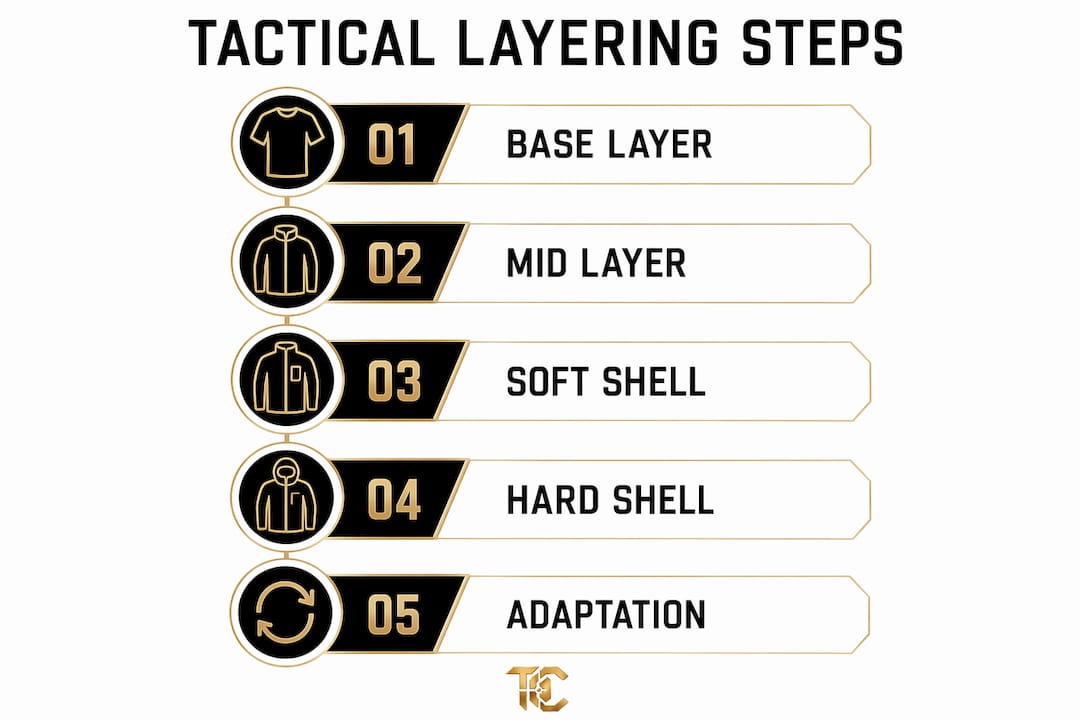
Each layer carries one primary function. The three-function framework is the organizing principle for both military and recreational systems: base moves sweat, mid traps heat, outer blocks the environment.
Base layer (L1): moisture management
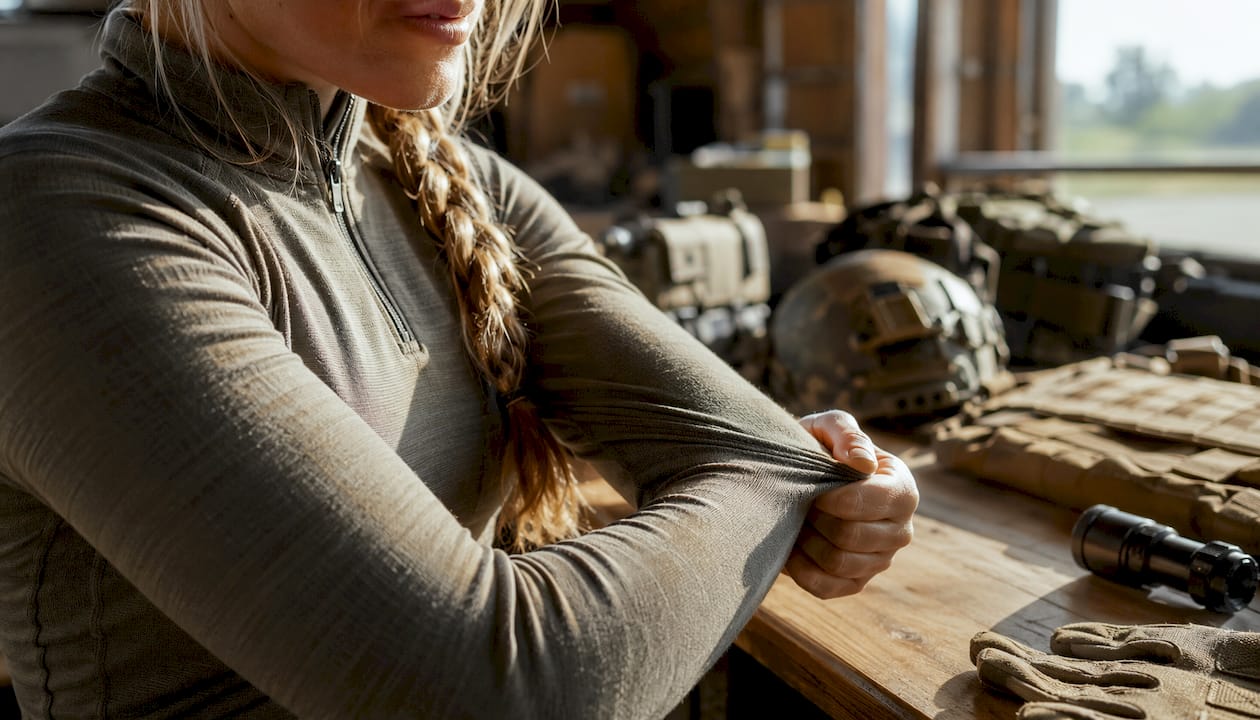
The base layer sits against your skin. Its only job is to move sweat away. Merino wool and synthetic polyester are the standard choices. Merino regulates temperature across a wider range and resists odor; synthetic dries faster and costs less. Fit should be close but not restrictive. A combat shirt, which combines a moisture-wicking torso with a durable outer-facing fabric on the sleeves, can serve as both base and partial outer layer in hot, arid conditions.
Mid-layer (L2/L3): insulation
Fleece jackets, synthetic-fill hoodies, and lightweight down vests all serve this role. Fleece is breathable and quick-drying. Down delivers outstanding warmth-to-weight ratio but loses most of its insulating value when wet. Synthetic fills like PrimaLoft retain warmth even damp, making them the more reliable choice in wet climates. For static security duties in cold weather, a heavier synthetic-fill jacket is often the right call. For a high-exertion patrol, a thin fleece grid mid-layer keeps you from overheating.
Soft shell (L4) and hard shell (L5): environmental protection
Soft shells offer breathability and stretch with light wind and water resistance. Hard shells, built around waterproof/breathable membranes like Gore-Tex, provide full waterproofing and wind protection. In heavy rain or sustained wet weather, the shell matters more than an extra mid-layer.
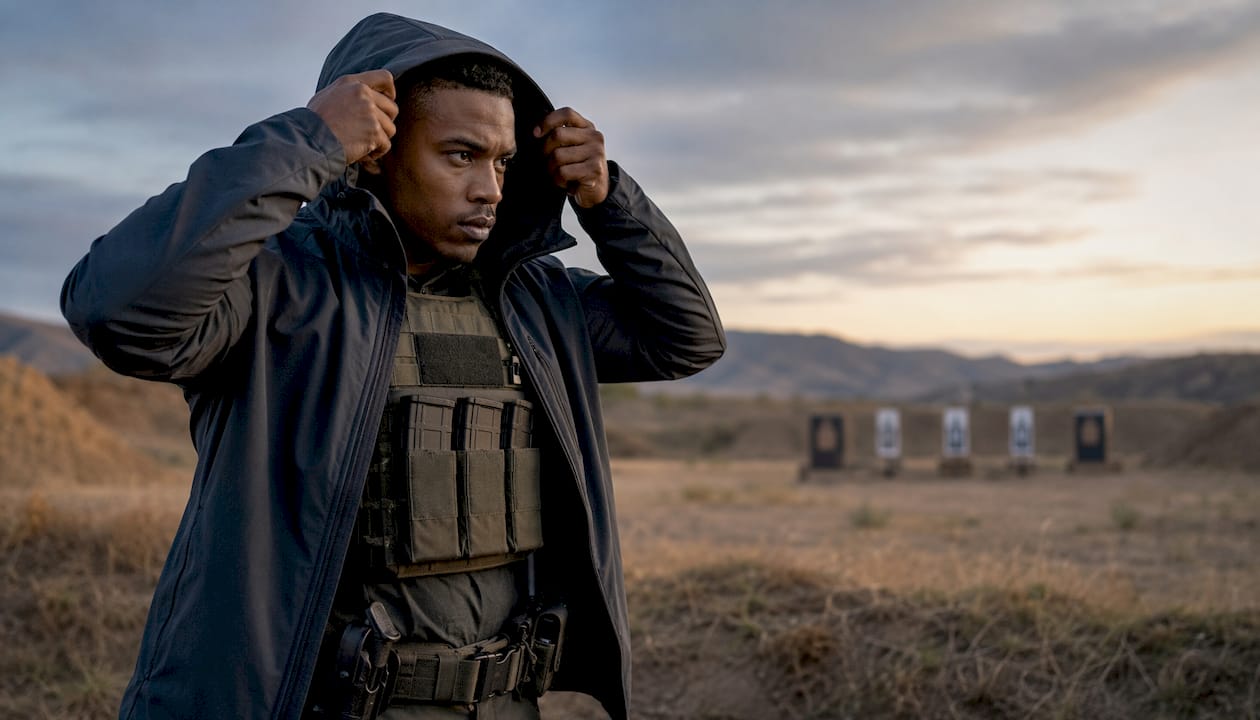
Pro Tip: For high-exertion movement in cold weather, drop the mid-layer and rely on a breathable soft shell over your base. Add the insulation layer only when you stop.
| Scenario | Base | Mid | Shell |
|---|---|---|---|
| High-exertion cold patrol | Synthetic wicking | Thin fleece | Soft shell |
| Low-exertion sentry/ambush | Merino wool | Synthetic-fill jacket | Hard shell |
| Wet rainy conditions | Synthetic wicking | Thin fleece (optional) | Gore-Tex hard shell |
| Hot/arid environment | Combat shirt | None | None or sun shell |
ECWCS Gen III maps this same logic across seven levels, from a lightweight base to an extreme cold parka, with combinations adjusted for activity and environment. You do not need to memorize all seven levels. You need to understand which functional layers to add or remove as conditions change.
Which materials perform best for each layer?
Fabric choice determines whether your system works or fails under pressure. The table below covers the materials you will encounter most often.
| Material | Warmth When Wet | Drying Speed | Breathability | Odor Control | Best Layer |
|---|---|---|---|---|---|
| Merino wool | Good | Moderate | High | Excellent | Base |
| Synthetic polyester | Moderate | Fast | High | Fair | Base / Mid |
| Fleece | Moderate | Fast | High | Fair | Mid |
| Down | Poor | Slow | Moderate | Fair | Mid (dry climates) |
| Synthetic fill (PrimaLoft) | Good | Moderate | Moderate | Fair | Mid |
| Gore-Tex membrane | N/A | N/A | High | N/A | Outer shell |
Cotton is absent from that table deliberately. It retains moisture, dries slowly, and provides no warmth when wet. For tactical use, it is not a trade-off. It is a liability.
Pro Tip: When selecting tactical garments, prioritize DWR (durable water repellent) treatment on your shell and check that it can be re-proofed. DWR degrades with washing and field use; a shell that no longer beads water loses much of its breathability advantage.
For operators who want material choices that perform under real conditions, merino and synthetic blends consistently outperform cotton-based alternatives in moisture management and thermal stability.
How do you scale your layers by exertion, temperature, and mission?
The practical skill in tactical layering is knowing when to add and when to strip. Carrying too much insulation during movement leads to sweat saturation, which destroys thermal performance the moment you stop. The ECWCS modularity principle is built around this exact problem.
Use these temperature and exertion bands as a starting framework:
- Above 50°F, high exertion: wicking base only, packable shell in your kit
- 35–50°F, moderate movement: base plus thin fleece or soft shell
- 20–35°F, mixed exertion: base, mid-layer, soft or hard shell; vent during movement
- Below 20°F, static watch: full insulation stack, hard shell, insulated extremity protection
Practical cues for real-time adjustment:
- Feel your back or chest. If it is damp, you are overheating. Vent or strip a layer before sweat saturates the base.
- Stopping for more than five minutes in cold weather? Add your mid-layer immediately. Heat loss accelerates fast when exertion stops.
- Rain incoming? Switch to your hard shell before you are wet, not after.
- Overnight stakeout: build your full insulation stack at the start. It is harder to rewarm a cold body than to maintain warmth from the beginning.
For a long foot patrol, start with base and soft shell, stow the mid-layer in a compression pouch. For a range day in cool weather, a base and fleece mid is usually enough. Wet weather routing demands a Gore-Tex hard shell regardless of temperature.
What tactical-specific features should you look for in layering garments?
Standard outdoor layering and tactical layering share the same thermal principles, but the operational requirements diverge sharply when you need to access a holster, draw a firearm, or move under load-bearing equipment.
Key features to look for:
- Pass-throughs and tear-away panels: allow holster access without removing outer layers; appendix-carry pass-throughs prevent snags on the draw
- Low-profile insulation: keeps bulk down under plate carriers or chest rigs
- Cuff and hem adjustments: prevent cold air ingress without restricting movement
- Reinforced wear zones: elbows, shoulders, and cuffs take the most abrasion under kit
- Quiet fabrics: nylon-face shells can produce noise during movement; softshell or fleece-face materials are quieter in close-quarters situations
Common mistakes that reduce effectiveness:
- Over-layering before movement, leading to sweat saturation and cold-when-stopped
- Blocking weapon access by wearing a shell that does not have pass-throughs
- Using cotton in any layer position
- Neglecting to vent during high-exertion phases
Integrating layers with load-bearing equipment requires attention to fit. A mid-layer that is too bulky will bunch under a plate carrier and create pressure points. Your tactical accessories and holster setup should be tested with every layer combination you plan to use operationally. Layering that looks right in a parking lot can fail at the draw when you add a chest rig.
Pro Tip: For hand protection, run liner gloves under combat gloves during cold operations. Cold-weather glove doctrine differentiates liner, midweight, and heavyweight gloves from mitten systems. Switch to mitten systems in extreme cold when dexterity is less critical than warmth preservation.
Quick field checklist: how to add and remove layers in common scenarios
When you start cold and move into high exertion
- Begin with base layer and mid-layer; stow hard shell in a packable pouch
- After 10 minutes of movement, check for back sweat
- If damp, remove the mid-layer and continue with base only
- Keep the mid-layer accessible, not buried at the bottom of your pack
When you overheat during movement
- Open venting zippers on mid and shell before removing layers
- If still overheating, strip the mid-layer first
- Never let sweat saturate your base; a wet base layer in cold air will chill you fast once you stop
When rain arrives suddenly
- Deploy your packable hard shell immediately
- Do not wait until you are wet; Gore-Tex and similar membranes work best when applied dry
- If your base is already damp, prioritize getting under cover before adding insulation
For a long static watch at night
- Add full insulation stack before your body temperature drops
- Cover extremities: insulated hat, neck gaiter, liner socks inside insulated boots
- Carry spare liner gloves in a chest pocket for quick swap if the primary pair gets wet
Gear stowage matters. A packable shell compressed into a belt pouch is usable. A shell buried in a rucksack is not. Head, hands, and feet account for significant heat loss; include tactical footwear and insulated socks in your layering plan, not as an afterthought.
What do expert sources and military doctrine say about layering pitfalls?
The research-backed consensus across military doctrine and practitioner sources is consistent: moisture management is the foundation, and most failures trace back to ignoring it.
Key recommendations from authoritative sources:
- Prioritize a wicking base in every configuration; merino or synthetic, never cotton
- Use membrane shells like Gore-Tex where waterproofing is required; shell choice matters more than adding another mid-layer in heavy rain
- Maintain garments properly: use technical detergents, avoid fabric softeners, and re-proof DWR shells periodically to restore water-shedding performance
- Improper washing degrades breathability and water resistance in membrane garments
Three high-impact pitfalls practitioners encounter repeatedly:
- Excessive layering before movement: leads to sweat saturation and a cold, wet base layer once activity stops; over-layering reduces thermal performance precisely when you need it most
- Ignoring access needs: a system that keeps you warm but prevents a clean draw is operationally compromised; test every layer combination with your holster before the field
- Poor ventilation discipline: failing to open venting zippers during exertion is the fastest path to a soaked base layer
Avoiding common tactical training errors around gear selection and overheating can significantly extend your operational effectiveness in variable conditions.
Pro Tip: In mission planning, balance insulation against mobility by asking one question: what is the lowest-exertion phase of this operation? Build your insulation stack for that phase, then plan which layers to strip during high-exertion movement.
Key Takeaways
A tactical layering system works only when moisture management comes first, modularity is built in, and every layer preserves your access to mission-critical tools.
| Point | Details |
|---|---|
| Moisture management is foundational | Never use cotton; choose merino wool or synthetic polyester for the base layer in every condition. |
| Each layer has one job | Base wicks, mid insulates, shell blocks wind and water while letting vapor escape. |
| ECWCS is the doctrinal reference | US Army ECWCS Gen III maps seven modular levels from base to extreme cold parka for operational flexibility. |
| Over-layering is a real risk | Sweat saturation from excessive insulation during movement destroys thermal performance when you stop. |
| Tungstencreektactical for mission-ready gear | Tungstencreektactical carries tactical accessories and gear built around the access and modularity principles covered here. |
Applying tactical layering when the mission changes mid-operation
Most articles on this topic treat layering as a pre-mission decision. That framing misses the harder problem: what you do when conditions shift after you are already in the field.
The conventional wisdom is to dress for the coldest part of the operation and strip as you warm up. That is partially right, but it underestimates how fast sweat saturation can compromise a system. An operator who starts a foot patrol in a full insulation stack will often arrive at the objective with a soaked base layer, which is a worse thermal position than starting with less insulation and staying dry.
The smarter approach is to dress for the highest-exertion phase, carry the insulation layer in a packable format, and add it at the transition point before your body temperature drops. Moving from a high-exertion patrol to a static overwatch position is the classic example: strip the mid-layer during movement, add it back the moment you go static, before you feel cold. Waiting until you are already chilled means your body is working to rewarm itself rather than maintain temperature, and that costs energy and focus you cannot spare.
Layering decisions are not gear decisions. They are judgment calls made under operational constraints, and the system only works if you have practiced the transitions before you need them.
Tungstencreektactical has the gear to back your layering system
Knowing how to layer is only half the equation. The other half is having gear that actually supports it in the field. Tungstencreektactical carries tactical accessories and firearms-compatible gear built around the same principles covered in this guide: modularity, access, and mission readiness without compromise.

Whether you are building a kit for concealed carry in variable weather or outfitting for extended field operations, the right accessories make the difference between a system that works and one that gets in your way. Tungstencreektactical’s tactical accessories guide walks you through holster-compatible options, pass-through-ready outerwear considerations, and the gear that integrates cleanly with a layered kit. For operators who want precision-built firearms to pair with a mission-ready setup, the custom guns page is the right starting point. Browse the full catalog and use the Tungstencreektactical mobile app to compare products, scan gear, and unlock VIP pricing on your next order.
Sources and further reading
The sources below represent the strongest references used in this guide. Each covers a distinct area of tactical layering doctrine, materials science, or field application.
- US Army “Fight the Freeze” (army.mil): Official US Army cold-weather guidance; the primary doctrinal source for moisture management and cotton exclusion in military layering systems.
- Military Clothing Layering System (Raff Military Textile): Covers ECWCS Gen III level structure, Gore-Tex membrane applications, and modular layer combinations for operational environments.
- Ultimate Guide to Layering (UF PRO): Practitioner-focused breakdown of the three-function framework, over-layering risks, and extremity protection; strong on field application.
- Marines Systems Command cold-weather glove doctrine (MarCorSysCom): Official doctrine on liner, midweight, and mitten glove systems and when to transition between them in extreme cold.
- Best Way to Layer for Cold Weather (Stio): Practical guidance on garment care, DWR re-proofing, and maintaining membrane breathability over time.
- Tactical Gear Maintenance Tips (Tungstencreektactical): Care and maintenance guidance for technical outerwear and tactical accessories to preserve long-term performance.
Recommended
Related Post
Discover the 5 ways
An introduction to Tactical Luxury Guns & Coffee We founded
Top 5 Best PCC’s
In 2026, the Pistol Caliber Carbine (PCC) market is no