
How to maintain firearm accuracy: proven methods and tips

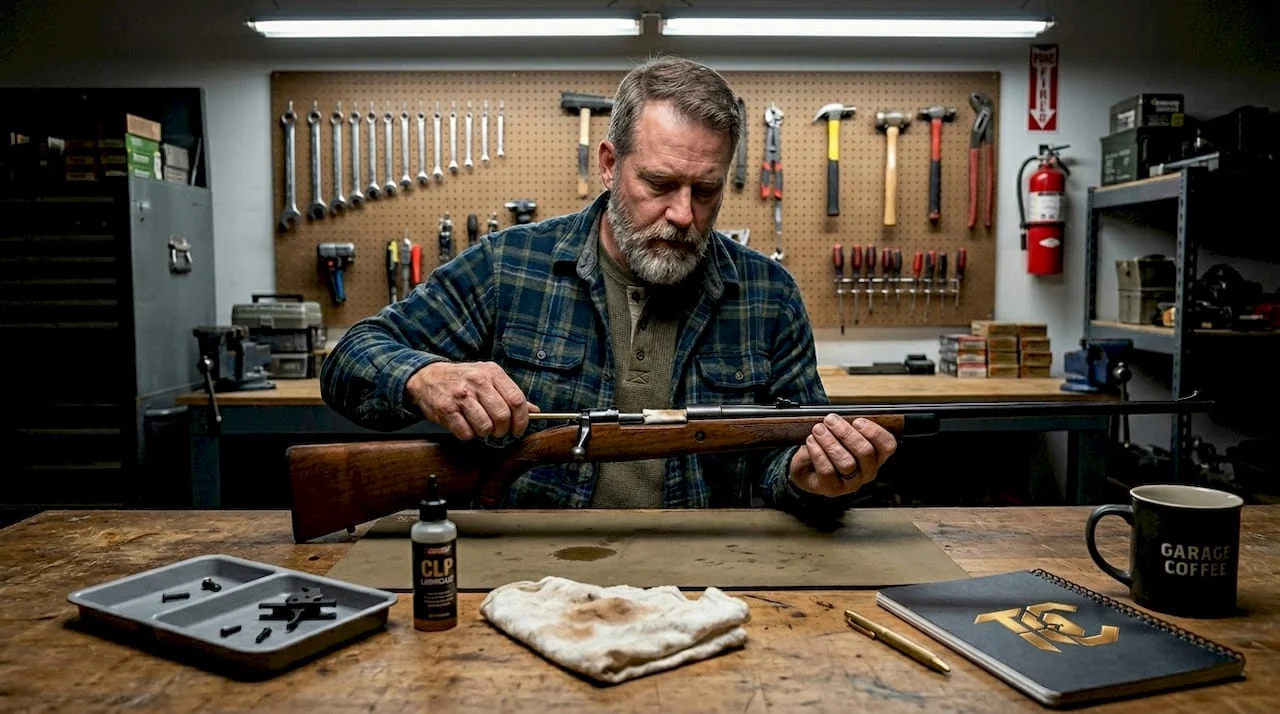
Accuracy is earned, not assumed. You’ve put in range time, invested in quality equipment, and still find your groups drifting or your shots landing inconsistently. That frustration is common, and it almost always traces back to one of two sources: neglected maintenance or underdeveloped fundamentals. This article addresses both directly. You’ll get practical guidance on the tools and materials you need, step-by-step care routines for accuracy-critical components, and the core shooting skills that tighten groups and build real confidence. Whether you’re running a bolt-action rifle or a carry pistol, the approach here is systematic and reliable.
Table of Contents
- Core requirements to maintain firearm accuracy
- Step-by-step maintenance and handling techniques
- Fundamental shooting skills for consistent accuracy
- Common mistakes and troubleshooting accuracy issues
- Our take: what most guides miss about maintaining accuracy
- Gear up for next-level accuracy with Tungsten Creek Tactical
- Frequently asked questions
Key Takeaways
| Point | Details |
|---|---|
| Foundation matters most | Proper prep and materials are essential for maintaining firearm accuracy. |
| Routine maintenance pays off | Consistent care and lubrication prevent performance loss and scratches. |
| Skill fundamentals drive results | Trigger discipline, sight focus, and dry fire drills build accuracy over time. |
| Avoid common pitfalls | Errors like neglecting bolts or inconsistent grip can derail shooting accuracy. |
| Technology is a tool, not a crutch | Innovation can help, but attention to basics and craft remains irreplaceable. |
Core requirements to maintain firearm accuracy
Now that we’ve set the stage for why accuracy matters, it’s time to look at the core requirements every shooter should have ready before starting any accuracy maintenance routine.
Maintaining firearm accuracy isn’t just about cleaning the barrel after a range session. It requires the right tools, the right environment, and a clear understanding of what each step accomplishes. Cutting corners here creates problems that compound over time. Think of it like properly brewed coffee: skip one step in the process, and the whole cup suffers.
Must-have maintenance tools and materials
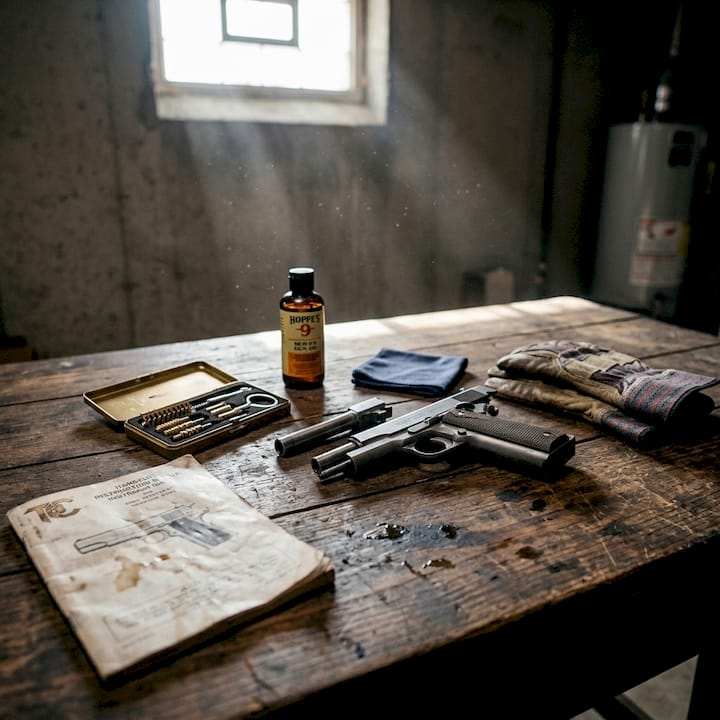
Before you begin, stock your cleaning station with the following:
- Bore snake or cleaning rod with appropriate caliber-specific patches and brushes
- Solvent and bore cleaner for removing carbon and copper fouling
- High-quality firearm oil and grease for lubrication of moving parts
- Nylon and brass bore brushes to avoid scratching the rifling
- Torque wrench for consistent scope mount and action screw tightening
- Cleaning mat to protect both your firearm and work surface
- Flashlight or bore light for detailed inspection of the chamber and bore
- Microfiber cloths for wiping down external surfaces without leaving lint
Explore firearm maintenance essentials to understand how each tool contributes to long-term performance and value protection.
Environmental factors that affect accuracy
Where you store and service your firearm matters more than most shooters realize. High humidity accelerates oxidation on metal surfaces, which increases friction and introduces surface irregularities that affect precision. Temperature swings cause slight expansion and contraction of metal components, which can shift zero over time.
| Environmental Factor | Impact on Accuracy | Recommended Control |
|---|---|---|
| High humidity (above 60%) | Rust, friction increase | Dehumidifier, gun safe with humidity control |
| Extreme heat | Component expansion, lubricant thinning | Store below 80°F in climate-controlled space |
| Dust and debris | Bore fouling, action grit | Sealed storage, regular wipe-downs |
| Rapid temperature change | Scope zero shift | Allow firearm to acclimate before shooting |
Proper storage is directly tied to accuracy. Review innovative storage solutions to find options that protect your investment in both the firearm and its precision.
Lubrication and component care
Lubrication is one of the most misunderstood aspects of firearm maintenance. Too much lubricant attracts fouling, gums up moving parts, and can actually reduce accuracy by introducing inconsistency into the action. Too little creates friction and wear. As Sporting Shooter notes, you should lightly lubricate bolt lugs to prevent scratches and torque under pressure, not soak them. A thin, even coat is the standard. Focus on bolt lugs, the action rails, and the trigger group, and keep the bore itself clean and dry unless the firearm will sit unused for an extended period.
Step-by-step maintenance and handling techniques
With requirements assembled, let’s move step-by-step through the key maintenance and handling routines that directly impact your firearm’s precision.
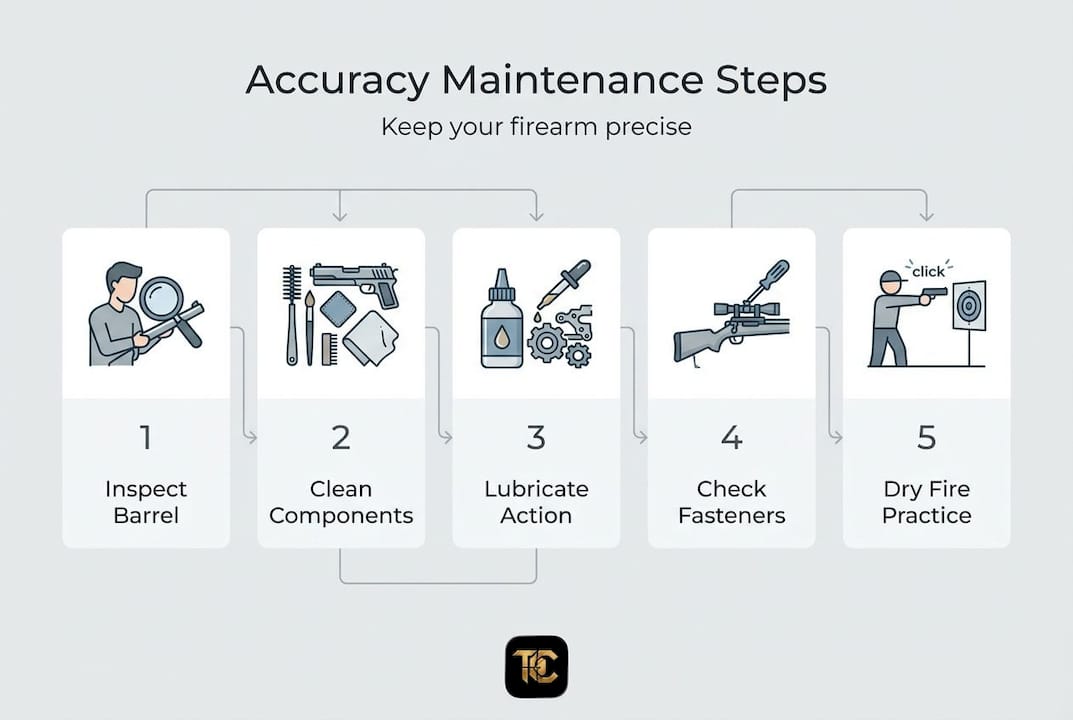
Accuracy maintenance is procedural. Doing the steps in the right order, with the right materials, prevents damage and ensures that every component functions as intended. Good shooting preparation routines begin before you even reach the range.
Step-by-step maintenance routine
- Clear and verify the firearm is unloaded. Remove the magazine, open the action, visually and physically inspect the chamber. Safety always comes first, without exception.
- Field strip the firearm following the manufacturer’s instructions. This exposes the barrel, bolt, action, and trigger group for cleaning.
- Clean the bore using solvent-soaked patches followed by a dry brush pass, then clean patches until they come out with minimal fouling. Avoid excessive scrubbing that can wear rifling.
- Inspect and lap bolt lugs if your rifle shows signs of uneven contact. Lapping ensures the lugs bear evenly against the receiver, which prevents torque under pressure and improves headspace consistency.
- Clean the action and rails with solvent, then dry completely before applying a thin coat of oil.
- Inspect the trigger group for debris, checking that reset and pull weight feel consistent.
- Reassemble and function check before storing or heading to the range.
“Consistent maintenance creates consistent performance. Accuracy doesn’t come from the firearm alone. It comes from the shooter treating every component with the attention it deserves.”
Handling and transport
How you handle and transport your firearm between uses also matters. Impacts and drops can shift scope zero, loosen action screws, and damage sensitive components. Always transport in a padded case. Check scope mount torque settings regularly, especially if you transport frequently. Consider protective gun coatings to add a layer of corrosion resistance and reduce the surface wear that contributes to long-term accuracy degradation.
Pro Tip: After every cleaning session, cycle the action several times to redistribute lubricant evenly before storage. This simple habit prevents dry spots and ensures consistent action feel when you pick the firearm up next.
Fundamental shooting skills for consistent accuracy
After maintenance, your shooting skill is the next frontier for accuracy. Mastering fundamentals is essential, and no amount of equipment work will compensate for gaps in technique.
Skilled shooters know that their firearm is only as accurate as the person behind it. Even a well-maintained, precision-built rifle will produce inconsistent results if the shooter’s fundamentals are weak. The basics, practiced with discipline and patience, are what separate tight groups from scattered shots.
The core fundamentals
- Trigger control: Apply steady, rearward pressure without disturbing the sight picture. Jerking or slapping the trigger is one of the most common accuracy killers.
- Sight alignment and sight focus: The front sight or reticle must be sharp and properly aligned. Your eye should prioritize the front sight, with the target slightly blurred behind it for iron sights.
- Respiratory pause: Fire during the natural respiratory pause between breaths. This reduces chest movement that shifts the muzzle off target.
- Consistent grip: A repeatable grip ensures the firearm recoils the same way every shot. Inconsistent pressure changes muzzle movement and shot placement.
- Stance and body position: A stable platform controls recoil and helps you return to the same natural point of aim for each shot.
Field & Stream confirms that trigger control and respiratory pause, along with consistent stance and dry fire drills, build the muscle memory necessary for reliable accuracy.
Dry fire practice
Dry fire drills (practicing trigger pulls and sight alignment without live ammunition) are one of the highest-return habits you can build. They cost nothing, can be done at home, and directly reinforce the mechanics that matter most. Commit to ten minutes per day focusing on trigger press and sight picture, and you’ll notice measurable improvement within two to three weeks.
Pro Tip: Use a coin or small washer balanced on the front sight during dry fire practice. If it falls when you press the trigger, your control needs work. It’s a simple diagnostic that reveals technique problems instantly.
Fundamentals applied vs. ignored
| Skill Area | With Consistent Practice | Without Practice |
|---|---|---|
| Trigger control | Tight, predictable groups | Scattered shots, low left pulls |
| Sight alignment | Consistent point of impact | Elevation and windage variation |
| Respiratory control | Reduced muzzle movement | Vertical stringing across target |
| Grip consistency | Predictable recoil pattern | Shifted impact per session |
The importance of regular firearm upkeep extends directly into skill maintenance. Just as equipment needs consistent care, your technique requires regular repetition to stay sharp. Staying current with firearm technology and precision can also open up new training tools and aids that accelerate skill development.
Common mistakes and troubleshooting accuracy issues
With fundamentals in place, let’s address some of the most common pitfalls that erode accuracy, and the fixes that actually work.
Accuracy problems don’t always announce themselves clearly. A gradual group size increase, shots clustering in unexpected locations, or a zero that shifts between sessions can all point to different underlying causes. The key is diagnosing systematically rather than guessing.
Common maintenance mistakes
- Over-lubrication of the bore or action. Excess oil migrates into the chamber and cartridge, affecting powder ignition and contributing to pressure inconsistencies. Use oil sparingly and keep the bore clean and dry.
- Neglecting bolt lugs. Bolt lug contact affects how consistently the cartridge headspaces in the chamber. If lugs don’t bear evenly, the case positions differently shot to shot. Take care to lap bolt lugs for even contact and lubricate them lightly to prevent wear.
- Improper bore brush selection. Using a brush that’s too large damages rifling. Using one that’s too small misses fouling. Match the brush to the caliber every time.
- Ignoring scope mount torque. Loose scope mounts shift zero unpredictably. Check torque with a proper tool on a regular schedule, especially after transport.
- Skipping function checks after reassembly. Reassembling incorrectly and heading straight to the range is a safety and accuracy risk. Always verify function before use.
Skill-based accuracy problems
Pro Tip: If your shots are consistently low and to one side, that’s almost always a trigger control issue. Video yourself shooting from behind to identify flinch or grip inconsistency. Most shooters are surprised by what they see.
Common skill-related mistakes include:
- Inconsistent grip pressure between dominant and support hands, especially after recoil
- Anticipating recoil (flinching before the shot breaks, pulling the muzzle before bullet exit)
- Rushing the shot without a clean respiratory pause
- Moving the head between shots, which changes sight picture and eye relief on scoped rifles
Visit firearm craftsmanship tips to see how quality manufacturing plays a role in reducing variables that a shooter has to compensate for. A well-crafted firearm forgives fewer errors and rewards better technique.
Our take: what most guides miss about maintaining accuracy
Most accuracy guides focus on expensive upgrades: premium triggers, match-grade barrels, high-end optics. Those components have a place, but they’re not where accuracy problems begin for most responsible shooters.
The real gains come from the details that cost almost nothing. Consistent bolt lug contact, correct lubrication applied in the right amounts, and a repeatable grip will tighten your groups more than a $400 trigger shoe ever will if the fundamentals aren’t already locked in. We’ve seen shooters obsess over equipment while their trigger control never improves, and they never understand why their groups stay inconsistent.
Patience is also undervalued. Accuracy is built over time, not purchased. Dry fire practice is unglamorous. Cleaning routines are routine by definition. But compounding attention to small details is how serious shooters separate themselves from casual ones. It mirrors the difference between a carefully hand-selected cigar and something grabbed off a gas station shelf: the quality is in the process.
Technology is evolving in ways that genuinely help. Smart targets, shot tracking apps, and modern coating technology all support the shooter who is already doing the fundamentals well. But as firearm precision insights confirm, the craftsmanship of the firearm and the discipline of the shooter remain the two variables that matter most. Every other tool amplifies what’s already there.
Our opinion: stop chasing shortcuts. Build the habit, maintain the equipment, master the fundamentals, and the accuracy will follow.
Gear up for next-level accuracy with Tungsten Creek Tactical
If you’re ready to take your accuracy and confidence even further, specialized solutions are within reach.
At Tungsten Creek Tactical, we back every recommendation with the same standards we hold our own products to: honest performance, real craftsmanship, and no shortcuts. Whether you’re looking for precision-built custom guns tailored to your specific shooting needs or want to build a complete maintenance setup from trusted components, we have what you need.

Our performance maintenance guide expands on the principles covered here, and our full catalog of premium firearm accessories includes the tools, coatings, and care products that support consistent precision. Use our mobile app to scan products, compare options, and unlock VIP pricing as you build out your maintenance kit. Accuracy is a practice. We’re here to support it at every step.
Frequently asked questions
How often should I clean my firearm to maintain accuracy?
Clean your firearm after each use or at minimum once per month to prevent residue buildup and component wear that gradually degrades accuracy.
Which parts are most critical to lubricate for accuracy?
Bolt lugs and the action are the highest priority, as lightly lubricating bolt lugs prevents torque inconsistencies and surface scratches that affect shot-to-shot precision.
What is the best routine for dry fire practice?
Daily sessions of ten minutes focusing on trigger control and sight alignment build the muscle memory and consistency that translate directly into tighter groups on the range.
Can environmental factors affect my firearm’s accuracy?
Yes, humidity and temperature fluctuations affect both metal components and your scope’s zero, so maintaining stable storage conditions is a direct investment in consistent accuracy.
Are there quick fixes for accuracy problems?
Most accuracy problems require systematic maintenance and honest skill practice to resolve; shortcuts address symptoms without fixing the root causes, so lasting results take disciplined effort.
Recommended
Related Post

Discover the 5 ways
An introduction to Tactical Luxury Guns & Coffee We founded
Top 5 Best PCC’s
In 2026, the Pistol Caliber Carbine (PCC) market is no