Firearm Finishes: How Coatings Protect and Enhance Your Gun
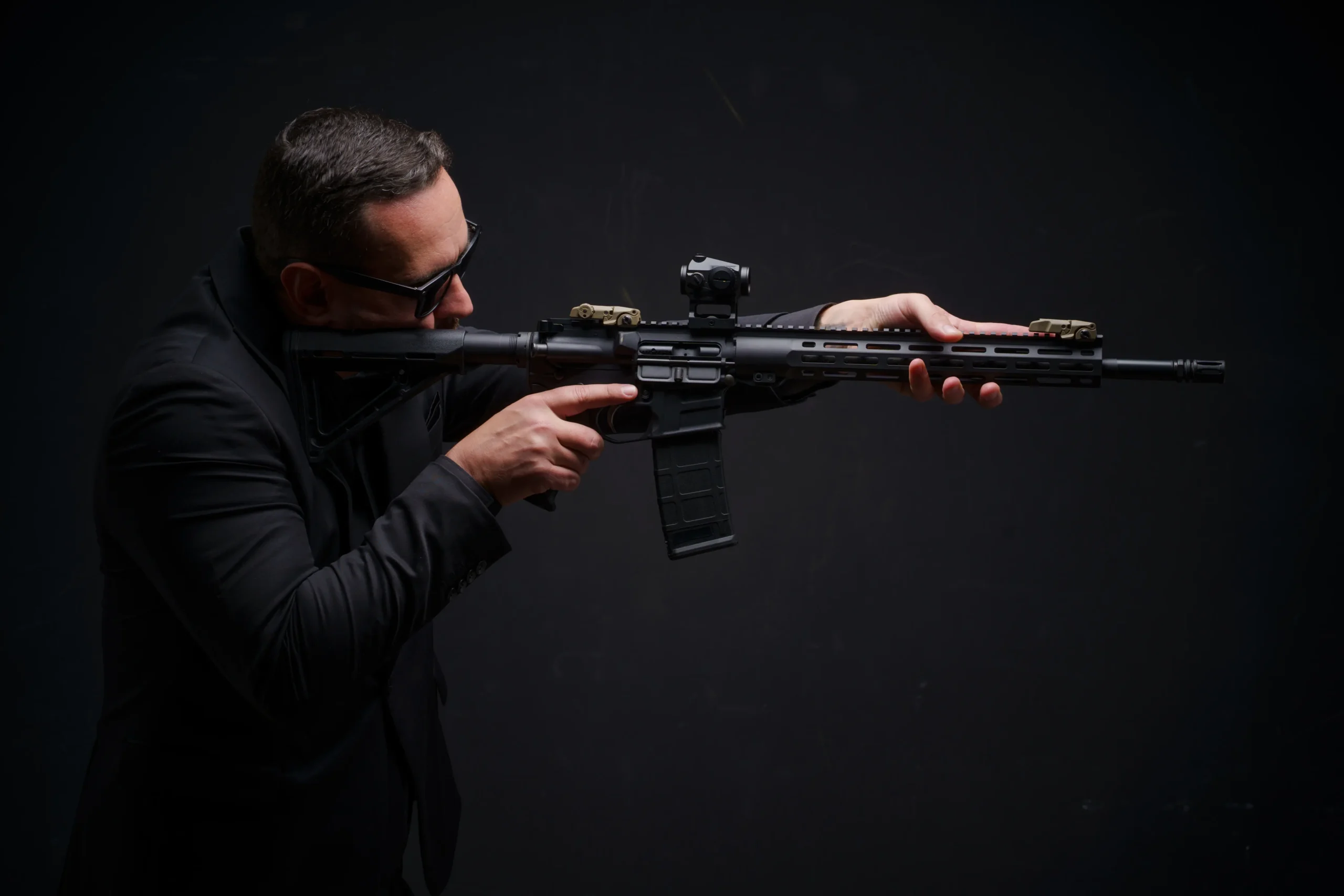
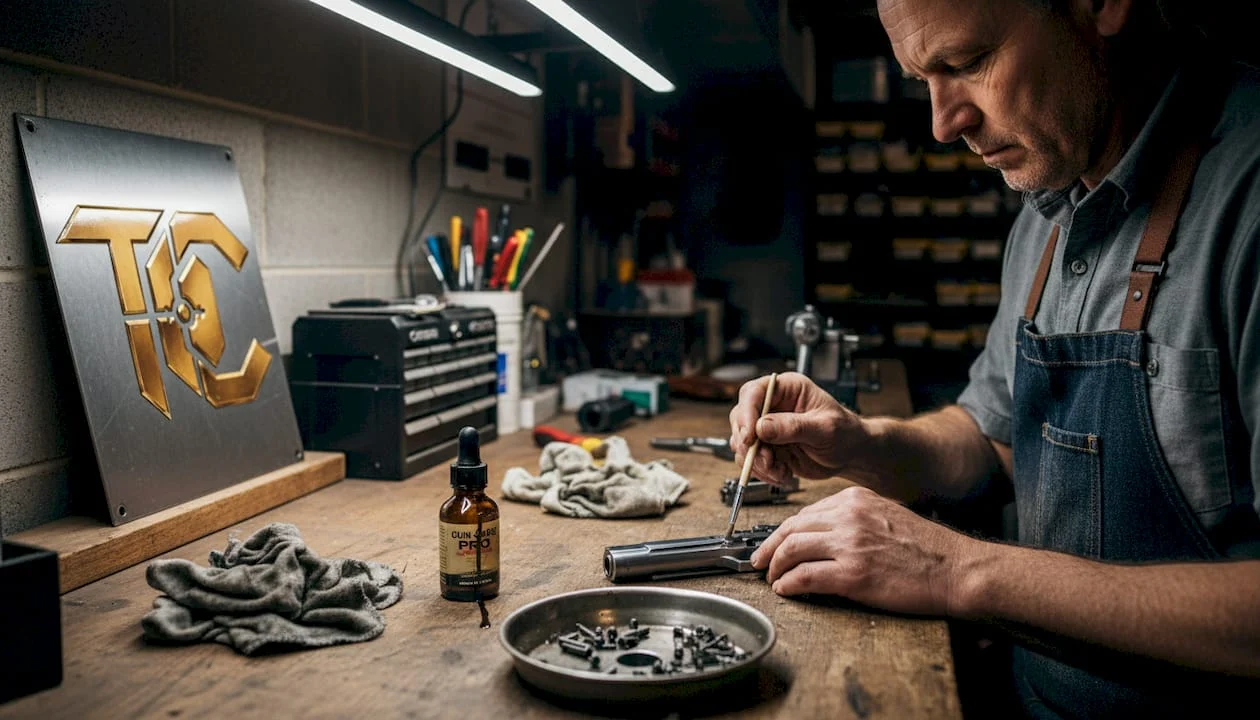
Most firearm owners assume the finish on their gun is purely cosmetic, a surface-level choice made for style. That assumption can cost you in real, measurable ways. The finish on your firearm is one of its most critical functional components, acting as the first barrier between the metal and everything that wants to degrade it: moisture, sweat, salt, friction, and time. Choose the wrong finish, and a thousand-dollar investment can rust, seize, or lose value faster than you expect. Choose the right one, and your firearm stays reliable, retains its worth, and looks exceptional for decades.
Table of Contents
- What are firearm finishes and why do they matter?
- Comparing popular firearm finishes: Features, pros, and cons
- How the right finish improves durability and performance
- Appearance matters: Customizing looks and retaining value
- Care and maintenance tips for firearm finishes
- Our take: What most people get wrong about firearm finishes
- Customize and protect your firearm with expert solutions
- Frequently asked questions
Key Takeaways
| Point | Details |
|---|---|
| More than looks | A firearm’s finish protects against rust, wear, and environmental damage, not just boosting appearance. |
| Choose wisely | Different finishes offer unique combinations of durability, cost, and style—pick what matches your needs. |
| Maintenance is key | Routine cleaning, proper storage, and avoiding harsh chemicals will extend the life of any finish. |
| Customization matters | Personalizing a finish can increase both pride of ownership and potential resale value. |
| Expert help available | Professional services can help you select, apply, and maintain the right finish for peak performance. |
What are firearm finishes and why do they matter?
A firearm finish is any protective or decorative coating applied to the exterior metal or polymer surfaces of a gun. It bonds to or reacts with the base material to create a barrier against environmental and mechanical damage. Think of it the way you would think about a well-constructed watch case: the external material determines how well the piece weathers daily wear, not just how it looks under the light.
Finishes serve several overlapping functions. Here is what they actually do:
- Corrosion resistance: Every finish creates a physical or chemical barrier that slows or stops oxidation on metal components.
- Wear reduction: Surfaces that slide, rack, or strike each other need a layer that can absorb friction without breaking down.
- Appearance: Color, sheen, and texture all affect how your firearm projects confidence, whether in a holster or on display.
- Value retention: A firearm with a quality, intact finish holds its resale value significantly better than one showing bare metal or pitting.
- Functional reliability: Certain finishes reduce friction in moving parts, which can meaningfully affect cycling and slide travel consistency.
The most common finish types you will encounter are bluing, parkerizing, Cerakote, and anodizing. Traditional bluing is a chemical process that converts the surface of steel into a thin layer of magnetite, offering moderate rust protection with a classic, polished look. Parkerizing (also called phosphate coating) creates a matte, porous surface that holds oil well and provides stronger corrosion resistance than bluing, making it popular in military applications. Cerakote is a polymer-ceramic coating applied in a liquid form and cured with heat, offering superior protection on multiple material types. Anodizing is an electrochemical process used on aluminum components, like many frames and receivers, to harden and protect the surface.
“Your finish is not an accessory. It is your first line of defense against everything your firearm faces in the field, on your hip, and in storage.”
Understanding the importance of firearm maintenance begins with recognizing that protecting the exterior is just as vital as cleaning the bore. Owners who treat the finish as secondary often find themselves dealing with rust, pitting, and component wear far ahead of schedule.
Comparing popular firearm finishes: Features, pros, and cons
Not all finishes are created equal, and the right choice depends heavily on how and where you use your firearm. Here is a direct comparison of the most widely used options today.
| Finish | Corrosion Resistance | Durability | Aesthetics | Typical Cost | Best For |
|---|---|---|---|---|---|
| Bluing | Moderate | Low to moderate | Classic, high-gloss | Low | Collectibles, range guns |
| Parkerizing | Good | Moderate | Matte, military | Low to moderate | Duty use, field guns |
| Cerakote | Excellent | Very high | Highly customizable | Moderate to high | Carry guns, tactical builds |
| Anodizing | Good | High | Matte, consistent | Moderate | Aluminum frames/receivers |
| Nickel plating | Good | Moderate | Bright, reflective | Moderate | Presentation, concealed carry |
Bluing: The traditional choice for collectors and range shooters. It looks elegant, especially on older or classic designs. However, it offers limited real-world corrosion resistance and will show wear faster than modern options. A rained-on blued steel pistol that is not dried quickly will rust.
Parkerizing: Tough and practical. The porous surface holds oil well, which gives parkerized guns solid corrosion protection when properly lubricated. The downside is that without oil, that same porous surface can trap moisture. It is a finish that rewards attentive owners.
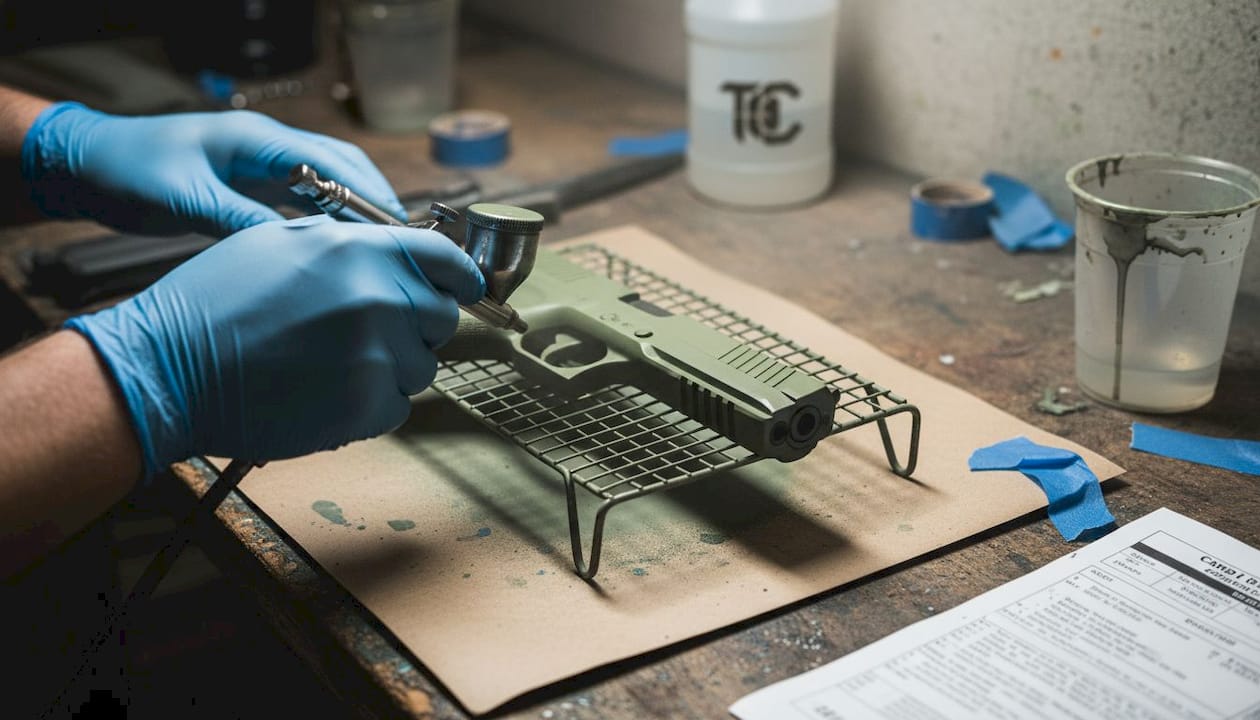
Cerakote: Today’s most versatile option. The coating application process involves thorough surface preparation, application in a controlled environment, and oven curing to bond the polymer-ceramic formula to the base material. The result is an exceptionally hard, chemically resistant surface available in hundreds of colors and patterns. Explore the full range of Cerakote options if you want protection and personalization in a single solution.
Anodizing: Reliable and cost-effective for aluminum. It does not add significant thickness, which matters for tight-tolerance components. If you have a lightweight aluminum receiver or frame, anodizing is almost always the appropriate choice.
Pros and cons, summarized:
- Bluing is affordable and beautiful but demands consistent care.
- Parkerizing is rugged and practical but needs oil to perform.
- Cerakote offers maximum protection and aesthetics with higher upfront cost.
- Anodizing is ideal for aluminum but not applicable to steel.
Pro Tip: Cerakote and other polymer-ceramic finishes add a very thin layer, typically 0.001 inches or less, but on tight-tolerance actions, even that can affect slide fit or trigger geometry. Always consult a professional who understands how finish thickness interacts with your specific platform. If you are considering a full custom build, look into custom gun finishes from experienced gunsmiths who account for these variables.
How the right finish improves durability and performance
Every finish degrades over time. The question is how quickly, and under what conditions. A firearm exposed to daily carry will face sweat, oils, temperature swings, and repeated holster friction. A gun stored improperly faces humidity and oxidation. The finish you choose determines how well your firearm handles both scenarios.
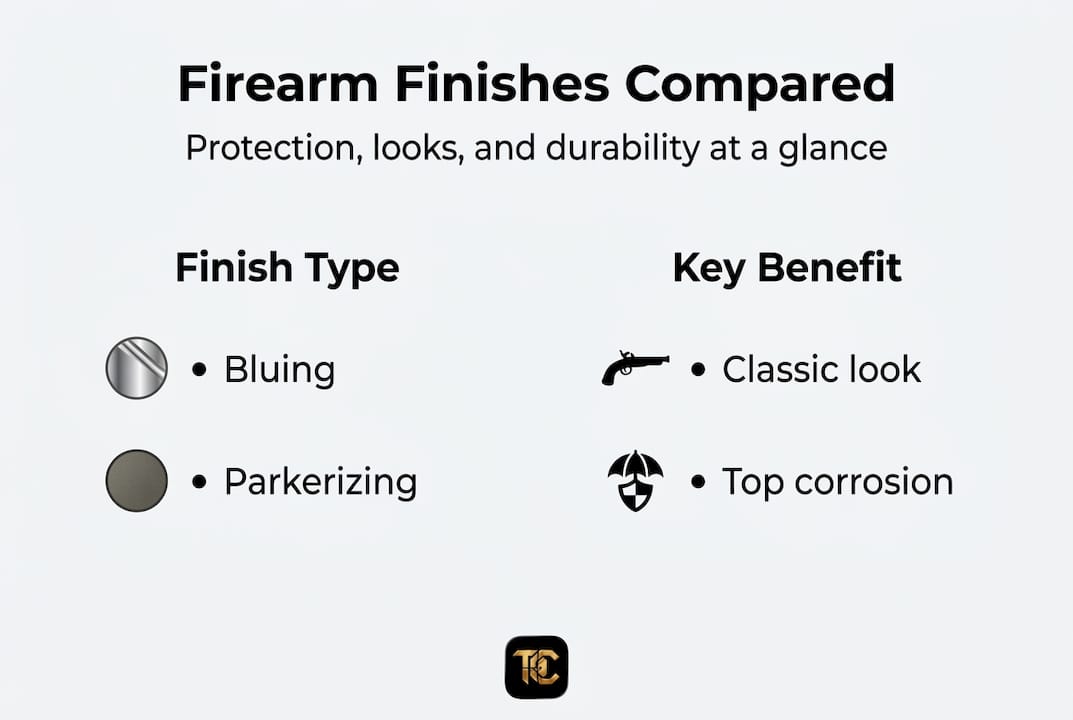
Here is real-world finish longevity data based on standard use conditions:
| Finish | Estimated Lifespan (Standard Use) | Maintenance Frequency | Key Vulnerability |
|---|---|---|---|
| Bluing | 5 to 10 years | High | Moisture, sweat |
| Parkerizing | 10 to 15 years | Moderate | Runs dry without oil |
| Cerakote | 15 to 25+ years | Low | Impact, sharp abrasion |
| Anodizing | 10 to 20 years | Low to moderate | Acidic environments |
Cerakote’s polymer-ceramic formula creates remarkable scratch resistance that outperforms traditional options under abrasive conditions. A holstered firearm drawn and reholstered dozens of times per week will wear through bluing in months. The same routine on a Cerakoted surface produces minimal visible wear over years.
Proper upkeep extends any finish’s life considerably. Follow these steps to protect your investment:
- Inspect your finish monthly. Look for nicks, bare spots, or discoloration that signal moisture intrusion or wear-through.
- Clean with the right solvents. Harsh chemicals can strip finishes faster than physical wear. Always confirm solvent compatibility.
- Apply a light oil coat after cleaning. Even Cerakote benefits from a thin protective oil layer on exposed metal areas.
- Store at controlled humidity. Moisture is the universal enemy of all finishes. A quality storage solution with a desiccant pack helps.
- Address damage immediately. A small chip in the finish, left untreated, becomes a rust nucleus. Touch-up kits exist for most common finishes.
Owners who stay consistent with these steps report significantly lower maintenance costs over five years compared to those who only act after visible damage appears. Learning how to protect firearm value starts with this kind of discipline. Detailed guidance on maintaining protective coatings reinforces why consistent habits outperform reactive repair every time.
Appearance matters: Customizing looks and retaining value
Beyond the functional conversation, finishes have become one of the most powerful tools for personal expression in the firearms world. A Cerakote job in flat dark earth, multicam, or a custom pattern reflects the owner’s taste just as a well-selected cigar reflects a preference for the finer, more considered things in life. The finish you choose says something about how seriously you approach your gear.
Today’s most popular finish trends include:
- Flat dark earth and OD green: Tactical, matte looks that reduce glare and feel purpose-built.
- Two-tone finishes: Contrasting frame and slide colors for visual depth and component identification.
- Multicam and digital camo patterns: Popular with hunters and competitive shooters who want a cohesive aesthetic with their other gear.
- Carbon fiber textures: Applied as overlays or simulated through finish techniques for a lightweight, modern look.
- Custom graphics and logos: From patriotic imagery to unit insignia, personal motifs are achievable with modern finish methods.
Finish condition also directly influences resale value. A firearm with original factory bluing in excellent condition can command a collector’s premium. A tactical pistol with a professionally applied Cerakote finish in good shape signals care and quality to potential buyers. Conversely, a gun with worn, chipped finish or visible rust will fetch significantly less, regardless of its mechanical condition.
If you want to mix utility with aesthetics, explore customization services that go beyond paint. Options like laser engraving add permanent, precise detailing without compromising the protective coating underneath. Browse available Cerakote colors and patterns to find a combination that fits your build.
Pro Tip: If you carry daily, consider a two-tone finish where the frame uses a rougher texture finish for grip and the slide uses a smoother, low-friction coating. This functional pairing looks intentional and serves a clear performance purpose, a combination worth considering the next time you review your carry setup.
Care and maintenance tips for firearm finishes
No finish will last indefinitely without the right care. The habits you build around cleaning and storage matter as much as the finish you chose at the start. Treating your gun’s finish like a secondary concern is one of the fastest ways to accelerate its deterioration.
The chemicals in your cleaning kit deserve close attention. Some solvent blends, especially petroleum-based degreasers, can break down polymer-based finishes over time. Bluing is particularly vulnerable to acidic cleaners. Always read the compatibility information for your specific finish before applying a new product.
Follow this maintenance sequence to keep any finish performing at its best:
- Field strip the firearm to access all surfaces that contact the environment or other components.
- Wipe down all exterior surfaces with a clean, dry microfiber cloth to remove loose debris, moisture, and fingerprints.
- Apply a compatible solvent to a separate cloth for areas with carbon buildup. Avoid soaking the finish.
- Dry completely before applying any protective oil. Trapping moisture under an oil layer defeats the purpose entirely.
- Apply a thin, even coat of gun oil to all metal surfaces. Wipe away excess so the surface is not slick.
- Inspect the finish under good light for chips, scratches, or discoloration before reassembling.
“The gun you clean after every session will always outperform the gun you clean after something goes wrong.”
Storage deserves its own attention. Temperature swings and humidity are finish killers. A quality case or safe combined with choosing storage solutions designed for long-term protection can add years to any finish’s life. Avoid storing guns in leather holsters for extended periods. Leather retains moisture and can accelerate corrosion on blued or parkerized steel.
Common mistakes to avoid include using steel wool or abrasive pads on any finish, applying automotive wax to firearms (it contains compounds that can interfere with metal surfaces), and skipping the dry step before oiling. For deeper guidance on coating maintenance best practices, the principles of industrial coating care apply directly to firearms. Refer to your firearm maintenance tips resources regularly to stay ahead of wear before it becomes damage.
Our take: What most people get wrong about firearm finishes
Here is the honest observation from years of working with firearm owners across every experience level: most people treat the finish as the last decision, not one of the first. They spend months selecting caliber, barrel length, and trigger configuration, then pick a finish based on what color looks good in a catalog photo. That approach leaves real performance and value on the table.
A poorly chosen finish can undo every quality upgrade underneath it. A premium trigger in a blued pistol carried daily in a humid climate will fight rust before it fights the trigger pull degradation everyone worries about. The finish protects your investment in every other component.
The second misconception is that finishes are only a concern for competitive shooters or tactical operators. Every firearm, regardless of how often it is used, faces the same environmental threats. A range gun sitting in a case for six months in a garage is not immune to humidity damage.
Investing in the right finish from the start, or refinishing a gun you already own, is one of the highest-return decisions you can make. Much like the importance of craftsmanship in the overall build, the finish reflects the owner’s commitment to long-term quality over short-term convenience. Most experienced owners come to this conclusion eventually. The smart move is arriving there before the rust does.
Customize and protect your firearm with expert solutions
Ready to upgrade your firearm’s finish or create a look that is truly your own?

At Tungsten Creek Tactical, we combine technical expertise with a genuine passion for craftsmanship. Whether you are looking to protect a daily carry gun, restore a worn finish, or design something completely custom, we have the services and knowledge to deliver results that hold up under real conditions. Our team applies professional-grade Cerakote finishing options in a full range of colors and patterns, and our custom gun builds are built around your specific needs, not a one-size approach. Use our mobile app to compare options, unlock VIP benefits, and make your next upgrade with confidence.
Frequently asked questions
Does the finish affect a firearm’s performance?
Yes, the finish directly impacts corrosion resistance and the smoothness of moving surfaces, both of which influence reliability and functional performance over time.
What is the most durable firearm finish available?
Cerakote is widely regarded as the most durable option, offering exceptional resistance to abrasion, corrosion, chemicals, and temperature extremes compared to traditional finishes.
How can I tell if my firearm needs a new finish?
Rust spots, visible bare metal, significant scratching, or a blotchy, uneven appearance are all clear indicators that your finish has failed or is failing and needs professional attention.
Can I change the color or pattern of my gun’s finish?
Yes, modern finishes like Cerakote support a wide range of colors, multi-color patterns, and custom designs, making it straightforward to personalize your firearm’s appearance.
How should I clean my firearm’s finish?
Always use gentle, non-abrasive cleaners designed for firearms, apply them with soft cloths or brushes, and avoid harsh solvents that can chemically break down the finish over time.
Recommended
Related Post

Discover the 5 ways
An introduction to Tactical Luxury Guns & Coffee We founded
Top 5 Best PCC’s
In 2026, the Pistol Caliber Carbine (PCC) market is no