
High-Performance Ammunition Types for Hunters in 2026

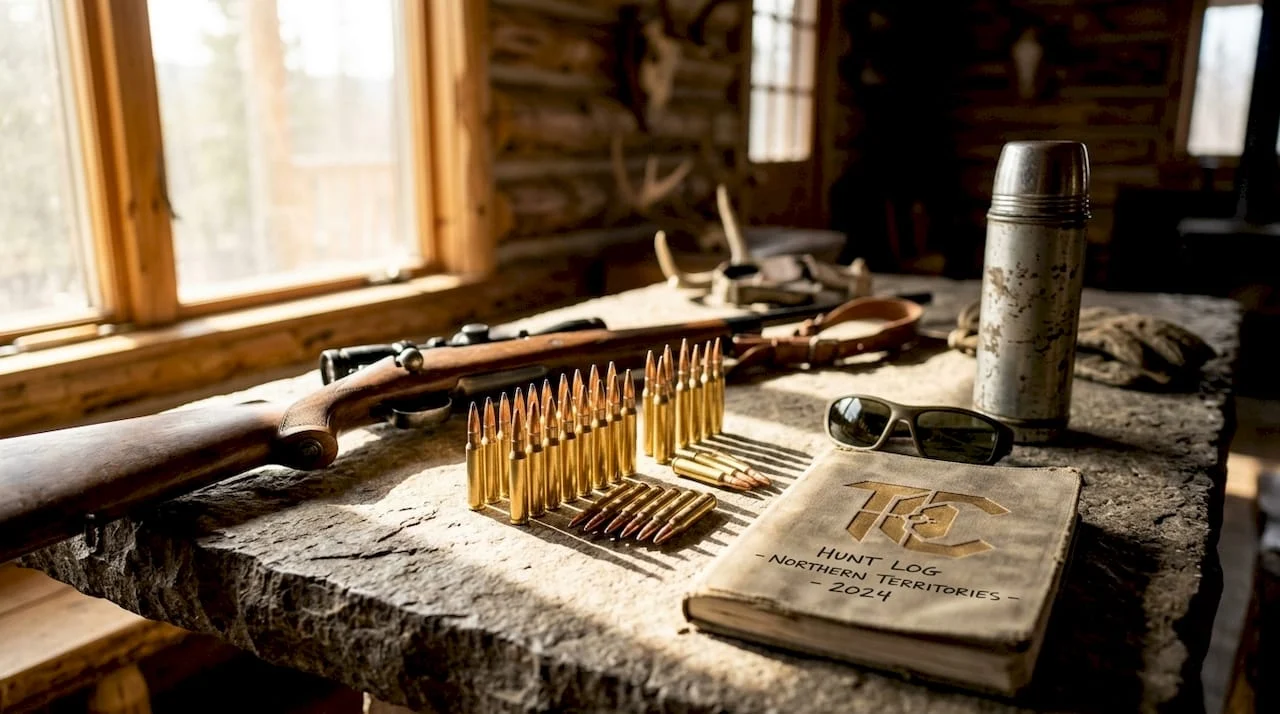
High-performance ammunition types are specialized cartridges engineered to deliver superior accuracy, velocity, and terminal effectiveness across hunting, tactical, and precision shooting applications. The industry term “performance cartridges” covers everything from match-grade ammo types built for sub-MOA precision to effective self-defense rounds designed for reliable expansion. Innovations like Federal’s Peak Alloy casing, Lapua’s TRX polymer-tipped bullets, and the XM1224 HAMR sniper round have pushed the ceiling of what factory ammunition can achieve. Choosing the right round is no different from selecting a well-aged cigar. The details matter, and the wrong choice wastes the potential of an otherwise excellent platform.
1. What makes a round truly high-performance?
High-performance ammunition types are defined by two distinct performance pillars: exterior ballistics and terminal ballistics. Exterior ballistics covers ballistic coefficient, velocity, and wind resistance. Terminal ballistics covers what happens when the bullet reaches the target, including expansion threshold, weight retention, and penetration depth. Both pillars must align with your specific shooting goal. A round optimized for 1,000-yard precision competition performs very differently from one engineered to ethically harvest elk at 300 yards.
Understanding this distinction saves you money and prevents mismatches between your firearm, your application, and your expectations. Manufacturers like Lapua, Federal, Hornady, and Berger each engineer their rounds for specific performance windows. Buying outside that window produces predictable disappointment.

2. Top innovative bullet designs driving ballistic precision
The bullet itself is the most consequential component in any performance cartridge. Four designs dominate the high-performance category in 2026.
- Monolithic solid copper bullets retain close to 100% of their original weight on impact. This makes them the top choice for deep penetration on large or dangerous game where a bonded lead-core bullet might fragment prematurely.
- Bonded bullets fuse the lead core to the copper jacket, producing controlled, mushroom-shaped expansion. Nosler AccuBond and Berger Elite Hunter rounds use this principle to balance expansion diameter with retained weight for medium to large game.
- Hollow point bullets initiate expansion immediately on contact with soft tissue. They are the standard for effective self-defense rounds and short-range hunting where rapid energy transfer matters more than deep penetration.
- Lapua TRX polymer-tipped bullets combine a solid copper body with a polymer tip that initiates expansion at long range. Near 100% weight retention and a lead-free construction make TRX rounds a strong choice for hunters who demand both precision and environmental compliance.
Pro Tip: Match your bullet construction to your terminal goal first, then worry about velocity. A monolithic copper bullet at 2,700 fps through a tough animal beats a fragmenting bullet at 3,100 fps every time.
The role-specific design principle applies equally to tactical rounds. A 75-grain hollow point boat tail like Hornady’s 5.56mm NATO HD SBR load is built for short-barreled rifles where standard loads lose velocity too quickly to perform reliably.
3. How advanced cartridge case technologies improve performance
The cartridge case is not a passive container. It is an engineered pressure vessel, and recent advances have redefined what is possible in smaller, lighter rifle platforms.
Federal’s patented Peak Alloy steel alloy casing allows chamber pressures exceeding 80,000 PSI, a figure that standard brass cases cannot safely sustain. Higher pressure translates directly to higher muzzle velocity without increasing case volume or overall cartridge length. The 7mm Backcountry, which debuted commercially in 2025, was the first civilian chambering to use Peak Alloy technology.
The U.S. Army has adopted Peak Alloy cases across multiple chamberings, which signals real-world confidence in the technology beyond laboratory conditions. For civilian hunters and precision shooters, the practical benefit is meaningful: more velocity from a lighter, more compact rifle without sacrificing reliability. Federal frames Peak Alloy as a system-level advancement that integrates pressure capability, safety, and rifle compatibility rather than simply pushing loads harder.
Key considerations when evaluating Peak Alloy or similar advanced case technology:
- Confirm your rifle’s chamber and headspace are rated for the specific cartridge
- Understand that high-pressure cases require matching primers and powder charges from the manufacturer
- Suppressed and short-barreled rifles benefit most from the velocity gains at reduced case length
- Steel alloy cases may behave differently in extraction compared to brass in some actions
4. Key performance cartridges shaping precision shooting today
Cartridge selection shapes every downstream decision, from rifle platform to optics to shooting distance. Three cartridges stand out in 2026 for their ballistic excellence and versatility.
Lapua 6.5 Creedmoor with AP570 armor-piercing bullet
Lapua’s 6.5 Creedmoor loaded with the 145-grain AP570 bullet produces a very flat trajectory that consistently outperforms .308 Winchester in windy, long-range conditions. The cartridge fits the same action footprint as .308 Winchester, making platform transitions straightforward. Precision shooters and tactical teams have adopted it widely for this combination of compatibility and downrange performance.
| Cartridge | Trajectory at 500 yards | Wind drift advantage | Best application |
|---|---|---|---|
| 6.5 Creedmoor (AP570) | Very flat | Significant over .308 Win | Long-range precision, tactical |
| .308 Winchester | Moderate drop | Baseline | Medium range, hunting, service rifle |
| 6.5 PRC (140gr HPBT) | Flat | Strong | Hunting, precision rifle competition |
| 7mm Backcountry | Very flat | Strong | Mountain hunting, lightweight platforms |
XM1224 HAMR
The XM1224 Hybrid Anti-Materiel Round improves accuracy by 20% over current sniper rounds and 75% over legacy .50 caliber M107 ammunition. Designed for the MK22 Precision Sniper Rifle, it also reduces the combat load a sniper team carries by consolidating ammunition choices. This is not incremental improvement. It represents a fundamental shift in what a precision sniper round can deliver.
Pro Tip: If you shoot 6.5 Creedmoor for hunting, consider the Berger Elite Hunter 156gr EOL load. The high ballistic coefficient and controlled expansion make it one of the most versatile hunting rounds in the cartridge’s lineup.
5. How to choose the best ammunition for your shooting needs
Selecting the best ammunition for hunting or tactical use comes down to a structured evaluation, not brand loyalty. Work through these four criteria in order.
- Define your terminal goal. Are you hunting whitetail at 200 yards, elk at 400 yards, or engaging steel targets at 1,000 yards? Each goal demands a different terminal performance profile.
- Evaluate exterior ballistics. Ballistic coefficient determines how well a bullet resists wind and retains velocity. For shots beyond 300 yards, a BC above 0.500 (G1) is a practical minimum for consistent results.
- Match bullet construction to game size and distance. Monolithic copper for large, tough game. Bonded bullets for medium game at extended range. Hollow points for self-defense and short-range hunting. Manufacturer application guidance exists for a reason. Follow it.
- Test before you commit. Every rifle has a preference. A load that shoots sub-MOA in one 6.5 Creedmoor may open up to 1.5 MOA in another. Buy a box of three or four candidate loads, shoot them from a cold, clean barrel, and let the groups decide.
Budget is a real factor, but it should not drive the decision on hunting ammunition. A box of premium Lapua or Hornady loads costs more than bulk practice ammo, but the terminal performance difference on game is not marginal. It is the difference between a clean, ethical harvest and a tracking job.
6. Comparing popular high-performance ammunition types
A side-by-side view clarifies the trade-offs between the leading performance cartridge categories.
| Ammo type | Velocity | Accuracy | Terminal effect | Price range | Best use |
|---|---|---|---|---|---|
| Monolithic copper (e.g., Lapua TRX) | High | Excellent | Deep penetration, high retention | Premium | Large game, long range |
| Bonded (e.g., Nosler AccuBond, Berger Elite Hunter) | High | Excellent | Controlled expansion | Mid to premium | Medium to large game |
| Hollow point (e.g., Hornady HD SBR, CORBON JHP) | High | Good | Rapid expansion | Mid range | Self-defense, short-range hunting |
| Match-grade OTM (e.g., SIG 6.5 Creedmoor OTM) | Very high | Best in class | Limited expansion | Mid to premium | Precision competition, tactical |
| Peak Alloy cased (e.g., 7mm Backcountry) | Very high | Excellent | Depends on bullet | Premium | Lightweight mountain hunting |
A few practical notes on sourcing and testing:
- Hornady, Lapua, Federal, Berger, and Nosler are the most consistently reliable brands for match-grade ammo types and hunting loads
- Buy from retailers who store ammunition properly. Temperature cycling degrades primers over time
- For hunting, always confirm your chosen load is legal in your jurisdiction, particularly for lead-free requirements in California and parts of Europe
- The .308 vs 30-06 comparison remains relevant for hunters choosing between proven cartridges before committing to newer options
Key takeaways
Matching bullet construction, case technology, and cartridge selection to your specific shooting application is the single most important decision in high-performance ammunition.
| Point | Details |
|---|---|
| Define terminal goals first | Identify whether you need deep penetration, controlled expansion, or flat trajectory before selecting a load. |
| Case technology matters | Federal’s Peak Alloy cases exceed 80,000 PSI, enabling higher velocity in lighter, shorter rifle platforms. |
| Bullet design drives performance | Monolithic copper, bonded, and polymer-tipped designs each serve distinct terminal performance roles. |
| Cartridge choice shapes the system | The 6.5 Creedmoor outperforms .308 Winchester in wind and long-range conditions while fitting the same action. |
| Test before the field | Every rifle shoots differently. Confirm your load’s accuracy in your specific firearm before hunting season. |
What I’ve learned after years of evaluating performance cartridges
The conversation around high-performance ammunition tends to fixate on velocity numbers and pressure figures. Those metrics matter, but they are not the whole story. I have watched shooters buy the fastest, most expensive load on the shelf and then wonder why their groups opened up or why their game ran farther than expected. The answer is almost always a mismatch between bullet construction and application.
The advances from Federal’s Peak Alloy technology and Lapua’s TRX line have genuinely raised expectations for what factory ammunition can deliver. But technology only performs when it is paired correctly with the firearm and the task. A Peak Alloy cased 7mm Backcountry load in a lightweight mountain rifle is a remarkable system. That same round in a platform with incompatible headspace tolerances is a liability.
My practical recommendation is straightforward. Start with the terminal goal, work backward to bullet construction, then select the cartridge and load that delivers the required ballistic coefficient and velocity for your shooting distance. Brands like Lapua, Hornady, and Federal have done the engineering work. Your job is to match the firearm setup to the ammunition, not the other way around. The XM1224 HAMR’s 75% accuracy improvement over legacy .50 caliber rounds is a useful reminder that even well-established platforms have room for dramatic improvement when the ammunition is purpose-built.
Trust the data from your own range sessions more than any review, including this one.
— Brian
Precision-built firearms and premium ammo at Tungstencreektactical

The right ammunition only reaches its full potential in a firearm built to match it. Tungstencreektactical offers custom-built precision firearms chambered and configured to your specific shooting application, whether that is long-range hunting, tactical competition, or everyday carry. Every build accounts for barrel length, twist rate, and chamber tolerances that directly affect how your chosen load performs. Browse the full selection of premium ammunition and precision platforms at Tungstencreektactical, where the mobile app lets you scan products, compare pricing, and unlock VIP benefits before you buy. Good ammunition deserves a rifle that can use it.
FAQ
What are high-performance ammunition types?
High-performance ammunition types are cartridges engineered for superior accuracy, velocity, and terminal effectiveness beyond standard factory loads. They include match-grade, bonded, monolithic copper, and polymer-tipped designs, each optimized for specific shooting applications.
What is the best ammunition for hunting large game?
Monolithic solid copper bullets and bonded bullets like the Nosler AccuBond or Lapua TRX deliver the deep penetration and weight retention needed for large game. Both designs maintain structural integrity through heavy bone and muscle at extended ranges.
How does 6.5 Creedmoor compare to .308 Winchester for long-range shooting?
Lapua’s 6.5 Creedmoor with the 145-grain AP570 bullet produces a flatter trajectory and better wind resistance than .308 Winchester at long range, while fitting the same action footprint. This makes it a direct upgrade for precision shooters already running .308 platforms.
What is Federal’s Peak Alloy case technology?
Federal’s Peak Alloy is a steel alloy cartridge case that withstands chamber pressures exceeding 80,000 PSI, enabling higher muzzle velocities in lighter, shorter-barreled rifles. The U.S. Army has adopted it across multiple chamberings, confirming its operational reliability.
Are match-grade ammo types suitable for hunting?
Match-grade open-tip match bullets are optimized for accuracy, not terminal expansion, which makes them a poor choice for ethical hunting. Purpose-built hunting loads from Lapua, Hornady, or Berger deliver both the accuracy of match-grade ammo and the terminal performance that game animals require.
Recommended
- Top firearm upgrade options to boost performance and safety
- Berger Elite Hunter Rifle Ammunition 6.5 PRC 140gr HPBT 3109 fps 20/ct | Tungsten Creek Tactical
- Berger Bullets Elite Hunter Rifle Ammunition 6.5mm Creedmoor 156gr EOL 2680 fps 20/ct | Tungsten Creek Tactical
- Nosler Accubond Long Range Trophy Grade Rifle Ammunition 6.5mm Grendel 129 gr PT 2350 fps 20/ct | Tungsten Creek Tactical
Related Post

Discover the 5 ways
An introduction to Tactical Luxury Guns & Coffee We founded
Top 5 Best PCC’s
In 2026, the Pistol Caliber Carbine (PCC) market is no