Firearm customization ideas for performance and style
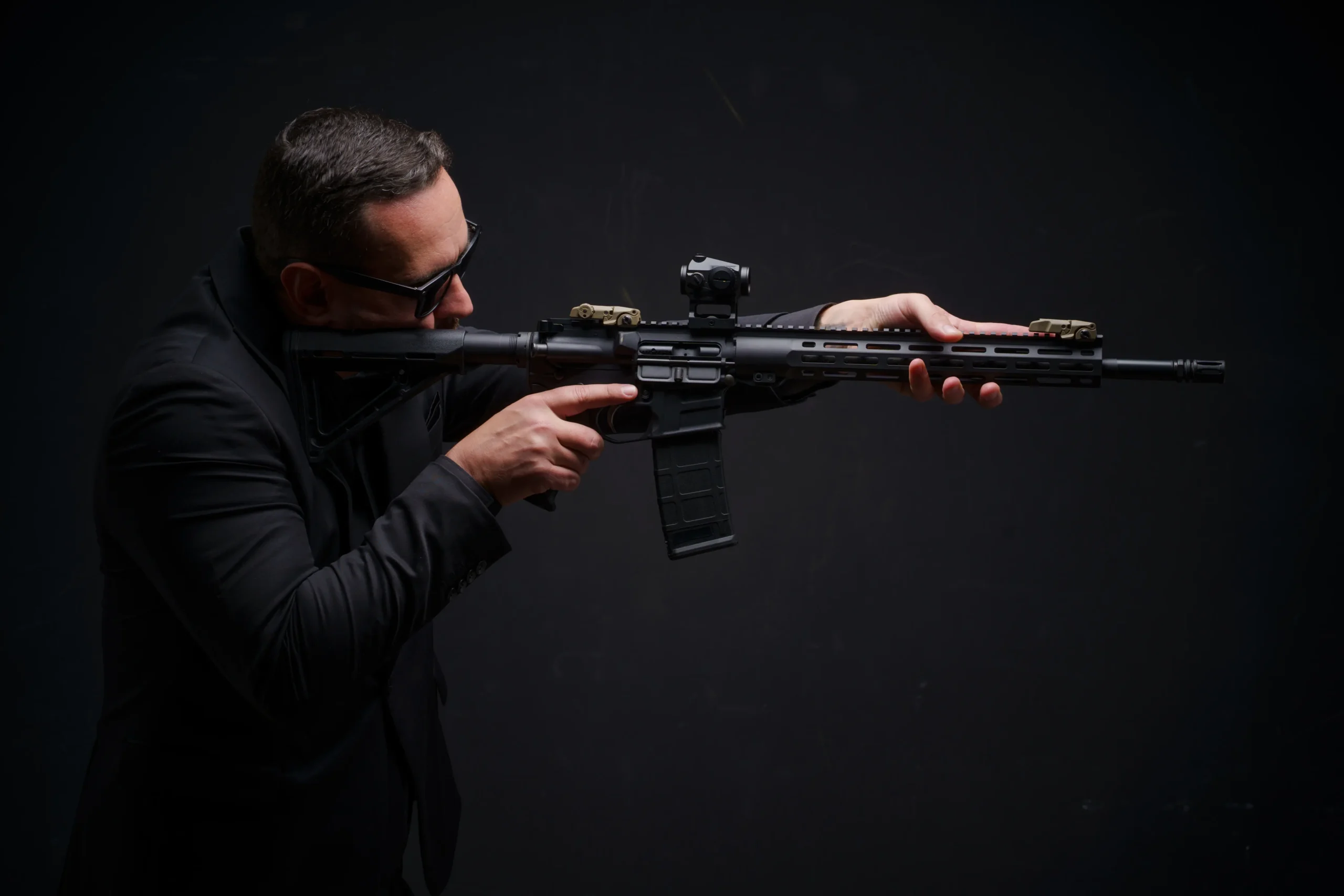
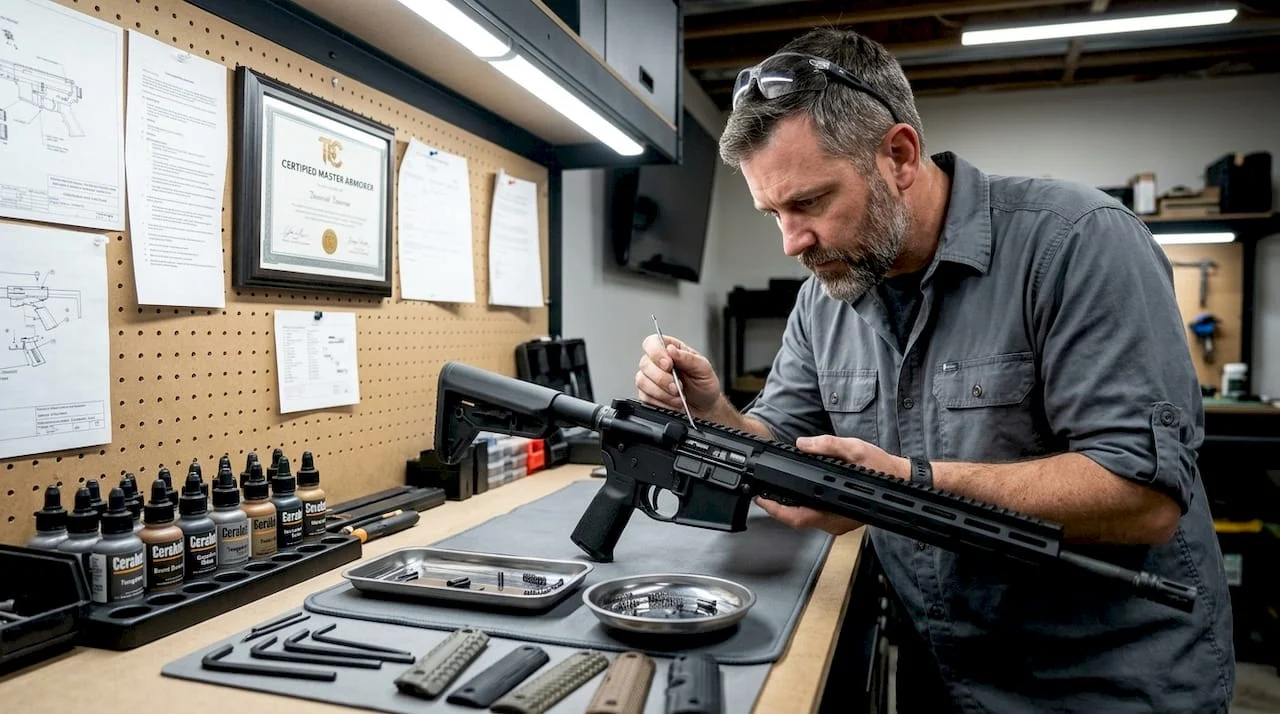
You’ve put time and money into your firearm, and now you want it to work and look exactly the way you need it to. That’s a reasonable expectation, and it’s one that a growing number of shooters share. The problem is that the customization market is enormous. Walk into any gun show or scroll through any retailer, and you’ll find hundreds of options across grips, finishes, optics, and engraving. Knowing where to start, what to prioritize, and how to avoid expensive mistakes is what separates a smart build from a collection of parts that don’t quite come together.
Table of Contents
- Core criteria: What to consider before customizing your firearm
- Functional upgrades: Grips, stocks, and performance parts
- Finishes and coatings: Protection with personality
- Personalized touches: Laser engraving and custom visuals
- Optics and sight systems: Tactical upgrades for every shooter
- Head-to-head comparison: Customization options at a glance
- The real secret to firearm customization: It’s personal
- Ready to upgrade? Explore custom solutions today
- Frequently asked questions
Key Takeaways
| Point | Details |
|---|---|
| Start with core upgrades | Grips, stocks, and basic optics provide the most dramatic functional improvement and set a foundation for further tuning. |
| Coatings protect and personalize | Cerakote and similar finishes add both tough protection and unique looks to any firearm. |
| Invest in what fits your use | Choose modifications that enhance your firearm for your specific needs, not just style trends. |
| Go custom for real uniqueness | Laser engraving and personalized touches make your firearm truly one-of-a-kind. |
| Professional help pays off | Expert gunsmiths and finishers ensure your customizations are safe, reliable, and expertly executed. |
Core criteria: What to consider before customizing your firearm
Before you jump into specific upgrades, let’s break down what matters most when personalizing your firearm. Skipping this step is like picking a coffee blend before you know whether you want something bold for a long day at the range or something smooth for a slow morning. The wrong choice wastes money and creates friction down the road.
Start with the legal landscape. Some modifications are federally regulated, and others vary by state. Barrel length, suppressor attachments, and certain trigger configurations all fall under scrutiny in specific jurisdictions. The custom guns overview at Tungsten Creek Tactical reflects how current trends in modification span both visual and functional upgrades, and any good build starts with knowing which options are available to you legally.
Next, get specific about intended use. A home defense pistol has different needs than a competition rifle or a collector’s showcase piece. Range shooters want consistency and comfort over long sessions. Competitors prioritize trigger weight, grip angle, and sight alignment. Home defense builds favor reliability above all. Knowing your use case prevents you from adding features that sound great but add no real-world value to your specific situation.
Budget deserves honest consideration too. Think of it like selecting a premium cigar: you can spend a little and get something solid, or you can invest more for a truly refined experience. But in both cases, you’re choosing intentionally, not randomly. The modular firearm benefits model is worth studying here, because modular platforms let you build incrementally without committing your entire budget upfront.
Key factors to evaluate before any customization:
- Legal compliance: Federal and state regulations for your specific modifications
- Intended use: Range, home defense, competition, or display
- Budget: Total spend ceiling and priority ranking for each upgrade
- Compatibility: Will this part fit your specific model and configuration?
- Installation complexity: DIY-friendly or gunsmith required?
- Reversibility: Can you undo or swap this out if your needs change?
Pro Tip: Write down your top three performance frustrations with your firearm before shopping. That list becomes your upgrade priority order and keeps you from buying cool-looking parts that solve problems you don’t actually have.
Functional upgrades: Grips, stocks, and performance parts
With your priorities defined, explore how these core upgrades boost both feel and effectiveness. Functional modifications are where most shooters see the most immediate return. A better grip or adjusted stock can transform a firearm that feels awkward into one that feels like a natural extension of your hand.
Ergonomic grips are one of the most impactful and affordable places to start. Poor grip angle and texture cause inconsistency, particularly during extended range sessions when fatigue sets in. The ERGO Enhanced AR15/M16 Grip Kit is a well-regarded example of how upgraded grip design delivers real ergonomic improvements in control and wrist angle. For those running an AR-style platform, tactical AR-15 grips offer additional texture patterns and angles for different hand sizes.
Adjustable stocks are equally important, especially for shooters of varying sizes or those who share a firearm. A stock that’s too long or too short throws off your cheek weld and sight alignment, which directly hurts accuracy. Fixed stocks are lighter and simpler, but adjustable ones accommodate more shooters and shooting positions. If you’re exploring upgrading pistol grips and stocks together, match the geometry of both so they work as a unified ergonomic system.
Trigger upgrades deliver measurable accuracy improvements. Reducing pull weight and eliminating excessive take-up allows for cleaner, more predictable shots. Drop-in trigger assemblies designed for specific platforms make installation straightforward.
| Upgrade type | Key benefits | Average cost |
|---|---|---|
| Ergonomic grip | Improved control, reduced fatigue | $25 to $80 |
| Adjustable stock | Custom length of pull, improved cheek weld | $60 to $200 |
| Enhanced trigger | Shorter reset, consistent pull weight | $80 to $350 |
| Extended mag release | Faster reloads, better ergonomics | $15 to $50 |
| Muzzle device | Recoil reduction, muzzle rise control | $40 to $180 |
Pro Tip: Test any new grip or stock with at least 100 rounds before committing to additional upgrades on top of it. Your body needs time to adapt, and what feels awkward at first often feels natural after a proper break-in.
Finishes and coatings: Protection with personality
Once internal upgrades are dialed in, it’s time to give your firearm a protective and personal outer layer. A quality finish is not just cosmetic. It’s the first line of defense against corrosion, wear, and the elements, and it’s also your clearest opportunity to express your style.
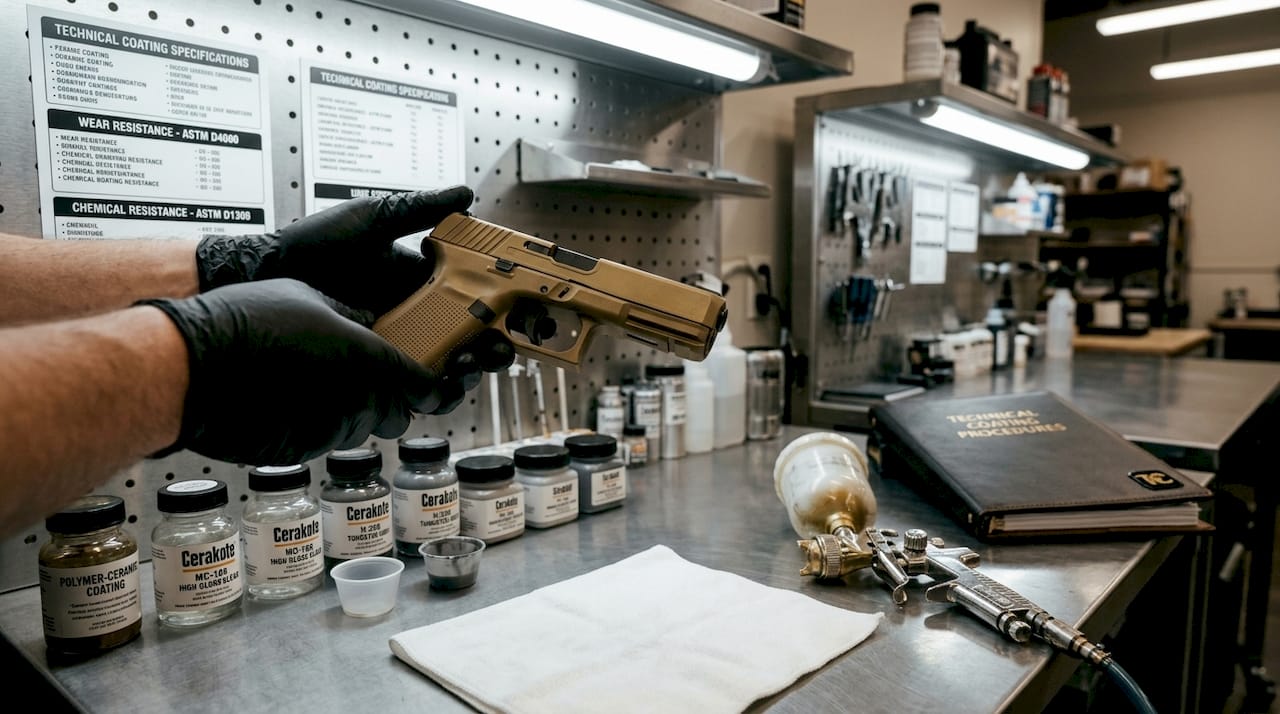
Cerakote is the industry standard for a reason. It’s a polymer-ceramic compound that bonds directly to the metal, offering superior protection against corrosion, abrasion, chemicals, and UV exposure. It’s also available in a near-limitless range of colors and patterns. You can explore Cerakote coating options that range from flat earth and OD green to two-tone patterns and custom graphics. The durability-to-weight ratio is exceptional, and it holds up under hard use.
Traditional bluing offers a classic, deep finish that many collectors and purists prefer. It’s less durable than Cerakote under harsh conditions but provides excellent corrosion resistance when properly maintained. Anodizing applies primarily to aluminum components and creates a hardened oxide layer that integrates with the metal itself rather than sitting on top of it. As this firearm coatings guide notes, the choice of finish significantly affects both the longevity and visual character of your firearm.
| Feature | Cerakote | Bluing | Anodizing |
|---|---|---|---|
| Appearance | Matte to semi-gloss, custom colors | Deep, classic blue-black | Matte, limited color range |
| Protection level | Excellent | Good | Very good (for aluminum) |
| Durability | Very high | Moderate | High |
| Maintenance needed | Minimal | Regular oiling required | Low |
| Best for | Hard use, outdoor environments | Traditional or collection builds | Aluminum frames and parts |
Key considerations when choosing your finish:
- Environment: Humid, wet, or dusty conditions demand Cerakote’s superior protection
- Maintenance routine: Lower maintenance shooters benefit from Cerakote over bluing
- Base material: Anodizing works only on aluminum, not steel
Pro Tip: If your firearm sees everyday carry use, Cerakote is the clear winner. It resists sweat, holster wear, and the occasional drop far better than traditional bluing, and you won’t need to run firearm maintenance tips nearly as aggressively to preserve its appearance.
Personalized touches: Laser engraving and custom visuals
Now, for those craving more visual impact, let’s look at ways to make your firearm truly one-of-a-kind. Laser engraving is one of the most precise and permanent ways to add personalization. Modern laser systems can etch fine detail at a resolution that rivals professional artwork, which means your design options are only limited by your imagination.
Common engraving styles include:
- Text: Initials, names, military unit designations, or meaningful phrases
- Logos and emblems: Unit patches, patriotic symbols, brand graphics
- Artwork and patterns: Geometric designs, wildlife, or custom illustrations
- Serial number enhancement: Adding contrast or framing to existing markings
Popular locations for engraving include the receiver, slide, barrel, grip panels, and magazine baseplate. Each location offers a different canvas and visibility level. The receiver and slide are the most visible, while the baseplate is a subtle option favored by shooters who want a personal touch that only they see during a reload.
Durability is high with laser-engraved marks because the process removes metal rather than adding a surface layer. That means there’s no coating to wear off. Cost varies based on design complexity, surface area, and the type of metal involved. The laser engraving technology used by professional gunsmiths ensures precision that DIY tools simply can’t match.
“The best custom engravings tell a story without trying too hard. One clean, well-placed design on the right surface says more than a firearm covered from end to end in decoration. Restraint is part of the craft.” — Professional gunsmith perspective on custom engraving design
Optics and sight systems: Tactical upgrades for every shooter
Beyond aesthetics and ergonomics, the right sight system can instantly elevate your shooting performance. Optics upgrades are among the most impactful modifications for practical use, and the right selection depends heavily on how and where you shoot.
Red dot sights excel at close to mid-range shooting. They’re fast to acquire, easy to use under stress, and don’t require eye alignment the way traditional iron sights do. For home defense and competitive shooting, a quality red dot is often the single biggest accuracy improvement available. Magnified scopes make sense when precision at distance is the goal, such as in 3-gun competition or hunting applications. The tradeoff is added weight and a narrower field of view at close range.
Backup iron sights (BUIS) provide redundancy. Many experienced shooters run a red dot with iron sights as a backup, so a dead battery never leaves them without an aiming solution. As firearm tech trends show, the integration of technology into modern optics continues to accelerate, with motion sensors, auto-brightness adjustments, and longer battery life becoming standard.
Steps to choose and install your optic:
- Define your engagement distance: Under 50 yards favors red dots; 100 yards and beyond benefits from magnification
- Check mounting compatibility: Confirm your rail system matches the optic’s mounting footprint
- Set a realistic budget: Quality red dots start around $150; premium magnified scopes run $500 and up
- Install and torque properly: Follow manufacturer specifications to avoid zero shift from over-torquing
- Zero at your primary engagement distance: A 25-yard zero works well for most defensive and competition setups
- Log your zero data: Note your settings so you can return to zero quickly after removal
Pro Tip: Start with a co-witnessed iron sight setup before relying entirely on your optic. This forces you to understand your sights at a fundamental level and gives you a reliable fallback position.
Head-to-head comparison: Customization options at a glance
To wrap up the list, compare your top options using this quick reference to guide your next move.
| Upgrade type | Style impact | Performance gain | Estimated cost | Install difficulty |
|---|---|---|---|---|
| Ergonomic grip | Moderate | High | $25 to $80 | Easy |
| Adjustable stock | Moderate | High | $60 to $200 | Easy to moderate |
| Trigger upgrade | Low | Very high | $80 to $350 | Moderate |
| Cerakote finish | Very high | Moderate | $150 to $400 | Professional |
| Laser engraving | Very high | None | $50 to $300 | Professional |
| Red dot optic | Moderate | Very high | $150 to $600 | Easy |
| Muzzle device | Low | High | $40 to $180 | Easy |
For shooters just starting out on their first customization build, the custom guns reference is a solid starting point. For additional context on how professionals approach aftermarket modification tips, understanding how choices compound over time helps you avoid redundant spending.
Recommended first modifications for new customizers:
- Grip upgrade: Immediate ergonomic payoff at low cost
- Red dot sight: Biggest accuracy improvement for most shooters
- Trigger job: Consistency gains that build long-term skill
- Cerakote or protective finish: Protects your investment while adding personal style
The real secret to firearm customization: It’s personal
Here’s the perspective that most customization guides miss entirely. The firearm world tends to glorify maximum configurations: the fullest build, the most optics, the most color. But the shooters who get the most out of their gear are usually the ones who make fewer, more deliberate choices.
The most overlooked modifications are often grip tape, a minor trigger adjustment, or a simple coating that protects what you already have. None of these make headlines, but all of them make a real difference in feel and reliability. A shooter who is deeply comfortable with a minimally customized firearm will outperform someone running a $3,000 build they don’t fully understand.
Smart customization aligns your firearm to your actual life, not to what looks good on a forum or performed well in someone else’s use case. The custom gun examples we see come through our shop confirm this consistently: the builds that hold up and deliver satisfaction over time are the ones built around a clear purpose, not a shopping cart.
Don’t underestimate the power of subtle changes either. Sometimes a different grip angle or a lighter trigger spring changes everything about how a session at the range feels. These small refinements are like dialing in the grind on a coffee brew: the beans were already good, but the adjustment makes the whole experience click.
Ready to upgrade? Explore custom solutions today
If you’re inspired to make your firearm your own, the next step is simple.
At Tungsten Creek Tactical, our team works directly with shooters to turn well-considered ideas into real, functional builds. Whether you’re looking for a professional-grade coating, a precision engraving project, or a full custom build from the ground up, we have the tools, the experience, and the inventory to make it happen. Our custom gun services cover everything from consultation to completion, and our laser engraving options give your firearm a permanent personal mark. Browse our full catalog, use our mobile app to scan and compare products, and reach out to our team when you’re ready to start building.
Frequently asked questions
What customization ideas offer the biggest impact for the money?
Grips, stocks, and durable coatings like Cerakote often deliver the most noticeable performance and style boosts within a modest budget.
Is it legal to customize my firearm?
Most customizations are legal, but some modifications may be regulated in your area, so always check local and federal laws before starting. Reviewing current modification trends with a knowledgeable gunsmith can help you stay compliant.
How do I pick the right optic for my firearm?
Match the optic to your intended use, such as red dots for close range or magnified scopes for precision shooting. Reviewing firearm technology insights can help clarify which systems suit your platform and budget.
Does a custom coating protect my firearm as well as look good?
Yes, coatings like Cerakote provide enhanced protection against corrosion and wear in addition to limitless style options. Learn more through this detailed firearm finishes guide.
Can I easily reverse or change most customizations later?
Many upgrades, such as grips, stocks, and even some coatings, can be swapped or refinished if your needs or style change, as outlined in this coatings and finishes overview.
Recommended
Related Post

Discover the 5 ways
An introduction to Tactical Luxury Guns & Coffee We founded
Top 5 Best PCC’s
In 2026, the Pistol Caliber Carbine (PCC) market is no