What Is a Tactical Pen? Uses, Features, and Benefits

A tactical pen is defined as a writing instrument engineered to survive repeated full-force impacts while functioning as a discreet self-defense tool. Built from aircraft-grade aluminum such as 6061-T6 or 7075-T6, titanium, or stainless steel, these pens concentrate striking force on a small surface area to deter threats. The category originated around 2005–2006, drawing from kubaton-style martial arts impact tools and adapting them into a functional writing instrument. For anyone serious about everyday carry and preparedness, a tactical pen sits at the intersection of utility and readiness. It writes reliably, carries legally, and performs when it matters most.
What is a tactical pen made of, and why does it matter?
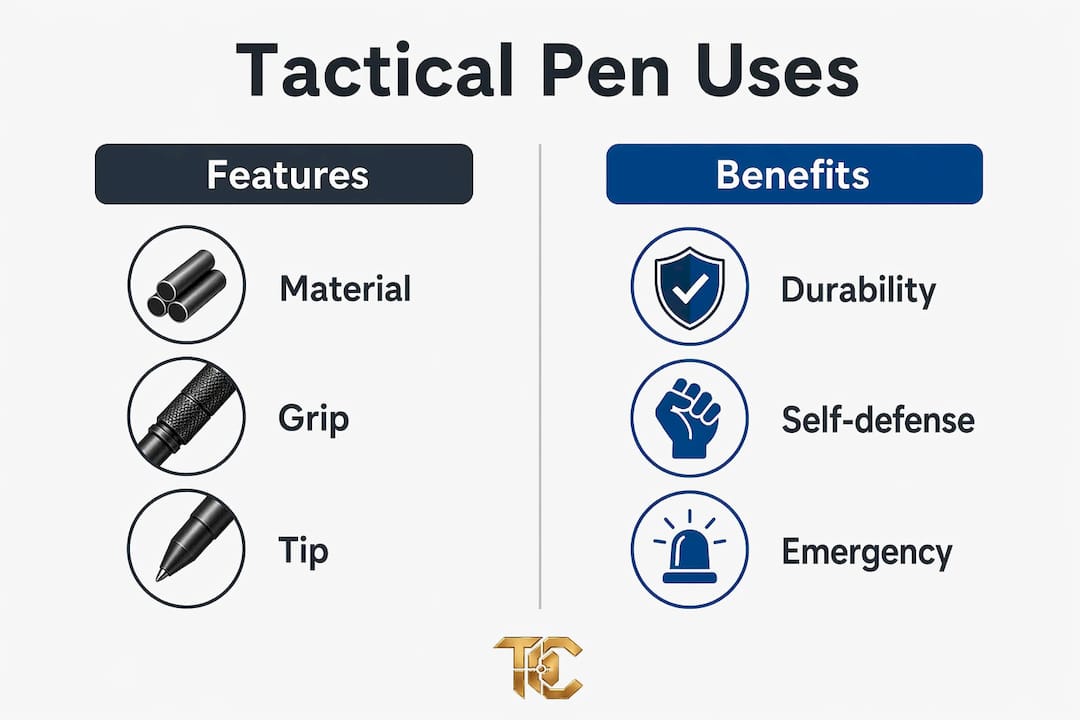
The materials in a tactical pen determine everything: durability, weight, grip, and striking effectiveness. Aircraft-grade aluminum alloys, specifically 6061-T6 and 7075-T6, are the most common choices. Titanium offers a higher strength-to-weight ratio and resists corrosion better than aluminum. Stainless steel versions run heavier but deliver more mass behind each strike.
Key construction features
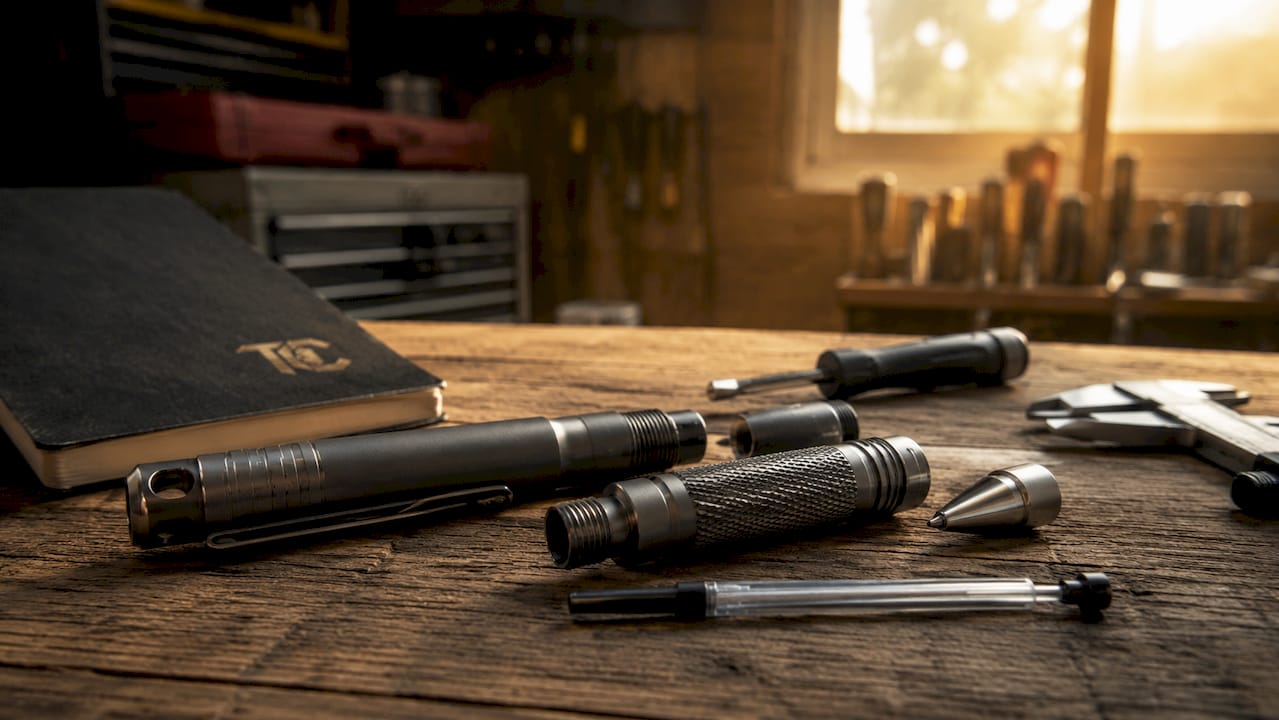
Beyond raw material, the design details separate a capable tactical pen from a novelty item:
- Textured grip surfaces: Aggressive knurling or ridged patterns prevent the pen from slipping during a forceful strike, especially under stress or wet conditions.
- Hardened tungsten carbide tips: These tips concentrate impact force on a pinpoint area and are hard enough to break tempered automotive glass in an emergency.
- Pressurized ink cartridges: Fisher Space Pen refills are the industry standard, writing reliably upside down, in wet conditions, and across extreme temperature ranges.
- Weight distribution: A heavier rear section shifts the center of mass toward the striking end, adding force without requiring a longer swing.
- Body diameter and thickness: A thicker barrel fills the hand more completely, reducing the chance of the pen rotating on impact.
Think of it like selecting a good fixed-blade knife. The steel matters, but the geometry and handle design determine whether it actually performs under pressure.
Pro Tip: Choose a tactical pen with a body diameter between 0.5 and 0.6 inches. That range fills most adult hands without requiring a white-knuckle grip, which preserves fine motor control under stress.
How does a tactical pen work as a self-defense tool?
A tactical pen works as a force multiplier by concentrating impact pressure onto a narrow reinforced tip. The physics are straightforward: pressure equals force divided by surface area. A bare-hand strike spreads force across several square inches of knuckle. The pen’s tip focuses that same force onto a fraction of a square inch, making each strike significantly more painful and effective as a deterrent.
Effective use requires knowing where to strike. Targeting soft tissue and vulnerable anatomical points produces the fastest results:
- Throat: A strike here disrupts breathing and creates immediate disorientation.
- Eyes: Even a near-miss causes a flinch response that breaks an attacker’s focus.
- Solar plexus: A direct hit causes involuntary muscle spasm and temporary loss of breath.
- Joints (wrists, elbows, knees): Strikes to joints cause sharp pain and can compromise an attacker’s grip or mobility.
- Temples and mastoid area: These bony prominences are sensitive to focused impact and can produce stunning effects.
A tactical pen is not a weapon that wins fights. It is a tool that buys you seconds. Use those seconds to create distance and exit the situation. Prioritizing escape over engagement is the core principle behind every credible self-defense framework.
Grip retention is the most overlooked skill in tactical pen training. The palm-stop technique seats the rear cap of the pen against the heel of the palm, preventing the pen from sliding backward through the hand during impact. Without it, a forceful strike can drive the pen into your own fingers. Knurled grip surfaces help, but technique is what keeps the tool in your hand when it counts.
Pro Tip: Practice the palm-stop grip with an inert training pen before carrying live. Muscle memory built in low-stress practice is the only kind that survives high-stress situations.
What can you do with a tactical pen beyond self-defense?
The benefits of tactical pens extend well past close-quarters defense. Multi-function features make these tools genuinely useful across a range of everyday and emergency scenarios.
- Glass breaking: The tungsten carbide tip shatters tempered automotive glass with a single focused strike to a corner. This is the most practically valuable emergency feature for most carriers.
- Integrated tools: Many models include a fire-starting flint, a flathead screwdriver tip, a compass, a safety whistle, or a bottle opener built into the body or cap.
- All-condition writing: Pressurized cartridges write on wet paper, at extreme angles, and in temperatures where standard ballpoint ink fails. This matters for first responders, field workers, and anyone who takes notes outdoors.
- Travel and office carry: A tactical pen passes through most security checkpoints without scrutiny because it looks and functions like a standard pen. This is the gray man carry principle in practice.
The table below shows how tactical pen features map to real-world use cases:
| Feature | Primary use | Emergency application |
|---|---|---|
| Tungsten carbide tip | Focused impact strikes | Breaking automotive or building glass |
| Pressurized ink cartridge | Reliable writing in any condition | Documentation in field or disaster scenarios |
| Knurled grip body | Secure hold during writing | Grip retention during defensive strikes |
| Integrated fire starter | Everyday convenience | Emergency fire starting in survival situations |
| Compact metal body | Pocket or clip carry | Improvised pry tool or window punch |
The role of knives in outdoor survival parallels the tactical pen’s position in an everyday carry kit. Neither tool replaces a dedicated system, but both fill gaps that no single tool covers alone.
What are the legal considerations for carrying a tactical pen?
Tactical pens are legal in most jurisdictions because their primary function is writing. That legal neutrality is the tool’s biggest carry advantage. A standard folding knife or pepper spray triggers scrutiny in many environments. A tactical pen does not.
That said, legal carry requires attention to a few consistent rules:
- Avoid overtly aggressive designs: Models with spikes, serrated edges, or obvious weapon aesthetics attract legal scrutiny even when the underlying tool is legal. Choose a design that reads as a premium pen, not a weapon.
- Do not brandish: Displaying a tactical pen as a threat before physical contact occurs can constitute menacing or assault in many states, regardless of whether you use it.
- TSA and air travel: The TSA does not explicitly ban tactical pens, but individual screeners have discretion. Carry your pen in a checked bag on flights to avoid confiscation.
- Know your state’s self-defense laws: Using any tool in self-defense is governed by your jurisdiction’s use-of-force statutes. The pen’s legality as a carry item does not automatically justify its use in every defensive situation.
- Workplace and venue restrictions: Some employers and venues prohibit weapons of any kind. A tactical pen’s discreet appearance helps, but knowing the rules of your environment is your responsibility.
The non-lethal carry guide from Tungstencreektactical covers the broader legal and practical framework for carrying defensive tools that do not cross into lethal force territory.
Key takeaways
A tactical pen is the most legally accessible everyday carry defense tool available, but its effectiveness depends entirely on material quality, grip technique, and consistent training.
| Point | Details |
|---|---|
| Material determines performance | Choose 6061-T6 or 7075-T6 aluminum, titanium, or stainless steel for reliable durability. |
| Grip technique is non-negotiable | The palm-stop method prevents self-injury and keeps the pen in your hand during strikes. |
| Multi-function extends carry value | Glass-breaking tips, pressurized cartridges, and integrated tools make tactical pens useful daily. |
| Legal carry requires discretion | Avoid aggressive-looking designs and never brandish the pen as a threat before contact. |
| Training multiplies effectiveness | A tactical pen enhances existing self-defense skills but does not replace them. |
Brian’s take: what most people get wrong about tactical pens
Most people who buy a tactical pen treat it like a talisman. They clip it to their pocket, feel prepared, and never practice with it once. That is the wrong approach, and it gives the tool a reputation it does not deserve.
A tactical pen is genuinely useful, but only if you carry it consistently. Consistent carry only happens when the pen writes well every day. I have seen people leave their tactical pen at home because the ink skipped or the cap was annoying to remove. A pen that does not write reliably does not get carried. A pen that does not get carried does not help you in an emergency. Reliable ink performance is not a secondary feature. It is the reason you carry the pen at all.
The other mistake I see constantly is treating the tactical pen as a primary defense tool. It is a last-resort option. Your first line of defense is awareness. Your second is distance management. Your third is verbal de-escalation. The pen comes into play when all of that has failed and you are already in contact with a threat. Train for that specific scenario, not for a general fight. Pair your pen training with broader self-defense skill development and you will carry it with genuine confidence rather than false comfort.
The gray man principle is real and underrated. A pen that looks like a weapon gets you questions before you ever need it. A pen that looks like a quality writing instrument gets you nothing but a signature. That invisibility is a feature, not a compromise.
— Brian
Tactical gear built for people who take preparedness seriously
Tungstencreektactical is built around the same principle that makes a good tactical pen worth carrying: quality tools, honest information, and no shortcuts.

If you are building out your everyday carry kit beyond a pen, Tungstencreektactical offers a full range of tactical accessories for firearm owners and expert guidance on pairing the right gear for your lifestyle. For those ready to go further, the custom firearms service connects you with precision-built options matched to your specific needs. Good preparation is layered. A tactical pen is one layer. Tungstencreektactical helps you build the rest.
FAQ
What is a tactical pen used for?
A tactical pen is used for writing, close-quarters self-defense, and emergency glass breaking. Many models also include integrated tools like fire starters, flashlights, and compasses for broader everyday carry utility.
Are tactical pens legal to carry?
Tactical pens are legal in most jurisdictions because they function primarily as writing instruments. Brandishing one as a weapon or choosing an overtly aggressive design can create legal problems regardless of where you carry it.
How does a tactical pen work for self-defense?
The pen concentrates impact force onto a narrow tungsten carbide tip, increasing pressure on a small surface area. Strikes to soft tissue targets like the throat, eyes, or solar plexus are most effective at creating distance from a threat.
What should I look for in the best tactical pens?
Look for aircraft-grade aluminum or titanium construction, a knurled grip, a hardened tungsten carbide tip, and a pressurized ink cartridge such as a Fisher Space Pen refill. Reliable writing performance is the feature that determines whether you actually carry it every day.
Can you take a tactical pen on a plane?
The TSA does not explicitly ban tactical pens, but individual screeners have discretion to confiscate them. Packing your pen in checked luggage on flights removes that uncertainty entirely.
Recommended
Related Post

Discover the 5 ways
An introduction to Tactical Luxury Guns & Coffee We founded
Top 5 Best PCC’s
In 2026, the Pistol Caliber Carbine (PCC) market is no