What Is Dry Fire Training: A Guide for Gun Owners
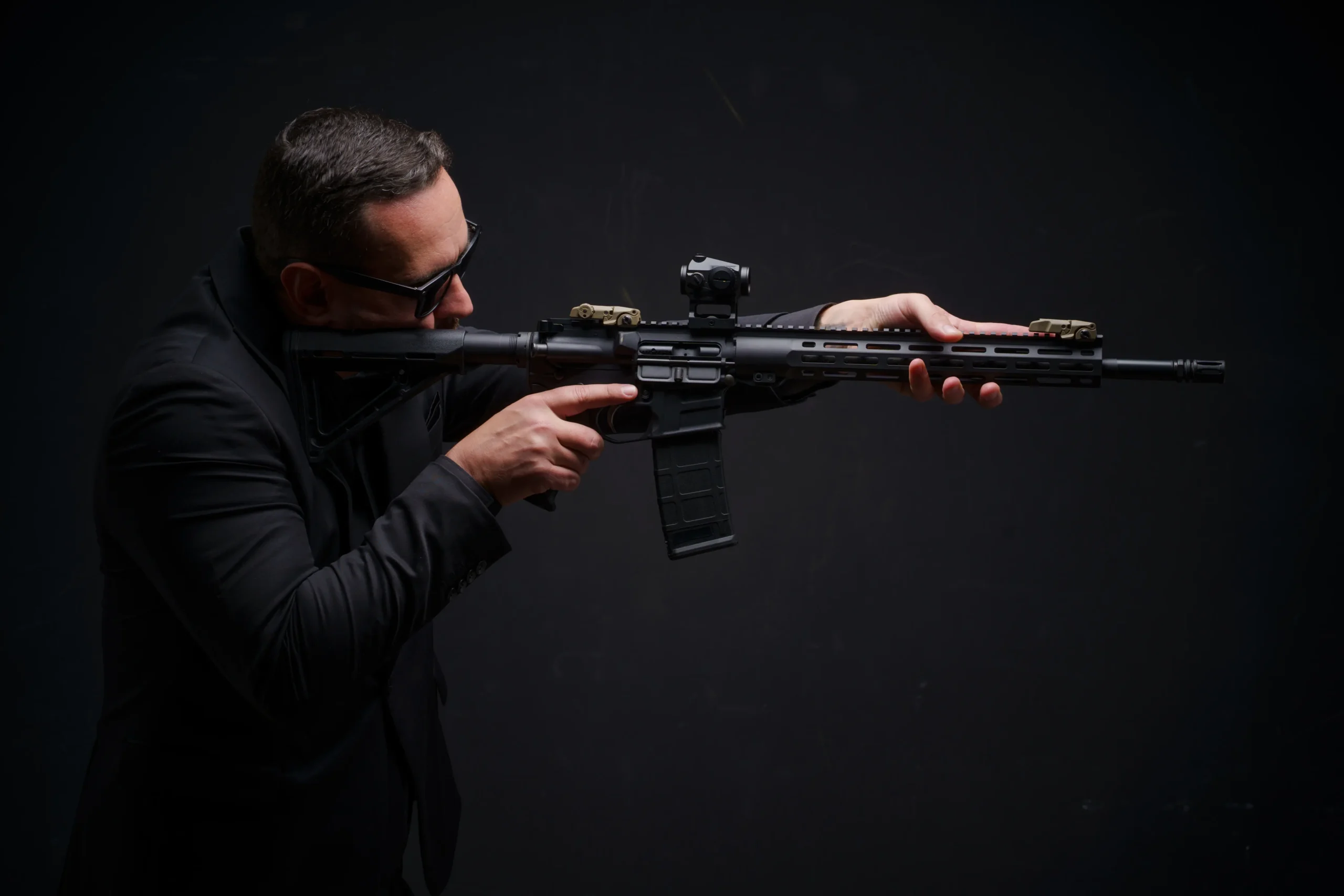
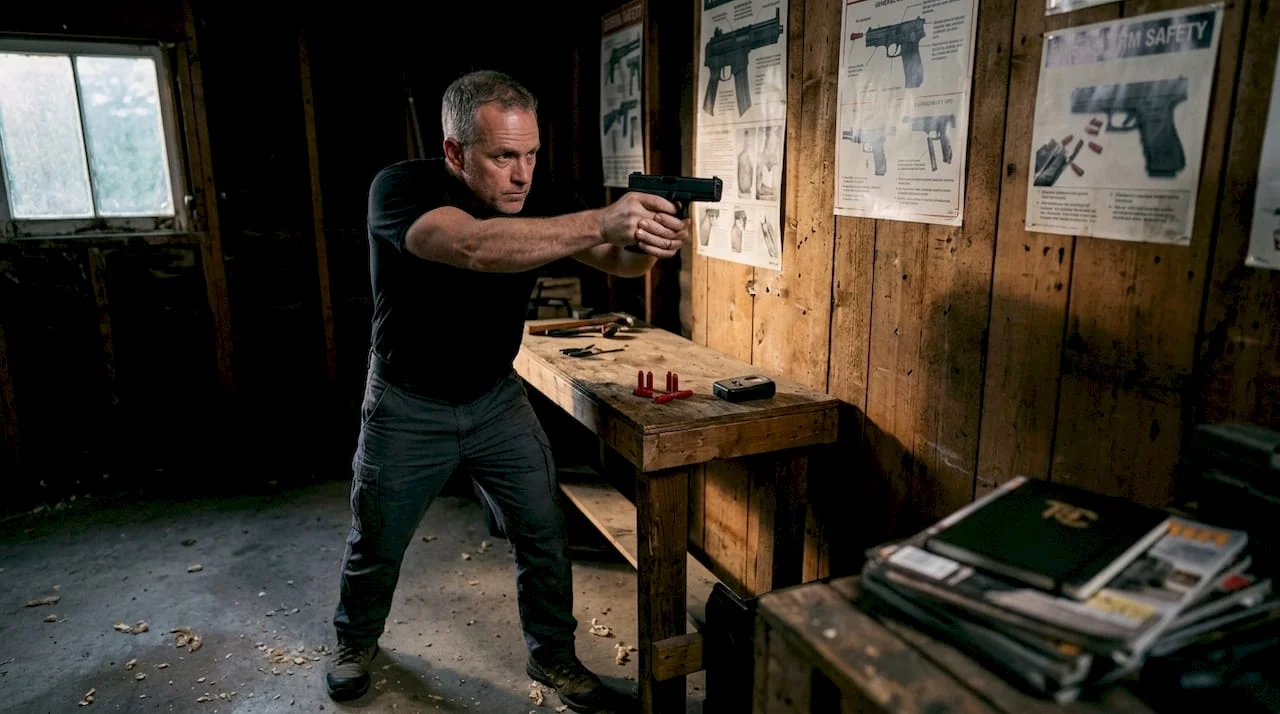
Dry fire training is the practice of working through firearm handling and shooting mechanics with an unloaded gun to build precision and muscle memory without live ammunition. It is not pretend shooting. Focused dry fire practice is the most efficient method available to ingrain mechanical shooting skills, and serious shooters from law enforcement to competitive marksmen rely on it daily. Tools like laser training cartridges, snap caps, and shot timers have made dry fire more measurable and engaging than ever. If you want to sharpen trigger control, sight alignment, and draw speed without burning through ammunition, dry fire is where that work gets done.
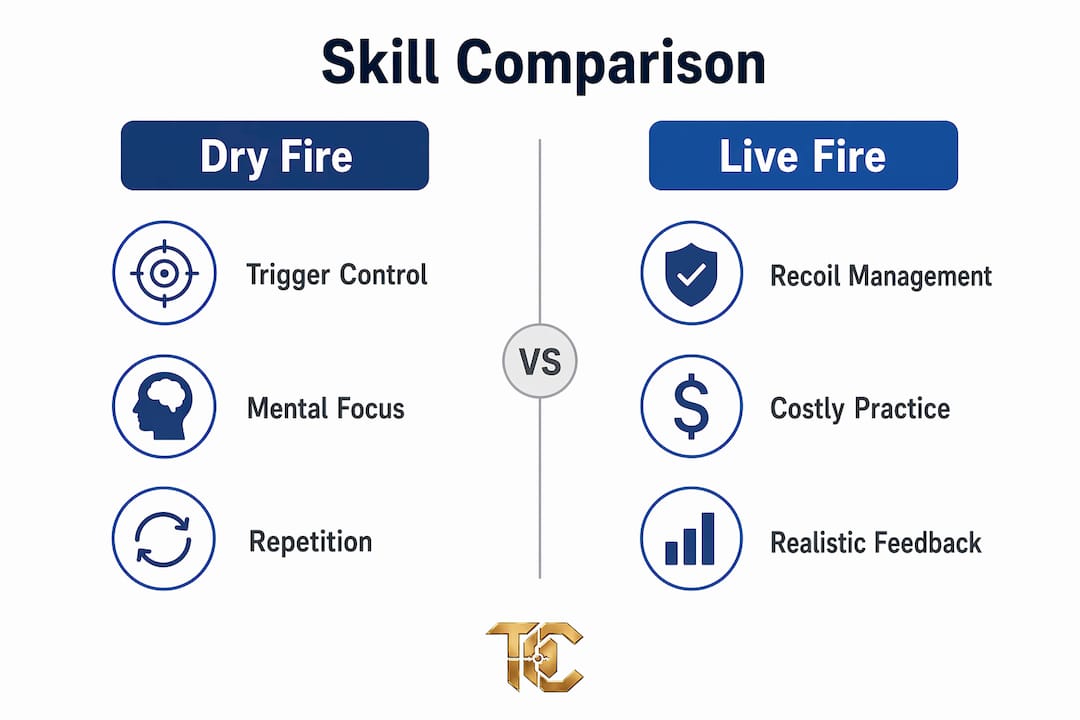
What is dry fire training and how does it compare to live fire?
Dry fire training is defined as structured practice with a verified unloaded firearm, targeting the mechanical fundamentals that determine accuracy: trigger control, sight alignment, grip, and draw presentation. The term “dry fire” refers to the absence of a live cartridge. The industry also uses the phrase “dry practice” to distinguish deliberate skill-building sessions from casual handling.
The efficiency advantage is significant. 50 focused dry fire trigger presses can build better trigger control than 200 rounds of live fire. That ratio exists because live fire introduces noise, recoil, and cost, all of which pull your attention away from the mechanical trigger break you are trying to perfect. Dry fire isolates the one variable that matters most for accuracy.
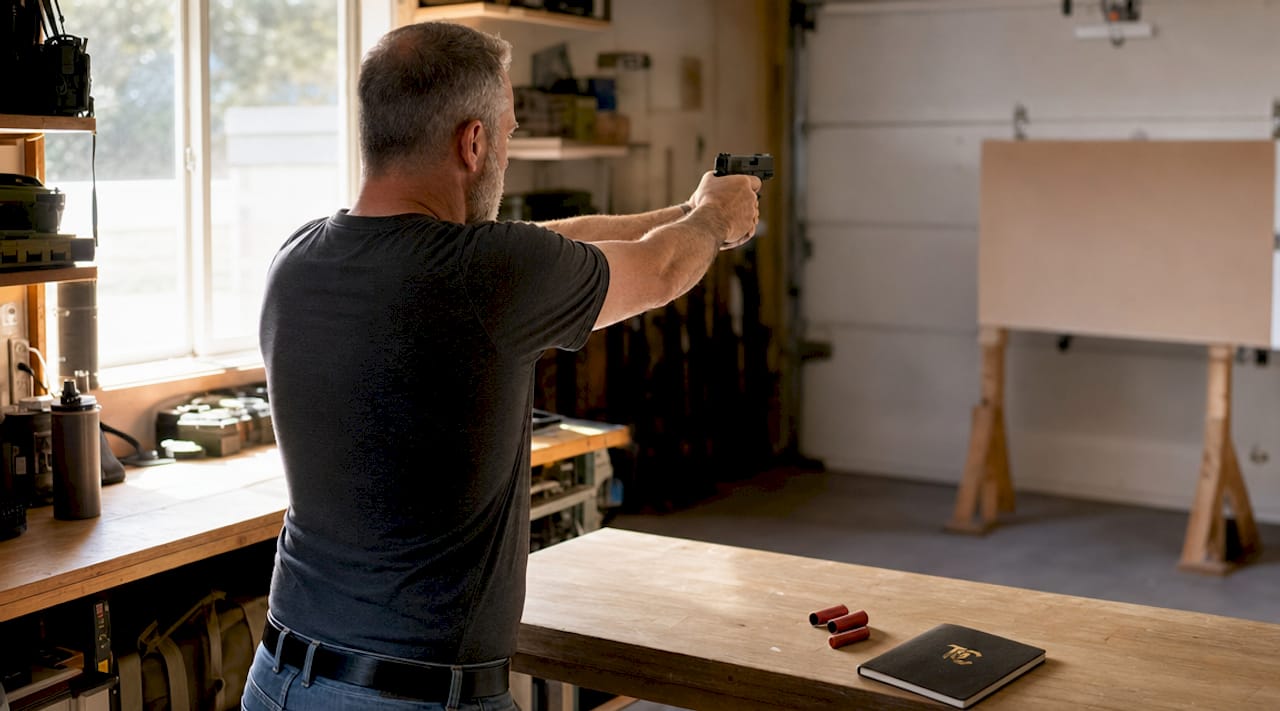
That said, dry fire has a real limitation. Recoil management requires live fire because the bullet exits the barrel before recoil physically moves the firearm. Dry fire cannot replicate that physical feedback. Think of dry fire as the foundation and live fire as the stress test. You build the skill in dry practice, then confirm it holds under recoil at the range.
The mental benefit is equally important. Repetition during dry fire programs neural pathways that allow better mechanical execution under stress, reducing conscious thought during real situations. This is what coaches call unconscious competence. A well-practiced draw becomes automatic, the same way a skilled barista pulls a shot without thinking about each step.
| Skill Area | Dry Fire | Live Fire |
|---|---|---|
| Trigger control | Highly effective | Effective but costly |
| Sight alignment | Highly effective | Effective |
| Recoil management | Not trainable | Required |
| Draw speed | Highly effective | Moderate |
| Flinch reduction | Highly effective | Less effective |
Pro Tip: Shift your mental focus from “firing a shot” to “isolating the trigger break”. That single mindset change makes each dry fire repetition far more productive.
What are the best dry fire training exercises for skill building?
Structured dry fire practice techniques follow a session format: warmup, primary drills, challenge drills, and cooldown. Each phase has a purpose. The warmup reconnects your grip and stance. Primary drills build the core skills. Challenge drills push your limits. The cooldown reinforces clean, controlled movement before you put the firearm down.
Three drills form the backbone of most dry fire programs:
- Wall Drill: Stand close to a blank wall, aim at a small dot or piece of tape, and press the trigger without moving the front sight. The wall removes target distraction and forces you to focus entirely on the mechanical break. Using a blank wall helps you focus on the front sight rather than chasing target distractions.
- Draw-to-First-Shot: Starting from your carry position, draw and acquire a sight picture as quickly and cleanly as possible. This drill builds the muscle memory that determines how fast and accurately you can get on target from a standing start.
- Target Transitions: Set up two or more aiming points and practice moving your sights between them with controlled speed. This trains the eye-hand coordination needed for multiple threat scenarios.
Experts recommend 10 to 15 minute sessions three to four times per week for maximum skill retention. Short and frequent beats long and sporadic every time. A 12-minute session done four days a week produces more durable skill than a 90-minute session once a week. Think of it like practicing a musical instrument: daily repetition builds the neural grooves that make technique automatic.
Shot timers and par-time apps like the PACT Club Timer or the free Dry Fire Par Timer app add objective measurement to your sessions. Without a timer, you are guessing at your progress. With one, you have data.
Pro Tip: Avoid practicing past fatigue or loss of focus. The moment your form degrades, stop the session. Ten perfect repetitions outperform fifty sloppy ones every time.
How to dry fire safely and set up your practice space
Safe dry fire practice starts with a non-negotiable protocol before you touch the firearm. Safety protocols require verifying that no ammunition is present in the firearm or the practice area before beginning any drill.
Follow these steps every single session, without exception:
- Remove all ammunition from the room. Not just the magazine. All of it. Put it in a separate room or a locked container.
- Remove the magazine from the firearm and set it aside.
- Lock the slide or action back and visually inspect the chamber.
- Insert a finger to physically confirm the chamber is empty.
- Perform this check a second time. Accidents happen when people skip the second check.
- Announce out loud: “This firearm is clear and safe for dry fire.”
- Place snap caps in the chamber if your firearm requires them to protect the firing pin.
Your practice space needs a safe backstop. A solid exterior wall, a dedicated bullet trap, or a blank interior wall with no people or pets on the other side all work. High-contrast simple targets help you focus on the front sight rather than the target itself. A small adhesive dot on a blank wall is often more effective than a printed silhouette.
Treat every dry fire session with the same mental discipline as live fire. Never point the firearm at a person, a pet, or anything you would not be willing to shoot. That rule does not change because the gun is unloaded.
Pro Tip: Snap caps from brands like A-Zoom or Tipton protect your firing pin during dry fire and give you a tactile reset point. They cost less than a box of ammunition and extend the life of your firearm.
How to measure progress and stay consistent with dry fire routines
Measuring progress turns dry fire from a vague habit into a skill-building program. Benchmark goals like a sub-1.5 second draw-to-first-shot indicate strong proficiency for civilian defenders. That number gives you a concrete target to work toward rather than practicing without direction.
Tracking your progress effectively comes down to a few practical habits:
- Use a shot timer or par-time app. Set a par time slightly faster than your current average and work to beat it consistently before dropping it lower.
- Keep a training journal. Log the date, drills performed, par times, and any notes on what felt off. Patterns become visible over weeks that you would never notice session to session.
- Record video occasionally. A phone propped against a wall captures grip, stance, and draw mechanics that you cannot see from behind the firearm. Watching yourself is often more instructive than any coaching cue.
- Set weekly and monthly goals. “Improve draw-to-first-shot by 0.1 seconds this month” is a goal. “Get better at shooting” is not.
Short, frequent sessions also protect motivation. When you improve marksmanship skills through daily 12-minute sessions, you see measurable improvement week over week. That feedback loop keeps you coming back. Long, infrequent range visits often feel discouraging because the gaps between sessions erode the gains you made.
Consistency compounds. A shooter who completes three 15-minute dry fire sessions per week for six months builds a fundamentally different skill base than one who visits the range once a month.
What technology and tools enhance dry fire practice?
Technology has made dry fire training more engaging and measurable. Laser training cartridges and electronic targets provide visual feedback on shot placement that pure mechanical dry fire cannot offer. These systems improve engagement and allow measurable tracking of accuracy and speed.
| Tool | Best For | Approximate Cost |
|---|---|---|
| A-Zoom snap caps | Firearm protection, basic dry fire | $10 to $20 |
| SIRT training pistol | Beginners, trigger and sight training | $200 to $300 |
| LaserLyte laser cartridge | Intermediate, shot placement feedback | $50 to $100 |
| MantisX sensor system | Advanced, data-driven movement analysis | $150 to $200 |
| PACT Club Timer | All levels, par-time measurement | $100 to $130 |
For beginners, snap caps and a blank wall are enough to start building solid fundamentals. The SIRT training pistol from Next Level Training is a dedicated dry fire tool that emits a laser on trigger press, giving you immediate visual confirmation of where your shot would have landed. It is purpose-built for dry fire and removes the need to reset a real firearm between repetitions.
The MantisX sensor system attaches to your Picatinny rail or magazine base and connects to a smartphone app. It tracks muzzle movement during the trigger press and scores each repetition. For shooters who want data rather than feel, MantisX provides the kind of objective feedback that accelerates improvement. You can also explore laser-based dry fire methods used in other shooting disciplines to understand how visual feedback systems work across different training contexts.
The honest answer on technology: tools amplify good practice but do not replace it. A laser cartridge used with poor trigger discipline teaches you nothing useful. Start with fundamentals, then add technology to confirm and measure what you have already built.
Key takeaways
Dry fire training builds the mechanical shooting fundamentals that live fire confirms, making it the most efficient and cost-effective skill development method available to responsible gun owners.
| Point | Details |
|---|---|
| Core definition | Dry fire is structured practice with an unloaded firearm targeting trigger control, sight alignment, and draw speed. |
| Efficiency advantage | 50 focused dry fire repetitions can outperform 200 live fire rounds for trigger control development. |
| Safety first | Remove all ammunition from the room and verify the chamber twice before every session, without exception. |
| Session structure | 10 to 15 minute sessions three to four times per week produce better retention than long, infrequent practice. |
| Measure everything | Shot timers, par-time apps, and training journals turn dry fire from habit into a measurable skill program. |
Why dry fire changed how I think about shooting practice
I spent years treating dry fire as a warm-up, something you did for five minutes before a range session. That was a mistake. The shift happened when I started timing my draw-to-first-shot and realized my live-fire performance was inconsistent not because of recoil management but because my draw was sloppy. Two weeks of deliberate Draw-to-First-Shot dry fire sessions, timed with a PACT timer, dropped my average by nearly half a second.
The lesson I keep coming back to is intentionality. A sloppy dry fire session is worse than no session at all because you are programming bad habits. Training scars develop when you repeat poor mechanics without correction, and they are genuinely difficult to undo. If you are new to structured dry fire, get at least one session with a qualified instructor before building a solo routine. The investment pays for itself.
The other thing I would tell any shooter starting out: do not wait until you have a SIRT pistol or a MantisX system. A cleared firearm, a dot on the wall, and a free par-time app on your phone are enough to start. The fundamentals of dry fire practice do not require expensive gear. They require attention and repetition. Start small, stay consistent, and the results will follow.
— Brian
Build your dry fire setup with Tungstencreektactical
Dry fire training works best when your firearm fits your hand, your grip, and your carry setup. A gun that does not fit you well creates compensations that dry fire will ingrain rather than fix.

Tungstencreektactical offers precision-built custom firearms tailored to your shooting goals, whether you are building a concealed carry setup or a competition-ready platform. The right firearm makes every dry fire repetition more productive. Tungstencreektactical also carries the tactical accessories that complement your training, from holsters to laser training aids. If you are not sure which firearm fits your skill level and goals, the firearms comparison guide is a practical starting point. Reach out to the team directly for personalized guidance.
FAQ
What is dry fire shooting in simple terms?
Dry fire shooting is practicing firearm mechanics with a verified unloaded gun to build trigger control, sight alignment, and draw speed without live ammunition. It is the same physical motion as live fire, minus the cartridge and recoil.
Is dry fire training safe for your firearm?
Most modern centerfire firearms handle dry fire without damage, but snap caps from brands like A-Zoom or Tipton protect the firing pin and are recommended for regular practice. Always confirm your specific firearm’s manufacturer guidelines before starting a dry fire program.
How often should you dry fire practice?
Structured sessions of 10 to 15 minutes three to four times per week produce the best skill retention. Consistency and focus matter more than session length.
Can dry fire training replace live fire entirely?
Dry fire cannot train recoil management, which still requires live fire. The two methods complement each other: dry fire builds the mechanical foundation and live fire confirms it holds under real conditions.
What is the best dry fire drill for beginners?
The Wall Drill is the best starting point for beginners. Stand close to a blank wall, aim at a small dot, and press the trigger without moving the front sight. It isolates trigger control with no distractions and builds the most critical fundamental in shooting accuracy.
Recommended
Related Post

Discover the 5 ways
An introduction to Tactical Luxury Guns & Coffee We founded
Top 5 Best PCC’s
In 2026, the Pistol Caliber Carbine (PCC) market is no