How to Improve Marksmanship Skills: a Practical Guide
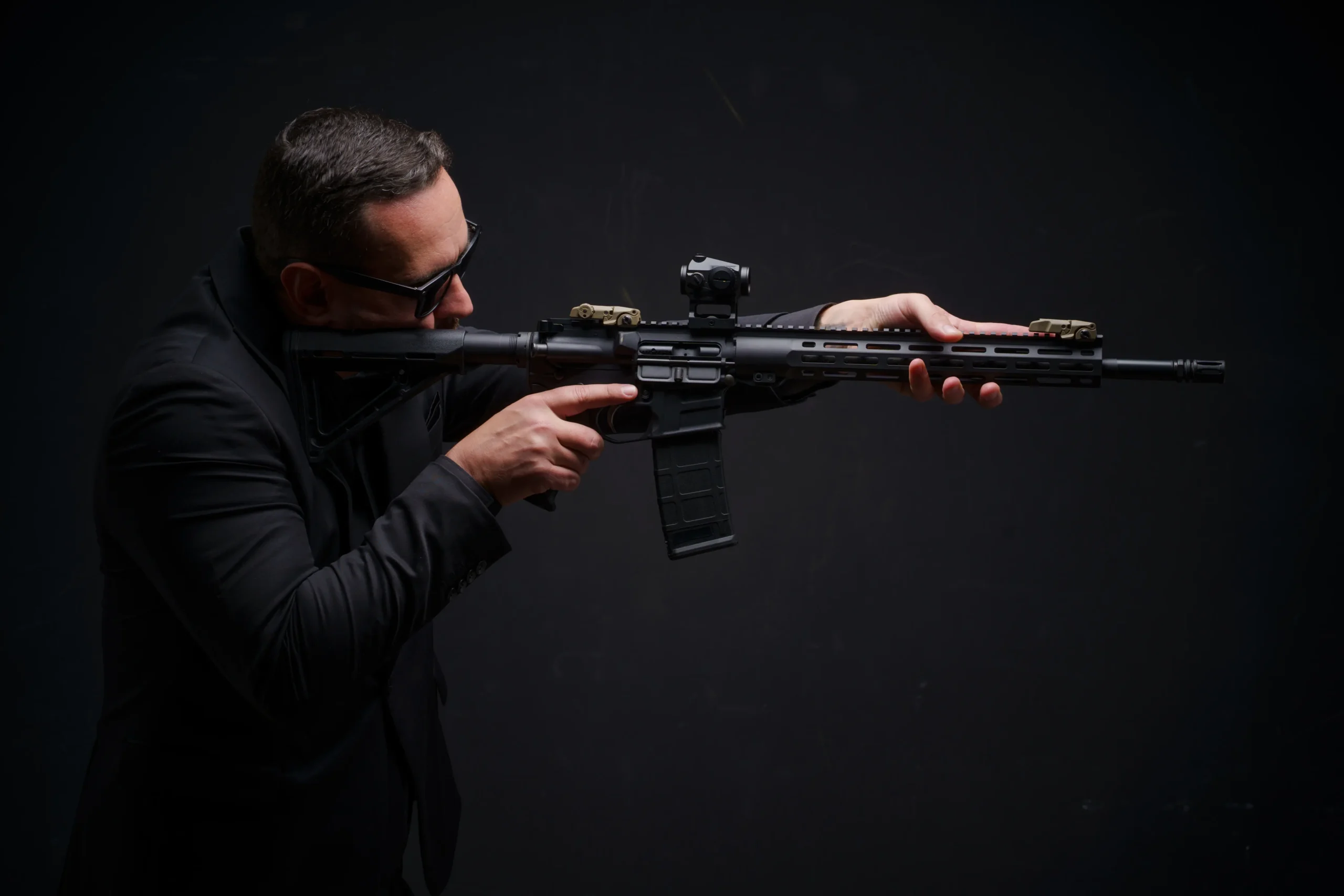
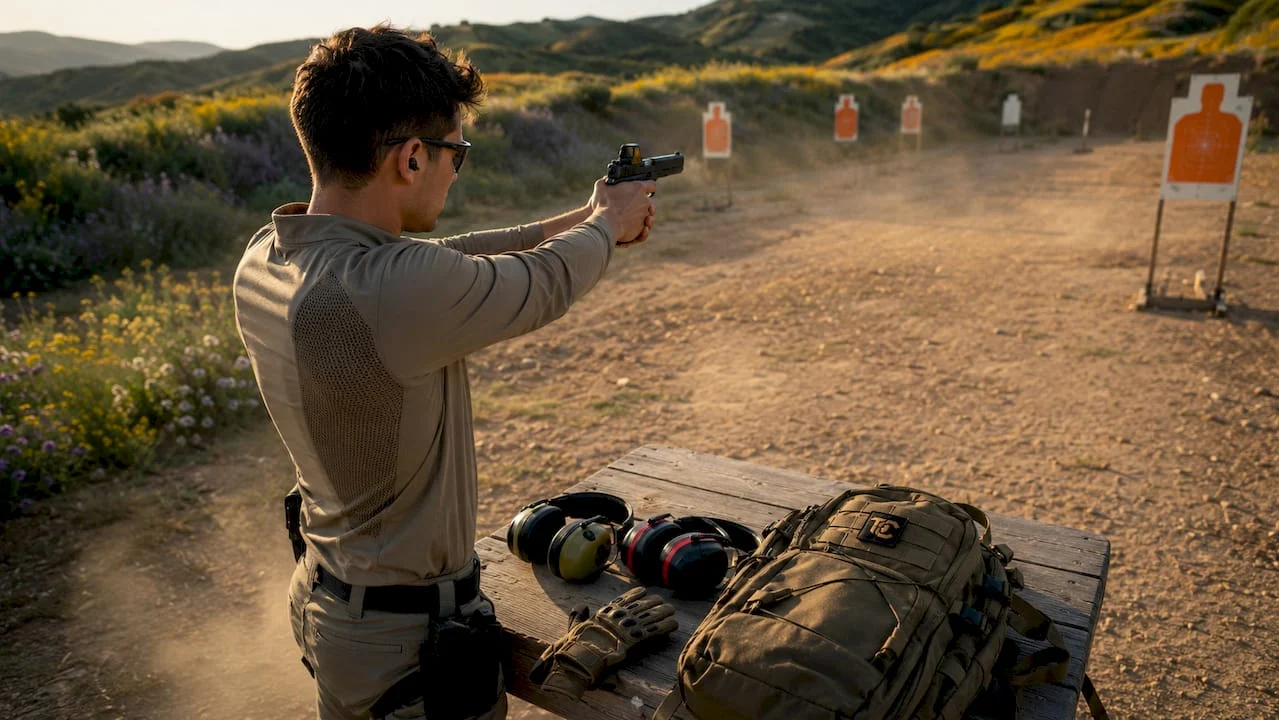
Marksmanship is defined as the disciplined ability to deliver accurate, consistent shots through deliberate control of your firearm. Knowing how to improve marksmanship skills means more than pulling the trigger correctly once. It means building repeatable mechanics under pressure, tracking your progress with honest data, and using tools like MantisX dry-fire trainers, shot timers, and slow-motion video to expose exactly where your technique breaks down. Whether you shoot for recreation, self-defense, or competition, the path forward is the same: structured practice, measurable benchmarks, and a willingness to pressure-test every fundamental you think you already own.
What are the essential fundamentals for improving marksmanship?
Marksmanship fundamentals are not a beginner’s checklist. They are active diagnostic tools that reveal failure under stress, and every serious shooter needs to treat them that way. Grip, stance, sight alignment, trigger control, and breathing are the five core inputs. When your groups open up or your splits slow down, one of these five is the culprit.
Here is what each fundamental actually demands in practice:
- Grip: A consistent, firm grip controls muzzle flip and speeds up your return to target. Your support hand does most of the work. If your grip pressure changes between shots, your point of impact will too.
- Stance: A forward, athletic stance with weight on the balls of your feet manages recoil more effectively than a squared, upright position. The Weaver and isosceles stances each have trade-offs, and you should know how both perform under movement.
- Sight alignment and sight picture: Front sight focus is the standard for iron sights. With a red dot optic, you place the dot on target without worrying about focal plane alignment. Optics can elevate accuracy significantly for shooters who struggle with aging eyes or low-light conditions.
- Trigger control: The trigger press must not disturb the sight picture. A smooth, straight-back press with no anticipation is the goal. Flinching before the shot breaks is the single most common accuracy killer across all skill levels.
- Breathing: A 2-3 second respiratory pause after exhale creates an optimal stability window. Fire during that pause, not during the inhale or full exhale.
Firearm fit matters as much as technique. A grip that is too large or a trigger reach that forces you to cant your wrist will undermine every other input. If your hand does not fit the gun, no amount of practice will fully compensate. Consider grip panels, backstrap inserts, or a different platform entirely before blaming your fundamentals.
Pro Tip: Test your fundamentals under disruption, not just in ideal conditions. Have a training partner call out random commands, add a time limit, or shoot after a short sprint. If your groups fall apart, you have found your failure point.
How to structure your practice for measurable progress
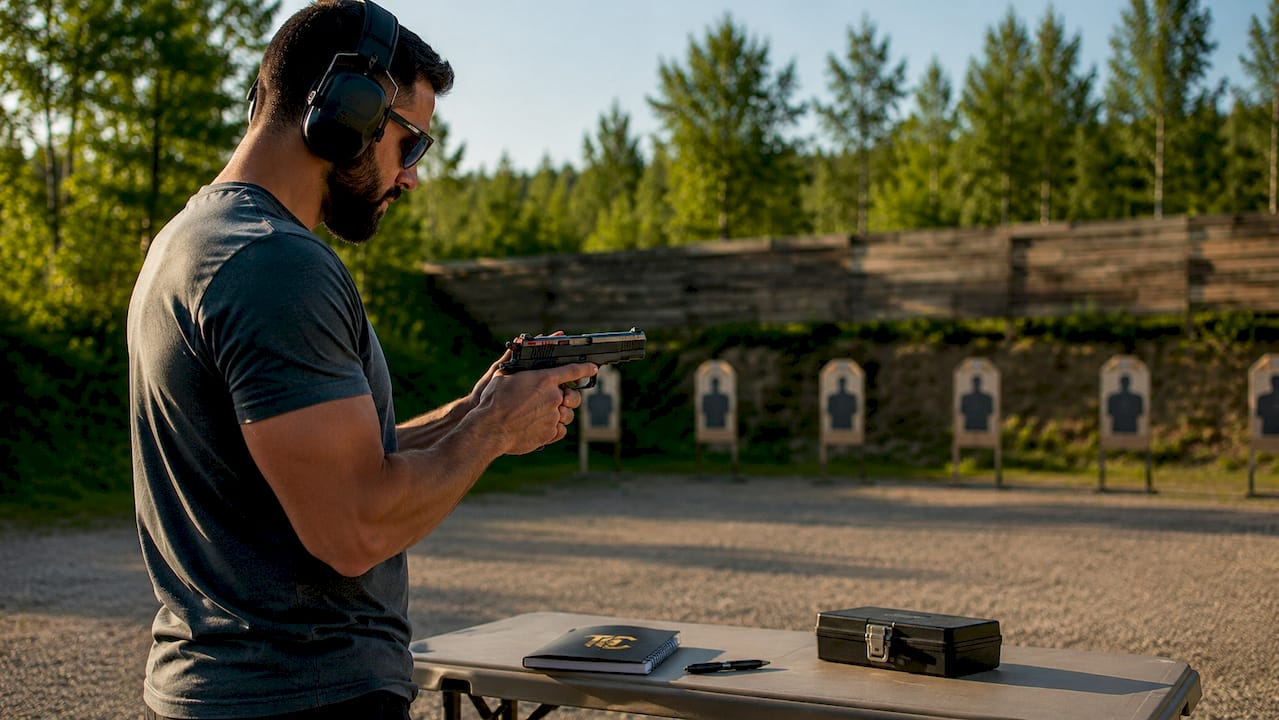
Many shooters fail to improve because they lack structured practice standards and rely on feel rather than data. Honest feedback from a shot timer and a camera is more useful than a thousand rounds fired without a benchmark.
Follow this sequence to build a practice structure that actually produces results:
- Set a fixed baseline. Use the same distance, the same target, and the same conditions every session. Consistent drill variables give you reliable progress data. Changing distance, target size, and lighting simultaneously makes it impossible to know what improved or degraded.
- Use a shot timer. A Pact Club Timer, a Competition Electronics Pocket Pro, or a free app like Shot Timer by Shooter Ready gives you split times and draw-to-first-shot data. These numbers do not lie. Your perception of speed is almost always faster than reality.
- Add dry fire daily. Even 10-15 minutes of dry fire builds muscle memory for grip, trigger press, sight tracking, and reloads without the distraction of recoil. MantisX attaches to your rail or magazine and scores each rep, giving you data on muzzle movement during the trigger press. Read more on why dry fire matters before your next range session.
- Film your sessions. Mount your phone on a tripod behind or beside your shooting position. Slow-motion playback reveals extra steps in your draw, grip changes mid-string, and inconsistent reload technique that you will never notice in real time.
- Track one variable at a time. If you are working on draw speed, do not simultaneously change your holster, grip, and target distance. Isolate the variable, measure it, then move on.
| Drill | Distance | Standard | Purpose |
|---|---|---|---|
| 5-shot group from ready | 7 yards | All rounds in 3-inch circle | Baseline accuracy check |
| Draw to first shot | 7 yards | Under 1.5 seconds | Speed and presentation |
| Reload and fire | 7 yards | Under 3 seconds | Reload mechanics |
| 10-round string, par time | 10 yards | 10 hits in 10 seconds | Accuracy under time pressure |
Pro Tip: Keep a range log. Write down your drill, distance, time, and hit percentage after every session. Reviewing three months of data shows you patterns that a single session never will.
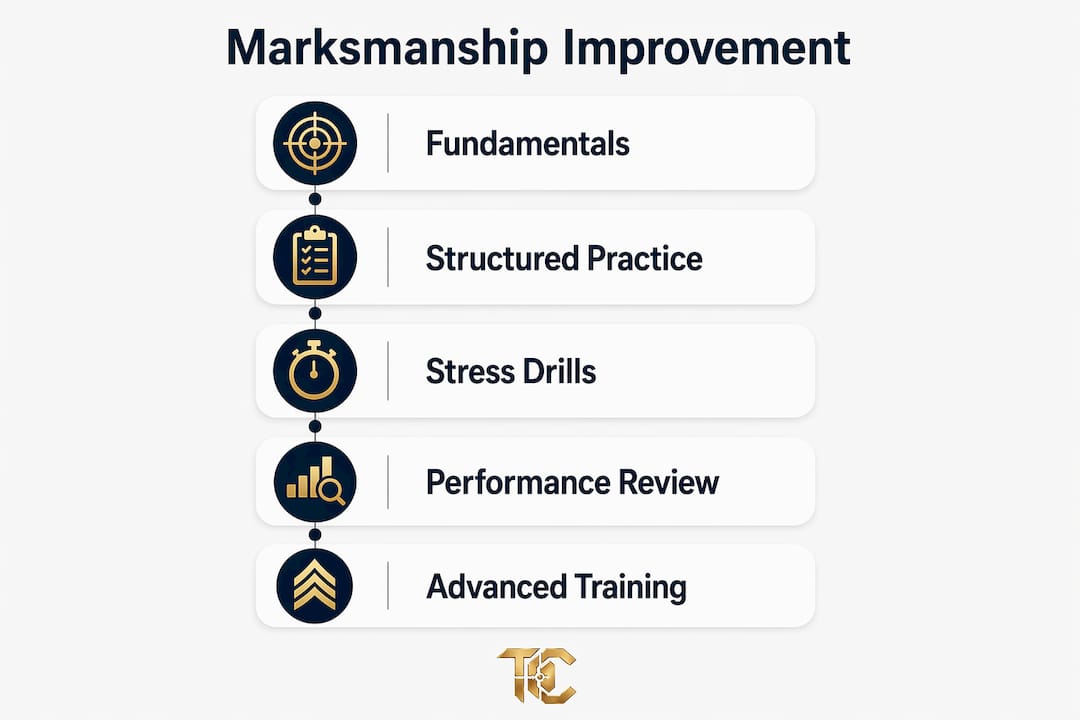
What training drills improve marksmanship under pressure and fatigue?
Accuracy at a static bench tells you almost nothing about your real-world capability. The best marksmanship techniques stress your system physically and mentally, then demand precision anyway.
Two drills stand out for their structured approach to pressure training:
- The NSSF Hold Settle Hit Challenge: Developed by NSSF’s Let’s Go Shooting program, this drill builds stabilizer muscle strength and shot discipline under fatigue. You hold on target until the wobble settles, then fire. The drill trains breathing control, wobble awareness, and mental patience. Shooters who rush the shot before the wobble settles are practicing the exact habit that costs them points in competition and accuracy in the field.
- The Color React Sequence Drill: This 50-round sequence uses color-coded targets to train reaction time and target transitions under timed pressure. Beginners focus on hit quality first. Advanced shooters add speed goals. The drill forces you to process information and execute a clean shot under a clock, which is the closest analog to competition stress you can build on a static range.
| Drill | Skill targeted | Difficulty level |
|---|---|---|
| Hold Settle Hit Challenge | Fatigue tolerance, shot discipline | Beginner to intermediate |
| Color React Sequence | Reaction time, target transitions | Intermediate to advanced |
| Failure drill (Mozambique) | Multiple target engagement | Intermediate |
| El Presidente | Draw, reload, target transitions | Advanced |
Controlled fatigue training translates directly to competition and self-defense scenarios. Do 20 push-ups or a 100-yard sprint before your next string. Your grip will feel different, your breathing will be harder to control, and your trigger press will be less refined. That gap between your rested performance and your fatigued performance is the training gap you need to close. For more on safe skill-building methods, structured simulation tools can complement live-fire work effectively.
How to diagnose and troubleshoot common marksmanship mistakes
Most shooters have blind spots. They repeat the same errors session after session because no one has shown them what the error looks like from the outside. Diagnosing mistakes requires honest tools and a willingness to be wrong.
The most common errors and how to find them:
- Flinching: Your body anticipates recoil before the shot breaks and pushes the muzzle down. Load a dummy round randomly in your magazine. If the muzzle dips on the click, you are flinching. This is the most common accuracy problem across all experience levels.
- Inconsistent grip: Your groups will print in different locations each session rather than clustering consistently. Film your grip from behind and compare it shot to shot. Even a small rotation in your support hand changes your point of impact.
- Poor sight alignment: Shots that print consistently high, low, left, or right in a predictable pattern usually indicate a sight alignment error rather than a trigger problem. Use a pistol rest or Ransom Rest to isolate the firearm’s mechanical accuracy from your technique.
- Wasted motion in the draw: Slow-motion video exposes extra hand movements, grip adjustments after the draw, and inconsistent presentation angles that add tenths of a second to every draw.
Feedback from an experienced instructor accelerates this process significantly. A qualified NRA instructor, a USPSA Grand Master, or a certified defensive shooting instructor can identify in one session what you might miss over months of solo practice. The investment in a single coaching session often produces more improvement than 500 rounds of unguided range time.
Pro Tip: Push your skill boundaries deliberately. Increase speed until you start missing, then back off 10 percent. That edge is where real improvement happens. Staying in your comfort zone produces consistent results, not better ones.
Key takeaways
Improving shooting accuracy requires mastering fundamentals as diagnostic tools, structuring practice with objective data, and training under pressure to close the gap between ideal and real-world performance.
| Point | Details |
|---|---|
| Fundamentals are diagnostic, not basic | Treat grip, trigger control, and sight alignment as failure points to test under stress, not skills to check off once. |
| Structured practice beats volume | Use shot timers, fixed drill variables, and range logs to generate honest, trackable performance data. |
| Dry fire builds the foundation | Ten to fifteen minutes of daily dry fire with tools like MantisX reinforces mechanics without recoil interference. |
| Pressure drills close the real-world gap | Drills like the NSSF Hold Settle Hit Challenge and Color React Sequence train accuracy under fatigue and time constraints. |
| Video and coaching expose blind spots | Slow-motion filming and qualified instructor feedback reveal errors that self-assessment consistently misses. |
What I’ve learned from years of watching shooters plateau
Most shooters who stop improving are not lazy. They are practicing the wrong things with the wrong feedback loop. They show up to the range, burn through a box of ammunition at a comfortable distance, and leave feeling like they did something productive. They did not. They reinforced whatever habits they already had, good or bad.
The shooters I have seen make the fastest progress share one trait: they are genuinely uncomfortable at the range. They are chasing a par time they cannot hit yet, filming a draw they know is sloppy, or working a drill that exposes a weakness they would rather ignore. That discomfort is the signal that real training is happening.
Technology has changed what is possible for the average shooter. A MantisX system, a $30 shot timer app, and a phone on a tripod give you a feedback loop that professional competitors did not have access to twenty years ago. There is no excuse for training blind when the tools are this accessible and this affordable.
The other lesson I keep coming back to is firearm fit. I have watched shooters struggle with trigger control for months, only to discover that their hand simply did not fit the grip. Switching to a different backstrap or a different platform entirely solved in one session what hours of dry fire had not. Your technique and your equipment have to work together. Neither one compensates for a fundamental mismatch in the other.
Treat your training like you would a well-selected piece of gear. Choose it deliberately, use it consistently, and evaluate it honestly. The results will follow.
— Brian
Gear and firearms that support your training at Tungstencreektactical
Improving your marksmanship starts with the right foundation, and that includes the firearm in your hand.

Tungstencreektactical carries custom-built precision firearms tailored for training, competition, and self-defense, so your platform fits your hand and your goals from the start. The team also stocks range-ready accessories including shot timers, training targets, and dry-fire tools that support the structured practice methods covered in this guide. If you are serious about building real skill, start with equipment that does not hold you back. Browse the full catalog at Tungstencreektactical and use the mobile app to compare options, unlock VIP pricing, and make an informed decision before your next range session.
FAQ
What are the most important fundamentals for improving marksmanship?
Grip, stance, sight alignment, trigger control, and breathing are the five core fundamentals. Treat them as active diagnostic tools rather than skills you mastered once, because they reveal failure under pressure.
How often should I practice to improve shooting accuracy?
Daily dry fire practice of 10-15 minutes combined with structured live-fire sessions two to three times per week produces measurable improvement. Consistency and honest feedback matter more than raw round count.
Does dry fire practice actually help with marksmanship?
Yes. Dry fire reinforces trigger press, grip, and sight tracking without recoil interference. Tools like MantisX score each repetition and provide data on muzzle movement, making dry fire one of the most efficient ways to enhance shooting skills.
How do I know if my marksmanship is actually improving?
Use a shot timer and fixed drill variables at every session, then log your times and hit percentages. Consistent data from the same distance, target, and conditions gives you reliable progress benchmarks over weeks and months.
What drills are best for shooting under pressure?
The NSSF Hold Settle Hit Challenge builds shot discipline under physical fatigue, while the Color React Sequence drill trains reaction time and target transitions under timed constraints. Both are structured for beginner through advanced progression.
Recommended
Related Post

Discover the 5 ways
An introduction to Tactical Luxury Guns & Coffee We founded
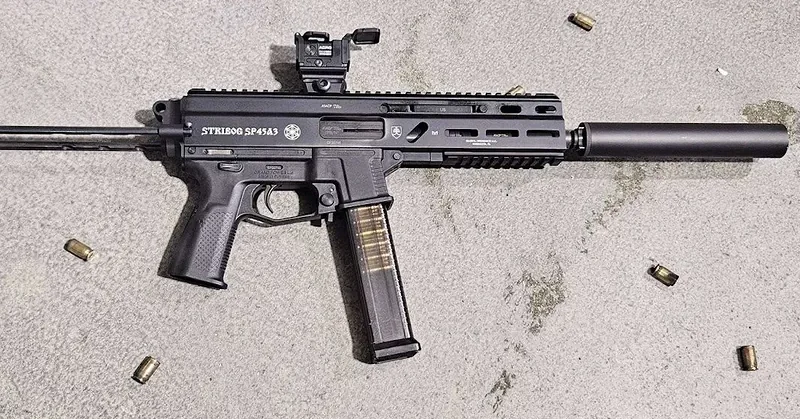
Top 5 Best PCC’s
In 2026, the Pistol Caliber Carbine (PCC) market is no