
What Is the AR-15 Platform? A Complete Guide

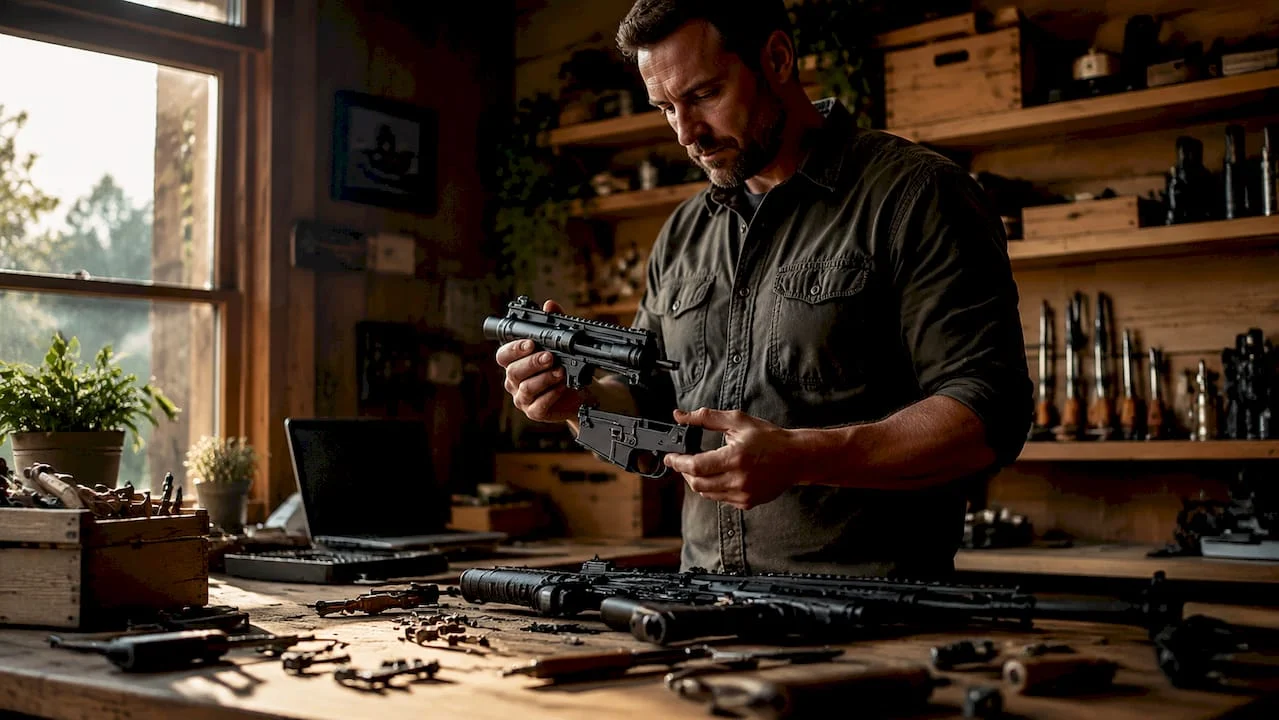
The AR-15 platform is defined as a modular, semi-automatic rifle system built around a split upper and lower receiver architecture, originally designed by Eugene Stoner for ArmaLite in 1956. The term “AR” stands for ArmaLite Rifle, not “assault rifle” as widely misunderstood. Colt later acquired the design and commercialized it for civilian use. After Colt’s patents expired, dozens of manufacturers entered the market, producing AR-15 style rifles under their own names. Today, the National Shooting Sports Foundation officially refers to these rifles as “modern sporting rifles” to distinguish them from military selective-fire weapons. With an estimated 24 million AR-15 pattern rifles in civilian circulation, this is America’s most widely adopted rifle platform by a significant margin.
What is the AR-15 platform and how does it work mechanically?
The AR-15 operates on an internal gas piston system where propellant gas tapped from the barrel drives the bolt carrier group rearward to eject the spent case and chamber a fresh round. This cycling process happens in milliseconds and resets the trigger for the next shot. The rifle fires one round per trigger pull, making it semi-automatic by definition.
Here is the basic cycling sequence:
- Gas is tapped from the barrel port after the bullet passes
- Gas travels through the gas tube into the bolt carrier key
- Pressure drives the bolt carrier rearward, compressing the buffer spring
- The bolt carrier returns forward, stripping a new round from the magazine
- The bolt locks into battery and the rifle is ready to fire again
One common misconception is that the AR-15 fires continuously when the trigger is held. It does not. Each trigger pull produces exactly one shot. That distinction matters legally, mechanically, and practically for anyone building or buying on this platform.
Pro Tip: If you want to understand your AR-15’s gas system more deeply, proper cleaning of the gas tube and bolt carrier group is critical. Neglecting this leads to cycling failures. Check out expert guidance on AR-15 maintenance to keep your rifle running reliably.
What are the key features and modular components of the AR-15?
The AR-15’s greatest mechanical advantage is its two-receiver modular design. The upper and lower receivers connect via two pins and require no tools to separate. That means you can swap an entire upper assembly in under a minute, changing caliber, barrel length, or configuration without a gunsmith.
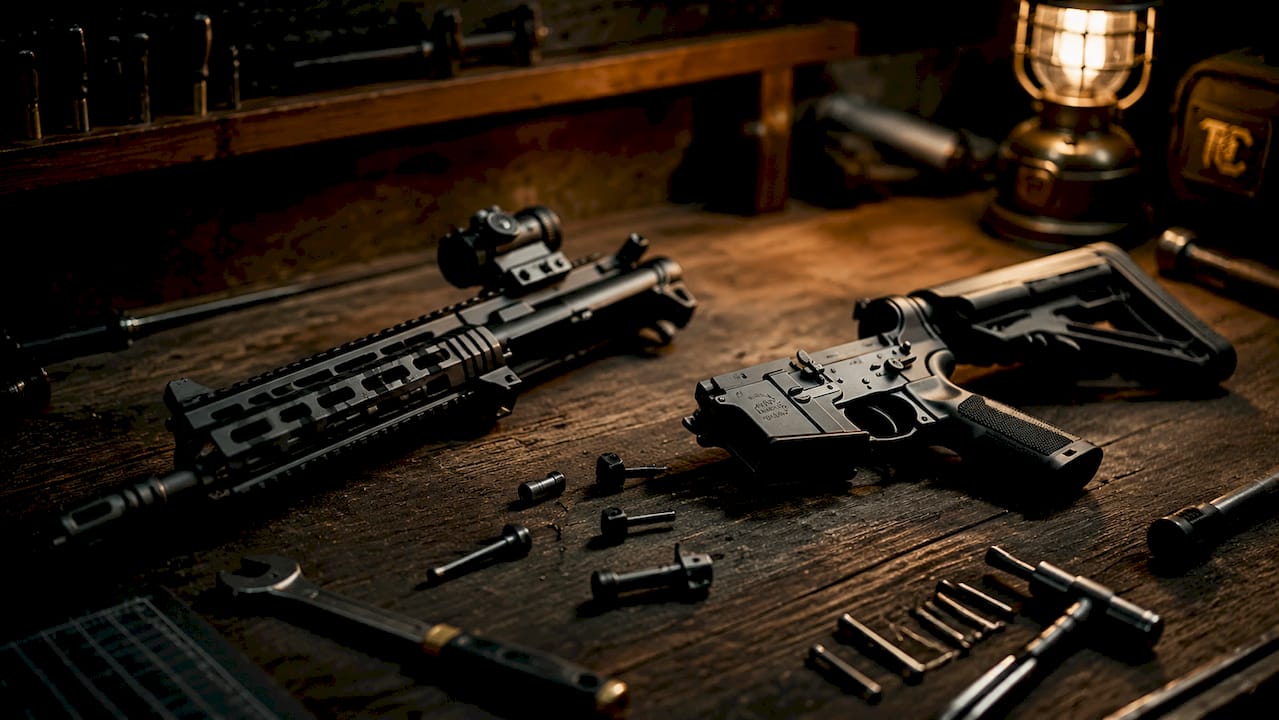
Upper receiver components
The upper receiver houses the barrel, gas block, handguard, and bolt carrier group. The barrel length and profile determine the rifle’s intended role. A 16-inch barrel suits general use and meets federal length requirements for a rifle. A 20-inch barrel adds velocity for precision shooting. A 10.5-inch barrel, configured as a pistol or short-barreled rifle, fits close-quarters roles.
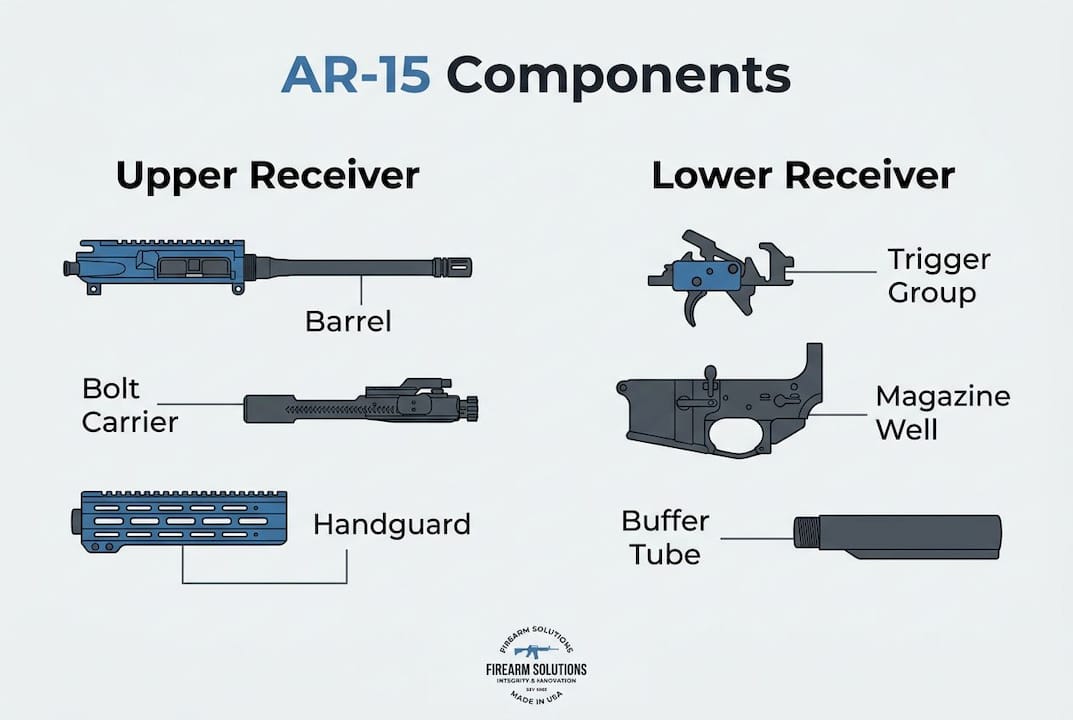
Lower receiver components
The lower receiver holds the trigger group, pistol grip, magazine well, and buffer tube with its spring and buffer. The buffer system absorbs the bolt carrier’s rearward energy and returns it forward. The lower is also the serialized, federally regulated component. When you purchase a lower receiver, that is the legal firearm.
The mil-spec standardization across manufacturers means a Bravo Company Manufacturing upper fits a Daniel Defense lower, and a Geissele trigger installs in either. That cross-compatibility is the platform’s defining commercial strength.
Pro Tip: New builders often mistake the slight wobble between upper and lower receivers for a defect. It is not. That intentional tolerance exists to allow tool-free field assembly and disassembly. A tight, zero-play fit would actually make the rifle harder to maintain in the field.
Common bolt and cartridge variations worth knowing:
- 5.56 NATO / .223 Remington — The standard chambering for most AR-15 rifles
- 300 Blackout — Optimized for suppressed fire and short barrels
- 6.5 Grendel — Extended range with better ballistics than 5.56
- 9mm — Pistol caliber carbine configuration using a dedicated lower
- .22 LR — Drop-in conversion kits for low-cost training
How does the AR-15 compare to the AR-10?
The AR-15 and AR-10 share the same design lineage and look nearly identical at a glance. The differences run deep enough that most parts are not interchangeable. Mixing components between the two platforms is one of the most common and costly mistakes new builders make.
| Feature | AR-15 | AR-10 |
|---|---|---|
| Frame size | Small frame | Large frame |
| Common calibers | 5.56 NATO, .223 Rem, 300 BLK | .308 Win, 6.5 Creedmoor, .243 Win |
| Bolt carrier group | AR-15 spec | AR-10 spec (larger) |
| Magazine | STANAG pattern | Proprietary, varies by manufacturer |
| Buffer system | Carbine or rifle length | Larger diameter, not compatible |
| Typical weight | 6–7 lbs | 8–9 lbs |
| Best use | Home defense, competition, plinking | Long-range hunting, precision shooting |
The AR-10 handles larger, higher-pressure cartridges like .308 Winchester and 6.5 Creedmoor. Those rounds require a bigger receiver, a heavier bolt carrier group, and a larger buffer. The AR-15’s receiver geometry simply cannot accommodate them safely. If you are building or buying, confirm the platform before ordering any parts. A bolt carrier group labeled “AR-10” will not fit an AR-15 lower, and forcing components creates a safety risk.
The practical takeaway is straightforward. Choose the AR-15 for versatility, lighter weight, and lower ammunition cost. Choose the AR-10 when you need extended range or are hunting larger game where a .308 or similar cartridge is appropriate.
Why is the AR-15 so popular, and what can you do with it?
The AR-15’s adaptability across calibers and roles is the core reason it holds the top position among American rifle platforms. No other semi-automatic rifle offers the same combination of parts availability, customization depth, and community support. Think of it like a quality base espresso: the foundation is solid, and everything you add on top reflects your specific taste and purpose.
The 24 million rifles in civilian circulation represent more than a sales figure. That number means parts are universally available, gunsmiths know the platform inside and out, and the aftermarket for accessories is the largest of any rifle in the country.
Common uses for the AR-15 platform include:
- Home defense — Reliable cycling, manageable recoil, and standard 30-round magazines make it a capable defensive tool
- Hunting — Caliber swaps via upper receiver changes allow use on varmints with .223, hogs with 300 Blackout, or deer with 6.5 Grendel
- Competition shooting — 3-Gun, PRS carbine, and USPSA Rifle divisions are built around AR-15 pattern rifles
- Plinking and recreation — The platform’s ergonomics and low recoil make it accessible for new shooters
- Precision builds — Heavy barrels, free-float handguards, and quality triggers transform the platform into a capable precision tool
The caliber versatility through upper swaps means one lower receiver can serve multiple roles. You can own a 5.56 upper for general use, a .22 LR upper for cheap training, and a 300 Blackout upper for suppressed shooting, all sharing the same lower. That flexibility is unmatched in the rifle market. For a deeper look at why modularity matters, the case for modular firearms benefits goes well beyond the AR-15 but applies directly to it.
Customization is equally deep. Popular upgrades include adjustable stocks like the Magpul MOE SL-S, free-float handguards, aftermarket triggers from companies like Geissele and CMC, and optics ranging from red dots to magnified scopes. The platform rewards investment because every upgrade carries over if you keep the lower.
Key Takeaways
The AR-15 platform is the most versatile and widely owned semi-automatic rifle system in America, defined by its modular split-receiver design, mil-spec parts compatibility, and broad caliber support.
| Point | Details |
|---|---|
| AR stands for ArmaLite Rifle | The term does not mean “assault rifle.” The AR-15 is a semi-automatic civilian firearm. |
| Split receiver design enables modularity | Upper and lower receivers separate without tools, allowing fast caliber and configuration changes. |
| AR-15 and AR-10 parts do not interchange | Different receiver sizes and bolt specs make cross-platform mixing a safety risk. |
| 24 million rifles in circulation | The AR-15 is the most widely adopted rifle platform in the United States as of 2026. |
| One lower, multiple roles | Swapping upper receivers lets a single rifle serve home defense, hunting, and competition. |
Why the AR-15’s modularity changes everything
I have handled a lot of rifle platforms over the years, and the AR-15 consistently stands apart for one reason: the modularity is not a marketing claim. It is a functional reality that changes how you own and use a firearm.
Most people come to the AR-15 thinking about the rifle they are buying. What they should be thinking about is the system they are entering. When you buy a quality lower receiver from a company like Aero Precision or Anderson Manufacturing, you are not buying a single rifle. You are buying a foundation that can become five different rifles depending on which upper you attach.
The misconception I encounter most often is the assumption that all AR-pattern parts work together. They do not. AR-15 and AR-10 components are not interchangeable, and even within the AR-15 family, mil-spec versus commercial-spec buffer tubes create compatibility issues with certain stocks. Understanding those distinctions before you buy saves real money and frustration.
My honest advice: start with a complete rifle from a reputable manufacturer, shoot it for a season, and then upgrade deliberately. Geissele triggers, quality optics, and a free-float handguard will transform your experience more than any cosmetic change. The platform rewards patience and informed choices, much like selecting a well-aged cigar over grabbing whatever is on the shelf. The right choice takes a moment of consideration but pays off every time you use it.
For anyone serious about building or upgrading, understanding your firearm customization options before spending money is the most practical step you can take.
— Brian
Build your AR-15 the right way with Tungstencreektactical
If you are ready to move from understanding the AR-15 platform to actually building or upgrading one, Tungstencreektactical has the services and expertise to get you there. Whether you want a precision-built rifle tailored to your exact specifications or need guidance on the right accessories for your setup, the team brings real knowledge to every build.

Tungstencreektactical’s custom gun building services cover everything from mil-spec builds to competition-ready configurations. You can also explore the full range of tactical accessories to find upgrades that match your platform and purpose. Every recommendation comes backed by the same transparency and product knowledge that defines the Tungstencreektactical brand. Call (689) 686-9321 or browse online to start your build today.
FAQ
What does AR stand for in AR-15?
AR stands for ArmaLite Rifle, the company that originally designed the platform in 1956. It does not stand for “assault rifle.”
Is the AR-15 fully automatic?
No. The AR-15 is a semi-automatic rifle that fires one round per trigger pull. Fully automatic variants are military-issue and heavily regulated for civilian ownership under the National Firearms Act.
Can I change calibers on an AR-15?
Yes. Swapping the upper receiver assembly allows you to change calibers on the same lower receiver. Common options include 5.56 NATO, 300 Blackout, 6.5 Grendel, and .22 LR with a conversion kit.
Are AR-15 and AR-10 parts interchangeable?
No. The AR-10 uses a larger frame and different component geometry. Bolt carrier groups, buffers, and magazines are not compatible between the two platforms, and mixing them creates a safety hazard.
What is the most common AR-15 caliber?
5.56 NATO and .223 Remington are the standard chamberings for most AR-15 rifles. Both cartridges are widely available, affordable, and well-suited for general use, home defense, and training.
Recommended
Related Post

Discover the 5 ways
An introduction to Tactical Luxury Guns & Coffee We founded
Top 5 Best PCC’s
In 2026, the Pistol Caliber Carbine (PCC) market is no