UV Protection in Shooting Eyewear: What You Need to Know
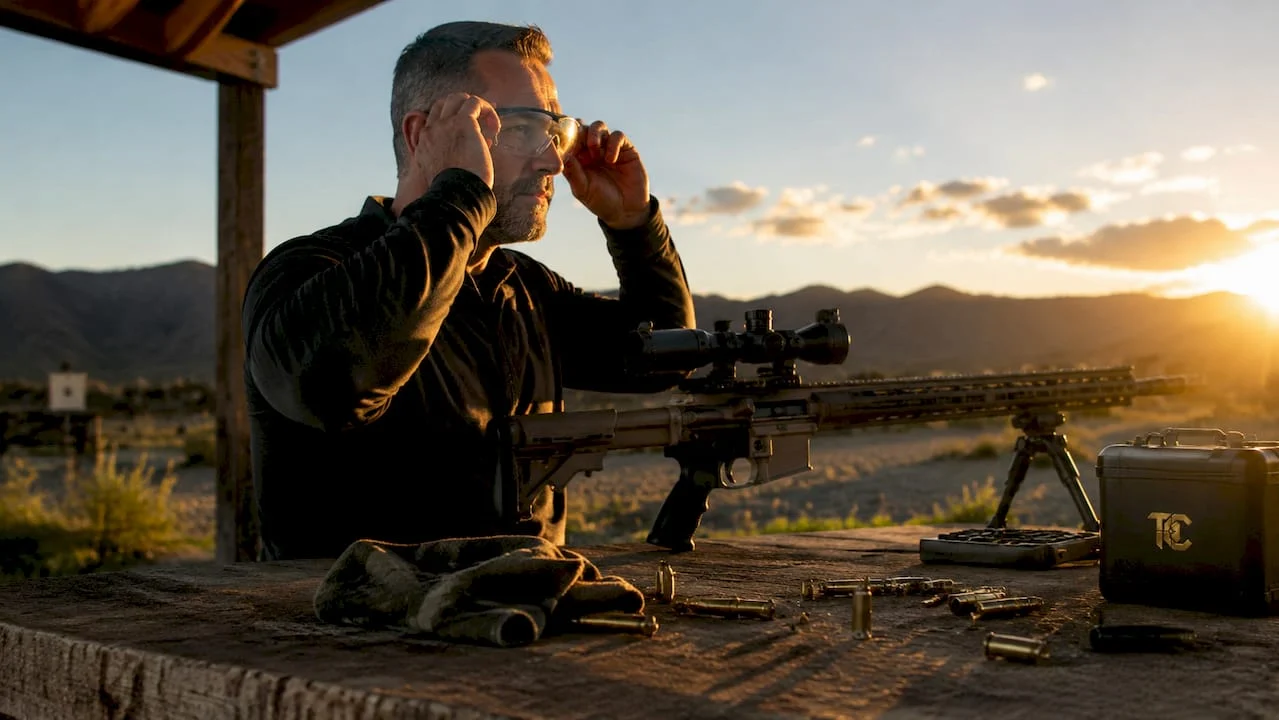
Certified UV protection is the most critical feature in shooting eyewear, defined as the ability to block 100% of UVA and UVB rays up to 400 nanometers. The role of UV protection in shooting eyewear goes beyond comfort. Without it, every outdoor range session adds to cumulative eye damage that builds silently over years. The industry standard for this protection is the UV400 rating, which shooters should verify on any pair of glasses before purchase. Standards like ANSI Z87.1+ further require that shooting eyewear combine UV filtering with ballistic impact resistance, making certification the baseline for any serious shooter.
How does UV protection work in shooting eyewear?
UV protection in shooting eyewear functions through a chemical treatment or film applied to the lens that absorbs or reflects ultraviolet wavelengths. Eyewear labeled UV400 certified blocks 99.9% to 100% of harmful ultraviolet wavelengths up to 400 nanometers. That coverage matters because both UVA and UVB rays penetrate the eye and damage tissue in different ways.
UVA rays reach deep into the eye and contribute to macular degeneration over time. UVB rays are more immediately energetic and are the primary driver of cataract formation. Consistent UV exposure causes cataracts, macular degeneration, and retinal damage, even on cloudy days. That last point catches many shooters off guard. Cloud cover blocks visible light but filters very little UV radiation.
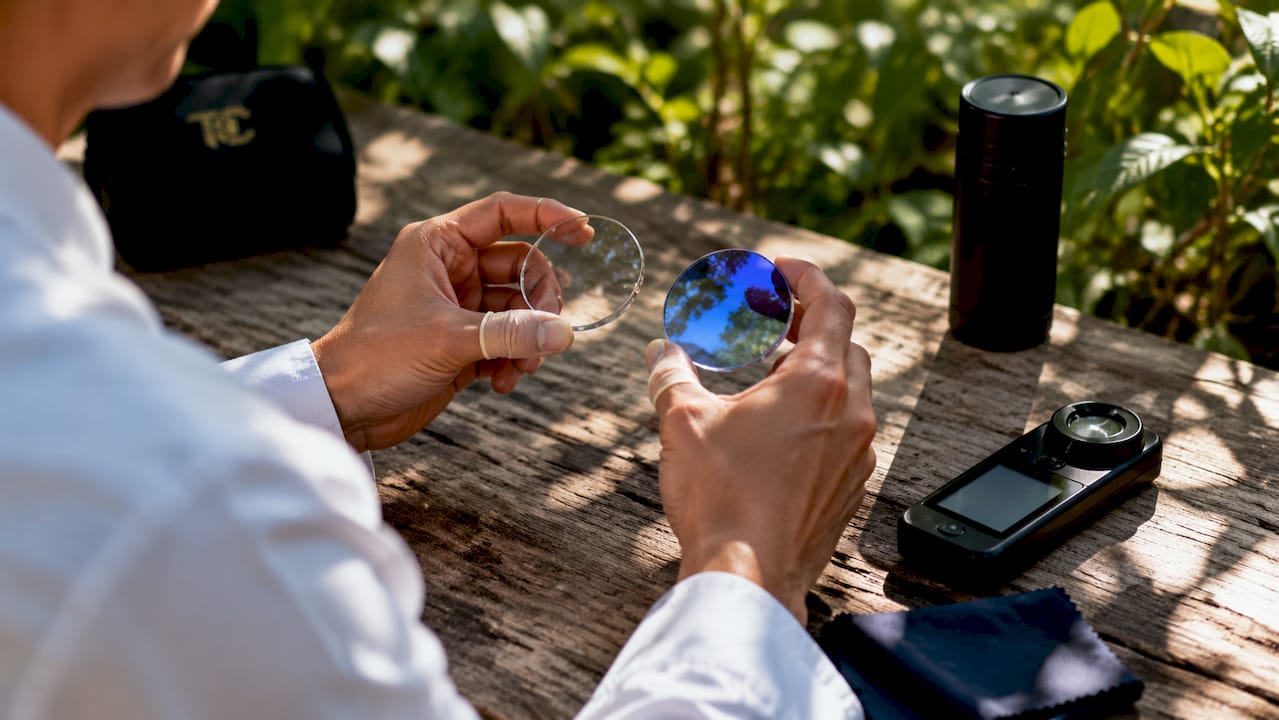
Ophthalmologists recommend automatic use of UV-rated glasses outdoors to prevent irreversible damage. The word “irreversible” is the key. Once the lens of your eye or your retinal cells are damaged by UV exposure, no treatment restores them fully. For shooters spending hours at outdoor ranges, the cumulative risk is real and preventable.
Key UV protection facts every shooter should know:
- UV400 certification covers both UVA (315–400 nm) and UVB (280–315 nm) wavelengths.
- UV damage accumulates even during brief, repeated exposures without adequate eye coverage.
- Overcast conditions do not eliminate UV risk. UV rays pass through clouds at significant levels.
- Ophthalmologists classify UV-related eye damage as a leading preventable cause of vision loss.
Why do shooting glasses need both UV and ballistic protection?
UV filtering alone does not make a pair of glasses safe for the range. Shooting eyewear must meet ANSI Z87.1+ or MIL-PRF-32432 impact ratings alongside UV protection to guard against ejected brass, powder, and debris. Standard sunglasses fail to provide the necessary ballistic resistance in shooting environments, even when they carry a UV400 label.
The ANSI Z87.1+ standard tests lenses against high-velocity and high-mass impacts. MIL-PRF-32432 testing adds criteria specific to firearm environments, including resistance to projectile hazards at velocities far beyond what consumer eyewear faces. Glasses that pass both standards give you a lens that will not shatter into your eye from a ricocheted fragment.
Frame design matters just as much as lens certification. Wraparound frames prevent side-leak UV radiation and enhance peripheral protection against lateral debris. A flat-front frame leaves your temples and the sides of your eyes exposed to both UV scatter and flying particles. At a busy outdoor range, debris does not always come from directly in front of you.
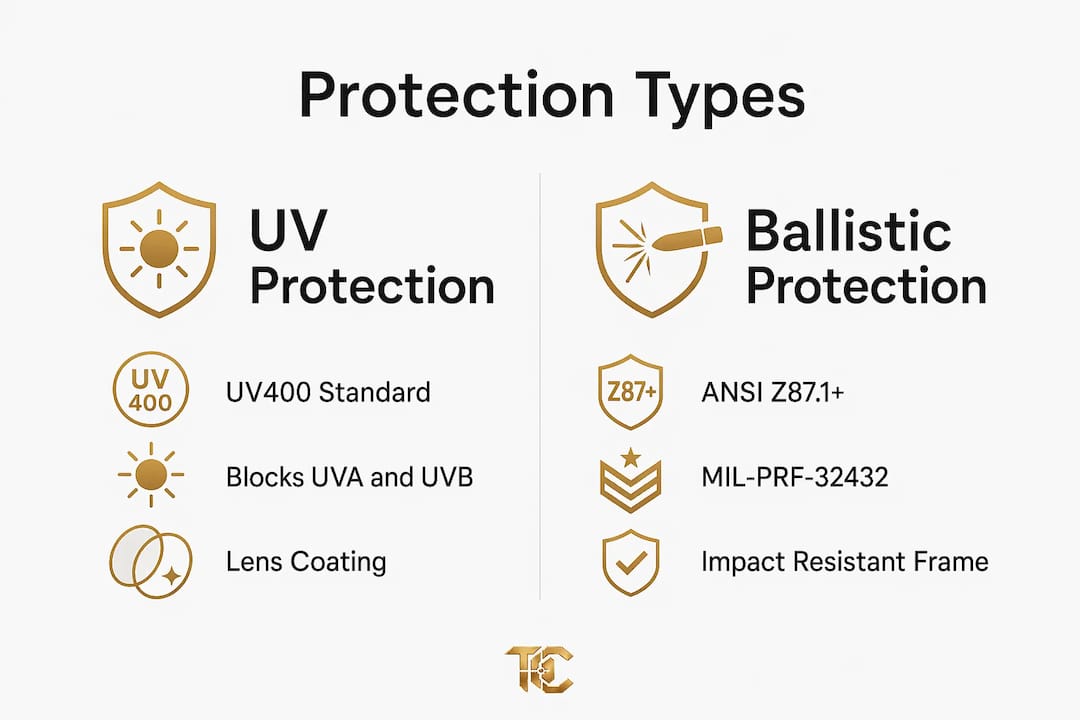
| Protection type | Standard | What it covers |
|---|---|---|
| UV filtering | UV400 | Blocks UVA and UVB up to 400 nm |
| Ballistic impact | ANSI Z87.1+ | High-velocity and high-mass impact resistance |
| Military ballistic | MIL-PRF-32432 | Firearm-specific projectile hazard resistance |
| Frame coverage | Wraparound design | Side UV scatter and lateral debris protection |
Pro Tip: When shopping for shooting glasses, look for both the UV400 label and the ANSI Z87.1+ or MIL-PRF-32432 marking on the same pair. A lens that passes only one of these tests leaves a real gap in your protection.
What are the biggest misconceptions about UV protection and lens tint?
The most dangerous misconception in shooting eyewear is that a darker lens means better UV protection. Lens darkness reduces glare but does not equate to UV filtering. UV filtering is a chemical or film treatment verified by manufacturer labels, not by lens tint. A dark lens with no UV certification is worse than wearing nothing at all.
Here is why that matters physiologically. Dark lenses without UV400 rating cause pupil dilation, which allows more harmful UV rays to enter the eye. Your pupil opens up because the brain perceives reduced visible light. Meanwhile, unfiltered UV passes straight through the dark lens and into a wider-open eye. The result is more UV damage than you would get without any glasses.
Polarization is a separate issue that also gets confused with UV protection. Polarized lenses reduce glare but do not replace the need for verified 100% UV protection. Polarization filters reflected light, which helps with target visibility near water or on bright concrete ranges. It does not block UV wavelengths unless the lens also carries a UV400 certification. The two features can coexist in the same lens, but one does not guarantee the other.
Common misconceptions to stop believing:
- Darker tint equals more UV protection. False. Tint and UV filtering are independent properties.
- Polarized lenses block UV. False. Polarization reduces glare. UV400 certification blocks UV.
- You only need UV protection on sunny days. False. UV penetrates cloud cover consistently.
- Any safety glasses work for shooting. False. Only ANSI Z87.1+ or MIL-PRF-32432 rated eyewear meets ballistic standards.
Pro Tip: Ophthalmologist Dr. Erwin advises verifying UV specs directly on the lens or manufacturer label rather than assuming protection based on lens color or darkness. If the label does not say UV400 or 100% UVA/UVB protection, the glasses do not qualify.
How to choose shooting eyewear with reliable UV protection
Selecting the right shooting glasses comes down to verifiable certifications, material quality, and practical fit. Here is a structured approach that covers every factor.
1. Check the label first. Look for “UV400” or “100% UVA/UVB protection” printed on the lens or frame. If neither phrase appears, move on. No label means no verified protection.
2. Choose polycarbonate lenses. Polycarbonate lenses with 100% UV protection are both impact resistant and shield eyes from UV damage. This material meets ballistic impact standards while providing full UV blocking. It is the preferred lens material for shooting eyewear because it handles both threats in one.
3. Prioritize wraparound frame geometry. Shooters should select wraparound polycarbonate frames with certified UV400 lenses to cover side exposure from indirect UV rays and ballistic events. Flat-front frames leave gaps at the temples that matter more than most shooters realize.
4. Consider interchangeable lens systems. Many quality shooting glasses come with multiple lens tints for different light conditions. Clear lenses work for indoor ranges and low-light shooting. Amber or yellow lenses enhance contrast in overcast conditions. All lenses in the set must carry UV400 certification individually. Do not assume the clear lens in a set is UV-rated just because the tinted lens is.
5. Inspect and maintain the UV coating. UV coatings on lenses degrade with improper care. Store glasses in a hard case when not in use. Clean lenses with a microfiber cloth and lens-safe solution, not paper towels or clothing. Deep scratches through a UV coating reduce its effectiveness. Replace lenses when scratching becomes significant.
6. Wear them consistently, not just on bright days. Integrating UV-protective eyewear into your range routine means putting them on before you step outside, regardless of weather. Treat them the way you treat range safety accessories: non-negotiable every session.
| Lens feature | What to look for | Why it matters |
|---|---|---|
| UV certification | UV400 or 100% UVA/UVB label | Confirms wavelength blocking up to 400 nm |
| Lens material | Polycarbonate | Combines impact resistance with UV filtering |
| Frame style | Wraparound | Prevents side UV scatter and lateral debris |
| Lens system | Interchangeable, each UV400 rated | Adapts to light conditions without losing protection |
| Coating care | Hard case storage, microfiber cleaning | Preserves UV coating integrity over time |
Key Takeaways
UV protection in shooting eyewear requires UV400 certification, ANSI Z87.1+ or MIL-PRF-32432 ballistic ratings, and wraparound polycarbonate frames to deliver complete eye defense on the range.
| Point | Details |
|---|---|
| UV400 is the baseline standard | Only eyewear labeled UV400 or 100% UVA/UVB protection blocks harmful wavelengths reliably. |
| Ballistic ratings are non-negotiable | ANSI Z87.1+ and MIL-PRF-32432 certifications protect against ejected brass and debris. |
| Dark tint does not mean UV protection | Unrated dark lenses dilate pupils and increase UV penetration into the eye. |
| Wraparound frames close the gaps | Side-entry UV and lateral debris require wraparound geometry, not flat-front frames. |
| Consistent use prevents cumulative damage | UV damage builds over time. Wearing certified glasses every outdoor session is the only reliable defense. |
What I’ve learned watching shooters skip UV protection
Most shooters treat eye protection as a ballistic problem only. They grab a pair of certified impact-resistant glasses, check that box, and never think about UV. I have watched this pattern repeat at ranges for years, and it concerns me more than almost any other safety gap I see.
The ballistic risk is immediate and obvious. A fragment hits your eye and you know it. UV damage is invisible and slow. You will not notice it for a decade, and by then the cataract or the macular degeneration is already established. That asymmetry is exactly why shooters underestimate it. Our brains are wired to respond to immediate threats, not slow-building ones.
The purchase mistake I see most often is buying based on lens color. A shooter picks amber lenses because they look tactical and improve contrast. Neither of those qualities has anything to do with UV filtering. The importance of UV in eyewear comes down to chemistry applied to the lens, not aesthetics. A clear polycarbonate lens with UV400 certification protects your eyes better than a dark, stylish lens without one.
My practical recommendation is simple. Treat your UV-rated shooting glasses the same way you treat your hearing protection. You would not shoot without ear protection because the damage is cumulative and irreversible. UV damage to your eyes works the same way. Put the glasses on before you step outside. Keep them on until you are back indoors. That habit, maintained consistently, is worth more than any single gear upgrade you will make this year.
— Brian
Tungstencreektactical has the shooting eyewear you can trust
Choosing the right eye protection should not require guesswork about certifications or material quality. Tungstencreektactical carries shooting glasses that meet ANSI Z87.1+ and UV400 standards, built for shooters who take both ballistic and UV safety seriously.
Whether you are building out your range kit or upgrading aging gear, the Tungstencreektactical shop brings together certified eyewear alongside the tactical accessories that complete a serious shooter’s setup. Use the tactical accessories guide to match your eyewear choice with the rest of your range gear. For shooters who want the full picture on precision equipment, the custom firearms page shows what a commitment to quality looks like across every product category.
FAQ
What does UV400 mean on shooting glasses?
UV400 means the lenses block 99.9% to 100% of ultraviolet wavelengths up to 400 nanometers, covering both UVA and UVB rays. It is the verified standard for UV protection in shooting eyewear.
Can standard sunglasses replace certified shooting eyewear?
Standard sunglasses do not meet ANSI Z87.1+ or MIL-PRF-32432 ballistic impact standards, even if they carry a UV400 label. They will not protect your eyes from ejected brass or range debris.
Do polarized shooting glasses block UV rays?
Polarized lenses reduce glare but do not block UV rays unless they also carry a UV400 certification. Always verify both features separately on the manufacturer label.
Does lens color affect UV protection?
Lens color and UV protection are independent. A dark lens without UV400 certification can actually increase UV damage by dilating your pupils and allowing more UV rays into the eye.
How often should I replace shooting glasses?
Replace shooting glasses when lenses develop deep scratches that compromise the UV coating or when the frame no longer provides a secure wraparound fit. Degraded coatings reduce UV filtering effectiveness over time.
Recommended
Related Post

Discover the 5 ways
An introduction to Tactical Luxury Guns & Coffee We founded
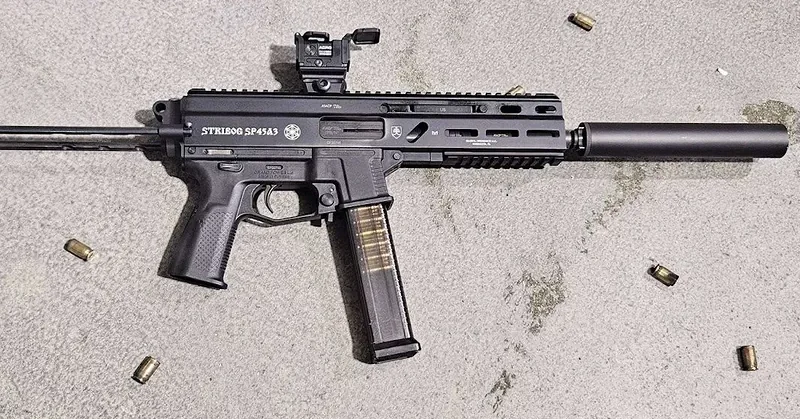
Top 5 Best PCC’s
In 2026, the Pistol Caliber Carbine (PCC) market is no