
Advantages of Modern Firearms for Defense and Sport

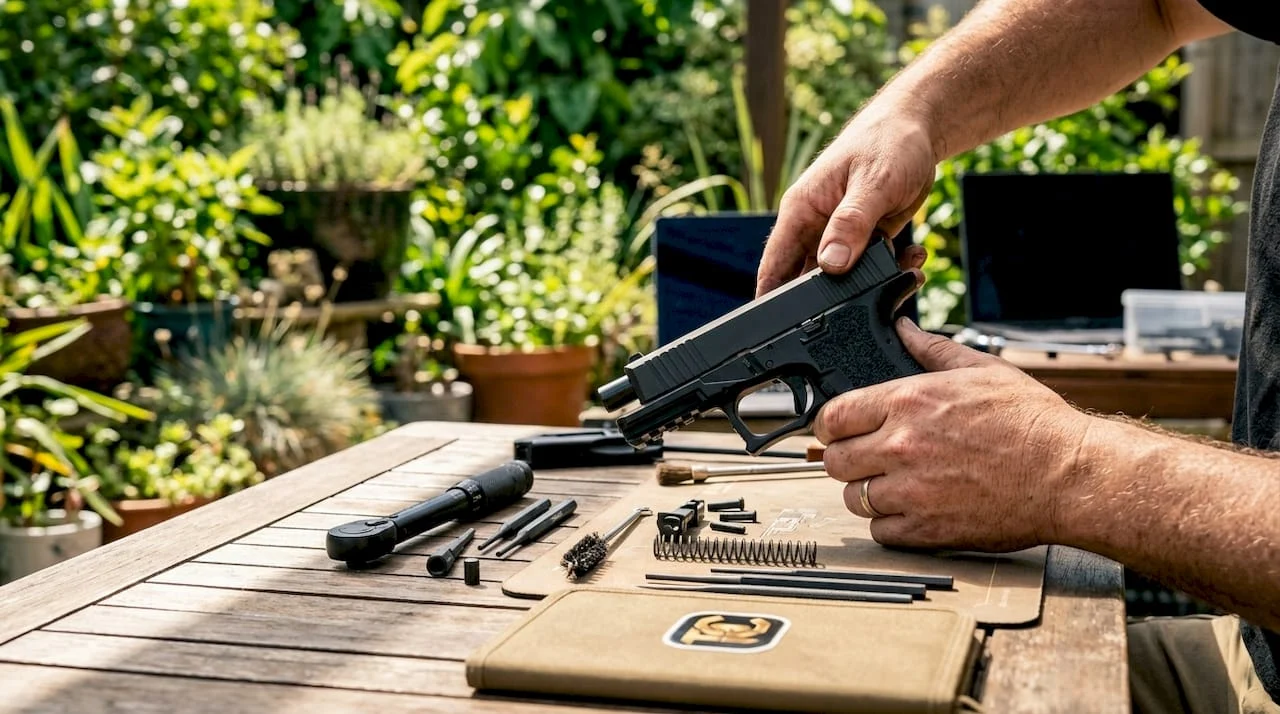
Modern firearms are defined by three core advances: lighter materials, more accurate cartridges, and modular designs that adapt to the shooter rather than forcing the shooter to adapt to the gun. These advantages of modern firearms translate directly into better performance whether you carry daily for personal defense, compete on the range, or prepare for tactical scenarios. The benefits of owning firearms have grown substantially as engineering has replaced guesswork with measurable gains in weight, durability, and accuracy. Understanding what drives those gains helps you make a smarter buying decision.
1. How advanced materials improve modern firearms
The biggest shift in firearm design over the past three decades is the move from steel and wood to engineered polymers and advanced alloy composites. That shift changed what a firearm weighs, how long it lasts, and what it costs to build.
Polymer frames now dominate the defensive pistol market for good reason. Polymer-framed handguns weigh 30–40% less than their steel counterparts and cost roughly 70% less to manufacture. That weight reduction matters when you carry a firearm for eight or more hours a day.
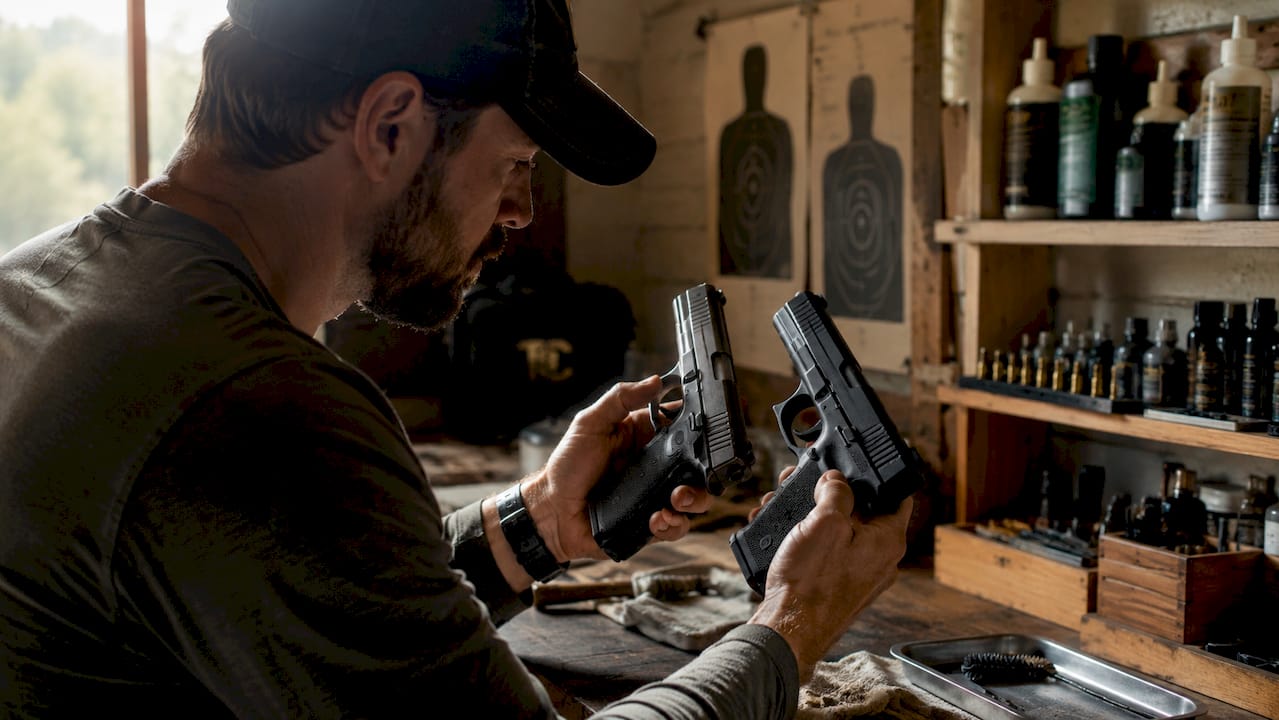
Steel alloys and barrel treatments extend service life dramatically. Modern barrels made from chrome-moly steel with nitride or chrome lining last 20,000 or more rounds before significant wear. Older barrels typically gave out between 5,000 and 7,000 rounds. That difference means fewer replacements, lower long-term cost, and more consistent accuracy over the life of the firearm.
Surface coatings add another layer of protection. Cerakote and diamond-like carbon (DLC) finishes resist corrosion, reduce surface friction, and survive conditions that would pit or rust older blued steel. For anyone who carries in humid climates or stores firearms in varied environments, these coatings are a practical upgrade, not a cosmetic one.
Pro Tip: Polymer frames absorb recoil better than steel, but they are vulnerable to extreme heat above 180 degrees Fahrenheit. Never leave a polymer-framed pistol on a car dashboard in direct summer sun. Store it in a case or holster that keeps it shaded.
2. Why modern cartridge design enhances accuracy and ballistic performance
Cartridge design is where physics and engineering meet. Modern ammunition is not simply a faster version of older loads. It is a fundamentally different product built around higher ballistic coefficients, tighter tolerances, and propellants that burn more efficiently.
Modern cartridges feature improved ballistic coefficients, which means bullets shed velocity more slowly, drift less in crosswinds, and arrive at the target with more retained energy. That matters at any range, but it becomes decisive past 200 yards. Shooters who switched from older flat-base projectiles to modern boat-tail designs often report tighter groups without changing anything else.
Key ballistic improvements in modern cartridges include:
- Higher ballistic coefficients from heavier-for-caliber, aerodynamically shaped projectiles
- Flatter trajectories that reduce holdover calculations at medium and long range
- Reduced wind drift from improved sectional density and velocity retention
- Optimized propellant loads that lower barrel wear and felt recoil without sacrificing muzzle velocity
- Tighter manufacturing tolerances that produce consistent chamber pressure and repeatable accuracy
The table below shows how these improvements translate into practical shooting outcomes:
| Ballistic Factor | Older Cartridge Design | Modern Cartridge Design |
|---|---|---|
| Velocity retention at 300 yards | Moderate drop | Significantly higher retention |
| Wind drift at 200 yards | Noticeable correction needed | Reduced correction required |
| Barrel wear per 1,000 rounds | Higher erosion rate | Lower erosion rate |
| Terminal energy at impact | Variable | More consistent and predictable |
Rifling twist rates have also evolved to match modern bullet profiles. A 1:8 twist stabilizes heavier, longer projectiles that older 1:12 barrels could not spin fast enough to fly true. Pairing the right twist rate with the right bullet is one of the most underrated accuracy factors in high-performance ammunition selection.
3. Modularity and ergonomic adaptability as advantages of modern firearms
A firearm that fits you shoots better than one that does not. That statement sounds obvious, but it took decades of design evolution to make true adjustability standard rather than a custom-shop luxury.
Ergonomic adjustability, including ambidextrous controls and adjustable stocks, standardizes optimal grip and sight alignment across shooters of different hand sizes, arm lengths, and dominant sides. The result is measurably better accuracy without changing the shooter’s fundamentals. Think of it like a well-fitted pair of boots versus an off-the-shelf size. The right fit changes everything about performance and endurance.
Modern modular features include:
- Adjustable stocks with length-of-pull settings that fit shooters from 5’2" to 6’4"
- Interchangeable backstraps and grip panels that change hand fit without tools
- Ambidextrous safety, magazine release, and charging handles for left-handed shooters
- Picatinny and M-LOK rail systems that accept optics, weapon lights, lasers, and foregrips
- Optics-ready slides and receivers that eliminate the need for milling
Digital integration is the next step. Advanced optics and digital targeting aids now improve engagement speed and accuracy in ways that fixed iron sights cannot match. Ballistic calculators built into scope reticles, rangefinder-equipped optics, and heads-up display systems are moving from military platforms into civilian sport shooting. Learning how to select tactical accessories for your specific platform is now a core skill for serious shooters.
Pro Tip: Standardized ergonomic adjustability often improves shooting accuracy more than any single material upgrade. Before spending money on a new barrel or trigger, spend time dialing in your stock length, grip fit, and optic height. The gains are immediate and free.
4. How reliability and defensive use statistics support modern firearm advantages
Reliability is not a marketing claim. It is a measurable outcome of better materials, tighter tolerances, and more consistent manufacturing. Modern defensive firearms cycle through thousands of rounds of varied ammunition with far fewer malfunctions than designs from 30 years ago.
The social case for modern firearms is equally clear. Defensive gun uses by private citizens occur five times more frequently than criminal uses. That ratio, drawn from 2021 data showing 1.67 million defensive uses against 330,000 criminal uses, puts the practical value of firearm ownership in direct statistical context. A reliable, well-designed modern firearm is the tool that makes defensive use possible.
Material advances directly support that reliability. Polymer frames resist moisture and temperature cycling that caused older wood stocks to warp and swell. Nitride-treated barrels resist fouling longer, which means more rounds between cleanings without degraded function. Coated feed ramps reduce the friction that caused older pistols to stutter on hollow-point ammunition. Each improvement is small in isolation. Together, they produce a firearm that works when you need it most.
Firearm ownership for preparedness is also growing. A rising share of owners in 2025 value firearms for public event preparedness, reflecting a broader shift toward self-reliance in uncertain environments. Modern firearms meet that need better than older designs because they are lighter, more reliable, and easier to maintain.
5. Situational advantages: choosing modern firearms for different uses
Not every firearm advantage matters equally in every context. A feature that is critical for concealed carry may be irrelevant for competitive shooting, and vice versa. Matching the right advantages to your actual use case is the most practical decision you can make.
The table below maps key modern firearm features to the three primary use contexts:
| Feature | Personal Defense | Sport Shooting | Tactical Preparedness |
|---|---|---|---|
| Lightweight polymer frame | Critical | Helpful | Important |
| Modular rail system | Moderate | High | Critical |
| Improved ballistic coefficient | Moderate | High | High |
| Ambidextrous controls | Helpful | Moderate | Critical |
| Corrosion-resistant coating | Important | Low | Important |
| Adjustable stock | Low | High | High |
For personal defense, the priorities are weight, reliability, and concealability. A modern infantry rifle is changing toward first-round hit probability over volume of fire. That same principle applies to civilian defense. One reliable, accurate shot matters more than magazine capacity.
For sport shooting, modularity and ballistic performance take the lead. Adjustable stocks, precision triggers, and high-BC cartridges close the gap between a stock firearm and a custom build. Many competitive shooters find that ergonomic adjustments alone move them into a higher accuracy tier.
For tactical preparedness, the full package matters. You want a firearm that is light enough to carry all day, reliable enough to function without daily cleaning, and modular enough to accept a light and optic when conditions demand it.
Tips for selecting the right modern firearm for your needs:
- Identify your primary use case before evaluating any specific model
- Prioritize reliability data over feature lists when choosing a defensive firearm
- Test grip fit and trigger reach before buying, not after
- Choose a platform with a strong aftermarket for accessories and spare parts
- Match your ammunition choice to your barrel’s twist rate for best accuracy
Key Takeaways
Modern firearms deliver measurable advantages in weight, durability, accuracy, and adaptability that make them the most capable tools available for personal defense, sport shooting, and tactical preparedness.
| Point | Details |
|---|---|
| Material advances reduce weight | Polymer frames weigh 30–40% less than steel, improving carry comfort without sacrificing durability. |
| Barrel life has multiplied | Modern chrome-moly barrels last 20,000+ rounds versus 5,000–7,000 for older designs. |
| Cartridge design improves accuracy | Higher ballistic coefficients and tighter tolerances produce flatter trajectories and less wind drift. |
| Ergonomic adjustability boosts performance | Adjustable stocks and grip panels improve accuracy more reliably than most hardware upgrades. |
| Defensive use outnumbers criminal use | Private citizens use firearms defensively five times more often than criminals use them in crimes. |
What I’ve learned from years of handling modern versus older firearms
The difference between a well-designed modern firearm and a classic older platform is not always obvious on paper. You feel it in the first 30 minutes of carry. The weight reduction from a polymer frame sounds modest until you compare how your back and hip feel after a full day. That is where the engineering earns its keep.
What surprises most people is how much ergonomic adjustability changes their shooting. I have watched shooters struggle with accuracy for months, then add an adjustable stock and a properly sized grip panel and immediately tighten their groups. The firearm did not change. Their fit to the firearm did. That is a lesson the industry took too long to teach clearly.
The reliability gains from modern materials are equally underappreciated. Older designs required meticulous cleaning schedules to function consistently. Modern nitride-treated barrels and coated feed ramps tolerate more rounds between cleanings without malfunctioning. For someone who carries daily and trains regularly, that is a real-world advantage, not a spec sheet number.
Responsible ownership and preparedness go together naturally. A modern firearm that fits well, functions reliably, and accepts the accessories you need is a tool you will train with more often. More training produces better outcomes. That connection between good equipment and consistent practice is the most honest case for choosing a well-designed modern platform.
— Brian
Tungstencreektactical: precision-built firearms for modern shooters
Tungstencreektactical builds and stocks firearms that reflect every advantage covered here. Whether you want a custom-built firearm tailored to your grip, your use case, and your preferred caliber, or you need a reliable stock platform with room to grow, the inventory is selected with the same criteria this article outlines: materials, reliability, and adaptability.

The Tungstencreektactical mobile app lets you scan products, compare pricing, and access VIP benefits before you buy. The firearms comparison guide on the site walks you through the decision framework in plain language. Good gear, honest service, and the information you need to choose well. That is the standard Tungstencreektactical holds itself to.
FAQ
What are the main advantages of modern firearms?
Modern firearms offer lighter weight through polymer frames, longer barrel life from advanced steel treatments, better accuracy from improved cartridge design, and modular ergonomics that fit a wider range of shooters. These features combine to produce more reliable and effective tools for defense, sport, and preparedness.
How much lighter are polymer-framed handguns than steel ones?
Polymer-framed handguns weigh 30–40% less than comparable steel-framed models. That reduction makes a significant difference in daily carry comfort and reduces shooter fatigue during extended range sessions.
Do modern cartridges actually improve accuracy?
Modern cartridges improve accuracy through higher ballistic coefficients, flatter trajectories, and reduced wind drift compared to older designs. Pairing the right cartridge with a barrel twist rate matched to the bullet weight produces the most consistent results.
How often are firearms used defensively compared to criminal use?
Private citizens use firearms defensively approximately five times more often than criminals use them in violent crimes, based on 2021 data showing 1.67 million defensive uses against 330,000 criminal uses. That ratio reflects the practical value of reliable, well-maintained modern firearms.
What should I prioritize when choosing a modern firearm for personal defense?
Prioritize reliability, weight, and ergonomic fit above all other features. A firearm that fits your hand, functions consistently across ammunition types, and is light enough to carry daily will serve you better than a feature-heavy platform that is uncomfortable or unreliable.
Recommended
Related Post

Discover the 5 ways
An introduction to Tactical Luxury Guns & Coffee We founded
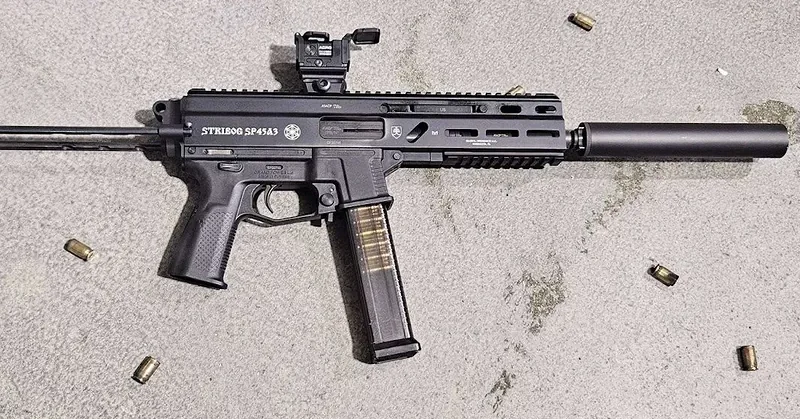
Top 5 Best PCC’s
In 2026, the Pistol Caliber Carbine (PCC) market is no