
How to Choose Tactical Footwear: A Field-Ready Guide


Tactical footwear is defined as purpose-built boots and shoes engineered for durability, protection, and performance under demanding operational conditions. Knowing how to choose tactical footwear correctly can mean the difference between mission success and a debilitating foot injury on day three of a patrol. The right pair accounts for terrain, climate, load weight, and mission duration. Standards like ASTM F3445-21 slip resistance and materials like Gore-Tex membranes and Vibram outsoles have raised the bar on what field-ready boots can deliver. Choosing poorly is not just uncomfortable. It is a genuine safety risk.
How to choose tactical footwear based on mission and environment
Your environment is the first filter. A boot built for desert heat will fail you in a Pacific Northwest river crossing, and a waterproof insulated boot will cook your feet on a summer urban patrol. Start by identifying your primary operating conditions before you look at any specific model.
Match these environmental conditions to the features you need:
- Wet and amphibious environments: Special operators choose boots with advanced drainage ports and quick-drying synthetic materials. Waterproof membranes trap water once it gets inside, so drainage beats waterproofing in true wet conditions.
- Cold and alpine terrain: Insulated boots with a waterproof membrane like Gore-Tex keep feet dry and warm. Pair them with moisture-wicking wool socks to manage condensation from the inside.
- Desert and arid environments: Breathable nylon uppers and ventilated mesh panels reduce heat buildup. Prioritize a light boot with a protective toe cap over a heavy leather construction.
- Urban and indoor operations: Low-profile tactical shoes or side-zip boots offer speed and quiet movement. Ankle support matters less here than sole flexibility and noise reduction.
- Jungle and high-humidity terrain: Drainage and anti-fungal linings are non-negotiable. Boots that stay wet for 12 hours breed blisters and trench foot faster than almost any other factor.
Mission type shapes the decision just as much as terrain. A patrol requiring 15 miles of movement under a 60-pound ruck demands a boot with serious cushioning and ankle support. A rapid-response role rewards a lighter, more flexible platform. Think about how long you will wear the boot continuously, how much weight you will carry, and whether you need to move silently. Those three variables narrow your options faster than any spec sheet.
What is the right way to fit tactical boots?
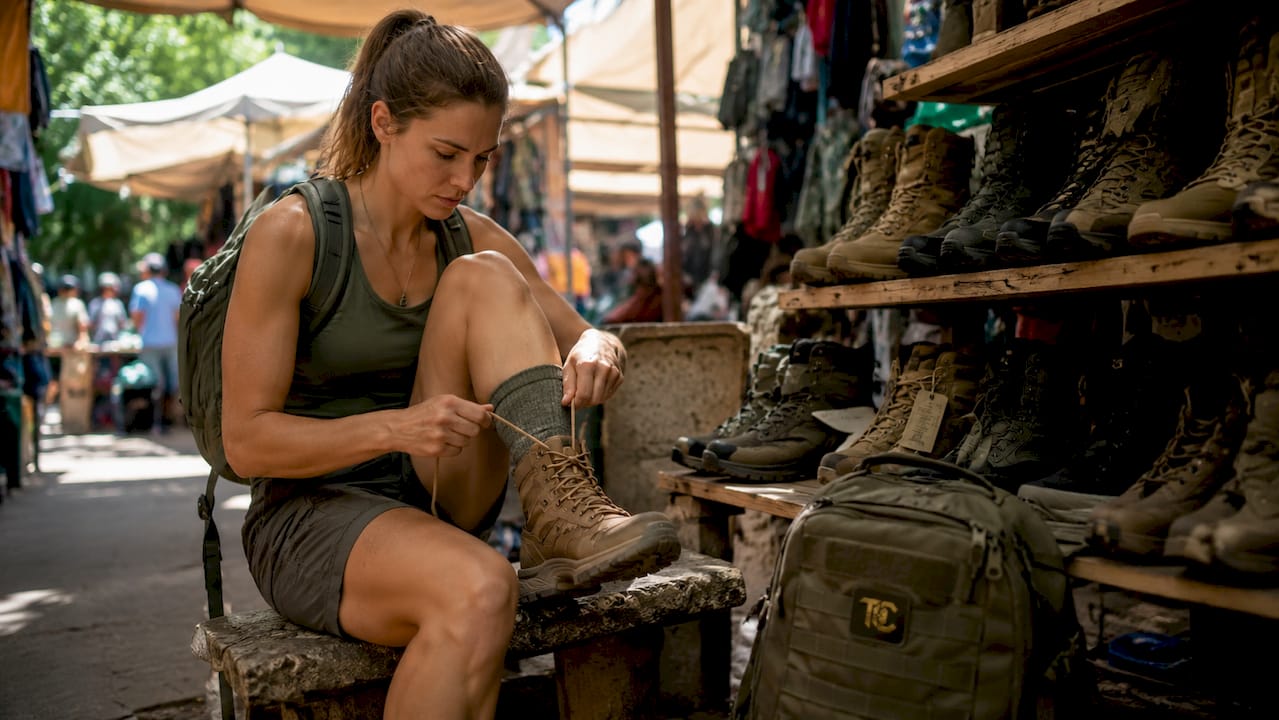
Fit is the most overlooked factor in any tactical footwear buying guide. A boot with every feature on your checklist becomes useless if it causes blisters by mile two.
Follow these steps to get the fit right before you buy:
- Measure with a Brannock device while wearing your mission socks. A proper tactical boot fit requires this combination. Your foot length in dress socks and your foot length in thick wool patrol socks can differ by half a size.
- Shop or measure in the late afternoon. Feet naturally swell throughout the day. Fitting boots in the morning means you may buy a size too small and pay for it on every long movement.
- Check toe splay. You need roughly a thumb’s width of space between your longest toe and the end of the boot. Cramped toes cause black toenails and nerve compression on downhill terrain.
- Test heel lock. Lace the boot fully and walk on an incline. Your heel should not lift more than a few millimeters. Heel slip creates friction blisters faster than any other fit problem.
- Break in gradually. Breaking in new tactical boots should be gradual, allowing materials and footbeds to conform to your foot anatomy. Start with short walks, then progress to loaded carries before any extended field use.
Pro Tip: Wear your actual mission socks to every fitting. Bring two pairs if your missions vary. The sock thickness changes the effective internal volume of the boot more than most people expect.
What features and materials matter most in tactical boots?
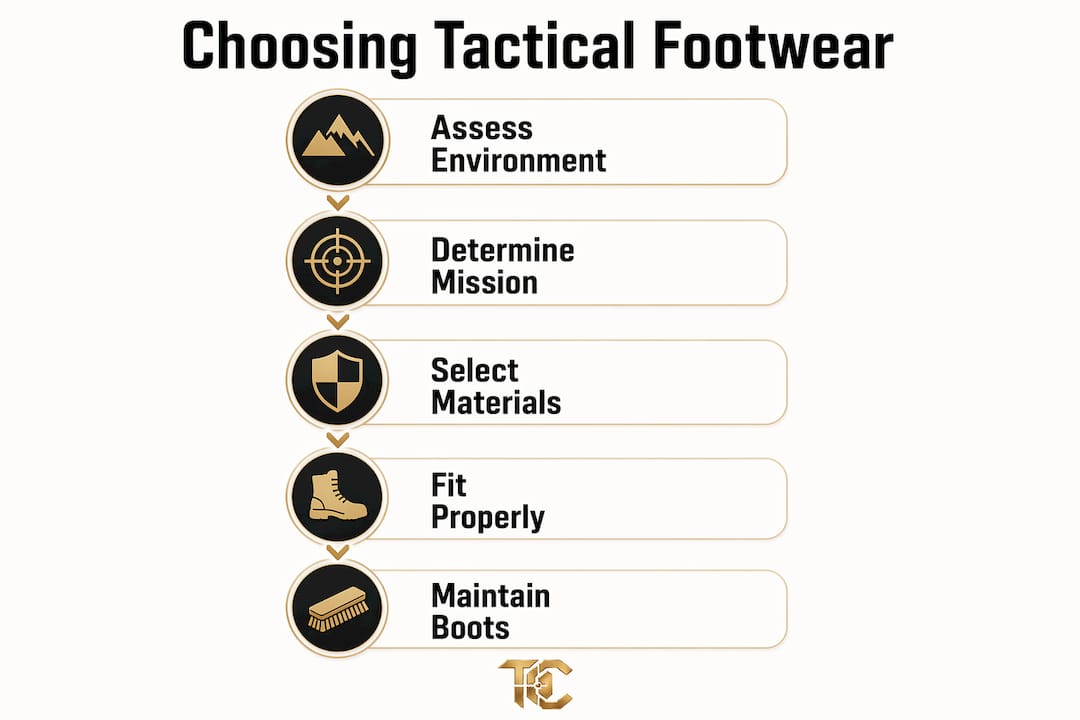
Modern tactical boots reduce fatigue through cushioned insoles and breathable air-mesh panels without sacrificing durability. That shift in design philosophy matters because it changes what you should look for on a spec sheet.
Upper materials
Full-grain leather offers the best abrasion resistance and molds to your foot over time. It handles rocky terrain and brush well but dries slowly when soaked. Synthetic composites and nylon uppers are lighter and dry faster, making them the better choice for wet or high-tempo operations. Material choice directly affects suitability for environment: leather for durability, synthetic for moisture-intensive operations. Gore-Tex membranes add waterproofing to either material but reduce breathability, which matters on long movements in warm weather.
Outsoles and traction
| Outsole type | Best use | Trade-off |
|---|---|---|
| Vibram rubber | Rocky, uneven terrain | Heavier than standard rubber |
| Slip-resistant rubber (ASTM F3445-21) | Urban, wet surfaces | Less aggressive tread |
| Aggressive lug pattern | Mud, loose soil | Noisy on hard floors |
| Low-profile tread | Indoor, urban | Limited grip on loose terrain |
Boots with Vibram outsoles and moisture-wicking linings provide reliable traction and keep feet dry in demanding environments. Boots compliant with ASTM F3445-21 deliver verified slip resistance on varied surfaces, which is a critical safety standard for law enforcement and military personnel.
Ankle support and closure systems
High-cut boots protect the ankle on uneven terrain and under heavy loads. Mid-cut designs balance support with mobility for faster movement. Low-cut tactical shoes sacrifice ankle protection for speed and are best suited to flat, predictable surfaces.
Side zipper tactical boots offer quick on/off convenience but can cause ankle irritation and represent a mechanical failure point compared to traditional laces. Lace-up systems take longer to don but are field-repairable with any cord if a lace breaks. For most field operators, laces win on reliability. For law enforcement or EMS roles where rapid donning matters, a side zip with a lace backup is a reasonable compromise.
Pro Tip: If you choose a side-zip boot, carry a spare lace anyway. Zippers fail at the worst possible moments, and a broken zipper in the field with no backup leaves you with a boot that will not stay closed.
How do you maintain tactical boots for long-term performance?
Boot maintenance is not optional. A $300 pair of boots treated poorly will perform worse than a $150 pair maintained correctly after six months of field use. Think of it like a quality firearm: the craftsmanship only holds up when you take care of it.
- Clean after every field use. Regularly cleaning tactical boots with a soft brush and mild soap removes grit that cuts into leather and nylon fibers from the inside out. Skip harsh detergents, which strip natural oils from leather.
- Apply waterproofing treatments. Professional-grade wax or spray treatments restore the durable water repellent (DWR) finish that factory waterproofing loses after repeated field exposure. Reapply every 30–60 days of active use, or after any deep soaking.
- Dry properly. Remove insoles and let boots air dry at room temperature. Never use direct heat sources like campfires or radiators. Heat degrades adhesives and warps midsoles faster than any amount of field use. Stuff boots with newspaper to absorb moisture and hold shape.
- Store correctly. Keep boots in a cool, dry location away from direct sunlight. UV exposure degrades rubber outsoles and fades nylon uppers over time.
- Know when to replace. Worn-through outsoles, collapsed midsoles, or cracked uppers are replacement signals, not repair candidates. A midsole that no longer springs back under pressure has lost its cushioning and will accelerate joint fatigue on long movements.
For a broader look at how waterproof gear maintenance applies across your full kit, the principles translate directly to boot care. Consistent maintenance routines extend the life of every piece of field equipment you carry, including your footwear. You can also find detailed protocols in this outdoor gear maintenance guide that covers drying, storage, and treatment schedules applicable to tactical boots.
Key Takeaways
Choosing tactical footwear correctly requires matching boot features to your specific environment, getting a precise fit with mission socks, and maintaining the boots consistently to preserve performance.
| Point | Details |
|---|---|
| Environment drives selection | Match waterproofing, drainage, insulation, and breathability to your primary terrain and climate. |
| Fit with mission socks | Measure with a Brannock device in the late afternoon wearing the socks you will actually use in the field. |
| Material affects suitability | Leather suits high-abrasion dry environments; synthetic materials perform better in wet or amphibious conditions. |
| Outsole standards matter | ASTM F3445-21 slip resistance and Vibram outsoles provide verified traction on varied and hazardous surfaces. |
| Maintenance extends lifespan | Clean, dry, and treat boots after every field use to preserve waterproofing, structure, and outsole grip. |
What I have learned after years of testing tactical boots
One of the most persistent myths in the tactical community is that a stiff boot is a durable boot. That assumption costs operators real performance. Tactical boots no longer need to be stiff. Modern construction prioritizes reducing operator fatigue while maintaining durability, and the best boots on the market today prove that flexibility and longevity are not mutually exclusive.
I have tested boots that looked impressive on paper but destroyed feet within two days of continuous wear. The fit was wrong, the break-in was skipped, and the material was chosen for appearance rather than environment. Every one of those failures came down to the same root cause: the buyer trusted the spec sheet over the actual fit and field conditions.
My honest recommendation is to test at least two or three pairs before committing to a primary boot. Wear each pair on progressively longer and more loaded movements. Pay attention to where pressure builds, where the heel lifts, and how the boot responds to wet conditions. A boot that feels good in a store and holds up through a 10-mile loaded carry in mixed terrain is worth every dollar. One that looks right but fails on the second day of a patrol is just expensive dead weight.
The tactical accessories selection process follows the same logic: prioritize function over aesthetics, test before you commit, and never let appearance substitute for performance data.
— Brian
Gear up with Tungstencreektactical
Tactical footwear is one piece of a larger preparedness picture. At Tungstencreektactical, we carry premium tactical gear, firearms, and accessories selected for operators who demand reliability in the field and quality in everyday carry.

Whether you are building out a full field kit or looking for custom-built firearms to complement your loadout, Tungstencreektactical brings together the gear, expertise, and transparency you need to make confident decisions. Our team understands what operators actually need, not what looks good in a catalog. Browse our full selection and use our mobile app to compare products, check pricing, and unlock VIP benefits built for serious buyers.
FAQ
What is tactical footwear?
Tactical footwear is purpose-built boots and shoes designed for durability, protection, and performance in demanding operational or outdoor environments. They differ from standard boots through features like slip-resistant outsoles, waterproof membranes, and reinforced toe caps.
How do I know what size tactical boot to buy?
Measure your feet with a Brannock device while wearing your mission socks, and always measure in the late afternoon when feet are at their largest. This combination gives the most accurate size for long-term comfort.
Are waterproof tactical boots always the best choice?
Waterproof boots are the right choice for cold, wet terrain but can trap heat and moisture in warm or amphibious conditions. In true wet environments, boots with drainage ports and quick-drying synthetic materials often outperform fully waterproofed options.
How long do tactical boots typically last?
Lifespan depends on use frequency, terrain, and maintenance quality. Boots cleaned regularly, treated with waterproofing compounds, and dried properly at room temperature will outlast neglected pairs by a significant margin regardless of original price.
What is the difference between Vibram and standard rubber outsoles?
Vibram outsoles use a proprietary rubber compound with aggressive tread geometry designed for grip on rocky and uneven terrain. Standard rubber outsoles are lighter and quieter but provide less traction on technical ground.
Recommended
Related Post

Discover the 5 ways
An introduction to Tactical Luxury Guns & Coffee We founded
Top 5 Best PCC’s
In 2026, the Pistol Caliber Carbine (PCC) market is no