
Why Invest in Holster Quality: A Carrier’s Guide
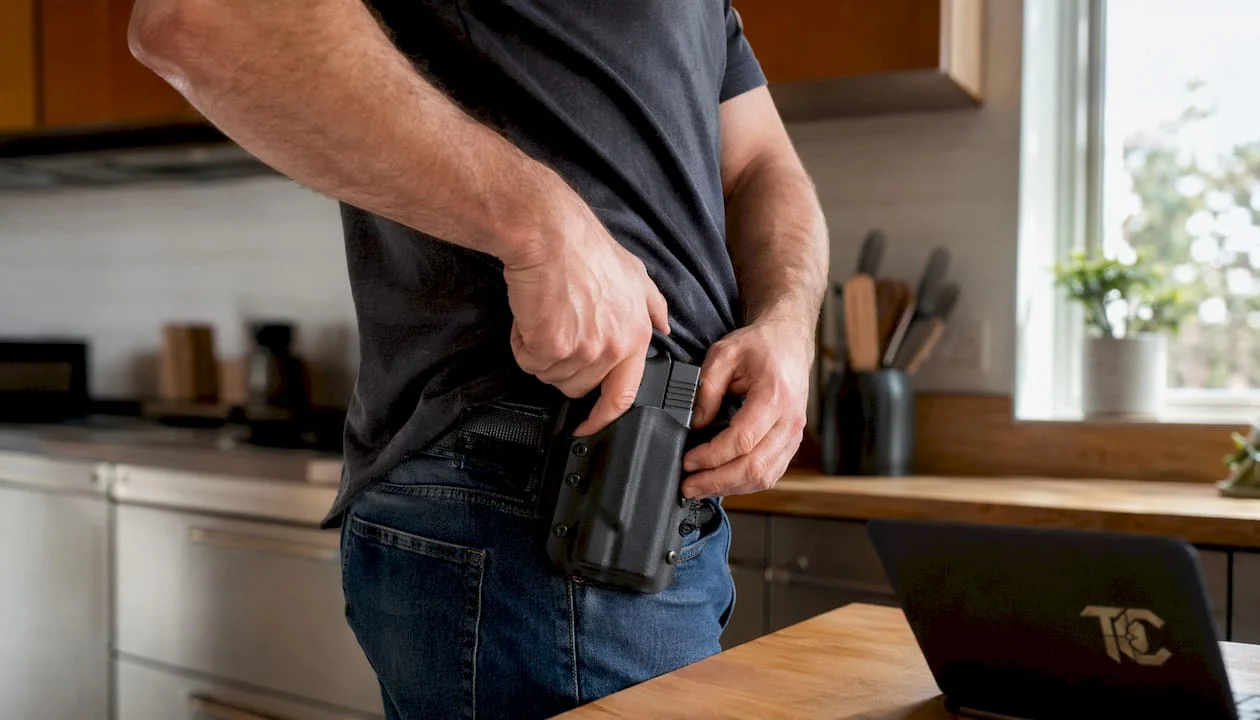
A quality holster is defined by its ability to secure your firearm safely, protect the trigger guard completely, and hold up through years of daily carry. Understanding why invest in holster quality goes beyond personal preference. It is a safety decision, a durability decision, and a comfort decision rolled into one. Responsible firearm owners who treat their holster as an afterthought put themselves at unnecessary risk. The right holster works like a well-selected cigar: the difference between a good one and a poor one is immediately obvious once you know what to look for.
Why invest in holster quality for firearm safety and retention?
Holster quality directly determines whether your firearm stays where you put it and whether it fires only when you intend it to. A poorly fitted holster creates two serious problems: the firearm can shift or fall out during movement, and an exposed trigger guard invites accidental contact. Neither outcome is acceptable for a responsible carrier.
Full trigger guard coverage is the single most critical safety feature in any holster. Without it, clothing, debris, or a reholstering motion can contact the trigger and cause a negligent discharge. Quality holsters are molded or stitched to cover the entire trigger guard with no gaps.
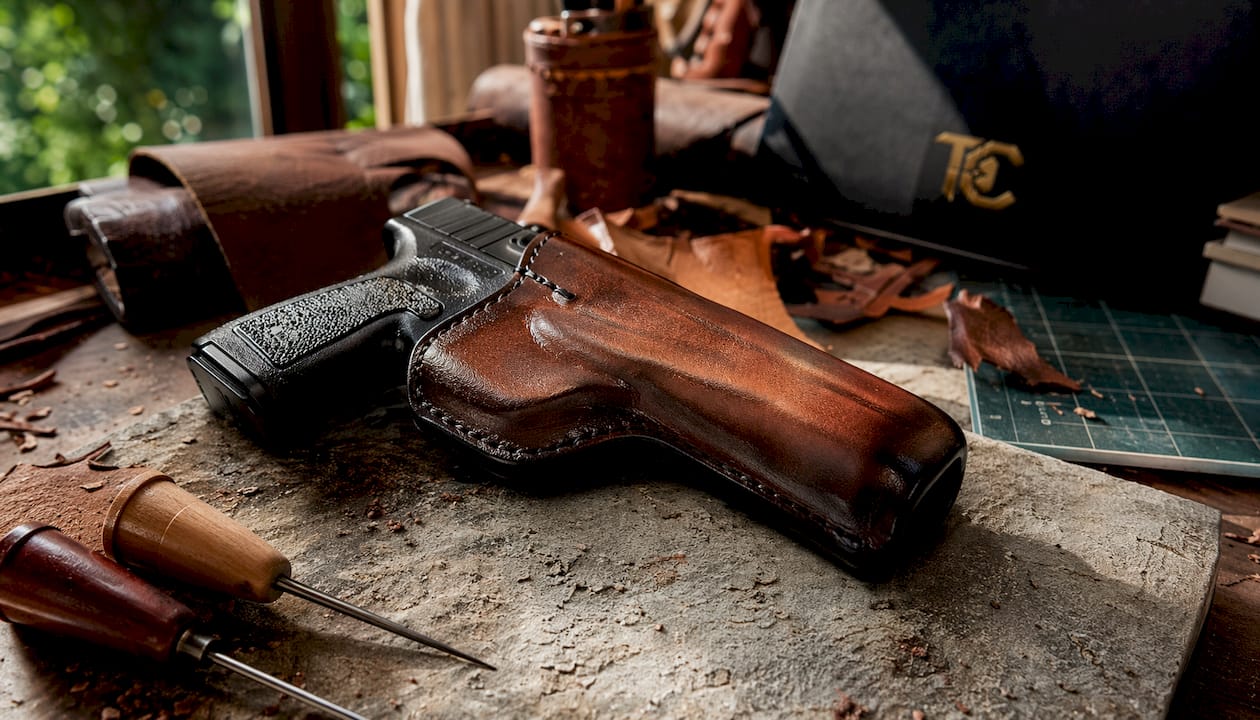
Retention is the second pillar of holster safety. Retention options vary from open-top passive tension to active locking mechanisms like thumb breaks and snap-in retention devices. Passive retention relies on friction and a snug fit. Active retention adds a deliberate release step before the firearm can be drawn. Your carry environment and threat level should guide which system you choose.
Quality holsters also protect the firearm itself. Cheap materials scratch slides, wear down finishes, and allow moisture to sit against the metal. A well-constructed holster holds the firearm away from sweat, resists corrosion, and keeps the finish intact over years of use. Think of it as protecting an investment that already cost you several hundred dollars.
- Full trigger guard coverage: No gaps, no exposed trigger face, no exceptions.
- Adjustable retention tension: Allows you to dial in the draw resistance that matches your training and carry style.
- Active locking mechanisms: Thumb breaks or retention hoods add a deliberate release step for duty or open carry.
- Firearm-specific molding: A holster built for your exact model fits tighter and retains better than a universal design.
- Sweat resistance: Quality materials and linings keep moisture away from the slide and frame.
Pro Tip: Test retention by holding the holster upside down with the firearm seated. If the gun falls out without a deliberate draw motion, the retention is inadequate for safe carry.
What materials and construction factors define holster quality?
The material a holster is made from determines its retention, durability, comfort, and lifespan. Three materials dominate the quality holster market: Kydex, leather, and hybrid constructions that combine both.
Kydex is a thermoplastic sheet that gets heated and vacuum-formed around a specific firearm model. Kydex’s rigidity allows precise molding that delivers consistent retention every single draw. It does not stretch, sag, or absorb moisture. Kydex holds its shape in heat, cold, and rain, which makes it the preferred choice for active carry and duty use. The tradeoff is that it can feel stiff against the body, especially during long wear sessions.
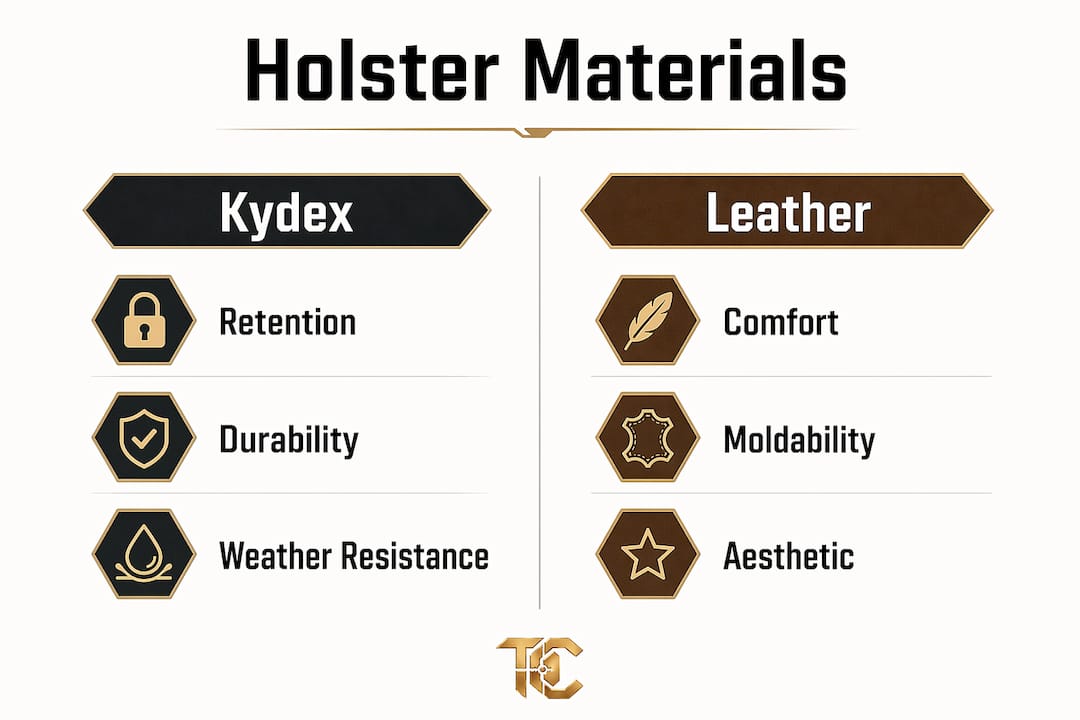
Leather holsters offer superior comfort by molding to the body’s shape over time. A quality leather holster breaks in over weeks of wear and eventually conforms to your body’s contours. Leather also carries a classic aesthetic that many carriers prefer. The downside is that leather can absorb sweat, soften with heat, and lose retention over time if not properly maintained.
Hybrid holsters pair a Kydex shell with a leather or foam backing. The shell provides consistent retention and trigger guard coverage. The backing distributes pressure across a wider surface area, reducing hotspots during all-day carry. For more on how hybrid holsters perform in everyday concealed carry, the differences become clear quickly.
Hardware quality matters as much as the shell material. Durability factors like corrosion-resistant clips, reinforced stitching, and quality screws determine whether a holster survives years of daily use or fails within months. A holster with cheap stamped-steel clips will loosen over time and shift on the belt. Quality clips, whether injection-molded polymer or stainless steel, hold position under the stress of movement and reholstering.
| Material | Retention | Comfort | Durability | Best Use |
|---|---|---|---|---|
| Kydex | Excellent | Moderate | Excellent | Active carry, duty use |
| Leather | Good | Excellent | Good with care | Everyday carry, classic preference |
| Hybrid | Excellent | Very good | Very good | All-day concealed carry |
Pro Tip: Inspect the hardware on any holster before buying. Screws should be stainless or coated steel. Clips should have a positive lock onto the belt with no lateral play.
Why is customization important for holster fit and comfort?
A holster that fits your body is as important as a holster that fits your firearm. Off-the-shelf designs assume an average body type, average clothing, and average carry position. Most carriers do not fit that average.
Custom and premium holsters add significant value by tailoring the holster body and hardware to individual body types, clothing choices, and firearm setups. The result is a holster that disappears under your clothing and stays comfortable through a full workday. Key customization features include:
- Cant adjustment: Changes the angle of the firearm relative to your belt. A forward cant of 15–20 degrees improves concealment for most inside-the-waistband carriers.
- Ride height: Controls how high or low the firearm sits relative to your beltline. Lower ride height aids concealment. Higher ride height speeds the draw.
- Sweat guard height: A taller sweat guard keeps the slide away from your skin and reduces moisture contact.
- Belt attachment width: Wider attachments distribute weight across more of the belt, reducing fatigue during long carry sessions.
- Concealment claw: A small wing that presses against the belt to rotate the grip inward, reducing printing through clothing.
- Optics and light compatibility: Premium holsters can be built to accommodate weapon-mounted lights and red dot sights without sacrificing retention.
Customization reduces printing and pressure points for all-day carry. Printing, where the outline of the firearm shows through clothing, is the primary concern for concealed carriers. A well-fitted holster with a concealment claw and proper cant eliminates most printing without requiring a wardrobe change. Pressure points develop when a rigid holster edge digs into the hip or ribs. Adjustable ride height and a contoured backing solve this without compromise.
Carriers who use weapon-mounted lights or optics face a specific challenge. A standard holster will not accommodate these additions. A quality holster built for your exact firearm configuration, including the specific light model, retains the firearm correctly and allows a clean draw. This is one area where firearm upgrade options and holster selection must be considered together.
How do you evaluate holster quality versus price?
Holster quality versus price is not a simple equation. The lowest-cost option almost always carries hidden costs in safety, comfort, and longevity. Here is how to think through the investment:
-
Identify your non-negotiables first. Full trigger guard coverage and firearm-specific fit are not optional. Any holster that fails these two criteria is not worth buying at any price.
-
Understand the price tiers. Entry-level holsters from generic manufacturers typically use universal fit designs and low-grade hardware. Mid-tier holsters offer firearm-specific molding and better clips. Premium and custom holsters add adjustability, superior materials, and tailored fit.
-
Calculate the real cost of a cheap holster. Cheap or improperly fitted holsters increase the risk of poor retention and negligent discharges. A holster failure that results in a dropped firearm, a negligent discharge, or a damaged finish costs far more than the price difference between a budget and a quality option.
-
Factor in longevity. A quality Kydex or leather holster, properly maintained, lasts five to ten years of daily carry. A cheap holster may need replacement within a year. Spread the cost over the lifespan and the premium option is often the better value.
-
Consider when custom adds clear value. Carriers with non-standard body types, those who use weapon lights or optics, and those who carry in demanding environments get the most return from custom holsters. If your setup is standard and your carry is light, a quality mid-tier option may serve you well.
Responsible firearm ownership means treating every component of your carry system with the same seriousness you give the firearm itself. Pairing a quality firearm with a poor holster is like pairing a precision-built rifle with a worn-out sling. The weakest link defines the system. For guidance on selecting tactical accessories that match your firearm’s quality level, the same principles apply across the board.
When interacting with law enforcement as a licensed carrier, your holster’s retention and presentation matter. A holster that keeps the firearm secure and visible in a predictable position reduces ambiguity. Understanding how a licensed gun owner should interact with police reinforces why a secure, well-designed holster is part of responsible carry, not just a comfort preference.
Key Takeaways
A quality holster is the most safety-critical accessory in your carry system, and skipping on it undermines every other investment you make in your firearm.
| Point | Details |
|---|---|
| Trigger guard coverage | Full coverage is non-negotiable; any gap creates a negligent discharge risk. |
| Material choice matters | Kydex excels in retention and durability; leather wins on comfort; hybrids balance both. |
| Customization pays off | Adjustable cant, ride height, and concealment claws reduce printing and pressure points significantly. |
| Cheap holsters cost more | Poor retention and safety risks from budget holsters outweigh any upfront savings. |
| Match holster to full setup | Optics and weapon lights require holsters built specifically for those configurations. |
What I’ve learned from years of carrying every day
Holster selection is the decision most carriers get wrong the first time. I did. I spent the first year of daily carry rotating through three different budget options, each one solving one problem while creating two others. The retention was fine but the comfort was poor. The comfort was good but the concealment was terrible. It took committing to a quality, firearm-specific holster with adjustable cant and a concealment claw before everything clicked.
The insight that changed my thinking was this: your holster is in contact with your body and your firearm every hour you carry. Your firearm is not. The holster takes the wear, the sweat, the movement, and the reholstering repetitions. It deserves more scrutiny than the firearm it holds.
I also learned that customization is not a luxury for serious carriers. It is the difference between a holster you forget you are wearing and one you are constantly adjusting. A concealment claw and a half-inch change in ride height transformed my carry experience more than any firearm modification I have made.
My recommendation: budget for a quality holster from the start. If you are new to carry, resist the urge to buy cheap while you “figure out your preferences.” A quality mid-tier holster with adjustable features will teach you your preferences faster and more safely than a cheap universal design ever will.
— Brian
Tungstencreektactical’s custom holster and gear expertise
Tungstencreektactical builds its reputation on matching responsible carriers with gear that performs at the level their firearm demands. That philosophy extends directly to holsters and carry accessories.
Tungstencreektactical’s custom guns and accessories service includes precision-built configurations tailored to your exact specifications, including setups that require holsters built around weapon lights, optics, and non-standard grip configurations. The team understands that a carry system is only as reliable as its least-considered component. Whether you are building a new carry setup or upgrading an existing one, Tungstencreektactical brings the same standard of craftsmanship to every recommendation it makes.
FAQ
What makes a holster “high quality”?
A high-quality holster provides full trigger guard coverage, firearm-specific retention, durable hardware, and materials that resist moisture and wear. It fits your exact firearm model and holds its retention characteristics over years of daily use.
Is Kydex or leather better for everyday carry?
Kydex delivers superior retention and weather resistance, making it the stronger choice for active or duty carry. Leather offers better comfort and body conformity, which suits carriers who prioritize discretion and all-day wearability.
How does a cheap holster create safety risks?
Cheap holsters often use universal fit designs that leave gaps in trigger guard coverage and provide inconsistent retention. These gaps increase the risk of accidental trigger contact and firearm loss during movement.
When is a custom holster worth the extra cost?
A custom holster is worth the investment when you carry a firearm with a weapon-mounted light or optic, have a non-standard body type, or need specific cant and ride height adjustments that off-the-shelf designs cannot provide.
How long should a quality holster last?
A well-constructed Kydex or leather holster maintained properly lasts five to ten years of daily carry. Hardware inspection and occasional cleaning extend that lifespan further.
Recommended
Related Post
Discover the 5 ways
An introduction to Tactical Luxury Guns & Coffee We founded
Top 5 Best PCC’s
In 2026, the Pistol Caliber Carbine (PCC) market is no