How to Pack for the Range: Your 2026 Gear Guide
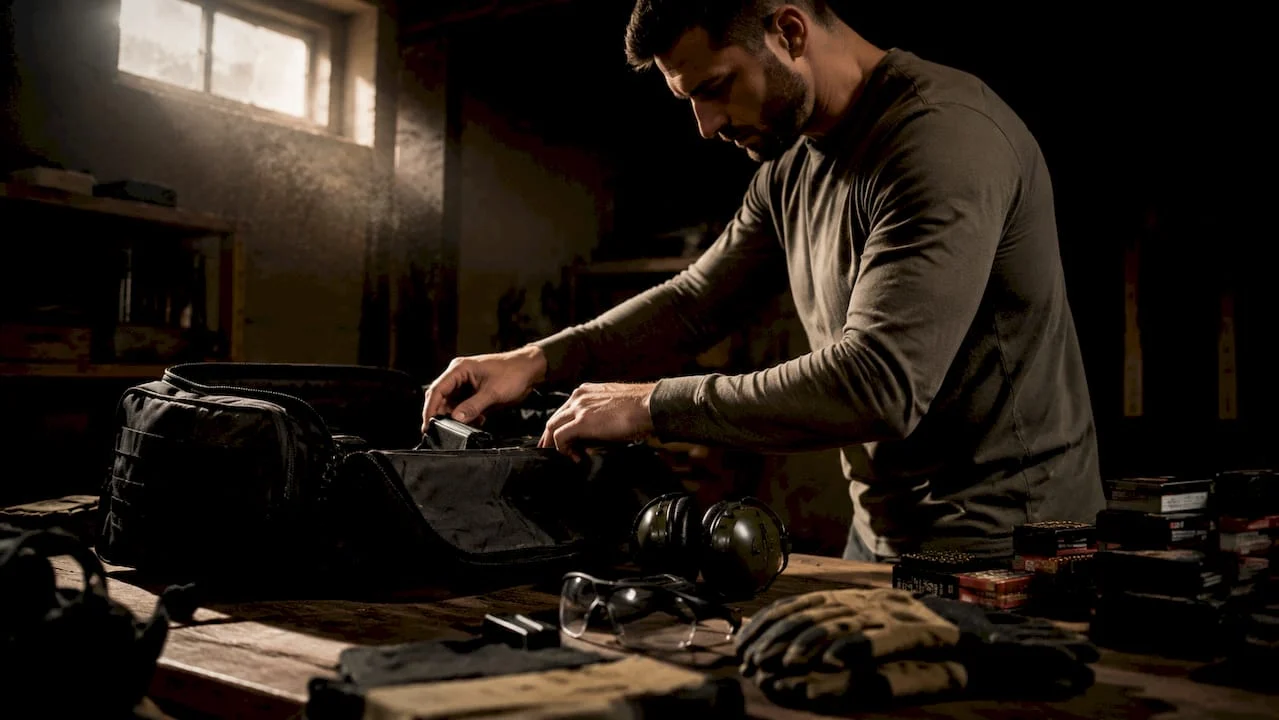
Packing for the shooting range means assembling a well-organized bag with safety equipment, ammunition, tools, and personal essentials before you ever leave the house. Knowing how to pack for the range correctly separates a productive session from a frustrating one. Your core loadout must cover personal protective equipment (PPE), a trauma-capable medical kit, and enough ammunition for your session. Federal law under 18 U.S.C. §926A also governs how you transport your firearm, so compliance starts before you reach the firing line.
What essential items must you include in your range bag?
A complete shooting range essentials list starts with two non-negotiables: eye protection and ear protection. Eye protection must meet ANSI Z87.1 impact standards. Ear protection should be electronic muffs, which let you hear range commands while blocking harmful impulse noise. Both items belong on top of your bag for instant access.
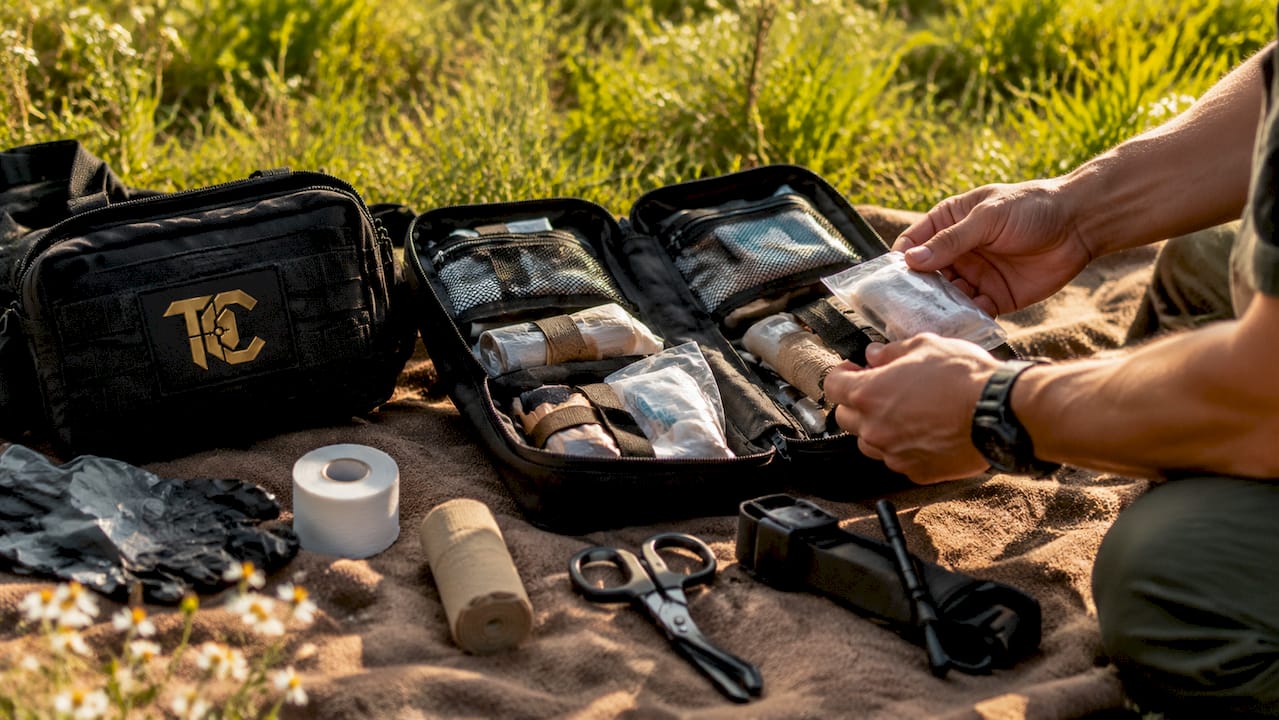
Your medical kit is the second non-negotiable. Pack a trauma-capable IFAK that includes a North American Rescue CAT Gen 7 tourniquet, pressure bandages, and nitrile gloves. A tourniquet you cannot find in three seconds is nearly useless, so mount it on the outside of your bag or in a dedicated outer pocket.
Ammunition quantity matters more than most shooters realize. A standard 90-minute session requires at least 300 rounds. That number assumes a focused training session, not casual plinking. Always verify that the headstamp on your ammunition matches the caliber marked on your firearm’s barrel and slide.
Administrative gear rounds out your packing list for shooting:
- Chamber flags: Brightly colored plastic flags that signal a clear, safe firearm on the line.
- Snap caps: Dummy rounds for dry-fire practice and function checks.
- Target pasters and tape: Cover shot holes to extend target life and track groups accurately.
- Sharpies: Mark targets, label magazines, and note adjustments on the spot.
- Maglula UpLULA magazine loader: Saves your thumbs during extended loading sessions and costs around $35.
Budget tiers for range loadouts run from a $60 minimalist setup to a $110 standard kit and a $250 enthusiast configuration. Knowing your tier helps you prioritize purchases without overbuying gear you will not use.
Pro Tip: Pack your IFAK and eye and ear protection first, every single time. If you run out of space, remove comfort items before safety gear.
How do you organize your range bag for balance and quick access?
Organization is the difference between a bag you can work from and a bag you dig through. Heavy ammunition boxes belong at the bottom and center of your bag. That placement keeps the center of gravity close to your body and reduces shoulder and back fatigue during transport.
Follow this packing order for a standard session:
- Bottom layer: Ammunition boxes, placed flat and centered.
- Middle layer: Cleaning kit, multi-tool, and torque wrench in a zippered pouch.
- Upper layer: Medical kit, eye protection case, and ear muffs.
- Outer pockets: Chamber flags, snap caps, pasters, tape, and Sharpies.
- Exterior attachment point or top flap: IFAK or tourniquet for immediate access.
Use compartments and labels to group similar items together. Batteries for electronic muffs go in one pouch. Cleaning supplies go in another. Labeling pouches with a Sharpie takes thirty seconds and saves minutes of searching mid-session.
A multi-tool and a torque wrench belong in every well-prepared range bag. Optic mounts loosen, grip screws back out, and rail accessories shift. Having on-site adjustment tools means you fix the problem and keep shooting instead of packing up early.
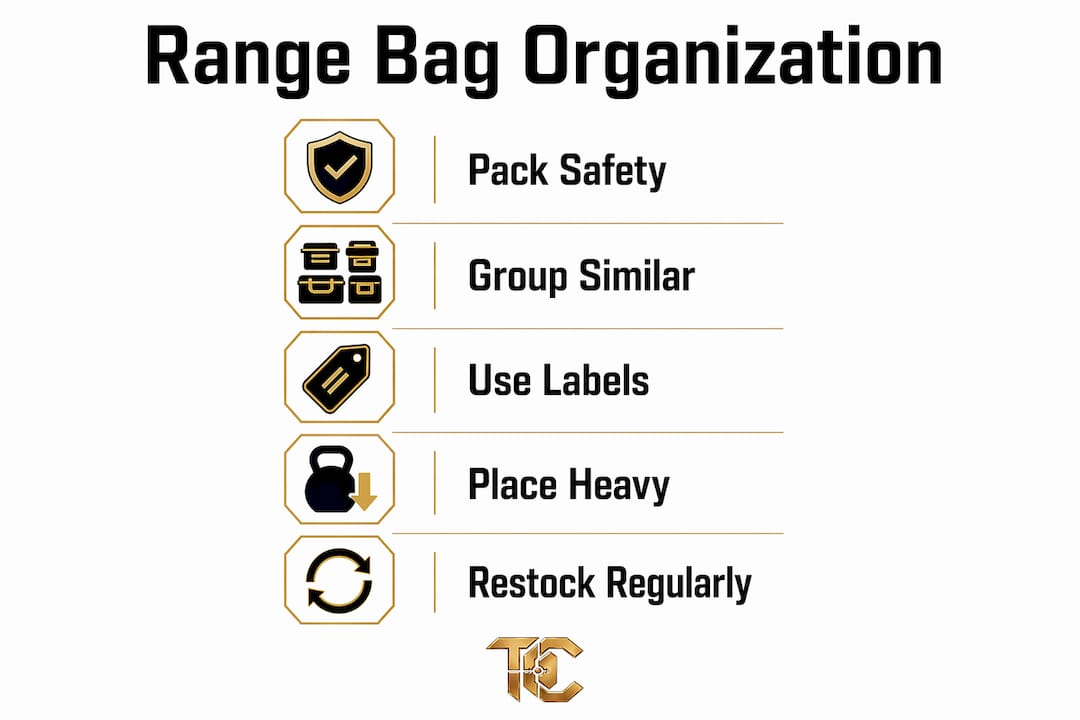
Pro Tip: After each range visit, restock your pasters, check your battery levels, and confirm your tourniquet is still accessible. A five-minute audit after every session keeps your bag ready to go.
What are the best practices for transporting firearms to the range?
Safe transport is a legal requirement, not a preference. Federal law mandates that firearms be unloaded and secured in a locked container during transport, with ammunition stored separately and not readily accessible from the passenger compartment. Many states add stricter requirements on top of federal law, so check your state statutes before every trip.
Follow these transport steps every time:
- Unload your firearm completely before placing it in its case.
- Lock the case and store it in the trunk or a secured area of your vehicle.
- Place ammunition in a separate bag or box, away from the firearm.
- Do not load magazines until you are at the firing line with a range safety officer present.
- Upon arrival, open the action, remove any magazine, and insert a brightly colored chamber flag.
Calling ahead to your range is a step most shooters skip. Local range policies can be stricter than state law, covering everything from caliber restrictions to case requirements. A two-minute phone call prevents a wasted trip.
“Range safety officers’ directions are final. Compliance is not optional, and a well-packed, compliant bag signals to every RSO that you are a prepared and responsible shooter.”
For a thorough breakdown of transport rules by state and vehicle type, Tungstencreektactical’s guide on firearm transportation compliance covers the specifics in plain language.
How do you adapt your packing list for different sessions and environments?
Your gear checklist should shift based on session length, location, and training goals. A 30-minute indoor pistol session and a four-hour outdoor carbine course require very different bags. Knowing how to prepare for the range means reading the environment before you pack.
For outdoor or extended sessions, add these items:
- Hydration: At least one liter of water per hour in warm weather.
- Snacks: High-protein options that do not melt or crumble in the bag.
- Sunscreen and lip balm: Sun exposure on an outdoor range is significant, especially at altitude.
- Insect repellent: Mandatory for wooded or rural ranges in warmer months.
- Extra ear plugs: Foam plugs as backup if electronic muffs lose battery power.
- Cooling pack or towel: Useful for hot-weather sessions to manage core temperature.
Cleaning tools like bore snakes and CLP lubricant belong in your bag for any session longer than two hours or any multi-firearm day. Carbon buildup affects reliability, and a bore snake takes thirty seconds to run through a barrel. Targets, tape, and a shot timer round out a training-focused loadout.
| Session Type | Ammunition | Key Additions |
|---|---|---|
| Indoor pistol, 60 min | 150–200 rounds | Pasters, snap caps, ear muffs |
| Outdoor pistol, 90 min | 300+ rounds | Water, sunscreen, bore snake |
| Carbine or rifle, 3+ hrs | 500+ rounds | CLP, extra mags, cooling pack |
| Multi-firearm day | Varies by platform | Full cleaning kit, timer, extra targets |
Hydration and comfort items are not luxuries. Dehydration degrades focus and fine motor control, both of which matter on the firing line. Pack them with the same seriousness you bring to your ammunition count.
If you want to sharpen your technique alongside your gear setup, the guide on diagnosing shooting errors pairs well with a training-focused loadout.
Key Takeaways
A well-packed range bag built around safety gear, compliant transport, and organized layers is the single most reliable way to improve every session you shoot.
| Point | Details |
|---|---|
| Safety gear comes first | Eye protection (ANSI Z87.1) and ear protection belong on top of every bag, every time. |
| Medical kit is non-negotiable | Pack a CAT Gen 7 tourniquet and IFAK where you can reach them in under three seconds. |
| Ammunition quantity matters | Plan for 300+ rounds per 90-minute session and verify headstamp matches your firearm. |
| Transport compliance is required | Federal law requires unloaded firearms in locked containers with ammo stored separately. |
| Adapt your loadout to the session | Outdoor and extended sessions need hydration, cleaning tools, and environmental comfort items. |
What I’ve learned from years of packing range bags
The most common mistake I see is shooters treating the range bag like a trophy case. They buy a tactical-looking bag, fill it with gear that looks impressive, and then spend the first ten minutes of every session hunting for their chamber flags. Functional organization beats aesthetics every time, and that lesson usually costs a few wasted sessions to learn.
My personal rule is simple: medical gear and PPE get packed first, always. Everything else fills in around them. I have seen shooters arrive without ear protection, without a tourniquet, and once without any ammunition at all. A written checklist on your phone or taped inside your bag lid solves all of those problems permanently.
Transport compliance is the area where I see the most overconfidence. Shooters assume their state law is the only standard that applies, but local range policies often go further. Call ahead. It takes two minutes and removes all uncertainty.
The last thing I will say is this: audit your bag every few months. Your training goals change, your firearms change, and your comfort items change with the seasons. A bag you built in january for indoor pistol work will not serve you well on an outdoor carbine course in july. Treat your range bag like a living system, not a one-time setup.
— Brian
Gear up with Tungstencreektactical
Tungstencreektactical builds and stocks gear for shooters who take their range time seriously. Whether you are refining your loadout or starting from scratch, the right firearm makes every session more productive.

Tungstencreektactical’s custom-built firearms are crafted to match your shooting style, caliber preference, and intended use. From precision pistols to purpose-built carbines, each build reflects the same standard of craftsmanship you bring to your range preparation. Browse the full selection of tactical accessories to complete your setup with gear that performs as well as it looks.
FAQ
What should always go in a range bag?
Eye protection meeting ANSI Z87.1 standards, electronic ear muffs, a trauma-capable IFAK with a tourniquet, ammunition, and chamber flags are the core items every shooter needs. Admin tools like target pasters, snap caps, and a Sharpie round out the minimum kit.
How much ammo should I bring to the range?
A standard 90-minute session requires at least 300 rounds. Longer or multi-firearm sessions call for more, so plan your ammunition count before you pack.
Is it legal to transport a loaded firearm to the range?
Federal law under 18 U.S.C. §926A requires firearms to be unloaded and locked in a container during transport, with ammunition stored separately. State and local laws may be stricter, so verify both before traveling.
How do I keep my range bag organized?
Place heavy ammunition at the bottom and center of the bag, group similar items in labeled pouches, and keep safety gear at the top or in exterior pockets for fast access. A consistent packing order means you always know where everything is.
Do I need a cleaning kit at the range?
For sessions longer than two hours or any multi-firearm day, a bore snake and CLP lubricant are worth packing. Carbon buildup affects reliability, and a quick cleaning mid-session keeps your firearm running without interrupting your training.
Recommended
Related Post
Discover the 5 ways
An introduction to Tactical Luxury Guns & Coffee We founded
Top 5 Best PCC’s
In 2026, the Pistol Caliber Carbine (PCC) market is no