Must-Have Shooting Accessories for Range Performance
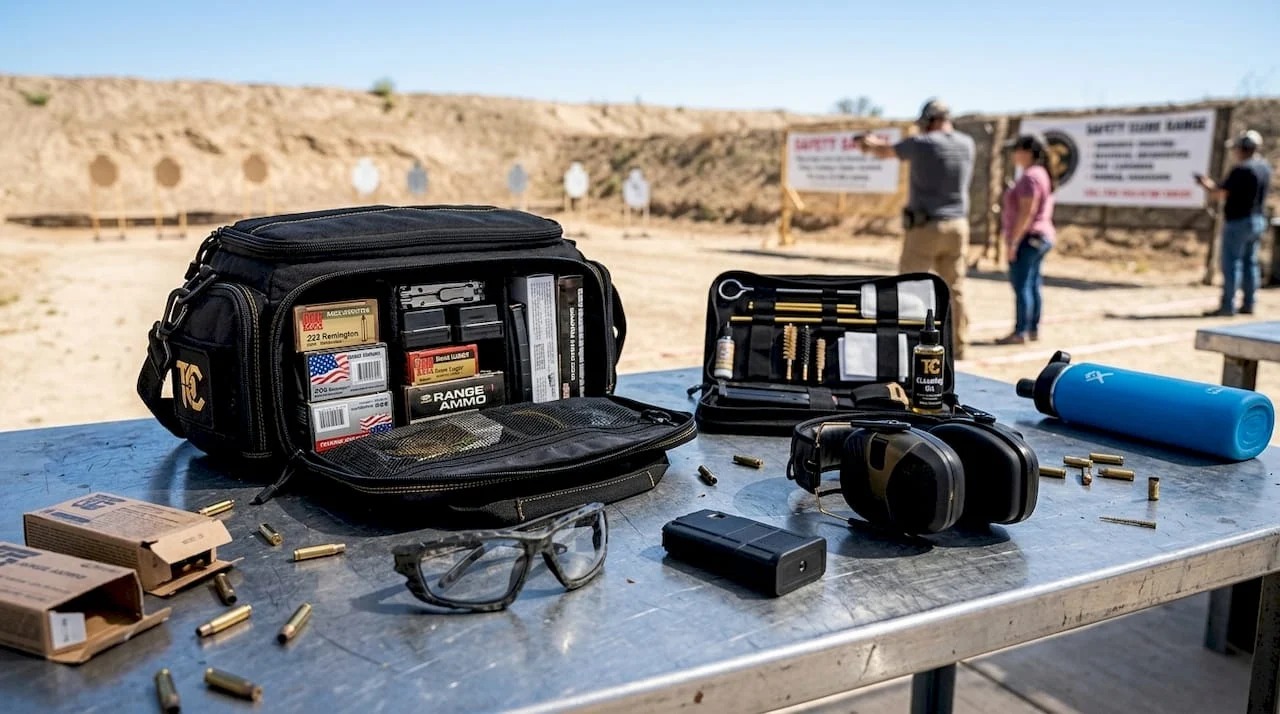
Walk into any gun store or scroll through any firearms retailer online, and the sheer volume of shooting accessories can stop you cold. The must-have shooting accessories are buried under a pile of gimmicks, novelty tools, and gear marketed more for aesthetics than function. What you actually need at the range is a shorter, smarter list. This article cuts through that noise, laying out the essential shooting gear every responsible gun owner should have, organized by priority, so you spend more time shooting and less time second-guessing your kit.
Table of Contents
- Key takeaways
- 1. What to look for in must-have shooting accessories
- 2. Ballistic-rated eye protection
- 3. Quality hearing protection
- 4. Magazine speed loaders
- 5. Firearm cleaning and maintenance kit
- 6. A well-structured range bag
- 7. First aid and bleed control kit
- 8. Quality targets and marking supplies
- 9. Shooting gloves and comfort essentials
- 10. Comparing popular accessories by category
- 11. Tailoring your gear to your experience level and goals
- My take on building a shooting kit that actually works
- Gear up with Tungstencreektactical
- FAQ
Key takeaways
| Point | Details |
|---|---|
| Safety gear comes first | Ballistic-rated eye protection and quality hearing protection are non-negotiable before anything else. |
| Speed loaders save significant time | A quality mag loader can save 30 or more minutes per session and prevent thumb fatigue. |
| Maintenance prevents session loss | A compact tool kit handles most on-the-spot fixes and keeps you shooting instead of packing up early. |
| Match gear to your experience level | Beginners should build a safety and maintenance foundation before investing in advanced performance tools. |
| Organization multiplies effectiveness | A well-structured range bag with quick-access pockets improves safety response and reduces frustration. |
1. What to look for in must-have shooting accessories
Before building your shooting equipment checklist, you need a filter. Not every accessory marketed as “essential” earns a spot in your bag. Here are the criteria worth applying to every purchase decision.
- Safety compliance. Any protective gear should meet recognized standards. Eye protection, for example, should carry ANSI Z87.1 certification to be considered genuinely ballistic-rated.
- Ease of use under pressure. If you have to think hard about how to use something when it counts, it is the wrong tool. Your first aid kit, your mag loader, your hearing protection — all of it should be operable quickly and intuitively.
- Durability. Range gear takes real abuse. It rides in bags, sits in trunks, and gets handled repeatedly. Quality stitching, solid zippers, and impact-resistant materials are not optional features.
- Cost-effectiveness. Premium gear does not always mean expensive gear. The question is whether the performance justifies the price, not whether the brand name impresses.
- Comfort for long sessions. Ill-fitting ear muffs or a bag with no padding will wear you down. Comfort directly affects how long and how well you practice.
- Range compliance. Some ranges have specific rules around target types, calibers, and even bag configurations. Gear that gets you flagged off the line is gear that wasted your money.
Pro Tip: Think of your shooting kit the way you’d select a well-built firearm. Every component should earn its place through function, not appearance.
2. Ballistic-rated eye protection
Your eyes are irreplaceable. Standard sunglasses or fashion eyewear offer zero protection against high-velocity spalling, hot brass, or ricochets. You need wrap-around ballistic lenses that meet ANSI Z87.1 standards at minimum. Brands like Oakley SI, ESS, and Wiley X all produce solid options at various price points. For shooters who wear prescription lenses, most of these brands offer insert systems so you are never forced to choose between vision clarity and eye safety. Clear lenses work for indoor ranges; amber or smoke-tinted lenses serve outdoor environments better.
3. Quality hearing protection
Hearing damage from gunfire is cumulative and permanent. A single unprotected shot at indoor ranges can push sound pressure levels well above 140 decibels. The most reliable approach combines foam in-ear plugs worn beneath full-cup earmuffs, because hearing damage can occur through soft tissues and the jaw, not just the ear canal. For shooters who want to hold a conversation between strings of fire, electronic earmuffs with ambient sound amplification are worth the investment. Models from Howard Leight and Walker’s offer solid noise reduction ratings at approachable prices. If you shoot suppressed rifles, a single layer of foam plugs usually suffices.
4. Magazine speed loaders
Loading magazines by hand is the slowest, most fatiguing part of any range session. A quality speed loader fixes that problem immediately. The Maglula UpLULA at around $35 handles virtually every double-stack pistol magazine on the market and has become the standard recommendation for handgun shooters. For rifle shooters running AR-platform magazines, the Podavach U-Loader at around $40 loads 30 rounds in 15 to 20 seconds. Beyond the time savings, your thumbs will thank you during high-volume sessions. Many shooters report recovering 30 or more minutes per session that was previously spent loading. That is real trigger time.
Pro Tip: Buy your mag loader the same day you buy your firearm. Waiting until your thumbs are raw to solve a problem you knew was coming is a choice, not a circumstance.
5. Firearm cleaning and maintenance kit
A fouled barrel or a loose optic mount can end a range session faster than a malfunction. A compact tool kit with hex keys, a multitool, and a bore snake covers the vast majority of on-the-spot fixes you will ever need. Dedicated cleaning kits from brands like Otis and Real Avid offer caliber-specific brushes, patches, and solvent bottles in a compact case. Understanding why regular maintenance matters for performance and longevity will reinforce the habit. A clean firearm patterns more predictably, cycles more reliably, and holds its value better. Consolidating your toolkit into one compact case saves space in your bag and prevents the frustration of missing a key tool at a critical moment.
6. A well-structured range bag
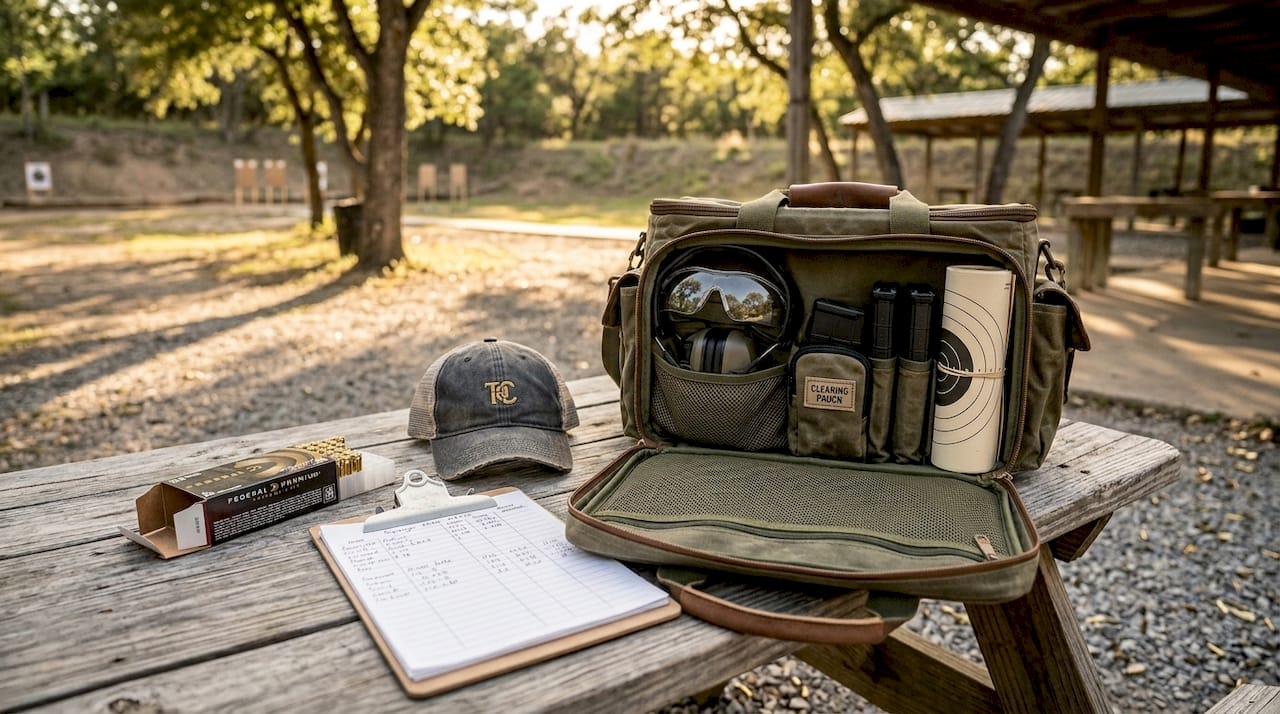
Your bag is the hub of your entire kit. A bag that sags, has cheap zippers, or offers no internal organization will cost you time and potentially gear. Look for hard-bottom construction that protects contents and prevents collapse, reinforced stitching at stress points, and external pockets sized for your eye and ear protection. The organizational philosophy matters too. Keep safety gear in the most accessible pockets, so you never have to dig for eye or ear protection under a pile of targets and ammo. Secondary pockets work well for maintenance tools and paperwork like range memberships. A quality range bag is not glamorous, but it is one of the best accessories for shooters who want a friction-free session.
7. First aid and bleed control kit
This is where a lot of shooters cut corners and should not. Individual first-aid kits — commonly called IFAKs — should include a tourniquet, chest seals, and hemostatic gauze at minimum. IFAKs have saved lives at shooting ranges, and having one on hand matters only if you know how to use it. Consider taking a basic trauma care or Stop the Bleed course before your next range trip. Mount your tourniquet where it is visible and accessible, not buried at the bottom of your bag. This is gear you hope to never use, but the investment in both the kit and the training is non-negotiable for responsible gun owners.
8. Quality targets and marking supplies
Shooting without defined goals reduces the effectiveness of any practice session. The right targets create measurable feedback. Paper silhouettes work for defensive drills. Grid-style precision targets work for rifle zeroing. Reactive steel targets, where your range permits them, create immediate auditory confirmation of hits. Carry a roll of target tape and a black marker so you can patch and reuse paper targets rather than burning through your supply in one session. The act of reviewing your shot groups and adjusting is what transforms range time into real skill development.
9. Shooting gloves and comfort essentials
Extended sessions with high-recoil firearms, or cold-weather range outings, make shooting gloves worth carrying. They protect your hands during administrative handling, reduce fatigue on long trigger sessions, and improve grip consistency in adverse conditions. Thin-profile gloves from brands like Mechanix or Magpul maintain tactile sensitivity while adding meaningful protection. Beyond gloves, pack hydration. It sounds basic, but dehydration accelerates fatigue and degrades fine motor control faster than most shooters realize. A quality water bottle and a light snack belong in your range bag just as reliably as your cleaning kit.
10. Comparing popular accessories by category
Here is a practical side-by-side look at common gear choices to help you decide what fits your needs and budget.
| Category | Option A | Option B | Best For |
|---|---|---|---|
| Mag loaders | Maglula UpLULA (~$35, pistol) | Podavach U-Loader (~$40, rifle) | Pistol shooters vs. AR platform users |
| Eye protection | Wiley X Saber Advanced (~$50) | ESS Crossbow (~$70) | Casual range vs. extended outdoor sessions |
| Hearing protection | Howard Leight Impact Sport (~$50) | Walker’s Razor Slim (~$60) | Budget-conscious vs. profile-focused buyers |
| Range bags | Voodoo Tactical range bag (~$40) | 5.11 Range Qualifier (~$100) | Entry-level vs. high-volume shooters |
| Cleaning kits | Otis Technology Elite Kit (~$30) | Real Avid Master Kit (~$60) | Basic maintenance vs. multi-platform cleaning |
Pro Tip: When choosing between budget and premium options, ask what the price difference actually buys you in terms of function. A $60 cleaning kit does not clean your barrel twice as well as a $30 one.
11. Tailoring your gear to your experience level and goals
The best accessories for shooters are always context-dependent. What makes sense for a competitive USPSA shooter does not make sense for someone new to pistol practice.
Beginners should prioritize:
- ANSI-rated eye and ear protection
- A basic cleaning kit and bore snake
- A mag loader for their primary firearm
- A first aid kit with tourniquet
Intermediate shooters can add:
- Electronic hearing protection for range communication
- Additional magazines to support longer drills
- A dedicated range bag with organization inserts
Advanced and competitive shooters benefit from:
- Shot timers for tracking splits and stage times
- Chronographs for load development and consistency checks
- Advanced performance accessories that match their specific discipline
Advanced tools like shot timers and chronographs are genuinely valuable for competitive shooters but represent a secondary tier of investment. Master the fundamentals of safety and maintenance first, and the performance tools will pay dividends when you get to them. Understanding the full range of gun accessories available can help you plan your progression without overspending at any single stage.
My take on building a shooting kit that actually works
I have seen more shooters than I can count show up to the range with a $300 holster and zero hearing protection. The sequence matters more than the total spend.
What I have learned from years of watching people build out their kits is that beginners systematically underinvest in safety and maintenance gear while overinvesting in accessories that look impressive but do little for their actual skill development. A shot timer does nothing for a shooter who is not yet calling their shots. A premium red dot does nothing for a shooter who has not learned the fundamentals of sight alignment. But a good mag loader and a pair of quality ear muffs will improve every single session you have, from your first to your thousandth.
The other trap I see is gadget accumulation. A range bag that weights 30 pounds and takes five minutes to unpack is a bag that teaches you to hate going to the range. Keep your kit lean and purposeful. Organize it so that every item you reach for is exactly where you expect it. That discipline in your bag reflects the discipline you carry to the firing line.
My honest advice: buy the safety gear first, buy it right, and resist the urge to upgrade your optics before you have mastered your iron sights.
— Brian
Gear up with Tungstencreektactical

Tungstencreektactical carries the firearms and accessories discussed in this article, from quality range-ready handguns to tactical accessories built for real-world performance. Whether you are building your first range kit or refining a setup you have carried for years, the product selection is curated for shooters who prioritize function over flash. If you are ready to invest in a precision-built firearm as the foundation of your kit, explore the custom firearms built to your specifications. Tungstencreektactical’s mobile app also lets you scan products, compare pricing, and unlock exclusive VIP pricing before you buy.
FAQ
What are the most important shooting accessories for beginners?
Beginners should start with ANSI Z87.1-rated eye protection, quality hearing protection, a mag speed loader, and a basic cleaning kit. These four items cover safety, efficiency, and maintenance before any other investment.
How much should I spend on essential shooting gear?
A solid baseline kit covering eye protection, ear protection, a mag loader, and a cleaning kit can be assembled for under $150. You do not need premium options at every category to start shooting safely and effectively.
Are electronic earmuffs worth the extra cost?
Yes, if you shoot with others or in instructional settings. Electronic earmuffs allow normal conversation between strings of fire while still providing adequate noise reduction for most outdoor range environments.
What shooting gear do I need for competitive shooting?
Competitive shooters benefit from shot timers, additional magazines, electronic hearing protection, and a well-organized range bag. Advanced tools like chronographs are worth adding once your fundamentals and basic kit are solidly in place.
How do I organize my range bag efficiently?
Keep safety gear, meaning eye and ear protection, in the most accessible outer pockets. Place your first aid kit where it is visible and easy to reach. Maintenance tools and ammo can sit deeper in the bag since you access them less frequently during a session.
Recommended
Related Post
Discover the 5 ways
An introduction to Tactical Luxury Guns & Coffee We founded
Top 5 Best PCC’s
In 2026, the Pistol Caliber Carbine (PCC) market is no