
Why Choose Mil-Spec Gear: A 2026 Tactical Guide
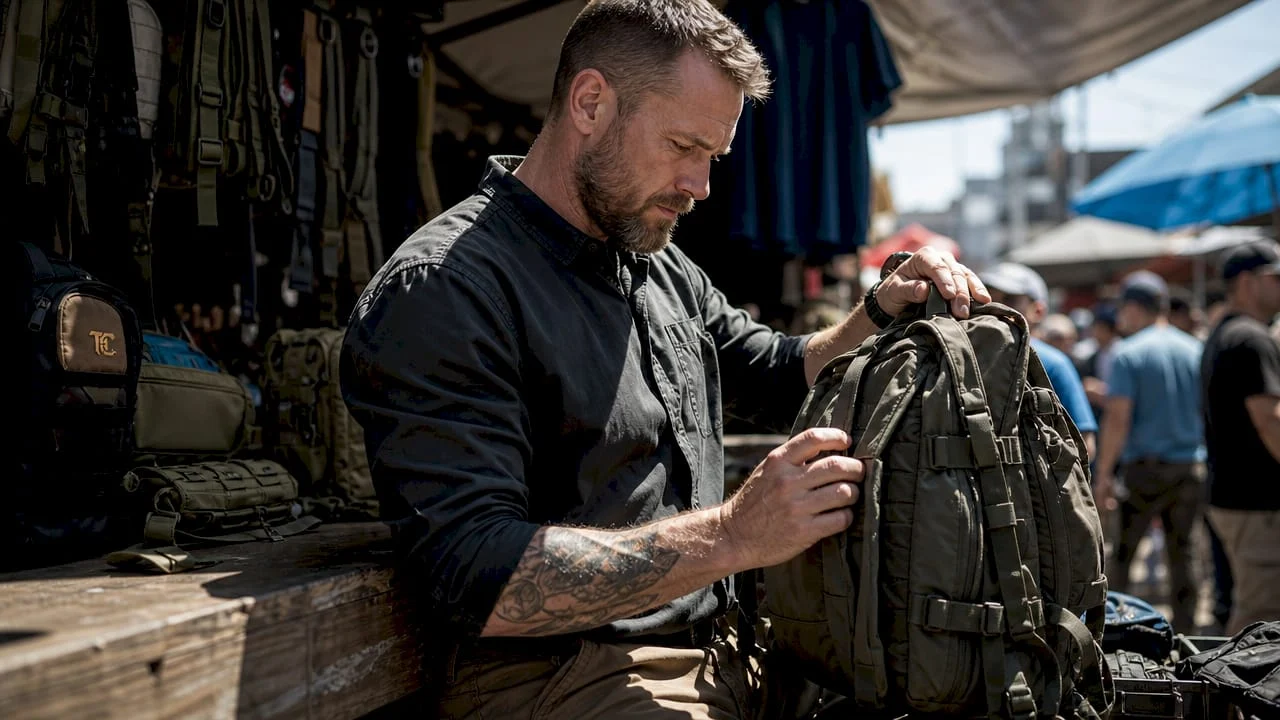
Mil-spec gear is equipment manufactured to meet documented U.S. military procurement standards, and that distinction is the reason why choose mil-spec gear is a question worth answering carefully. Standards like MIL-DTL-32439 and MIL-STD-810 define exact materials, construction methods, and environmental testing requirements. These are not marketing labels. They are enforceable specifications tied to government contracts, third-party testing, and verifiable paperwork. If you carry gear into demanding conditions, the difference between a genuine mil-spec pack and a “military-inspired” alternative is the difference between equipment that holds and equipment that fails.
What sets mil-spec gear apart from commercial tactical gear?
The gap between genuine mil-spec gear and commercial tactical gear starts at the material level. 1000D Cordura nylon with infrared reflectance treatment is mandated under MIL-DTL-32439 for tactical assault packs. That fabric is built for durability and low visibility under night-vision aids. No commercial pack maker is required to meet that standard, and most do not.
Construction standards go beyond fabric weight. Genuine mil-spec gear specifies stitch density, bartack reinforcement placement, and bonded nylon thread. These details matter because seams and low-grade materials are the first failure points under heavy loads. A commercial pack may look identical to a mil-spec version on a store shelf, but the stitching holding the shoulder straps will not survive the same abuse.

Testing is where the real separation happens. Destructive testing at Natick Soldier Systems Center includes dropping 300-pound loads and running abrasion cycles that no commercial product is required to pass. That testing protocol exists to confirm the gear will not fail in the field. Commercial tactical gear skips this process entirely.
Here is what genuine mil-spec gear includes that most commercial alternatives do not:
- MIL-DTL contract number printed or tagged on the item
- CAGE code identifying the approved manufacturer
- Berry Amendment compliance confirming U.S.-sourced materials and labor
- IRR-treated fabric for night-vision compatibility
- Bonded nylon thread and specified stitch density at stress points
- Documented test results from military or accredited third-party labs
Pro Tip: When you pick up a pack marketed as “mil-grade” or “military-inspired,” flip it over and look for a contract tag. If there is no MIL-DTL number and no CAGE code, the label is a marketing term, not a specification.
How do MIL-STD-810 and MIL-DTL-32439 ensure gear durability?
MIL-STD-810 is not a single certification. It is a series of test methods, and its relevance depends on which tests apply to the specific product. A manufacturer can claim MIL-STD-810 compliance after passing just one of its many test categories. That is why reading the fine print matters more than reading the headline claim.
For tactical gear, the relevant MIL-STD-810 test areas include vibration, shock, rain, humidity, temperature extremes, sand and dust exposure, and salt fog testing. Each test simulates a real operational environment. Salt fog testing, for example, confirms that metal hardware will not corrode after coastal or maritime exposure. Temperature cycling tests confirm that zippers and fabric will not crack or delaminate in extreme cold.
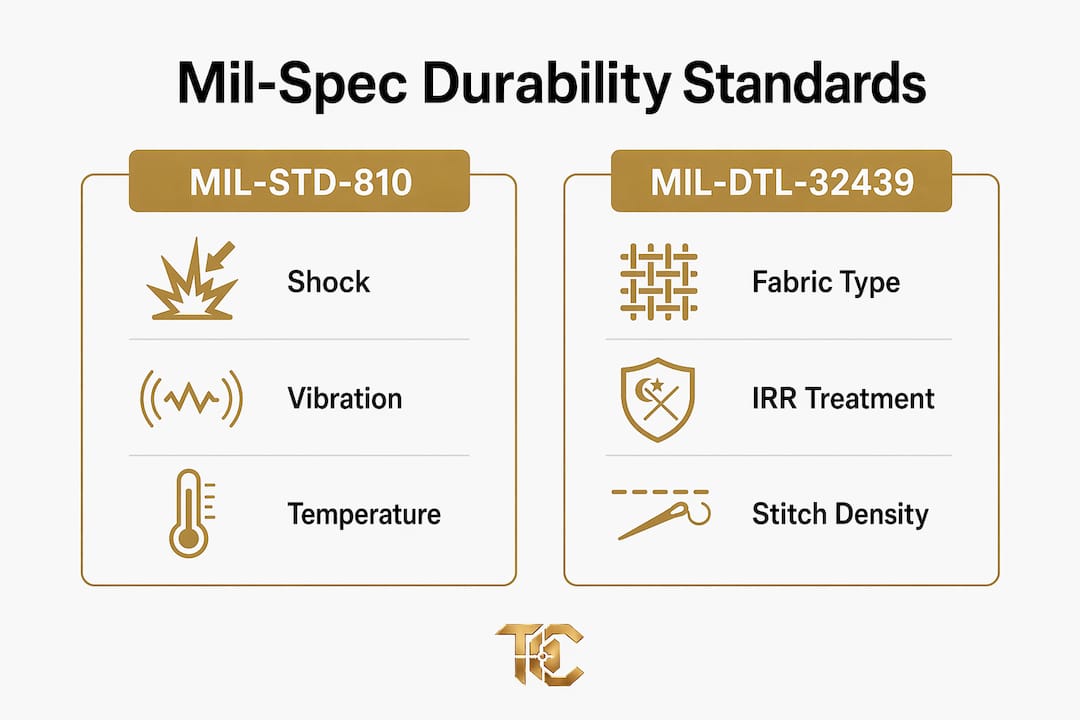
MIL-DTL-32439 goes further for tactical packs specifically. It defines the exact fabric type, IRR treatment level, stitching requirements, hardware specifications, and load-bearing construction. A pack built to MIL-DTL-32439 has been designed from the ground up to a written standard, not assembled to a price point.
| Standard | What it covers | Why it matters |
|---|---|---|
| MIL-STD-810 | Environmental stress testing: shock, vibration, humidity, temperature, salt fog | Confirms predictable performance in harsh field conditions |
| MIL-DTL-32439 | Fabric type, IRR treatment, stitching, hardware, load-bearing construction | Defines exact build requirements for tactical assault packs |
| Berry Amendment | U.S. sourcing of materials and labor | Ensures supply chain integrity and legal compliance |
| CAGE Code | Manufacturer identification tied to approved contracts | Verifies the maker is authorized to produce to spec |
Pro Tip: When a seller claims MIL-STD-810 compliance, ask which specific test methods were applied. A pack that passed only a vibration test has not been validated for salt fog or temperature extremes. Full environmental testing is what separates field-ready gear from gear that looks the part.
What practical advantages do you gain by choosing mil-spec gear?
The most immediate advantage is load capacity. Military load-carrying systems support 80–120 pounds over multi-day movements using internal frame sheets and load transfer yokes. That is a structural engineering requirement, not a marketing claim. Commercial tactical packs rated for similar weights often lack the frame and yoke system to distribute that load safely over time.
Longevity is the second major advantage, and it has a direct financial argument. Genuine military packs cost less per year of service than premium commercial tactical gear when you calculate total cost of ownership. A surplus FILBE pack at roughly $2.67 per year over 15 years compares favorably to premium commercial alternatives running closer to $13 per year. Quality built to a standard outlasts quality built to a price.
For professionals and serious tactical enthusiasts, predictable performance under extreme environmental stress is the core value of military-standard gear. You need to know your equipment will function the same way in wet heat as it does in dry cold. That predictability comes from documented testing, not from a brand’s reputation.
The practical benefits of choosing military-grade equipment include:
- Higher load capacity with structural support for 80–120 pounds without seam failure
- Longer service life reducing replacement costs over years of use
- Repairability because mil-spec components use standard hardware and thread that can be replaced in the field
- Environmental reliability across wet, dusty, cold, and high-heat conditions
- Reduced failure risk during critical operations when gear failure is not an option
Selecting tactical accessories for firearm owners follows the same logic. The gear you carry to the range or into the field should meet the same standard as the firearm it supports.
How to verify genuine mil-spec gear and avoid misleading claims
Verification starts with the label, not the product description. True mil-spec gear carries verifiable paperwork including MIL-DTL numbers, CAGE codes, and Berry Amendment compliance documentation. If a product page lists none of these, the gear is not mil-spec regardless of what the marketing copy says.
Here is a step-by-step process for evaluating any tactical gear claim:
- Find the MIL-DTL or MIL-STD number. It should appear on the product tag, spec sheet, or manufacturer documentation. No number means no standard.
- Look up the CAGE code. The Commercial and Government Entity code identifies the manufacturer as approved for government contracts. You can verify CAGE codes through the SAM.gov database.
- Check for Berry Amendment compliance. Berry Amendment compliance confirms that materials and labor are U.S.-sourced, a legal requirement for military procurement.
- Verify the fabric specification. Genuine MIL-DTL-32439 packs use 1000D Cordura with IRR treatment. If the seller cannot confirm the fabric spec, ask for the material data sheet.
- Request test documentation. For MIL-STD-810 claims, ask which specific test methods were completed and whether testing was done by a military lab or an accredited third party.
Terms like “mil-grade,” “military-inspired,” and “tactical-grade” carry no legal or technical weight. They are descriptive marketing terms with no enforcement mechanism. The only terms that matter are the ones tied to a numbered standard and a verifiable contract.
Pro Tip: Military surplus gear from verified government contracts is often the most reliable way to confirm genuine mil-spec compliance. Surplus FILBE packs, MOLLE II systems, and similar items come with the contract documentation already attached. For tactical enthusiasts who want mil-spec gear without the research burden, surplus channels are worth exploring.
If you want to pair your gear knowledge with the right accessories, the range packing guide at Tungstencreektactical covers what to bring and how to organize it for a productive training session. For collectors and enthusiasts who appreciate military heritage alongside their gear, military-themed wall art is a natural complement to a well-equipped space.
Key Takeaways
Mil-spec gear is defined by documented standards, verified testing, and traceable paperwork. Without those three elements, any military-sounding label is a marketing term.
| Point | Details |
|---|---|
| Standards define the product | MIL-DTL-32439 and MIL-STD-810 set exact material, construction, and testing requirements. |
| Verification requires documentation | Look for MIL-DTL numbers, CAGE codes, and Berry Amendment compliance before buying. |
| Load capacity is structurally engineered | Genuine mil-spec packs support 80–120 pounds using frame sheets and load transfer yokes. |
| Cost per year favors mil-spec | Documented longevity makes mil-spec gear less expensive over time than premium commercial alternatives. |
| Marketing terms are not standards | “Mil-grade” and “military-inspired” carry no legal or technical enforcement. |
The real cost of ignoring the spec sheet
I have handled a lot of tactical gear over the years, and the pattern I keep seeing is the same. Someone buys a pack because it looks right. It has MOLLE webbing, a subdued color, and a label that says “military-grade.” Six months later, a shoulder strap seam blows out under a 60-pound load. The pack was never built to carry that weight. It was built to look like it could.
The uncomfortable truth about the mil-spec gear market is that most of what gets sold as “tactical” has never been near a test lab. Manufacturers know that buyers respond to military aesthetics. They use the vocabulary without the substance. A well-selected cigar has a band that tells you exactly what leaf, what region, and what blend you are getting. Gear should work the same way. The spec sheet is the band. If it is missing, you are buying on appearance alone.
What I tell anyone serious about their kit is this: the paperwork is the product. A CAGE code and a MIL-DTL number are not bureaucratic details. They are the proof that someone tested this gear to destruction before it reached your hands. That proof is worth more than any amount of tactical branding.
The other thing worth saying is that mil-spec does not mean heavy or uncomfortable. Modern military packs built to MIL-DTL-32439 are engineered for ergonomics as well as durability. The load transfer yoke system exists because the military learned that a pack that injures the carrier is a failed piece of equipment. That engineering thinking carries real value for anyone who spends long days in the field or at the range.
Buy to the standard. Verify the paperwork. The gear that earns your trust is the gear that was built to earn it.
— Brian
Tungstencreektactical: gear built to a standard, not a price point
Tungstencreektactical curates tactical gear and accessories with the same attention to specification that serious shooters bring to their firearms. Every product in the catalog is selected for documented performance, not marketing copy.
If you are ready to build a kit that holds up under real conditions, the tactical accessories guide at Tungstencreektactical is the right starting point. For shooters who want precision-built firearms to match their gear standards, the custom firearms service delivers the same level of craftsmanship. Quality gear and quality firearms belong together.
FAQ
What does mil-spec actually mean?
Mil-spec means a product is manufactured to a documented U.S. military procurement standard, such as MIL-DTL-32439 or MIL-STD-810. These standards define exact materials, construction methods, and testing requirements that manufacturers must meet and document.
Is “military-grade” the same as mil-spec?
No. “Military-grade” is a marketing term with no legal or technical enforcement. Genuine mil-spec gear carries a MIL-DTL number, a CAGE code, and Berry Amendment compliance documentation.
What is MIL-STD-810 testing?
MIL-STD-810 is a series of environmental test methods covering shock, vibration, humidity, temperature extremes, sand and dust, and salt fog. A product must specify which test methods it completed for the claim to be meaningful.
How do I verify a mil-spec gear claim before buying?
Look for the MIL-DTL or MIL-STD number on the product tag or spec sheet, verify the CAGE code through SAM.gov, and confirm Berry Amendment compliance. If none of these are present, the product is not certified mil-spec.
Why does mil-spec gear cost less over time?
Mil-spec gear is built to survive years of heavy use, which lowers the annual cost of ownership compared to commercial alternatives that wear out faster. A genuine military pack can deliver a significantly lower cost per year of service than a premium commercial tactical pack.
Recommended
Related Post

Discover the 5 ways
An introduction to Tactical Luxury Guns & Coffee We founded
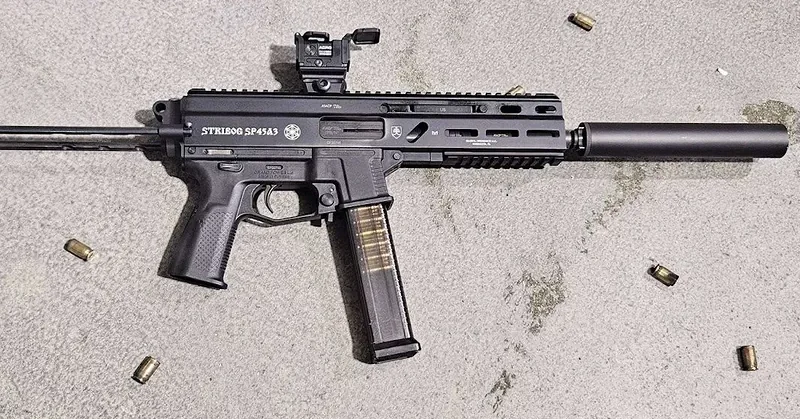
Top 5 Best PCC’s
In 2026, the Pistol Caliber Carbine (PCC) market is no