
How to Clean Firearms: a Step-by-Step Guide


Knowing how to clean firearms is one of the most practical skills a responsible gun owner can develop. A dirty gun is not just an inconvenience. It is a liability. Carbon buildup, unburned powder, and moisture left unchecked will cause malfunctions at exactly the wrong moment. Whether you carry daily, shoot competitively, or keep a firearm for home defense, the condition of your gun directly reflects your commitment to safety and reliability. This guide covers everything from the right supplies to the step-by-step process, common mistakes, and how often you should be doing it.
Table of Contents
- Key takeaways
- How to clean firearms: the tools you need first
- Step-by-step firearm cleaning process
- Common cleaning mistakes to avoid
- How often you should clean your firearms
- My take on what actually matters in firearm cleaning
- Gear up with Tungstencreektactical
- FAQ
Key takeaways
| Point | Details |
|---|---|
| Use the right tools | Carbon fiber or nylon-coated rods protect barrel rifling from permanent damage. |
| Safety first, always | Verify your firearm is unloaded before any cleaning step begins, every single time. |
| Less oil is more | Over-lubrication attracts debris and causes feed or extraction failures. |
| Clean to your use case | Defensive guns need cleaning every 250 to 500 rounds; range guns every 500 to 1,000 rounds. |
| Function check is mandatory | Always cycle the action and test the safety after reassembly before storing or carrying. |
How to clean firearms: the tools you need first
You would not try to brew a quality cup of coffee without the right equipment. Cleaning a firearm is no different. Using the wrong tools can cause more damage than neglect.
A basic cleaning kit includes the following:
- Cleaning rod (carbon fiber or nylon-coated; never stainless steel)
- Bore brush (sized to your specific caliber)
- Cleaning patches and a patch holder or jag
- Bore solvent for removing carbon and powder fouling
- CLP or gun oil for lubrication
- Utility brushes (an old toothbrush works well for small parts)
- Microfiber cloths for wiping down surfaces
- Gun vise or cleaning mat to hold the firearm securely
- Bore guide (strongly recommended for bolt-action rifles)
Caliber-specific brushes matter. A .45 ACP brush run through a 9mm barrel will not clean effectively. An undersized brush risks leaving fouling behind. Always match your tools to the firearm and caliber you are cleaning.
One thing often overlooked is your cleaning environment. Work in a well-ventilated space. Solvents release fumes that are not safe to breathe in an enclosed area. A dedicated cleaning mat protects your work surface and keeps small parts from rolling away.
Pro Tip: Pull out your owner’s manual before your first cleaning session. Manufacturers include specific disassembly instructions and sometimes identify lubrication points unique to that model. Ignoring the manual is how parts get lost or damaged.
Before you start, review the firearm safety tips that apply during every handling session, including cleaning.
Step-by-step firearm cleaning process
This is the core of proper maintenance. Follow these steps every time, and cleaning becomes a habit instead of a chore.
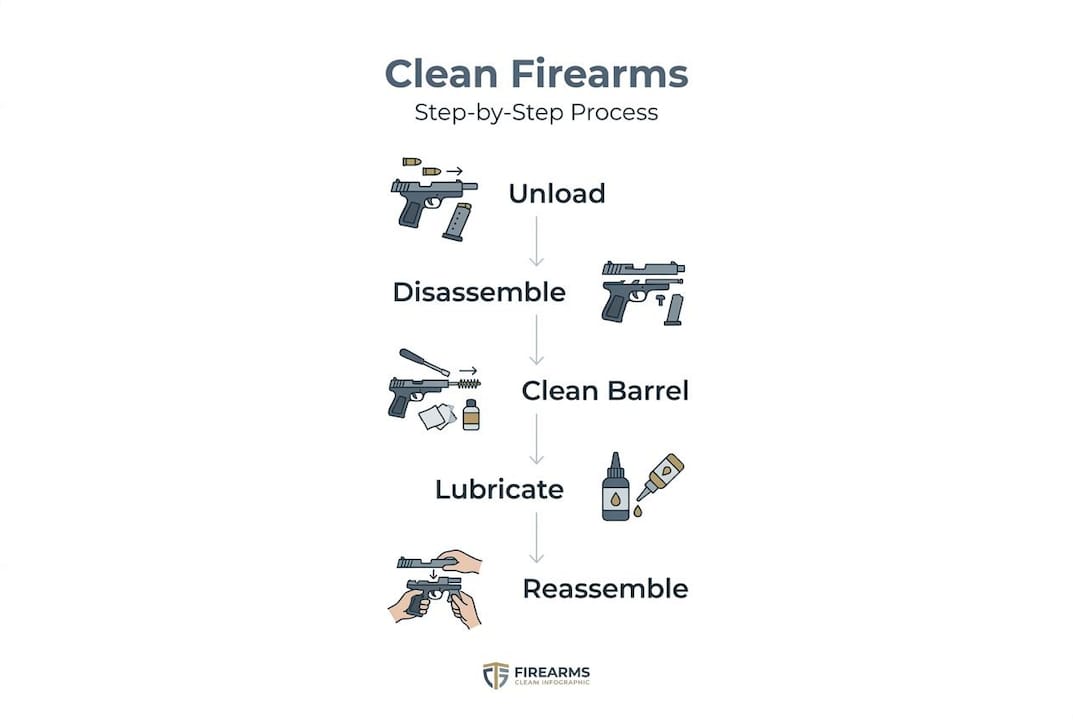
1. Unload and verify safe
- Remove the magazine.
- Lock the slide or bolt back.
- Visually and physically inspect the chamber. Run your finger into it if needed.
- Point the firearm in a safe direction and verify again before proceeding.
There is no such thing as being too careful here. Firearm safety rules apply even when you are certain the gun is empty.
2. Field strip the firearm
Field stripping means disassembling the gun into its major components without going to the level of a full detail strip. For most pistols, that means the frame, slide, barrel, and recoil spring. For rifles, that typically means separating the upper and lower receivers. Consult your manual for your specific model.
3. Clean the barrel
This is where most of the fouling lives. Run a solvent-soaked bore brush through the barrel several times from breech to muzzle when possible. Then switch to patches until they come out clean. A single clean patch at the end tells you the barrel is clear.
Do not leave bore solvent sitting in the barrel between sessions. Leftover solvent causes rifling pitting over time, which degrades accuracy permanently.
If you own a bolt-action rifle, use a bore guide. Bore guides protect the chamber and throat from the cleaning rod rubbing against them during the process.
4. Clean the action and other components
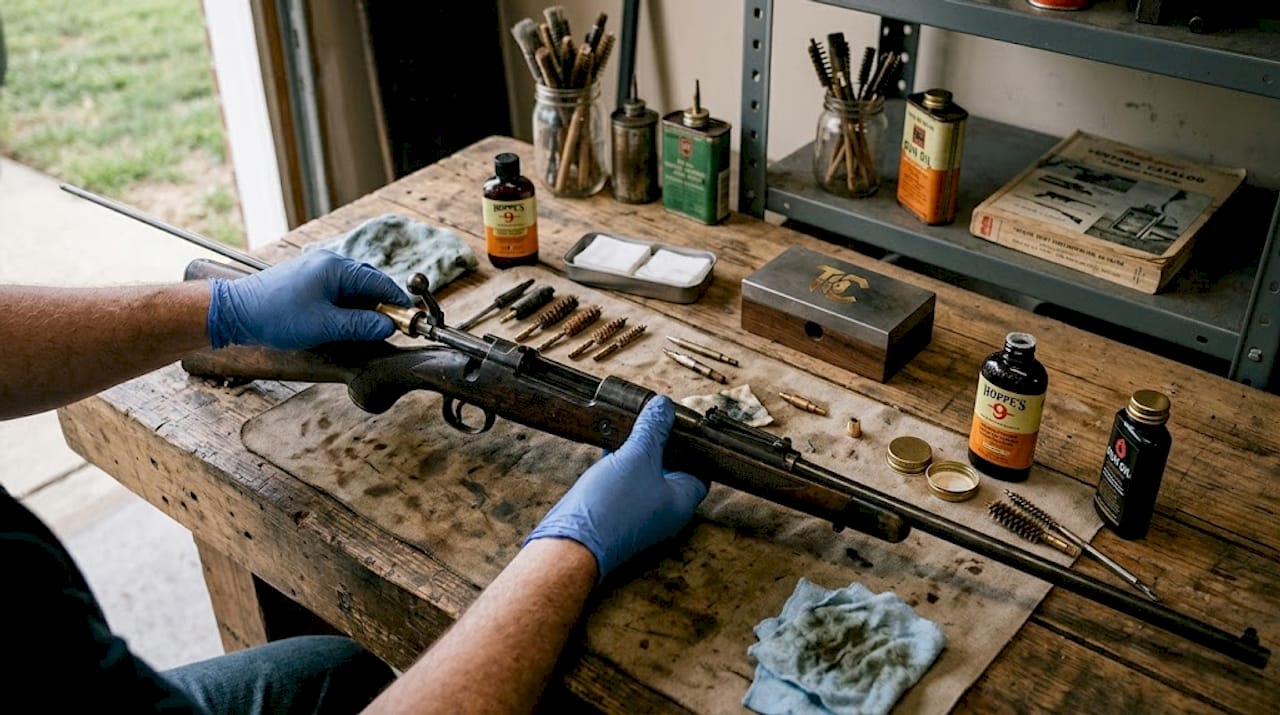
Use a utility brush to scrub carbon fouling from the slide rails, bolt face, feed ramp, and chamber. A dry patch or cloth clears the loosened debris. Pay attention to the extractor groove and any recessed areas where carbon tends to pack in.
For revolvers, the cylinder face and forcing cone collect heavy fouling. These areas require extra attention because buildup there affects timing and accuracy.
5. Lubricate correctly
Apply oil sparingly. Think of lubrication the way a skilled craftsman thinks about finishing a fine piece of wood. A little goes exactly where it needs to go, and nowhere else. Excess lubricant creates a gummy paste that traps debris and causes malfunctions. Apply a thin layer to slide rails, the barrel hood, the recoil spring, and other metal-to-metal contact points. Wipe away any excess with a clean cloth.
Pro Tip: Use a cotton swab or a precision oiler to apply lubricant to tight areas. This gives you control and prevents oversaturation.
6. Reassemble and perform a function check
Reassemble the firearm in reverse order. Then perform a mandatory function check. Cycle the action manually, engage and disengage the safety, and confirm the trigger resets correctly. This step is not optional. A gun that fails its function check after cleaning should not be carried or stored until the issue is identified.
Common cleaning mistakes to avoid
Most malfunctions tied to maintenance come down to the same handful of errors. Here is what to watch for.
- Using stainless steel cleaning rods. Stainless steel rods can permanently score and damage barrel rifling. Use carbon fiber or nylon-coated rods instead.
- Over-lubricating the action. The most common mistake gun owners make. Too much oil attracts dirt, which then turns into an abrasive paste inside your action.
- Skipping the chamber inspection. The chamber collects fouling just like the bore. Neglect here leads to extraction failures and pressure issues.
- Using harsh solvents on polymer frames. Aggressive chemical solvents break down the polymer over time. Use products formulated for firearms and check that they are safe for polymer contact.
- Ignoring the function check. Reassembly does not confirm proper function. The function check does. Skipping it leaves you with an assumption instead of a verified result.
- Not cleaning after moisture or corrosive ammo exposure. Environmental exposure requires immediate cleaning regardless of how many rounds you fired. Moisture and corrosive salts from certain ammo cause pitting and rust faster than most shooters expect.
It is also worth noting that aggressive over-cleaning can wear parts and damage rifling faster than actual shooting. More is not always better. A consistent, moderate cleaning routine using the right tools will always outperform obsessive scrubbing with improper ones.
Pro Tip: After cleaning, lightly wipe the exterior metal surfaces with an oil-dampened cloth before storage. This thin barrier is your first line of defense against surface rust.
How often you should clean your firearms
Cleaning frequency is one of the most misunderstood topics in firearm maintenance. More is not automatically better, and arbitrary schedules do not account for how you actually use your gun.
Cleaning intervals based on usage break down like this:
| Firearm type and use | Recommended cleaning interval |
|---|---|
| Defensive carry firearm | Every 250 to 500 rounds |
| Range or recreational shooting | Every 500 to 1,000 rounds |
| Competition shooting | After every use |
| After moisture or corrosive ammo | Immediately, regardless of round count |
| Long-term storage preparation | Before storing, and every 6 to 12 months in storage |
The condition of your storage environment also matters. A gun kept in a humid climate or an area prone to temperature swings needs more frequent inspection than one stored in a stable, climate-controlled safe. After you clean and inspect, proper firearm storage solutions make a real difference in how well your gun holds up between sessions.
Different firearm types also have different focal points:
- Handguns collect fouling primarily in the barrel, chamber, and slide rails.
- Rifles demand attention to the bolt face, gas system, and bore. AR-platform rifles in particular build up carbon in the bolt carrier group quickly.
- Shotguns accumulate heavy fouling in the chamber and forcing cone, especially with lead loads.
Pro Tip: If you shoot corrosive surplus ammo, clean your firearm the same day. The corrosive salts in older military primers begin attacking metal within hours of exposure.
My take on what actually matters in firearm cleaning
I have seen shooters spend hours obsessing over their guns after every single range trip and others who go thousands of rounds without cleaning at all. Neither extreme is smart. What I have learned over years of working with firearms is that the discipline matters more than the frequency.
The two things I see most often go wrong are over-lubrication and skipping the function check. People assume that more oil means better protection. What it actually means is more debris stuck in your action and a gun that feels sluggish or misfires when you need it to perform. Apply oil with intention, not generosity.
The function check is the one step that separates a responsible owner from someone who is just going through motions. I have personally caught reassembly errors that would have resulted in a failure to fire. That check is not a formality. It is your verification.
One thing that does not get enough attention is maintaining firearm accuracy through consistent cleaning habits. A clean barrel is a predictable barrel. I have seen accuracy degrade noticeably in firearms where solvents were left in the bore or where copper fouling was allowed to build up over time. If precision matters to you, your cleaning routine reflects that.
Manufacturer guidelines exist for a reason. Every firearm is engineered with specific tolerances and materials. The people who built it know where the oil goes and what solvents are safe. Follow those guidelines, invest in quality supplies, and treat cleaning as part of owning a firearm rather than a burden.
— Brian
Gear up with Tungstencreektactical

Proper cleaning is only one part of responsible firearm ownership. Having a gun worth maintaining is the other. At Tungstencreektactical, you will find a selection of quality firearms and tactical accessories built for real-world performance. Whether you are looking at custom precision firearms built to exact specifications or browsing the full shop for cleaning supplies, gear, and premium accessories, everything is selected with the same standard you hold your maintenance routine to. Explore the full shop and use the Tungstencreektactical mobile app to compare products, unlock VIP pricing, and make confident buying decisions.
FAQ
What supplies do I need to clean a firearm?
A basic kit includes a caliber-matched bore brush, cleaning rod, patches, bore solvent, gun oil, utility brushes, and a microfiber cloth. Carbon fiber or nylon-coated rods are strongly recommended to protect barrel rifling.
How often should I clean my firearms?
Defensive carry firearms should be cleaned every 250 to 500 rounds. Range firearms every 500 to 1,000 rounds. Competition shooters should clean after every use. Any exposure to moisture or corrosive ammo requires cleaning immediately.
Is over-lubrication actually harmful?
Yes. Excess oil attracts dirt and carbon debris, forming an abrasive paste inside the action. Apply lubricant sparingly to metal contact points only, and wipe away any excess after application.
Do I need to clean a brand-new firearm before shooting it?
Most manufacturers apply a protective coating or shipping grease that should be removed before the first use. Wipe down the bore and action, and apply a light coat of oil to the appropriate wear points before your first range session.
What is a function check and why does it matter?
A function check is a manual test performed after reassembly to confirm the firearm operates correctly. It involves cycling the action, testing the safety mechanism, and verifying trigger reset. Skipping this step leaves you with an unverified firearm.
Recommended
Related Post

Discover the 5 ways
An introduction to Tactical Luxury Guns & Coffee We founded
Top 5 Best PCC’s
In 2026, the Pistol Caliber Carbine (PCC) market is no