
What Is Shot Placement and Why It Matters
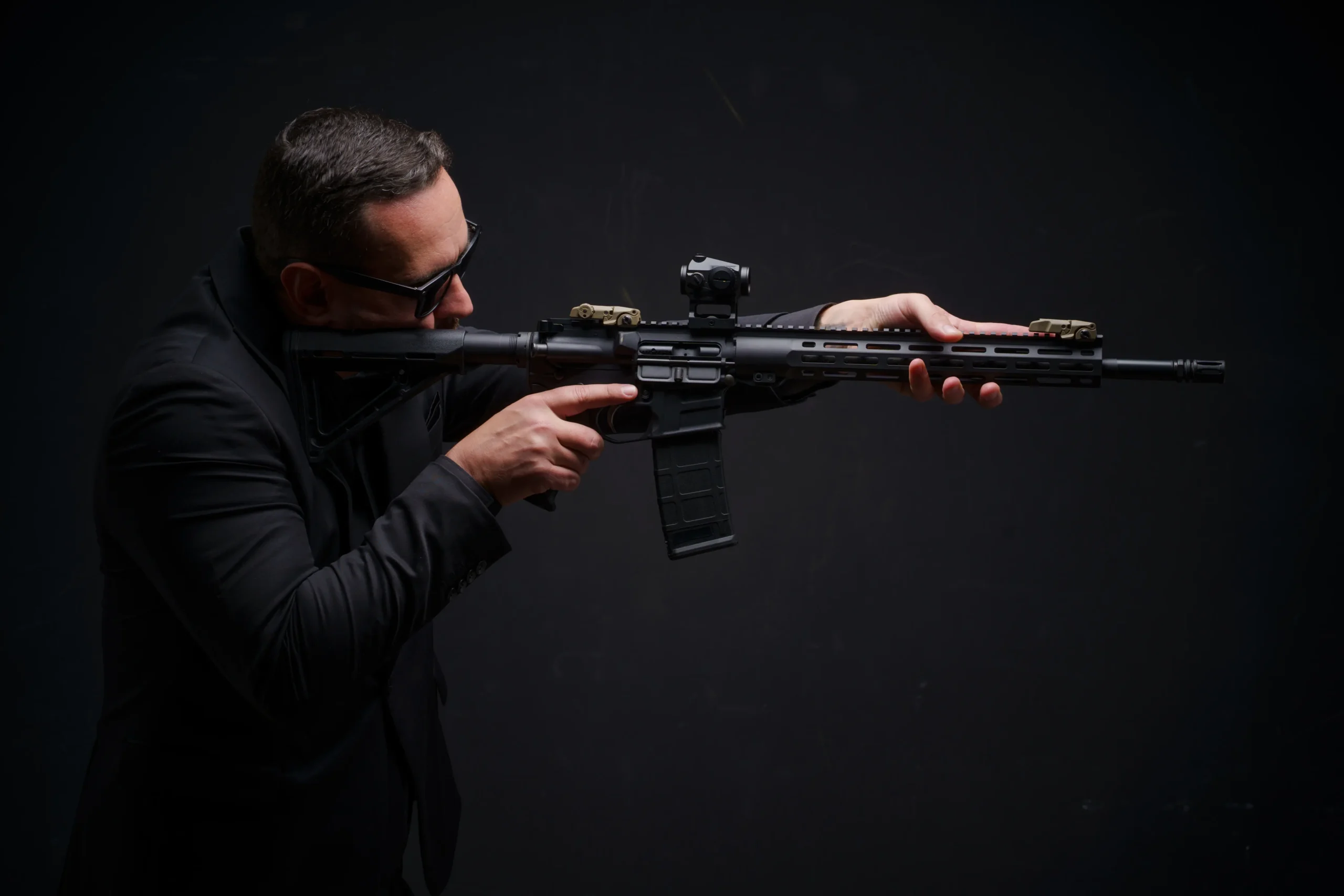
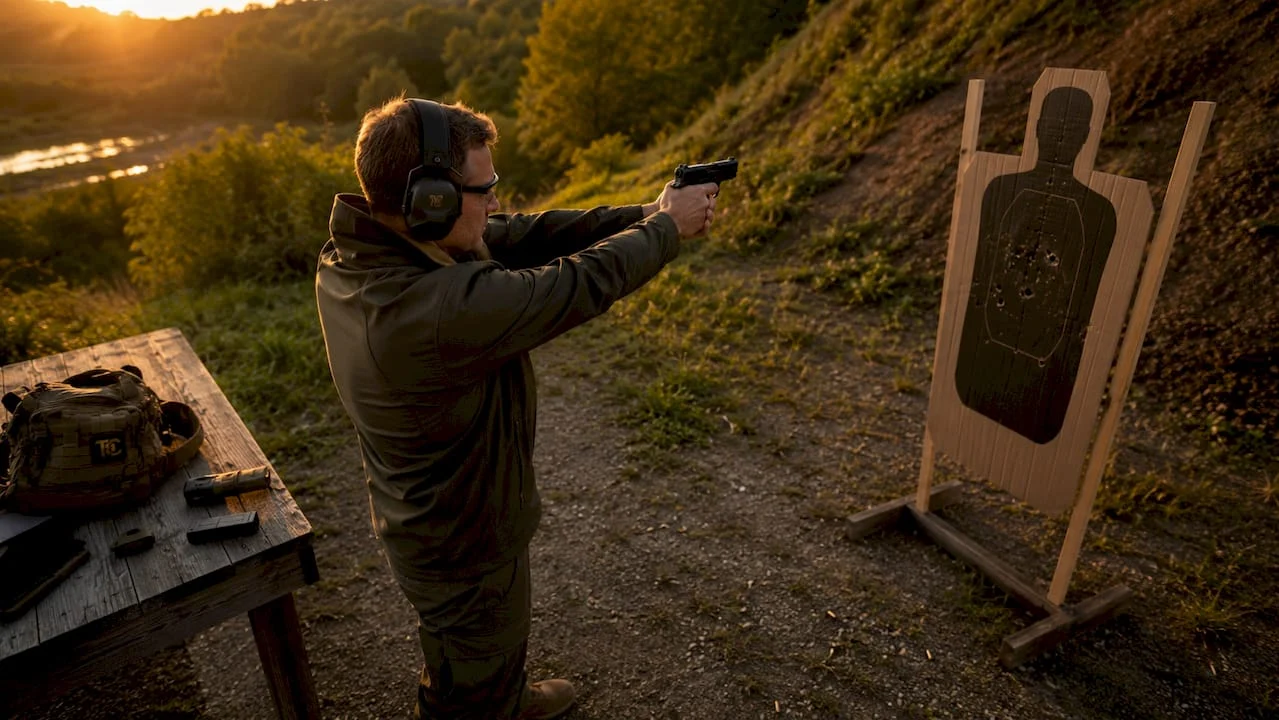
Shot placement is defined as the deliberate targeting of vital anatomical zones to produce an immediate, effective response from a single projectile. Caliber, muzzle velocity, and firearm platform are secondary. Where the bullet lands determines the outcome. Whether you carry concealed for self-defense or pursue game in the field, placement over power is the principle that separates effective shooters from lucky ones. This guide covers the anatomy behind vital zones, the techniques that build consistency, and the ethical standards that define responsible firearms use in both defensive and hunting contexts.
What is shot placement, and why does it define every outcome?
Shot placement is the most critical factor in any shooting outcome. Powerful cartridges cannot compensate for a round that misses the vital zone. A well-placed shot from a modest caliber outperforms a poorly placed shot from a magnum every time. That is not opinion. That is terminal ballistics.
The industry term for this discipline is “terminal shot placement,” and it refers specifically to where a projectile impacts relative to the target’s internal anatomy. Knowing what is proper shot placement means understanding that the goal is not to hit the target. The goal is to hit the right part of the target.
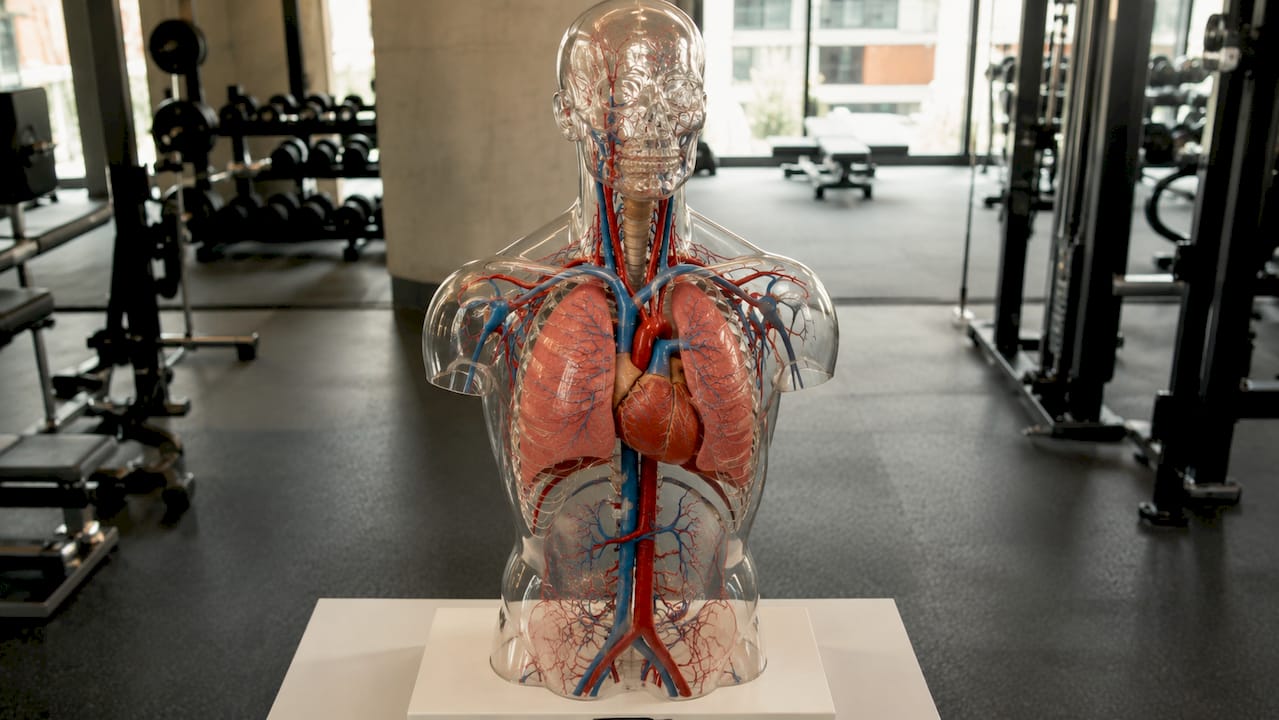
The USCCA defines the vital target zone as roughly the size of a paper plate. That zone contains the heart, lungs, major blood vessels, and the central nervous system. Hitting outside that zone, even with a powerful round, may not stop a threat or produce a humane kill. Hitting inside it consistently is the entire point of training.
What are the vital zones and why do they matter?
Vital zones are the anatomical regions where a projectile causes rapid physiological incapacitation. They are not simply “center mass.” They are specific structures that, when disrupted, stop a threat or end an animal’s life quickly and humanely.
The primary vital zones include:
- Heart and lungs. The largest and most accessible vital target. Disruption causes rapid blood pressure loss and oxygen deprivation to the brain.
- Central nervous system (CNS). The brain and upper spinal cord. A CNS hit produces instant incapacitation. It is a smaller target and demands higher precision.
- Major blood vessels. The aorta, vena cava, and pulmonary arteries. Damage here causes rapid hemorrhagic shock.
- Liver. Particularly relevant in hunting. The liver is dense, highly vascular, and a lethal hit zone for deer-sized game.
The size of the effective target area matters enormously. In self-defense, the vital zone is roughly paper-plate-sized, which sounds generous until you factor in movement, stress, and distance. In hunting, the heart-lung zone on a broadside deer is approximately the size of a dinner plate. Quartering-away shots shrink that window considerably.
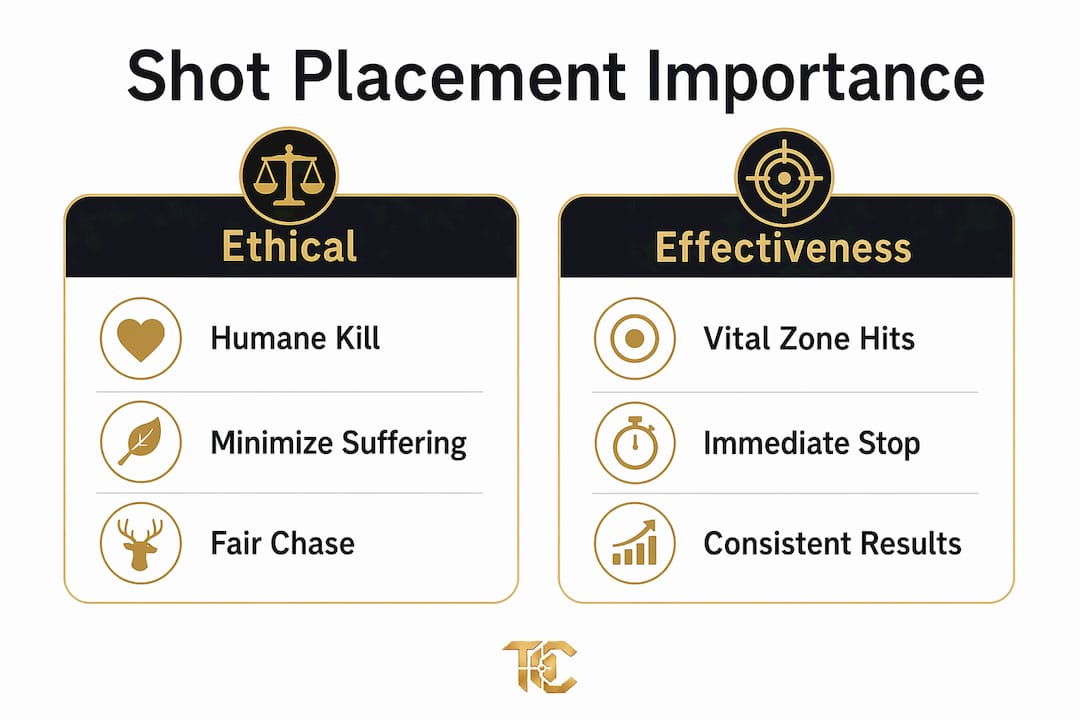
The ethical dimension of shot placement is real. A round that strikes gut, shoulder, or hindquarter causes suffering, wastes game, and reflects poorly on the shooter’s preparation. Knowing internal anatomy is not optional for ethical shooting. It is the foundation.
What techniques improve shot placement consistency?
Consistent shot placement is a product of disciplined mechanics, not natural talent. The fundamentals are learnable, repeatable, and trainable under stress. Here is how to build them:
-
Set your stance correctly. A shoulder-width stance with even weight distribution gives you a stable platform. Feet parallel or slightly staggered, knees soft, hips square to the target. This is not cosmetic. It directly affects muzzle control.
-
Control your breath. Shoot at the natural respiratory pause, the brief moment between exhale and inhale. This reduces thoracic movement and keeps your sights aligned at the moment of the shot.
-
Master trigger control. A smooth, consistent trigger press without disturbing sight alignment is the single biggest mechanical variable in shot placement. Slapping or jerking the trigger moves the muzzle before the round exits the barrel.
-
Follow through. Keep the trigger pressed and sights on target through the shot. Anticipating recoil and dropping the gun early is one of the most common causes of low shots.
-
Use mental visualization. Before a drill or a hunt, visualize the shot sequence from stance to follow-through. Muscle memory is built through repetition, and mental reps count.
-
Train for stress. Fine motor skills degrade under adrenaline. Drills that elevate heart rate before shooting, such as burpees before a draw-and-fire sequence, teach your body to perform mechanics when it matters most.
Pro Tip: Flinching is the body’s anticipation of recoil, not a character flaw. Fix it by dry-firing regularly. Without live ammunition, your brain has nothing to anticipate, and the flinch response fades.
Hip alignment and trigger control are subtle but decisive. Even minor breakdowns in body mechanics cause significant accuracy loss at distance. Think of it like a well-brewed cup of coffee: every variable matters, and skipping one step changes the result.
How does shot placement affect defensive shooting outcomes?
Defensive shot placement operates under a different set of constraints than range practice. The target moves. The lighting is poor. Your hands shake. Your heart rate spikes. Under those conditions, the margin for error shrinks fast.
Center mass aiming is a general guideline, not a guarantee. Aiming for the center of the torso gives you the best statistical chance of hitting the vital zone, but it does not mean every center-mass hit stops the threat. Physiological stopping power depends on which structures are disrupted. A round that passes through muscle and fat without hitting a vital structure may not stop an attacker quickly.
“Effective defensive shooting is not about shooting more rounds. It is about placing each round where it causes immediate physiological incapacitation. The heart, lungs, and CNS are the structures that stop threats. Training must reflect that reality, not just the idea of hitting the target.”
The legal dimension of self-defense also intersects with shot placement. Every round you fire has a legal consequence. Shots that miss the threat and strike bystanders or property create serious liability. Precise placement is not just a tactical advantage. It is a legal and moral responsibility.
Your effective range is the distance at which you can reliably place every shot inside the vital zone under realistic conditions. That number is almost always shorter than the mechanical range of your firearm. Test it honestly with a paper plate target from a standing, unsupported position. The result tells you where you should and should not take a shot. You can build marksmanship skills over time to extend that range, but never assume range before you have earned it.
What does ethical shot placement mean in hunting?
Ethical hunting shot placement starts with one principle: only take shots you are confident will reach the vital zone. That confidence comes from knowing animal anatomy, reading the animal’s position, and being honest about your effective range.
Ideal shot angles:
- Broadside. The best option. Broadside shots expose the full heart-lung zone and offer the largest margin for error. Aim just behind the front shoulder, one-third up from the bottom of the chest.
- Quartering-away. Acceptable when aimed to send the bullet through the vital zone from the opposite side. The entry point moves toward the hindquarter, but the projectile travels through the lungs and often the heart.
Shot angles to avoid:
- Quartering-toward. The shoulder blade and heavy muscle mass block the vital zone. The risk of wounding without a lethal hit is high.
- Head-on. A small target with heavy bone in front of the vitals. Even a slightly off-center hit misses the vital zone entirely.
- Straight-away. The spine and pelvic structure block access to the heart and lungs. Pass on this shot.
| Shot angle | Vital zone access | Recommended? |
|---|---|---|
| Broadside | Full heart-lung exposure | Yes |
| Quartering-away | Good with correct aim point | Yes |
| Quartering-toward | Partially blocked by shoulder | No |
| Head-on | Heavily obstructed | No |
| Straight-away | Blocked by spine and pelvis | No |
Passing on a shot that is too far, at a poor angle, or obstructed is not weakness. It is the fair chase ethic in practice. A responsible shooter only fires when confident the round will reach the vital zone. That discipline separates ethical hunters from those who wound and lose game.
Key Takeaways
Effective shot placement, not firearm power or caliber, determines whether a shot is ethical, effective, and legally defensible in both self-defense and hunting.
| Point | Details |
|---|---|
| Placement beats power | A well-placed modest-caliber round outperforms a poorly placed magnum round every time. |
| Know your vital zones | Heart, lungs, CNS, and major vessels are the structures that cause rapid incapacitation. |
| Mechanics drive consistency | Stance, breath control, trigger press, and follow-through directly determine where your round lands. |
| Stress degrades fine motor skills | Train under elevated heart rate to maintain shot placement accuracy in real defensive scenarios. |
| Ethical hunting demands angle discipline | Broadside and quartering-away shots are the only angles that reliably access the vital zone. |
Why I think most shooters get this backwards
Most shooters spend money on ammunition and upgrades before they spend time on placement discipline. I get it. A new caliber or a higher-grain load feels like progress. It is measurable, tangible, and easy to justify. But after years of watching shooters at the range and in the field, the pattern is consistent: the shooter who groups tight at 15 yards with a stock pistol outperforms the one who shoots loose at 25 yards with a premium setup.
The uncomfortable truth is that effective range is almost always shorter than people admit. I have seen hunters take shots at 200 yards on deer when their honest effective range, tested cold and unsupported, was closer to 120. The result is wounded animals and lost game. The same principle applies in defensive shooting. Knowing your limits is not a liability. It is the foundation of confidence.
Anatomy knowledge is the piece most shooters skip entirely. You cannot aim for the heart if you do not know where the heart sits relative to the animal’s shoulder or a human torso’s center line. That knowledge changes how you read a target and how you make shot decisions. It also changes how you train, because you stop aiming at a vague center and start aiming at a specific structure.
If you want to build real shot placement discipline, start with competitive shooting drills that force you to perform under time pressure. Then test your effective range honestly. Then study anatomy. In that order.
— Brian
Gear that supports better shot placement
Consistent shot placement starts with the shooter, but the right equipment removes variables that work against you.

Tungstencreektactical carries custom-built precision firearms fitted to your grip, trigger preference, and intended use, whether that is concealed carry, home defense, or field hunting. A firearm that fits your hand and breaks cleanly at the trigger reduces the mechanical variables that throw shots off target. Tungstencreektactical also stocks tactical accessories that improve stability, sight acquisition, and control under stress. Every product is selected with the same standard: does it help you place the shot where it needs to go?
FAQ
What is shot placement in simple terms?
Shot placement is the deliberate targeting of vital anatomical zones to produce an immediate, effective result. It is the most important variable in any shooting outcome, more important than caliber or firearm power.
Why does shot placement matter more than caliber?
A round that misses the vital zone, regardless of its power, may not stop a threat or produce a humane kill. Consistent accuracy within the vital zone defines effective shooting success.
What is the vital zone in self-defense shooting?
The vital zone in self-defense is roughly the size of a paper plate and contains the heart, lungs, major blood vessels, and central nervous system. Hitting this zone causes rapid physiological incapacitation.
What is the best shot placement for deer hunting?
A broadside shot aimed just behind the front shoulder, one-third up from the chest floor, gives the largest access to the heart-lung zone. Quartering-away shots are also ethical when the aim point is adjusted to send the bullet through the vitals.
How do I improve my shot placement under stress?
Train with drills that elevate your heart rate before you shoot, practice dry-fire to eliminate flinching, and test your effective range honestly with a paper plate target. Simple, repeatable mechanics hold up better under stress than complex techniques.
Recommended
Related Post

Discover the 5 ways
An introduction to Tactical Luxury Guns & Coffee We founded
Top 5 Best PCC’s
In 2026, the Pistol Caliber Carbine (PCC) market is no