
Safe ammunition storage: Protecting your family and resources

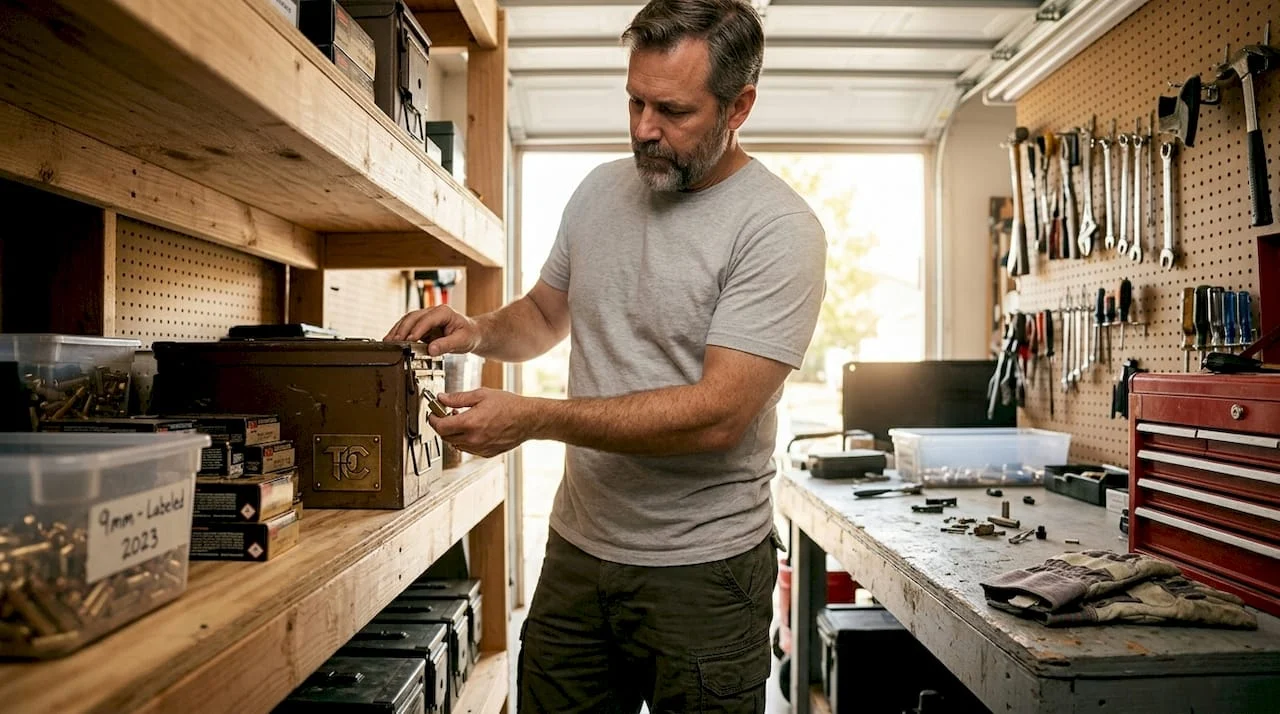
Storing ammunition carelessly is one of the most common oversights among gun owners, and the consequences reach far beyond a simple legal violation. Most people assume that having a safe in the closet checks the box, but the reality is more nuanced. Gun safety starts with safe storage, and that includes keeping ammunition secured separately, in the right environment, and in a way that genuinely protects everyone in your household. This guide breaks down exactly what responsible ammo storage looks like, why it matters more than most guides acknowledge, and how you can put these principles into practice starting today.
Table of Contents
- Why safe ammunition storage matters
- What defines safe ammunition storage?
- Best practices for securing ammunition
- Compliance, fire codes, and managing edge cases
- What most guides get wrong about safe ammo storage
- Explore storage and safety solutions at Tungsten Creek Tactical
- Frequently asked questions
Key Takeaways
| Point | Details |
|---|---|
| Reduces preventable tragedies | Safe ammunition storage lowers risks of accidental injuries, suicides, and theft in your household. |
| Separate, locked containers | Storing ammo away from firearms and securing it with dual locks offers the strongest protection. |
| Legal compliance matters | Many states mandate safe storage, and following regulations prevents legal and insurance problems. |
| Best practices adapt to your needs | Consider household makeup, rural/urban differences, and readiness requirements to shape your storage strategy. |
Why safe ammunition storage matters
The numbers are harder to ignore than most gun owners realize. According to secure firearm and ammo storage trends tracked in Washington State, the share of households practicing secure storage climbed from 34.9% in 2013 to 48.8% in 2022. That’s meaningful progress, but it also means that more than half of households still aren’t meeting the standard. And when storage falls short, the real-world consequences are well documented.
The safe storage saves lives stakeholders toolkit provides sobering benchmarks: less than half of U.S. gun owners store all firearms safely, Child Access Prevention (CAP) laws reduce youth suicides by up to 14%, and approximately 80% of youth firearm suicides involve a gun taken from the family home. These aren’t abstract statistics. They represent real households, real families, and real decisions that could have gone differently.
Here’s what inadequate storage puts at risk:
- Unintentional injuries: A child or teenager who finds unsecured ammunition alongside an accessible firearm creates a tragic scenario that is entirely preventable.
- Suicide risk: Easy access to loaded or quickly loadable firearms is a critical factor in impulsive suicide attempts, especially among young people.
- Theft: Unsecured ammo and firearms are among the most commonly reported items taken during residential burglaries, feeding illegal gun trafficking networks.
- Homicide risk: In domestic situations, accessible weapons and ammunition dramatically elevate the danger when conflict escalates.
Responsible firearm safety tips go well beyond how you handle your gun at the range. They extend into how you manage every component of your setup at home. Think of it like properly storing a fine cigar: the right environment and the right container aren’t optional steps, they’re what protects the investment and keeps everyone around it safe. Your social responsibility guide as an owner includes understanding the broader impact of your storage choices on your community.
“Responsible gun ownership doesn’t end when you close the safe door. It extends to every round you store, the conditions you store it in, and the security measures you have in place to prevent unauthorized access.”
What defines safe ammunition storage?
Safe storage isn’t just about having a lock. It’s about applying the right combination of physical security, environmental control, and legal compliance. The foundation starts with understanding what standards actually govern how you should store your ammunition.
NFPA 495 and SAAMI guidelines classify small arms ammunition as 1.4S, the lowest hazard classification. This means it doesn’t require the same extreme precautions as commercial explosives, but it does need to be kept cool, dry, and stable. Many states go further, requiring locked, separate storage from firearms, especially in households where minors are present.
Storing ammunition separately from your firearms provides four distinct safety benefits: it reduces the risk of negligent discharges, improves fire safety by limiting fuel concentration in a single location, prevents moisture damage to your rounds, and enhances overall security because a potential intruder would need to defeat two separate locks instead of one.
Here’s how different storage approaches compare:
| Storage method | Security level | Environmental control | Compliance potential | Best for |
|---|---|---|---|---|
| Original factory box in drawer | Very low | Poor | Non-compliant in most states | Nowhere |
| Locked ammo can (metal) | Moderate | Good (sealed) | Partial | Short-term, limited quantities |
| Dedicated ammo locker | High | Good | Strong | Larger collections |
| Biometric/electronic safe | Very high | Excellent | Full | Primary storage |
| Gun safe with separate ammo compartment | High | Excellent | Full | Combined security setup |
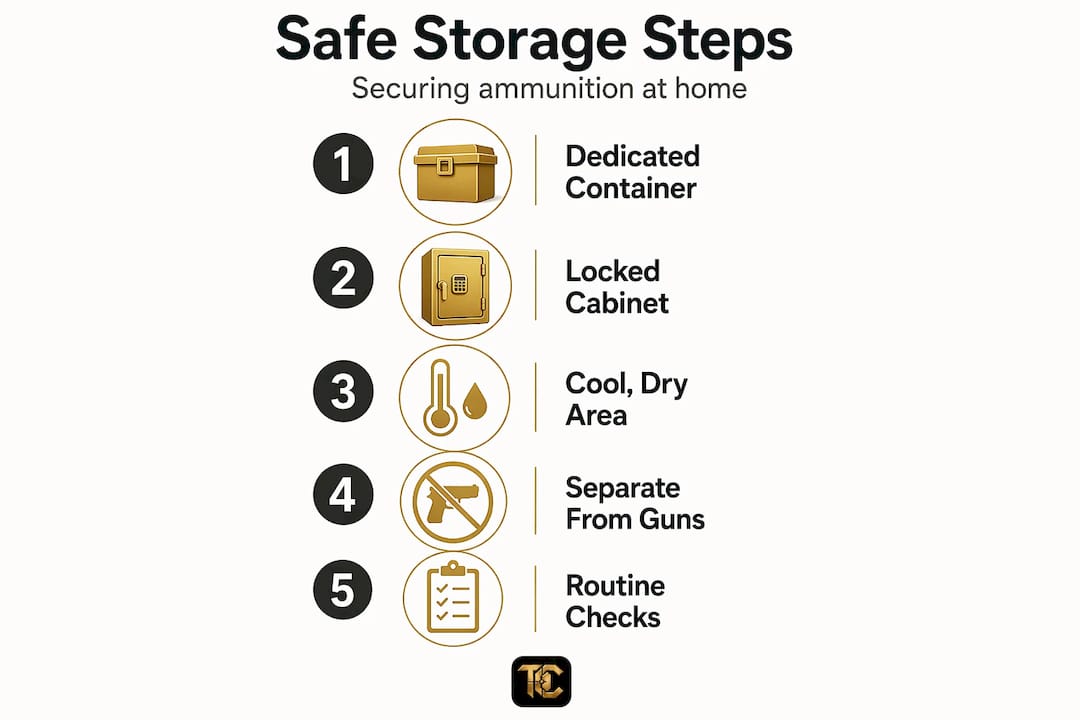
When building your storage system, follow these core steps in order:
- Choose a container rated for the task: A metal ammo can with a solid latch is a baseline. A dedicated, lockable ammo cabinet or safe is better.
- Select a location with stable temperature: Avoid garages and attics where temperatures swing dramatically. A climate-controlled interior room or closet is ideal.
- Control humidity: Silica gel desiccant packets inside sealed metal containers keep moisture at bay without any extra equipment.
- Separate ammunition from firearms physically: Different locked containers in different locations is the gold standard.
- Label and inventory your storage: Know exactly what you have, where it is, and when it was purchased.
Pro Tip: If you’re just starting to upgrade your storage setup, a quality metal ammo can with a rubber seal and a padlock through the latch handle is an inexpensive first step that puts you ahead of most gun owners immediately. It takes about ten minutes to implement and costs less than a box of premium ammunition.
Explore purpose-built firearm storage solutions that pair well with your existing setup rather than replacing everything at once. Layered security is almost always more effective than a single, expensive solution.
Best practices for securing ammunition
Understanding the principles is one thing. Applying them consistently in a real household, with real variables, is another. The practical side of safe ammo storage requires you to balance two competing priorities: keeping your defensive rounds accessible when seconds matter, and keeping them completely inaccessible to anyone who shouldn’t have them.
Research on rural vs urban storage differences reveals an important gap. Rural households show consistently higher rates of unsecured storage, and those areas also see elevated rates of firearm suicide and unintentional deaths. The assumption in rural communities is often that physical isolation substitutes for locked storage. It doesn’t. Military households face a similar challenge: personnel with unsecured storage at home carry measurably higher suicide risk, even when their professional environment enforces strict firearms discipline.
The practical answer isn’t to choose between readiness and safety. It’s to build a system that provides both. Public health guidance aligns closely with industry standards from SAAMI and the ATF on this point: a firearm designated for home defense can be kept more readily accessible with biometric access, while ammunition for storage and range use stays in a separate, fully secured container.
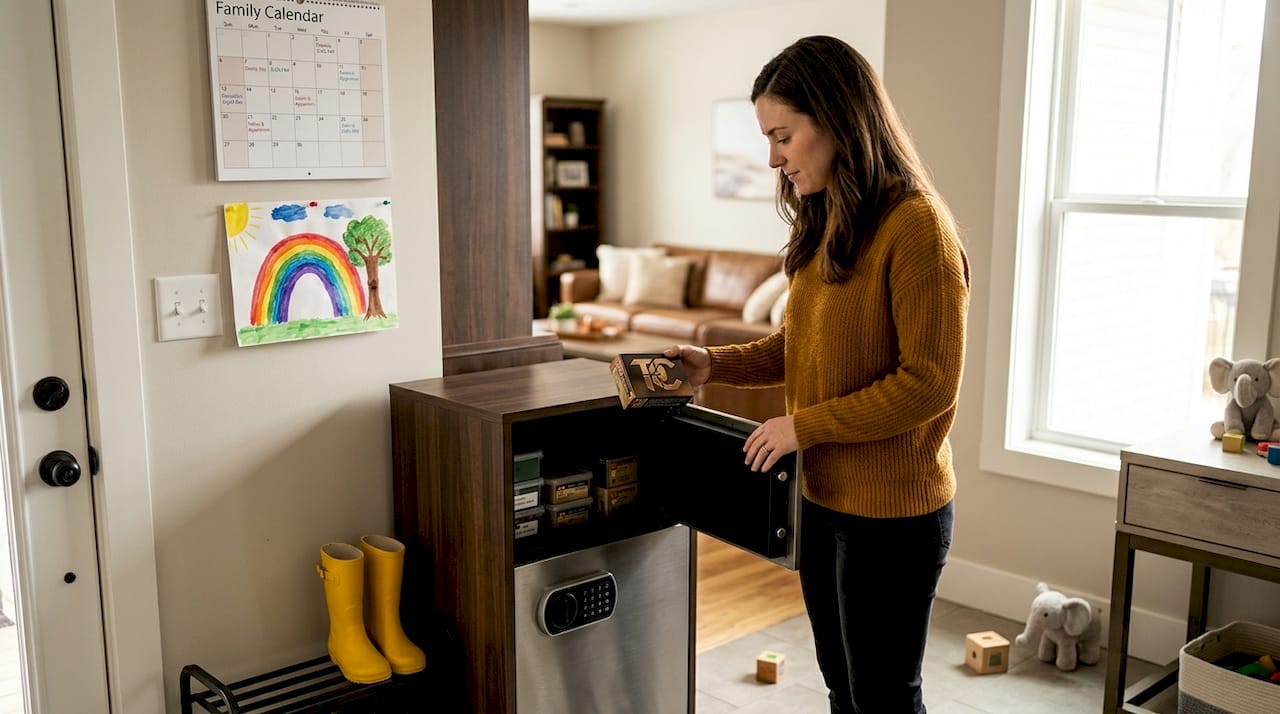
Here’s a practical breakdown of how to manage your ammunition by use case:
| Ammo type | Recommended storage | Access speed | Security priority |
|---|---|---|---|
| Home defense rounds (loaded mag) | Biometric safe, bedside | Immediate (under 5 seconds) | High but accessible |
| Range ammunition (bulk) | Dedicated ammo locker | Non-urgent | Maximum |
| Specialty/collectible rounds | Climate-controlled locked cabinet | Non-urgent | Maximum |
| Hunting ammunition (seasonal) | Metal ammo cans in locked storage | Seasonal access | High |
Key practices that apply across all situations:
- Use desiccant religiously: A round degraded by moisture won’t fire reliably when you need it. Silica gel packs inside sealed containers are cheap insurance.
- Rotate stock: Use older rounds before newer ones. Ammunition doesn’t last forever, and regular rotation keeps your defensive loads fresh and functional.
- Never store loose rounds: Always keep rounds in their original boxes or in labeled, sealed containers. Loose ammunition is harder to inventory and easier to misplace.
- Audit your inventory twice a year: Set a reminder every six months to check quantities, condition, and storage environment. Treat it like checking smoke detector batteries.
Pro Tip: For your defense ammo best practices, keep a single magazine loaded with your carry or home defense load inside a dedicated biometric safe. Store the rest of that caliber in a separate locked container. This gives you immediate access to what you need while keeping bulk inventory fully secured.
Your storage setup also directly affects maintaining firearms safely. Ammunition stored in poor conditions can contaminate your firearm with corrosive residue, and loose rounds in a shared container with your gun can create mechanical issues you won’t notice until it’s too late.
Compliance, fire codes, and managing edge cases
Legal compliance isn’t just about avoiding fines. It’s about understanding the full framework that governs how you own, store, and transport ammunition, and then building a system that exceeds those minimums.
“Meeting the legal minimum is the floor, not the ceiling. The goal of safe storage is to protect your family, not just to technically comply with state law.”
ATF explosives storage requirements are primarily aimed at commercial quantities and explosive materials beyond consumer small arms ammunition. However, the underlying principles apply to responsible home storage: locked access, separation from ignition sources, and thoughtful placement within the structure. Consumer ammo classified as 1.4S under NFPA 495 and SAAMI standards doesn’t require the same standoff distances or blast-resistant magazines, but it does need to stay away from heat, open flames, and flammable materials.
Key compliance steps every responsible owner should complete:
- Research your state’s specific requirements: CAP laws, storage mandates, and requirements for households with minors vary significantly by state. Don’t assume what applies in one state transfers to another.
- Check your homeowner’s or renter’s insurance policy: Many policies have specific language about firearms and ammunition storage. Non-compliance can void coverage in the event of theft or fire.
- Review travel regulations before crossing state lines: Ammunition transport rules differ by state, and ignorance isn’t a legal defense. Keep rounds in their original containers, in a locked case, in the trunk.
- Address military household requirements proactively: If you or a household member is active duty, confirm that home storage complies with both civilian law and any applicable military regulations.
- Audit your setup when household composition changes: A teenager moves in, a parent visits for an extended stay, or a new roommate arrives. Any change to who lives in or regularly accesses your home should trigger a storage review.
Special situations require extra attention. Mixed households, where some members support gun ownership and others don’t, can create friction around safe storage conversations. The solution isn’t to avoid the conversation. It’s to lead with facts, set clear rules, and make the physical setup do most of the work. A properly secured system requires no trust from anyone else in the household because access is physically controlled.
If you’re building out a more sophisticated setup, reviewing a serialized firearms guide helps you understand the full documentation picture. And when evaluating storage hardware, a thorough look at firearm storage selection gives you a practical framework for matching product to use case.
What most guides get wrong about safe ammo storage
Most storage guides focus entirely on hardware and legal checklists. Lock this, separate that, check the box. That’s useful, but it misses the most important variable in any storage system: the people living inside it and the situations they face.
Rural and military household research consistently shows that access, habit, and culture drive storage behavior more than knowledge of the law does. A rural gun owner who grew up with unlocked ammunition in the barn doesn’t ignore safe storage because they don’t know the rules. They do it because the habit was never built, and no checklist changed that. The same applies in military households, where range discipline is ironclad but home storage is often an afterthought.
The uncomfortable truth is that safe storage requires an emotional audit, not just a physical one. Ask yourself who is in your home regularly. Think about household stress levels, access to mental health resources, and whether every person with physical access to your storage location understands the stakes. These aren’t abstract questions. They’re the real variables that determine whether your locked container actually protects anyone.
For self-defense purposes, the tension between quick access and absolute security is real, and dismissing either side is intellectually dishonest. The best approach we’ve seen, working with serious owners who run ammo for self-defense setups, is a tiered system: one biometric safe for immediate access to a single loaded firearm, and everything else in maximum-security storage. That isn’t a compromise on safety. It’s a thoughtful, situationally aware system built on honest self-assessment.
Don’t let a guide, including this one, substitute for that self-assessment. The hardware is the easy part.
Explore storage and safety solutions at Tungsten Creek Tactical
Knowing the principles behind safe ammo storage is only part of the picture. The other part is having the right products, the right support, and the right expertise to build a setup that works for your specific household and lifestyle.

At Tungsten Creek Tactical, we carry a curated selection of storage products designed to meet real-world needs without cutting corners on quality or security. Whether you’re building your first proper setup or upgrading an existing one, our team can help you find solutions that balance accessibility with safety. If your firearms themselves need attention, our gunsmithing services ensure that everything in your collection functions as intended, safely and reliably. For owners looking to go further, our custom guns service lets you build a firearm specifically configured for your defensive and storage needs. Reach out or visit our site to take the next step.
Frequently asked questions
What is the safest way to store ammunition?
The safest method is in a locked, dedicated container separate from your firearms, kept in a cool, dry location following NFPA 495 and SAAMI guidelines, which classify small arms ammo as 1.4S and recommend stable, climate-controlled environments.
Do I need to store ammunition separately from my guns?
Yes, separate locked storage reduces negligent discharge risks, limits fire hazard concentration, prevents moisture damage, and forces any unauthorized person to defeat two security barriers instead of one.
Are fire codes relevant to home ammo storage?
Yes, NFPA 495 and SAAMI standards apply to home storage and recommend avoiding heat sources and ignition risks; non-compliance can also create issues with homeowner’s insurance in the event of a fire or theft claim.
Does safe storage really reduce family risk?
Absolutely. Secure storage trends show a direct association between increased safe storage rates and reduced firearm suicide and unintentional injury incidents in gun-owning households, making it one of the most impactful safety decisions you can make.
Recommended
Related Post

Discover the 5 ways
An introduction to Tactical Luxury Guns & Coffee We founded
Top 5 Best PCC’s
In 2026, the Pistol Caliber Carbine (PCC) market is no