
Safe Firearm Transportation: A Compliance and Safety Guide

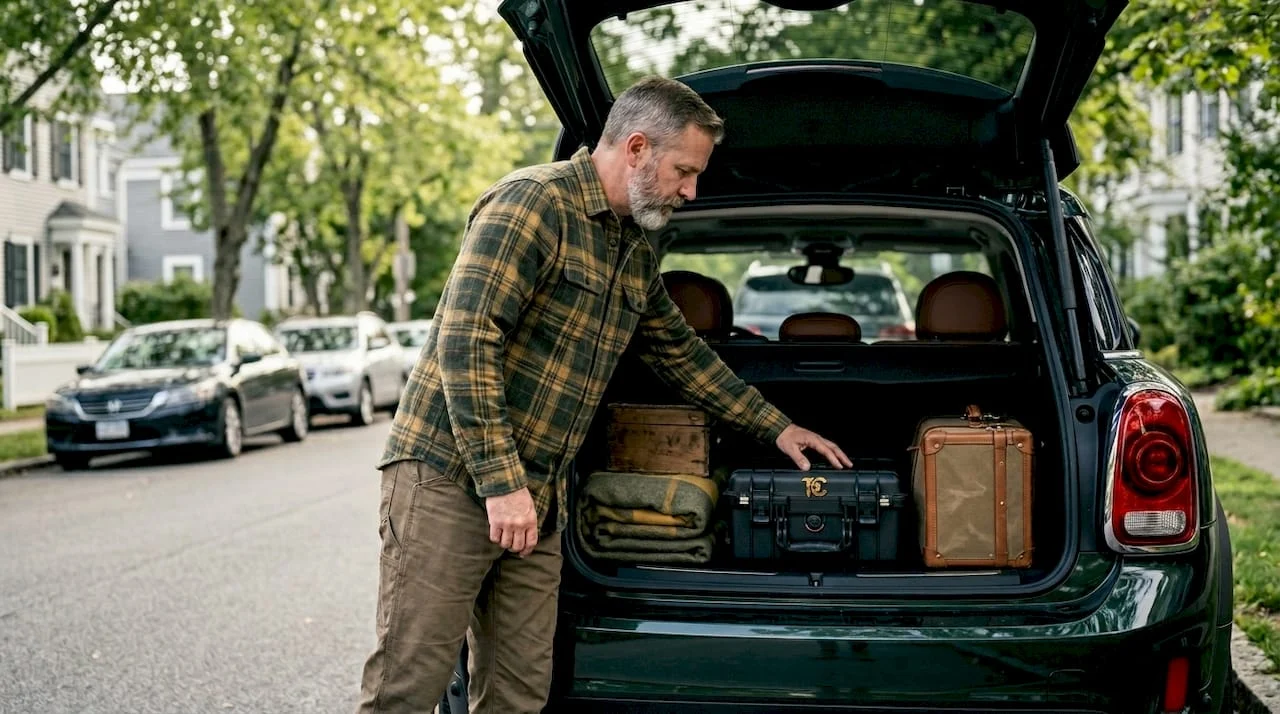
You’ve planned a road trip through three states, your firearm is packed in the trunk, and somewhere around the state line you wonder if you’ve done everything right. That moment of doubt is more common than most gun owners admit. Transporting firearms legally and safely requires more than good intentions. It requires knowing federal law, understanding state-specific rules, preparing the right documentation, and physically setting up your vehicle for compliance. This guide walks you through every step so you travel with confidence, not anxiety.
Table of Contents
- Key laws and requirements for safe firearm transportation
- Preparing for travel: Planning for compliance and safety
- Executing safe firearm transportation: Step-by-step process
- Addressing common mistakes and troubleshooting issues
- The uncomfortable truth most guides miss about firearm transportation
- Explore precision gear for safer firearm travel
- Frequently asked questions
Key Takeaways
| Point | Details |
|---|---|
| Federal guidelines matter | Always follow federal safe passage rules for unloading and locking firearms during transport. |
| State laws can vary | Check every jurisdiction on your route for stricter laws that exceed federal requirements. |
| Plan ahead for compliance | Prepare all documents and use proper storage solutions before traveling to avoid legal issues. |
| Continuous travel is key | Extended stops or overnight stays may break your legal protection—plan your trip as a continuous journey. |
| Verify your process | Maintain records and double-check compliance to ensure safe, hassle-free firearm transportation. |
Key laws and requirements for safe firearm transportation
With the importance established, let’s break down the actual laws you need to understand for your journey.
The foundation of interstate firearm transport is the Firearm Owners Protection Act of 1986, which created a federal “safe passage” provision. Under 18 U.S.C. § 926A), the firearm must be unloaded and neither the firearm nor the ammunition may be readily accessible from the passenger compartment. If your vehicle has no separate compartment, everything must be stored in a locked container that is not the glove compartment or console. That’s the federal baseline, and it’s non-negotiable.
The problem is that “federal baseline” does not mean universal protection. State and local laws can impose stricter or different requirements, and the Firearm Owners Protection Act does not automatically prevent a stop, detention, or arrest by local law enforcement. This is where many responsible gun owners get caught off guard. They assume federal law shields them everywhere. It does not.
Here’s a clear comparison of how transport requirements can vary:
| Jurisdiction type | Container required | Ammunition rules | Permit required |
|---|---|---|---|
| Federal (18 U.S.C. § 926A) | Locked, inaccessible | Separate from firearm | No (in-transit) |
| New York (example) | Hard-sided locked case | Separate locked container | Handgun permit required |
| California (example) | Locked container | Unloaded, separate ammo | No standard carry permit |
| Texas (example) | Not always required | No state separation rule | No permit for transport |
This table illustrates why assuming one rule covers everything is a serious mistake. California and New York both go beyond federal requirements in ways that can result in criminal charges for an otherwise law-abiding traveler.
Important: The FOPA “safe passage” provision is a legal defense, not a get-out-of-jail-free card. Police in restrictive jurisdictions can still stop, detain, and arrest you. Whether the defense holds up in court is a different matter from what happens at the roadside.
Key federal requirements you must meet to qualify for safe passage protection:
- Firearm must be unloaded before the journey begins
- Ammunition must be stored separately, not mixed with the firearm
- Both must be inaccessible from the passenger compartment during travel
- Locked container is required if no trunk or separate compartment exists
- You must be legally permitted to possess the firearm in both the origin and destination states
Understanding these rules before you start is as important as the firearm buying process itself. You should also be familiar with serialized firearm rules, which affect what you can legally transport at all. Some jurisdictions also consider state firearm insurance impacts worth reviewing before you hit the road.
Preparing for travel: Planning for compliance and safety
Once you understand the laws, the next step is making sure your preparations match those requirements.
Preparation is where the real work happens. Think of it like selecting a premium cigar before a long evening: you wouldn’t reach for the first thing on the shelf. You’d research, plan, and choose deliberately. Firearm travel preparation works the same way.
Here is a step-by-step pre-travel preparation process:
- Research all states on your route, not just your origin and destination. Look up transport requirements for every state you pass through.
- Check destination-specific requirements, including whether your carry permit is recognized and whether additional permits are needed.
- Gather documentation, including your firearm registration, any applicable permits, and proof of compliance with storage requirements.
- Select a compliant locked container that meets the hard-sided requirement for air travel or the locked container rule for road travel.
- Separate firearms from ammunition before loading your vehicle, using dedicated pouches or cases for each.
- Photograph your packed setup before departure. This gives you visual proof of how everything was stored if questions arise later.
- Plan your stops intentionally, noting whether you will be stopping in states with stricter rules and for how long.
For air travel, the rules are even more structured. The ATF emphasizes that airline declaration alone does not authorize bringing firearms into other countries. You must complete required forms and meet destination-specific requirements before international travel with firearms.
Airlines require firearms in hard-sided, locked checked baggage, declared at check-in. TSA has its own rules, and individual airlines may impose additional conditions. If you’re flying internationally, you may need import permits, export permits, or both. Don’t assume your destination country recognizes your rights or paperwork.
| Travel type | Key requirement | Declaration needed | Common pitfall |
|---|---|---|---|
| Road, intrastate | Unloaded, inaccessible | No | Wrong container type |
| Road, interstate | FOPA compliance + state laws | No | Skipping state-by-state check |
| Air, domestic | Hard-sided locked case, declared | Yes, at check-in | Using a soft case |
| Air, international | Destination country rules apply | Yes, multiple forms | Assuming US documentation transfers |
Pro Tip: Create a dedicated travel folder (physical or digital) that holds your state-by-state compliance notes, firearm documentation, and permit copies. Having everything organized before departure saves time and stress if you’re ever questioned.
Reviewing firearms storage solutions before purchasing a travel case is a smart step. Not all cases meet federal and airline standards, and choosing the wrong one can invalidate your compliance effort entirely. Our firearm safety tips resource provides additional guidance on safe handling practices throughout the entire process.
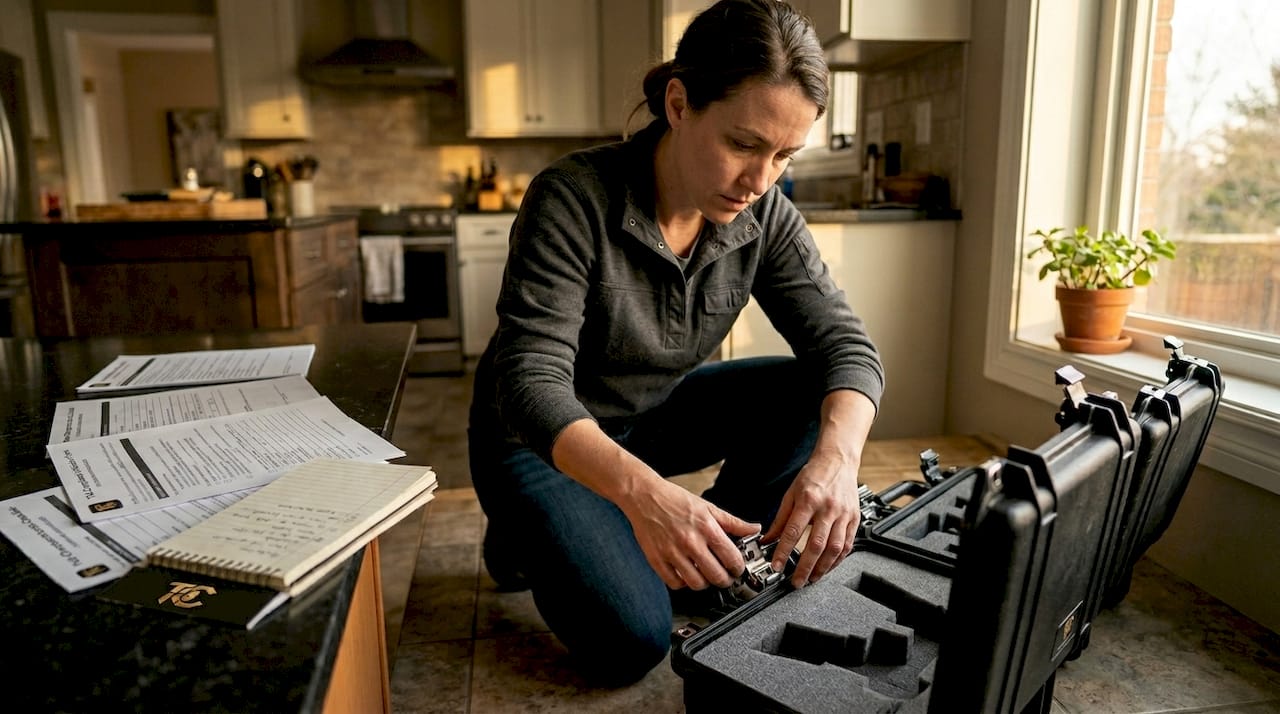
Executing safe firearm transportation: Step-by-step process
With preparations in place, let’s walk through the full transportation process so you can respond confidently at every step.
Execution is where preparation either pays off or falls apart. Knowing the rules is not enough if you load your vehicle incorrectly or make an impulsive stop in the wrong jurisdiction. Here is how to physically execute safe transport:
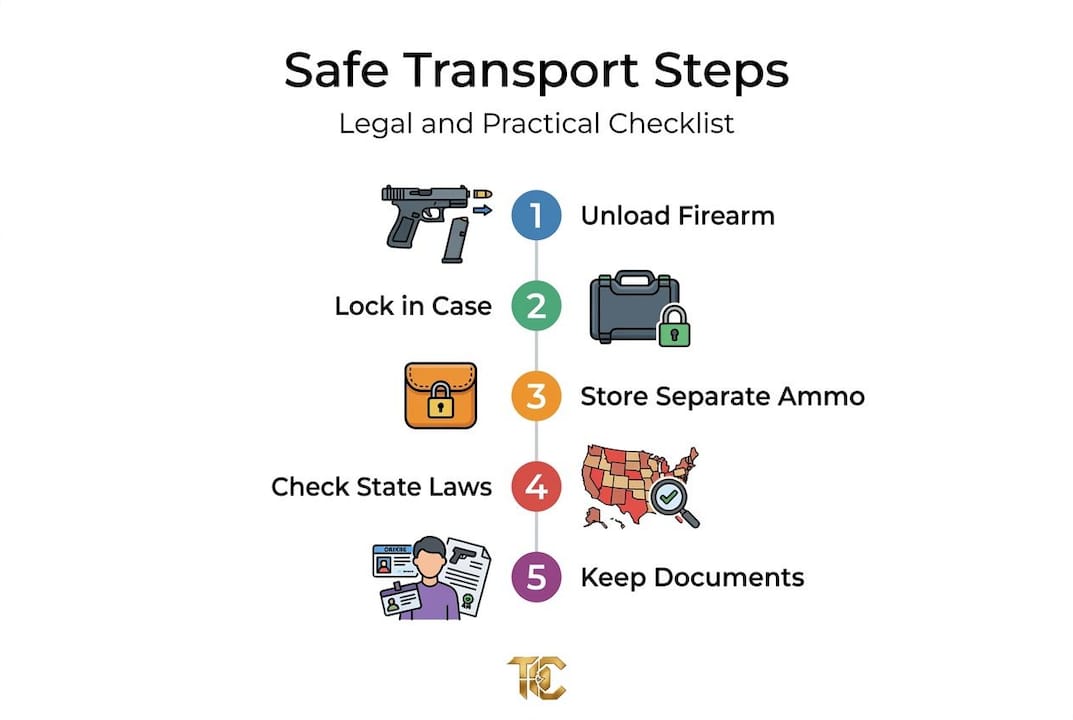
- Unload the firearm completely before you begin packing. Visually and physically inspect the chamber and magazine well. Do this at home, not in a parking lot.
- Place the firearm in its locked container and secure the lock. Test it. If you can open it quickly, so can law enforcement, and that may undermine your compliance argument.
- Store ammunition separately, ideally in a factory box or a dedicated locked container. Some states require ammunition and firearms to be in separate locked containers entirely.
- Place both in the trunk or a compartment not accessible from inside the passenger cabin while the vehicle is in motion. This is not optional. A firearm on the back seat in a locked box still fails the accessibility test in most interpretations.
- Avoid opening the container until you reach your legal destination, unless you are in a jurisdiction where you are permitted to access the firearm.
- Log your stops in a simple note on your phone: time, location, duration. This documents your journey as continuous and intentional.
The statutory conditions in 18 U.S.C. § 926A) require that the firearm not be readily accessible from the passenger compartment, which is interpreted strictly in states like New Jersey and New York. Placing a locked case on the back seat of a sedan has been used as the basis for arrest in those states.
The “continuous journey” concept is one of the most misunderstood elements of interstate transport. Federal safe passage treats brief stops for fuel, food, or restrooms as consistent with continuous travel. But extended stops, hotel stays, or sightseeing in restrictive jurisdictions can legally “break” your journey and eliminate the protection. Multi-day travel through states like Massachusetts or Maryland should be planned carefully with this in mind.
Pro Tip: Record your travel route in a navigation app that logs your path. If you’re ever stopped and need to demonstrate a continuous journey from Point A to Point B, a timestamped digital route record is far more convincing than a verbal explanation.
Pairing safe transport practices with solid firearm maintenance tips ensures that the firearm you transport arrives in the same condition it left. Understanding firearms social responsibility is equally important because how you transport your firearm reflects your broader commitment as an owner.
Addressing common mistakes and troubleshooting issues
Even with a strong plan, mistakes can happen. Here’s how to stay ahead of the most common pitfalls and what to do if trouble arises.
Most transport violations are not the result of malicious intent. They happen because a responsible owner assumed federal protection covered everything, or forgot to check one state’s laws, or made a last-minute decision that seemed harmless. These are the most common mistakes:
- Leaving the firearm accessible in the vehicle, even locked, when it can be reached from the driver’s seat
- Storing firearms and ammunition together in the same case, which violates both federal guidance and many state laws
- Failing to check intermediate states, especially on long drives where you pass through a state quickly and assume it doesn’t count
- Relying on outdated information, such as last year’s state law summary, when regulations change more often than most people track
- Using soft-sided bags for air travel, which fail TSA and airline requirements for checked firearms
- Not carrying any documentation, which makes it harder to demonstrate intent and compliance if questioned
Legal reality check: FOPA-style protections do not automatically prevent stop, detention, or arrest. They serve as a defense after the fact. In restrictive jurisdictions, local law enforcement may take action first, and the burden of proving compliance falls on you in the moment.
If you are stopped while transporting a firearm, stay calm. Inform the officer that you have a firearm in the vehicle and where it is stored. Do not reach for it. Provide your documentation. If you are detained or arrested, do not argue the law at the scene. That conversation belongs in front of a judge with an attorney present.
Unexpected situations also include discovering mid-trip that your destination has changed to a more restrictive state. In those cases, pull over safely and assess your options before driving further. Sometimes rerouting is the right call.
Selecting the best firearm storage options before travel reduces the chance of container-related violations significantly. If you’re also thinking about personal defense ammo for your destination, research destination laws on ammunition types before you pack. And if you ever wonder whether your retailer is helping you make informed decisions, responsible sales trust is the standard we hold ourselves to at Tungsten Creek Tactical.
The uncomfortable truth most guides miss about firearm transportation
Most guides give you the federal rules, list a few state examples, and call it done. That’s a clean answer to a messy problem. The reality is more complicated, and pretending otherwise puts responsible gun owners at risk.
The gap between federal protection and local enforcement is real and wide. Officers in jurisdictions with strict gun laws are not required to interpret 18 U.S.C. § 926A favorably. They have discretion. And even when you’re legally protected, the process of proving that can take hours, cost money, and create a paper trail that follows you. “Technically legal” is not the same as “consequence-free.”
Multi-day travel is where this gap becomes most dangerous. Most guides mention the continuous journey principle but don’t stress how easily an overnight stop can undermine it. Staying in a hotel in a restrictive state changes your legal exposure in ways a two-hour gas stop does not. If you’re making a cross-country drive and sleeping in Newark or Boston, you need specific legal advice, not just a general article.
There’s also the documentation problem. Most gun owners don’t carry any paperwork when they travel. They rely on their knowledge of the law. That’s fine in a friendly jurisdiction, but it’s a weak position in a hostile one. Documenting your setup, photographing your packed case, and carrying printed state law summaries all create a defensible narrative. Firearms ownership and responsibility means building that kind of discipline into every trip, not just the complicated ones.
The most overlooked piece of advice: treat every multi-state trip as if someone will question your setup at every stop. That mindset leads to better preparation, more careful routing, and a much cleaner legal position if something unexpected happens.
Explore precision gear for safer firearm travel
Responsible transportation starts with the right gear, and the right gear starts with knowing what actually meets compliance standards in the real world.

At Tungsten Creek Tactical, we stock purpose-built solutions for firearm owners who take transport seriously. Whether you need a hard-sided case that meets TSA and FOPA requirements, or you’re looking to optimize your setup with a custom guns configuration that travels more cleanly, we’ve got the expertise to match you with the right option. If you’re running an AR-platform firearm, an adjustable stock can reduce overall length and simplify case selection significantly. Browse our full selection at the tactical shop to find compliant carry cases, locking hardware, and transport accessories built for real-world use.
Frequently asked questions
What is the federal requirement for transporting firearms across state lines?
Federal law requires) firearms to be unloaded and stored so they cannot be accessed from the passenger compartment; if your vehicle has no separate compartment, use a locked container that is not the glove box or console.
Do state laws override federal firearm transportation protections?
State and local laws can impose stricter requirements than federal law, and FOPA protections do not prevent arrest; always check every state you travel through, not just your origin and destination.
Are brief travel stops allowed when transporting firearms?
Brief fuel and food stops are generally treated leniently under the continuous journey concept, but overnight stops in restrictive states can legally break the federal safe passage protection and increase your legal risk.
What documents should I carry when transporting firearms?
Carry proof of legal ownership, any required permits, and documentation showing your firearms are unloaded and securely stored; for international travel, ATF guidance requires completing destination-specific forms well before departure.
Recommended
Related Post

Discover the 5 ways
An introduction to Tactical Luxury Guns & Coffee We founded
Top 5 Best PCC’s
In 2026, the Pistol Caliber Carbine (PCC) market is no