Gun etiquette’s role in community safety
Gun ownership carries a responsibility that goes well beyond locking your door at night. The role of gun etiquette in community safety is something many firearm owners think they understand, yet consistently underestimate in practice. Most focus on their own habits while missing the broader picture: how your behavior with a firearm shapes public trust, range access, neighborhood safety, and the long-term future of firearm ownership rights. This article breaks down what genuine gun etiquette looks like, why it matters at a community level, and how you can apply it in ways that make a real difference.
Table of Contents
- Understanding gun etiquette and its community impact
- Key principles of firearm etiquette every owner should practice
- Proper range etiquette: preserving safety and the community’s reputation
- The community-wide benefits of practicing good gun etiquette
- Applying gun etiquette daily: practical tips for responsible owners
- Why gun etiquette is the backbone of firearm community trust and safety
- Explore precision custom guns and accessories at Tungsten Creek Tactical
- Frequently asked questions
Key Takeaways
| Point | Details |
|---|---|
| Gun etiquette’s community role | Proper firearm etiquette improves safety and builds trust within communities. |
| Follow core safety rules | Adhering to established firearm safety and handling rules prevents accidents and misuse. |
| Range etiquette matters | Respectful behavior on shooting ranges preserves access and fosters public confidence. |
| Secure storage reduces risks | Consistent use of locking devices helps prevent theft, accidents, and unauthorized use. |
| Etiquette shapes reputation | Good etiquette supports positive firearm culture and protects community access to shooting sports. |
Understanding gun etiquette and its community impact
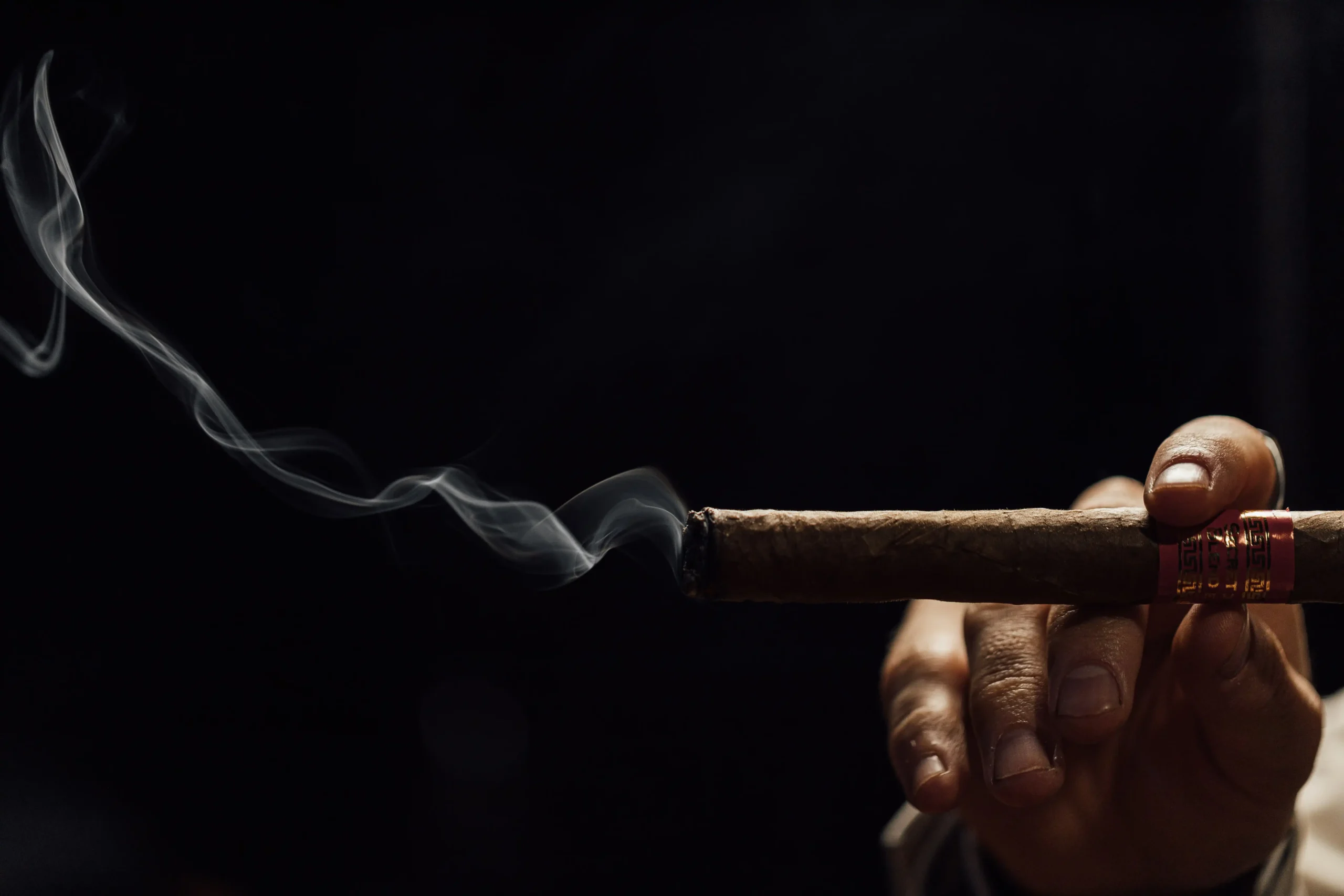
Gun etiquette is not simply knowing which end of the barrel to point away from you. It covers a full range of behaviors: how you handle a firearm in public and private settings, how you store it when not in use, and how your conduct reflects on every other responsible gun owner around you. Think of it like a well-selected cigar. The quality shows not just in the leaf but in how you carry yourself while enjoying it. Firearm etiquette works the same way.
Community gun safety starts with awareness that your practices have consequences beyond your own household. Unsafe storage, careless handling at a range, or dismissive behavior toward safety guidelines signals to the public that firearm owners cannot regulate themselves. That perception erodes trust and feeds the policy arguments that threaten legal ownership.
Programs like Project ChildSafe demonstrate what community-focused firearm safety looks like at scale. Over 41 million free firearm safety kits have been distributed to promote secure storage and prevent accidents, theft, suicide, and misuse in communities. That number reflects how seriously organized firearm advocacy takes the communal dimension of gun ownership.
Here is what responsible gun etiquette covers at a foundational level:
- Safe handling: Treat every firearm as if it is loaded, always
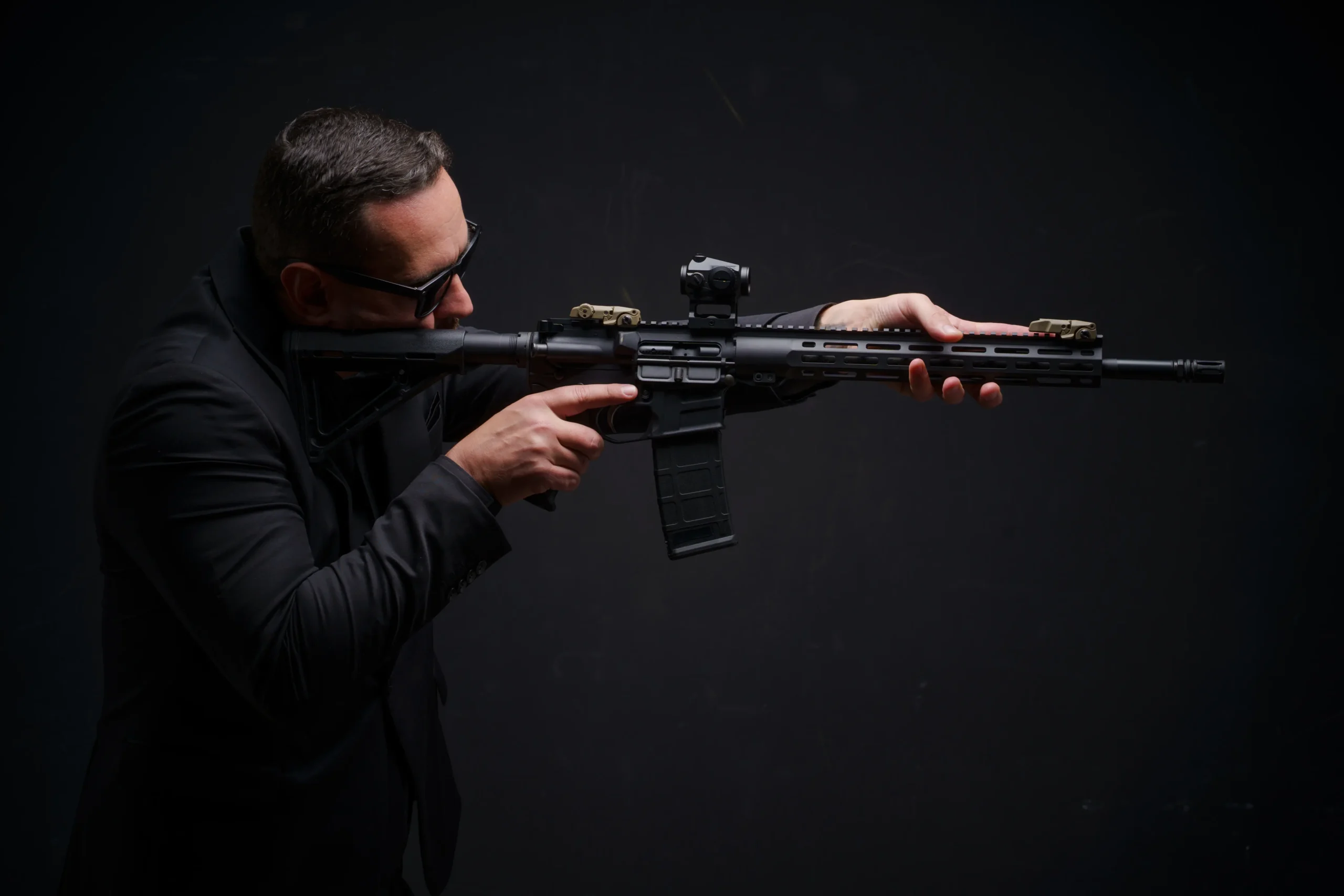
- Muzzle discipline: Keep the muzzle pointed in a safe direction at all times
- Trigger awareness: Keep your finger off the trigger until you are ready to fire
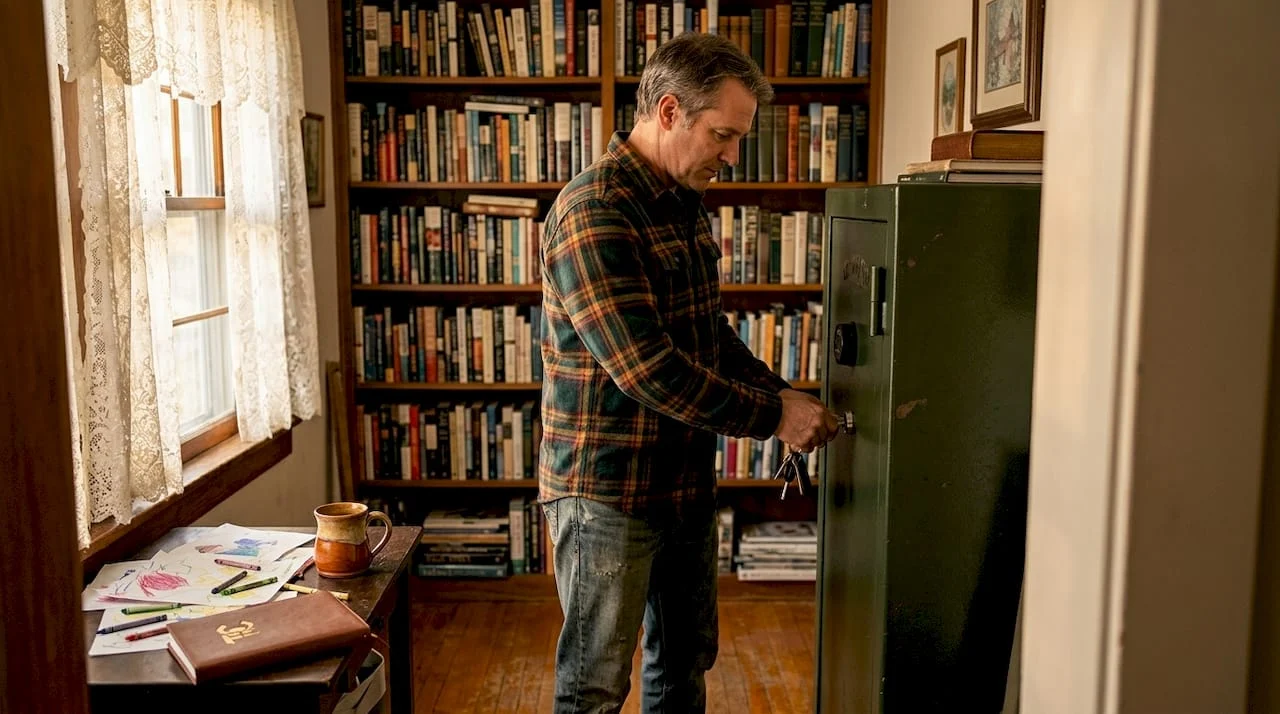
- Secure storage: Use locks, safes, or secured cases to prevent unauthorized access
- Public behavior: Avoid handling or displaying firearms unnecessarily in public spaces
- Communication: Clearly announce when a firearm is loaded, unloaded, or going hot at a range
Solid firearm safety tips reinforce these behaviors as daily habits, not situational checklists.
Key principles of firearm etiquette every owner should practice
The basics of safe gun handling are widely known but inconsistently applied. Firearm etiquette importance becomes clear when you consider that most accidents involving firearms happen at home, not at ranges or in confrontations. Familiarity breeds carelessness, and carelessness is where etiquette breaks down.
Here are the core principles that directly protect both you and your community:
- Treat every gun as loaded. This is not just a saying. It is a cognitive discipline that prevents the split-second decisions that cause tragedy.
- Never point a firearm at anything you are not willing to destroy. Muzzle awareness requires constant, active attention.
- Keep your finger off the trigger until your sights are on the target. Trigger discipline eliminates accidental discharges more effectively than any mechanical safety.
- Know your target and what is beyond it. A bullet does not stop at the target. Knowing your backdrop is non-negotiable.
- Never alter your firearm illegally. NSSF firearm safety rules stress not altering firearms and getting regular servicing to prevent accidents and illegal misuse.
- Service your firearm on schedule. A neglected firearm is an unpredictable firearm. Regular cleaning and inspection keep it functioning as designed.
- Secure every firearm when not in active use. Locking mechanisms and proper storage are non-optional for responsible owners.
Pro Tip: Keep a maintenance log for each firearm you own. Date every cleaning, inspection, and part replacement. This habit keeps you consistent and builds a record that demonstrates responsible ownership if you ever need it.
Learning to maintain firearms for safety is as fundamental as knowing how to shoot. And understanding social responsibility as a gun owner ties these habits together into a coherent practice.
Proper range etiquette: preserving safety and the community’s reputation
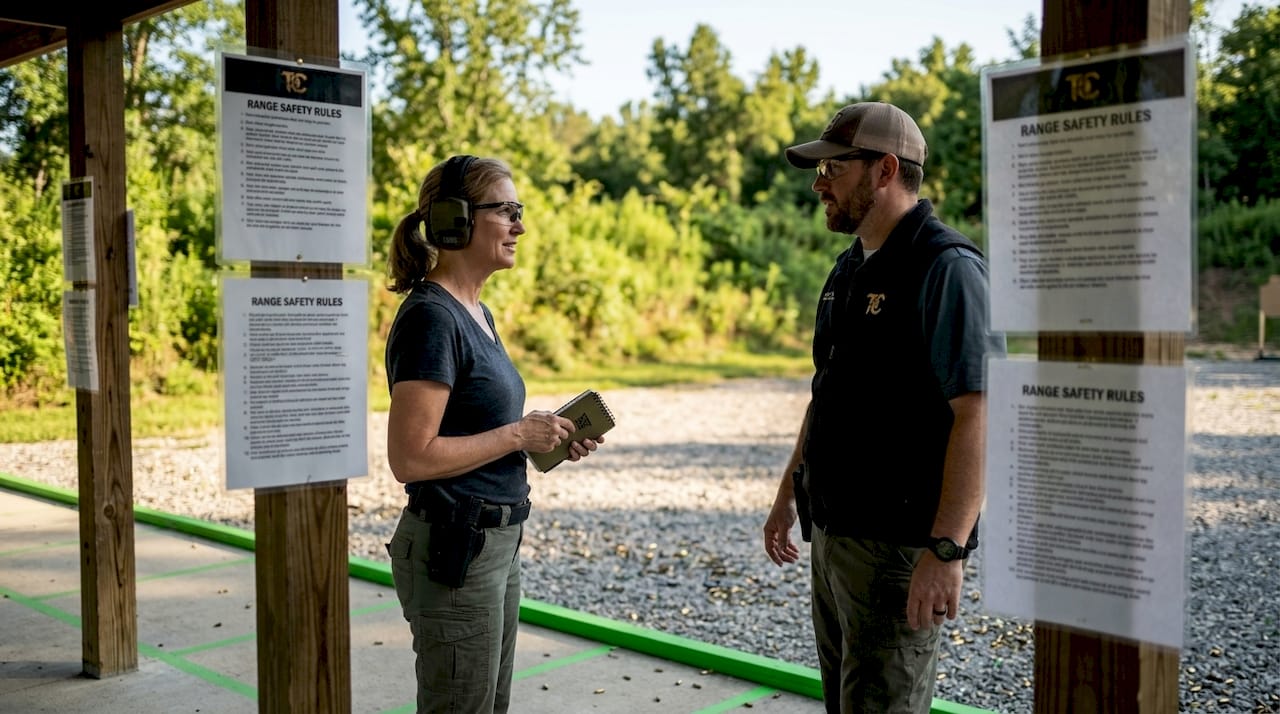
A shooting range is where firearm etiquette becomes public. Every mistake you make there is visible. Every courtesy you show reflects on the broader culture of gun ownership. Ranges are community institutions, and they can lose their operating licenses, face community opposition, or shut down entirely when the people using them behave poorly.
The most important behaviors at a range include:
- Follow Range Safety Officer (RSO) commands immediately and without argument. An RSO’s authority exists for one reason: to keep everyone alive. Debating a safety call is never appropriate, regardless of your experience level.
- Respect lane boundaries. Stay in your designated area. Do not reach across another shooter’s space or handle their equipment without permission.
- Call the line correctly. “Hot” and “cold” range commands must be understood and followed by everyone. Mistakes during a cold range are extremely dangerous.
- Avoid unsolicited advice. Unless someone is creating a safety hazard, keep your opinions about their stance or technique to yourself unless they ask.
- Clean your area when finished. Brass, targets, and packaging should be cleared before you leave. A clean range is a range that stays open.
- Check in newcomers kindly. If someone new to the range seems uncertain, a brief, respectful orientation goes further than a lecture.
“Responsible adherence to range etiquette fosters public trust and helps keep ranges open for future generations.”
Pro Tip: If you shoot at the same range regularly, introduce yourself to the RSOs. Knowing the staff by name builds mutual respect and often gives you better access to range resources and scheduling.
Joining a structured group makes all of this easier. The benefits of shooting clubs include built-in culture around etiquette, mentorship from experienced shooters, and a community invested in keeping ranges safe and accessible.
The community-wide benefits of practicing good gun etiquette
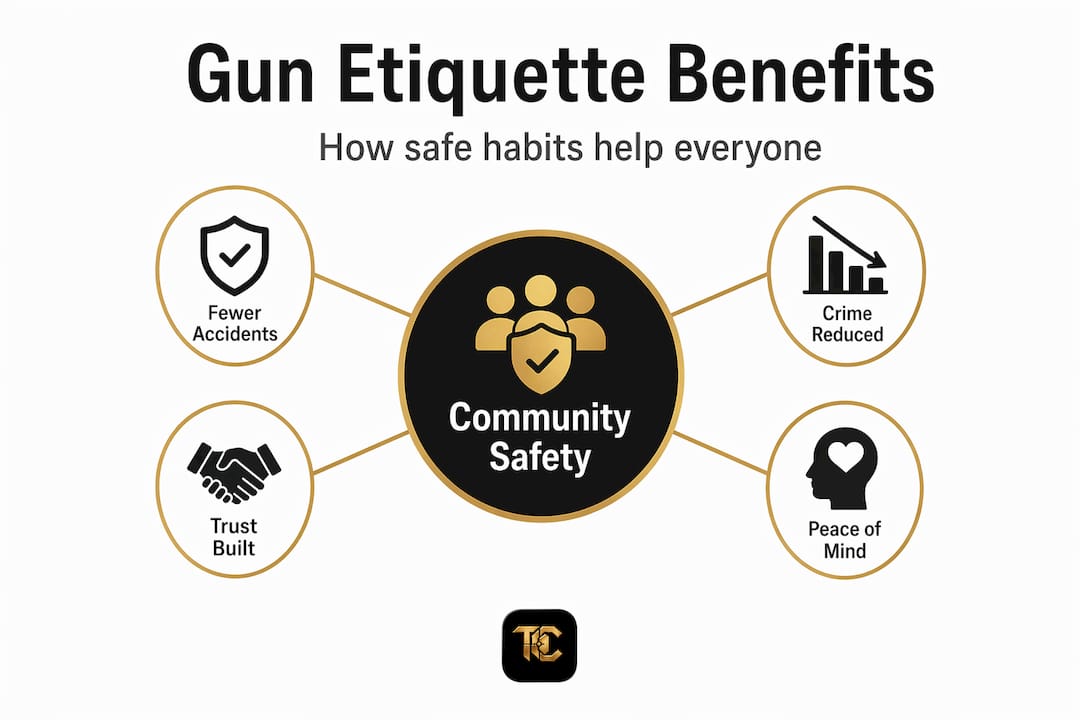
When firearm etiquette becomes a genuine community standard rather than an individual preference, the results are measurable. Accidents decrease. Theft and misuse drop. Public trust in legal gun ownership rises. These are not abstract outcomes. They are documented patterns tied to specific practices.
Secure storage and education reduce accidents, suicide, theft, and misuse, empowering communities to function more safely around legally owned firearms. The connection between proper storage habits and reduced harm is consistent and well-supported.
| Etiquette practice | Community benefit | Impact area |
|---|---|---|
| Secure storage | Prevents unauthorized access and theft | Home safety, crime reduction |
| Regular maintenance | Reduces mechanical failures and accidents | Personal and public safety |
| Range discipline | Maintains safe shooting environments | Community trust, range access |
| Legal modification only | Reduces weapon-related crime | Law enforcement, public safety |
| Safety education | Builds generational responsible ownership | Long-term cultural impact |
Illegal firearm modifications are directly connected to increased community violence. A modified firearm that bypasses legal safety standards introduces unpredictable risk in both the hands of the modifier and in any eventual misuse. Community gun violence prevention strategies consistently cite illegal modifications as a contributing factor to escalated harm in violent incidents.
On the positive side, communities where firearm education and storage practices are strong show better outcomes across multiple safety categories. Investing in secure storage solutions is not just about compliance. It is one of the highest-return safety decisions a gun owner can make.
Applying gun etiquette daily: practical tips for responsible owners
Knowing the principles is step one. Applying them consistently is what actually shapes community outcomes. The gap between what gun owners know and what they practice is where accidents, theft, and preventable misuse happen.
Here are concrete steps to build a daily etiquette practice:
- Inspect your firearm every time you handle it. Check the chamber, the safety, and the condition of the action before and after use. Make it automatic.
- Store every firearm in a locked container when it is not on your person. A firearm on a nightstand or in an unlocked drawer is an accessible firearm for anyone in the house.
- Educate every household member on firearm safety basics. Curiosity does not stop because you tell someone not to touch a gun. Proper education reduces the risk that curiosity creates danger.
- Use trigger locks and cable locks as backup storage security. These are inexpensive and add meaningful protection when a full safe is not practical.
- Participate in local safety programs and training events. Safety programs and etiquette empower firearm owners to build trust and prevent misuse at home and in the community.
- Talk openly about safe practices with other gun owners. Informal peer accountability is one of the most effective ways to raise community standards.
Pro Tip: Schedule a quarterly firearms review. Check storage security, inspect each firearm, and review safety knowledge with any household members. Treat it like a smoke detector test: routine, brief, and non-negotiable.
The right firearm storage solution depends on your household, the number of firearms you own, and your access needs. Choosing correctly is part of practicing the etiquette that protects everyone around you.
Why gun etiquette is the backbone of firearm community trust and safety
Here is a perspective you will not hear often enough: gun etiquette is not a soft skill. It is the structural foundation that determines whether legal firearm ownership remains viable as a cultural and legal practice in the United States.
Every range closure, every restrictive ordinance, every public outcry about firearms is partly fueled by incidents that proper etiquette would have prevented. One careless display at a grocery store. One unsecured firearm accessed by a child. One modified weapon used in a crime. These events do not just harm individuals. They set back the entire community of responsible gun owners.
The impact of gun culture is shaped from the ground up. It is not shaped by lobbyists or legislation alone. It is shaped by what you do in your own home, at your local range, and in the conversations you have with neighbors, family members, and newer gun owners. When your standard is high, you raise the standard around you.
Poor etiquette signals to the broader public that gun owners cannot be trusted with self-governance. That perception is the argument that drives restrictive policy. Strong etiquette culture counters it with undeniable evidence. Communities where gun ownership is practiced responsibly are not communities asking for fewer rights. They are communities demonstrating that expanded trust is warranted.
Understanding firearms ownership responsibility means seeing your behavior as a vote for what the future of gun ownership looks like. That is a serious and consequential responsibility, and the owners who understand it are the ones who genuinely advance the culture.
Explore precision custom guns and accessories at Tungsten Creek Tactical
At Tungsten Creek Tactical, we build our offerings around the same values this article covers: reliability, responsibility, and craftsmanship that holds up when it matters.

Every custom gun we work on is precision-fitted and built to function exactly as intended, because a firearm that performs consistently is a firearm that supports safe, confident ownership. We also carry the accessories and storage solutions that help you practice the kind of gun etiquette that protects your household and your community. Whether you are building a new setup or upgrading your current kit, browse our full selection to find firearms, gear, and accessories that match a responsible owner’s standards. Quality gear and ethical ownership go together. We are here to support both.
Frequently asked questions
What is the most important aspect of gun etiquette in a community?
Secure firearm storage combined with respectful handling practices is crucial to prevent accidents and build community trust. Secure storage and education reduce accidents, suicide, theft, and misuse, empowering communities across the board.
How does range etiquette contribute to community safety?
Following range rules, listening to safety officers, and respecting others help maintain safe shooting environments and positive public perceptions. Range etiquette directly supports keeping ranges operational and welcoming for all responsible users.
Can modifying my firearm affect community safety?
Illegal modifications can make firearms unsafe and are directly linked to increased crime, so following manufacturer guidelines and legal safety standards is essential. NSSF safety rules specifically address the risks of unauthorized alterations and the importance of regular professional servicing.
How can I encourage better gun etiquette in my local community?
Participating in safety programs, educating others, and supporting community firearm safety initiatives help promote responsible ownership and reduce risks. Safety programs and etiquette training empower owners to build genuine community trust, not just follow rules on paper.
What resources exist to help new gun owners learn proper etiquette?
Programs like NSSF’s Project ChildSafe provide free firearm safety kits and educational materials focused on secure storage and safe handling practices. Project ChildSafe has distributed over 41 million safety kits with educational brochures to support firearm safety education nationwide.
Recommended
Related Post
Discover the 5 ways
An introduction to Tactical Luxury Guns & Coffee We founded
Top 5 Best PCC’s
In 2026, the Pistol Caliber Carbine (PCC) market is no