The Role of Community in Gun Ownership: What Shapes Us
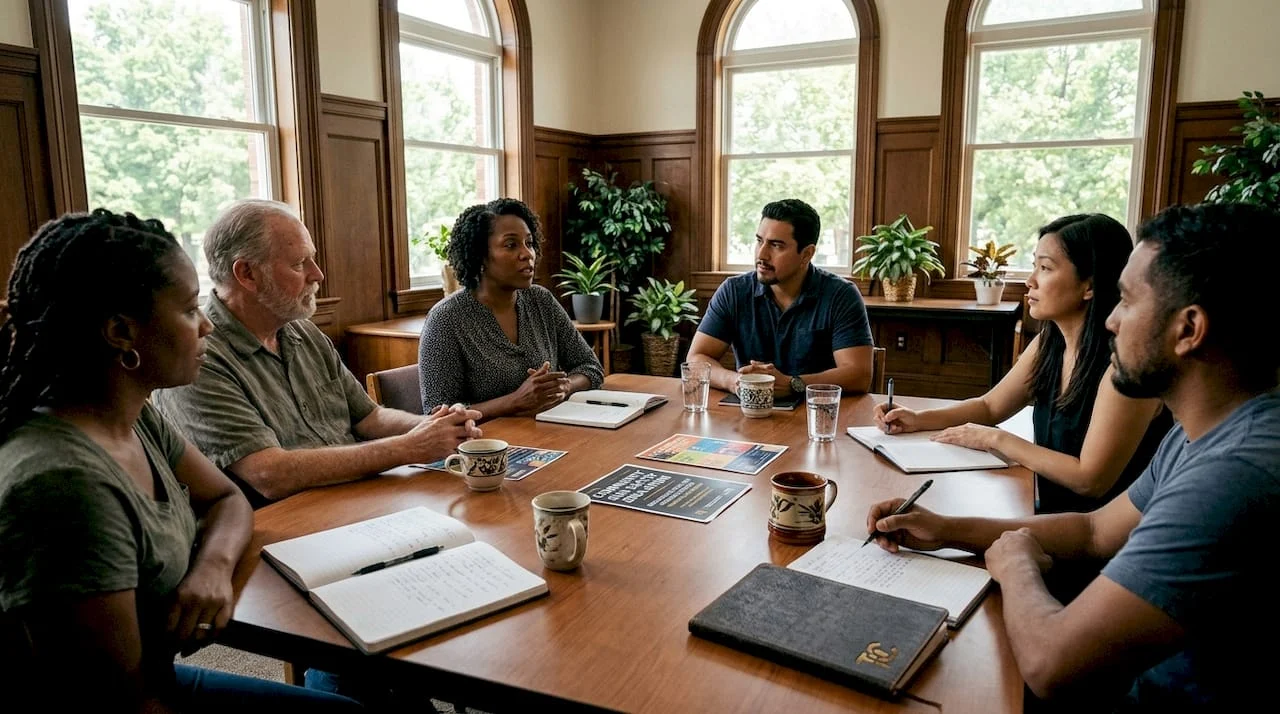
Gun ownership is rarely as solitary a decision as it appears. The role of community in gun ownership runs deeper than most people realize. Your zip code, your neighbors, your local culture, and even the safety conditions on your street all shape how you think about firearms, whether you own one, and how responsibly you handle it. Researchers, policymakers, and experienced gun owners are increasingly recognizing what many already feel intuitively: the individual and the community are inseparable when it comes to firearms.
Key takeaways
| Point | Details |
|---|---|
| Community shapes ownership motivations | Local safety conditions and violence exposure directly influence why and whether people acquire firearms. |
| Norms drive policy views | Gun-related beliefs formed through social networks predict policy support more reliably than demographics alone. |
| Credible messengers reduce violence | Community-based intervention programs using trusted locals have measurable success in preventing gun violence. |
| Peer networks reinforce responsibility | Shooting clubs, community forums, and local education programs build a culture of safe firearm handling. |
| Engagement benefits everyone | Responsible gun owners who actively participate in community programs contribute to safer local firearm culture. |
The role of community in gun ownership: historical and social context
Gun culture in America did not develop in a vacuum. It grew out of specific geographic, demographic, and economic conditions that varied dramatically by region and community type. Understanding those roots helps explain why two neighbors in different counties can hold entirely opposite views on the same firearm.
Several community-level factors consistently shape local ownership rates and attitudes:
- Rural traditions: Hunting, ranching, and self-reliance are deeply embedded in rural American identity. Firearms are tools passed down through generations, and local gun ownership norms often reflect that heritage directly.
- Urban safety concerns: In cities, ownership motivations shift toward personal protection. Gun ownership motivations are heavily influenced by local experiences of safety and violence rather than national narratives or demographics.
- Suburban in-betweens: Suburban communities often blend both influences, creating mixed norms where recreational shooting coexists alongside protection-based ownership.
- Cultural and demographic patterns: Peer affiliations, poverty, neighborhood characteristics, and community peer factors all interact to influence firearms behavior among residents, especially younger adults.
The contrast between these community types matters practically. A gun owner in rural Montana operates in a social context that openly celebrates firearm competency. A gun owner in a dense urban neighborhood faces a completely different social calculus. Neither experience is more legitimate than the other, but both are shaped far more by community than by personal ideology alone.
How community violence shapes firearm attitudes
The connection between community violence and firearm behavior is not theoretical. It shows up clearly in the data. A 2023 survey from California and Louisiana found that lifetime violence exposure raised positive safety attitudes toward firearms by 46%, while recent exposure increased the likelihood of firearm acquisition by 4.15 times.
| Violence exposure type | Effect on firearm attitudes | Effect on acquisition |
|---|---|---|
| Lifetime (historical) | +46% increase in safety-oriented attitudes | Moderate influence |
| Recent (last 12 months) | Strong positive shift in protective views | 4.15x higher likelihood of acquisition |
| No direct exposure | Lower safety motivation reported | Baseline ownership rates |
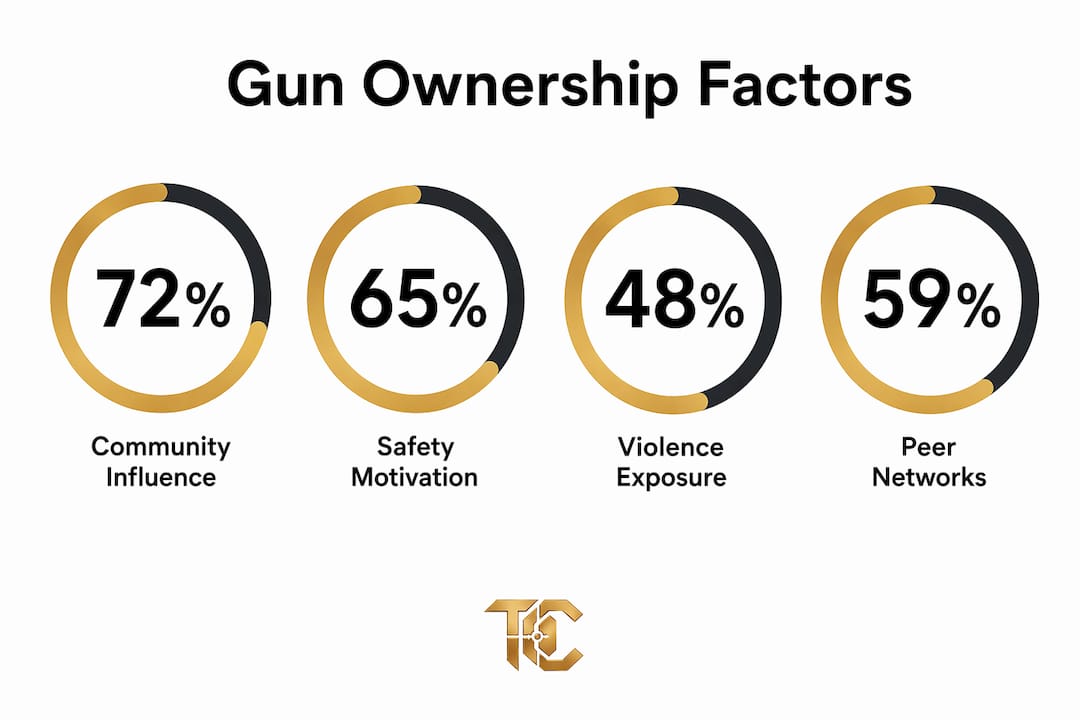
These numbers tell a clear story. People in high-violence environments are not acquiring firearms recklessly. They are responding rationally to conditions on the ground. Local safety concerns produce protective motivations, and those motivations are rooted in community experience, not abstract ideology.
This matters for how we think about social responsibility and firearms. A gun owner in a neighborhood with frequent violent incidents brings a different perspective to safety protocols, storage decisions, and training priorities than someone in a low-crime suburb. Both deserve access to education and community support calibrated to their real context.
Pro Tip: If you live in an area with elevated violence exposure, prioritize training that covers both defensive scenarios and de-escalation. The two skills complement each other and reflect the full picture of responsible ownership.
Community violence intervention (CVI) programs have developed in response to exactly this reality. These programs recognize that telling individuals to “be more responsible” is insufficient when the surrounding environment shapes every decision they make.
Community norms, peer networks, and social responsibility
Here is something worth sitting with: gun-related beliefs predict support for specific firearm policies more reliably than demographic categories like age, race, or income. That means the conversations happening in your community are shaping your policy views more than your birth certificate is.
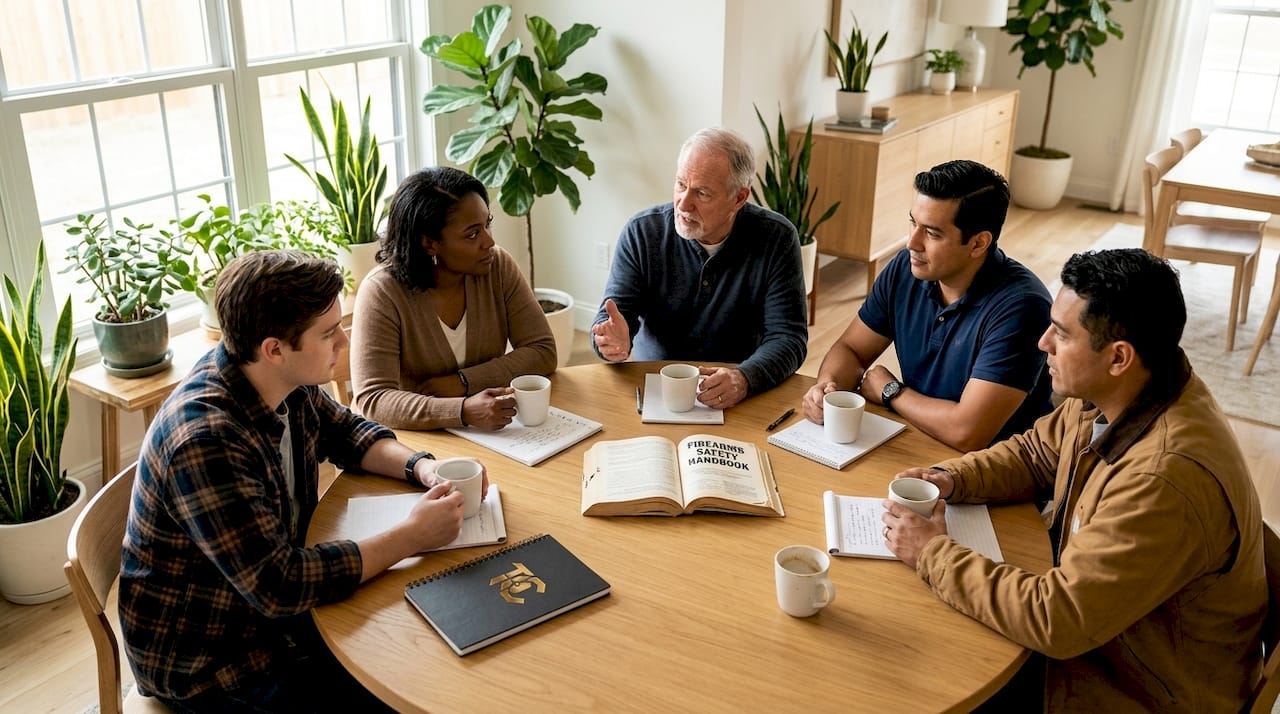
This is why peer networks matter so much. The friends you shoot with, the forums you follow, the club you belong to: all of these quietly calibrate your sense of what responsible ownership looks like. That influence is not manipulation. It is how social norms function in every area of human life.
Several examples show how civic responsibility gets woven into local gun culture:
- Shooting clubs that require safety certifications before allowing range access
- Community advisory boards where gun owners and violence-affected residents co-design research questions and outreach messaging
- Local forums where members discuss storage best practices and share information about firearm safety education
- Neighborhood watch programs that include firearm-owning members trained in de-escalation
Participatory community research consistently shows that advisory boards and community input improve how firearm responsibility messages land. Top-down campaigns rarely shift norms. Neighbors talking to neighbors does.
“Trust and legitimacy are the essential mechanisms through which community actors successfully shift norms around gun violence and responsible ownership.” — Research insight from Baltimore Safe Streets program evaluations
This aligns with what experienced gun owners already know. The most effective safety culture does not come from a pamphlet. It comes from a range officer you respect, a mentor who checked your grip before you ever fired a round, or a community member whose word carries weight because they have earned it.
Community-based conflict mediation programs
When peer influence and community norms are not enough to prevent violence, structured intervention programs step in. These programs operationalize the community role through specific, measurable activities.
The credible messenger model is the most widely validated approach. It places individuals with direct lived experience in the role of conflict mediator. These are people the community already trusts. Their authority comes not from a badge or a title but from shared history. Baltimore’s Safe Streets program is among the best-documented examples.
Here is how a credible messenger model typically operates:
- Identify credible messengers: Recruit individuals with prior involvement in community violence who have credibility in high-risk social networks.
- Build relationships: Messengers connect with at-risk individuals through ongoing personal relationships, not one-time interactions.
- Mediate active conflicts: When disputes escalate, messengers intervene directly to negotiate and de-escalate before violence occurs.
- Host community events: Regular gatherings build social cohesion and reinforce norms against gun violence.
- Sustain presence: Consistent, long-term engagement is what separates programs that work from ones that do not.
The Safe Streets Penn North site in Baltimore mediated 1,752 conflicts in a single year and went more than 365 consecutive days without a homicide. That outcome did not happen because of policy alone. It happened because community trust and legitimacy drove every interaction.
| Program model | Primary mechanism | Validated outcomes |
|---|---|---|
| Credible messenger (Safe Streets) | Trust-based conflict mediation | 1,752 mediations, 365+ days without homicide |
| Community advisory boards | Co-created research and messaging | Improved policy message resonance |
| Violence interruption outreach | Relationship-based risk reduction | Reduced retaliatory violence in target areas |
One honest limitation: most CVI evaluations do not fully measure protective factors or individual-level behavioral changes. Few CVI programs use validated risk assessments, which makes it hard to know exactly which components drive the outcomes. That is not a reason to dismiss these programs. It is a call for better measurement.
Pro Tip: Look for community violence intervention programs in your area and consider volunteering or providing material support. Responsible gun owners who engage with prevention efforts are part of the solution, not apart from it.
Practical steps to engage with your community
You do not need to run a CVI program to make a difference. The impact of community on firearm laws and culture starts with individual gun owners showing up in meaningful ways.
Here are concrete ways to get started:
- Join a local shooting club: The benefits of shooting clubs extend well beyond marksmanship. They create peer networks that reinforce responsible habits and normalize safety-first culture.
- Attend community safety meetings: City council discussions, neighborhood forums, and public safety hearings benefit from the informed perspective of responsible gun owners. Your voice matters in shaping local norms.
- Participate in safety education programs: Offer to share your knowledge with first-time gun owners, friends, or family. Peer-led education is consistently more effective than institutional outreach.
- Support or learn from intervention programs: Even financial contributions or awareness-raising helps established programs scale their reach.
- Advocate for transparency: Be the person in your circle who talks openly about safe storage, training standards, and responsible ownership practices without lecturing or alienating others.
The through-line in all of this is presence. How community shapes gun culture is determined largely by who shows up and what they model for others.
My perspective on community and gun ownership
I have spent years observing how gun culture shifts depending on the community around it, and one thing consistently surprises people: the most responsible gun owners I have encountered are not the ones who went it alone. They are the ones who had mentors, who trained alongside people they respected, and who felt a genuine sense of obligation to the community around them.
The conventional framing treats gun ownership as a purely individual act. You buy a firearm, you handle it safely, you store it properly. Done. But in my experience, that framing misses the bigger picture entirely. The gun owner who keeps their skills sharp does so because their range community sets a high standard. The person who locks up their firearm keeps it locked because someone in their circle made it the expected norm.
What I have learned is that community influence is not a threat to individual rights. It is the mechanism through which rights get exercised responsibly. Peer networks, local norms, and shared expectations are how safety culture actually propagates. A well-chosen cigar is better enjoyed with good company, and responsible gun ownership is much the same: it deepens when it is embedded in a community that takes it seriously.
My honest take is that gun owners who disengage from their communities are leaving real influence on the table. You can shape local norms, support prevention efforts, and model the kind of ownership that builds trust rather than erodes it. That is not politics. It is stewardship.
— Brian
How Tungstencreektactical supports responsible gun owners

Tungstencreektactical was built on the belief that responsible gun ownership and community engagement go hand in hand. Whether you are looking for a precision-built custom firearm matched to your specific needs or seeking the kind of gear that performs under real conditions, the Tungstencreektactical team brings expertise, transparency, and practical knowledge to every interaction.
Beyond the products, Tungstencreektactical offers resources and community touchpoints for owners who want to stay informed, stay safe, and stay connected. From gear recommendations to safety education content, the goal is to serve gun owners who take their responsibility seriously. Browse the full shop to find firearms, accessories, and tactical goods selected with both performance and purpose in mind.
FAQ
How does community influence gun ownership behavior?
Community shapes ownership through shared norms, peer expectations, and local safety conditions. Research shows that local violence exposure and social networks influence both firearm acquisition decisions and safety practices.
Do community beliefs predict support for gun laws?
Yes. Studies show that gun-related beliefs predict policy support more strongly than demographic factors, meaning the conversations within your community directly shape views on firearm legislation.
What are community violence intervention programs?
Community violence intervention (CVI) programs use trusted local messengers to mediate conflicts and shift norms around gun use. Baltimore’s Safe Streets program mediated over 1,700 conflicts and achieved more than a year without a homicide in one neighborhood.
Can responsible gun owners contribute to violence prevention?
Absolutely. Joining local shooting clubs, participating in safety education, and supporting intervention programs are all practical ways gun owners can contribute to safer communities without compromising their rights.
How do local gun norms form over time?
Local firearm norms develop through a combination of regional traditions, peer networks, historical safety experiences, and community events. Rural, suburban, and urban communities each develop distinct norms based on those collective inputs.
Recommended
Related Post
Discover the 5 ways
An introduction to Tactical Luxury Guns & Coffee We founded
Top 5 Best PCC’s
In 2026, the Pistol Caliber Carbine (PCC) market is no