
The Role of Ethics in Firearms Retail in 2026
Selling firearms has never been a simple transaction. The role of ethics in firearms retail touches every part of the business, from the moment a customer walks through the door to the records you file after the sale closes. Many retailers still operate under the assumption that following the law is enough. It is not. Legal compliance sets the floor, not the ceiling. The firearm you sell today could end up in a newspaper headline tomorrow, and the industry is watching how retailers respond to that reality in 2026.
Table of Contents
- Key takeaways
- The role of ethics in firearms retail: legal and social context
- Core principles of responsible gun retailing
- Operationalizing ethics: practical steps and challenges
- Ethics debates and the future of firearms retail
- My perspective on ethics as a competitive asset
- Explore responsible firearms and services at Tungstencreektactical
- FAQ
Key takeaways
| Point | Details |
|---|---|
| Ethics exceeds legal compliance | Following the law is the minimum; responsible gun retailing demands judgment beyond what regulations require. |
| Liability is expanding fast | New laws like Washington’s FIRA hold retailers accountable for downstream harm, making ethical sales a legal matter too. |
| Staff training is non-negotiable | Recognizing red flags and handling difficult sales decisions requires consistent, documented training across all store personnel. |
| Inventory security protects everyone | Programs like Operation Secure Store show that retailer-led theft prevention directly reduces community harm. |
| Trust is your real inventory | Long-term customer relationships and community reputation are built or destroyed by your ethical consistency, not your product selection. |
The role of ethics in firearms retail: legal and social context
The legal ground beneath firearms retailers has shifted considerably. For years, the industry operated with significant liability protection. That protection is narrowing.
Washington State’s Firearms Industry Responsibility Act (FIRA) represents the sharpest edge of this change. Under FIRA, retailers face wrongful death liability if they sell to individuals who pose a substantial risk of harm, even when the transaction technically passes a background check. The Olen v. Precise Shooter case made that accountability concrete and public.
Philadelphia took a different approach. In 2026, several gun shops ceased operations after litigation demonstrated that they had knowingly or recklessly facilitated straw purchases tied directly to street violence. These were not fringe operators. They were licensed dealers who let profit override judgment.
The ATF added another layer with updated guidance expanding the definition of who counts as someone “engaged in the business” of dealing firearms. More sellers now require licenses. More transactions now fall under formal compliance requirements. The practical message is clear: the definition of a firearms retailer, and the responsibilities that come with it, keeps getting broader.
“The tension is real. Retailers are being asked to absorb social responsibilities that once belonged to policymakers and law enforcement. That is uncomfortable, and it is also the reality of operating in this industry right now.”
Here is what the most ethically grounded retailers understand: the law catches up to behavior eventually. Shops that refused straw purchases, questioned suspicious buyers, and kept airtight records did not need 2026 legislation to tell them how to act. Their practices were already there. For everyone else, the legal pressure is arriving whether they are ready or not.
Core principles of responsible gun retailing
Ethical considerations in gun sales are not abstract. They show up in specific decisions made dozens of times each week.
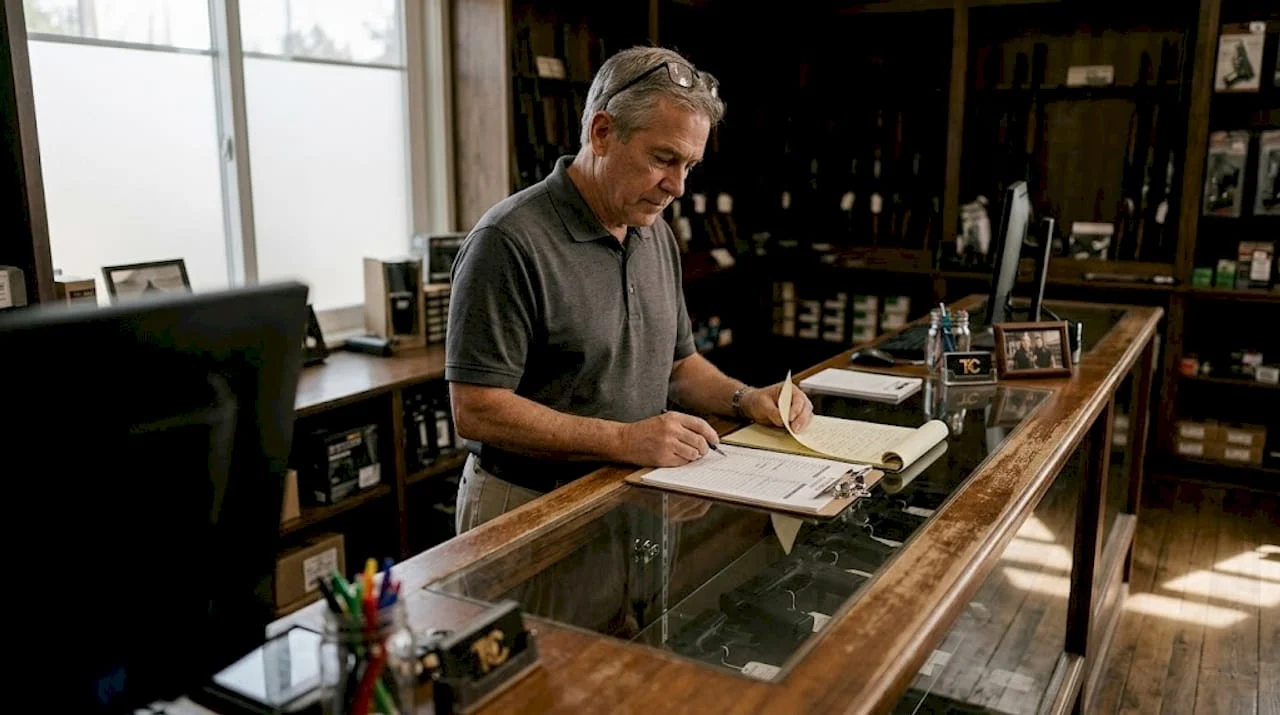
The clearest principle is honest customer guidance. Industry leaders consistently emphasize that ethical retailers help customers find firearms that fit their actual needs and abilities, not the items with the highest margin. A first-time buyer asking for a full-size .45 ACP because it “sounds serious” deserves an honest conversation about recoil management, ergonomics, and intended use. Pushing the sale anyway is not salesmanship. It is a disservice.
The second principle is the willingness to refuse a sale. This is where gun shop ethics get tested in real time. The unwritten code that experienced retailers follow goes beyond watching for obvious red flags. It includes:
- Refusing sales when a customer shows signs of emotional crisis or states intent to harm.
- Declining transactions that present clear indicators of straw purchasing, such as a third party directing the buyer’s choices.
- Walking away from any sale where something feels wrong, even if you cannot articulate a specific violation.
- Documenting refused sales to establish a pattern and protect the business if questions arise later.
- Training all staff to make these calls independently, without needing manager approval for every refusal.
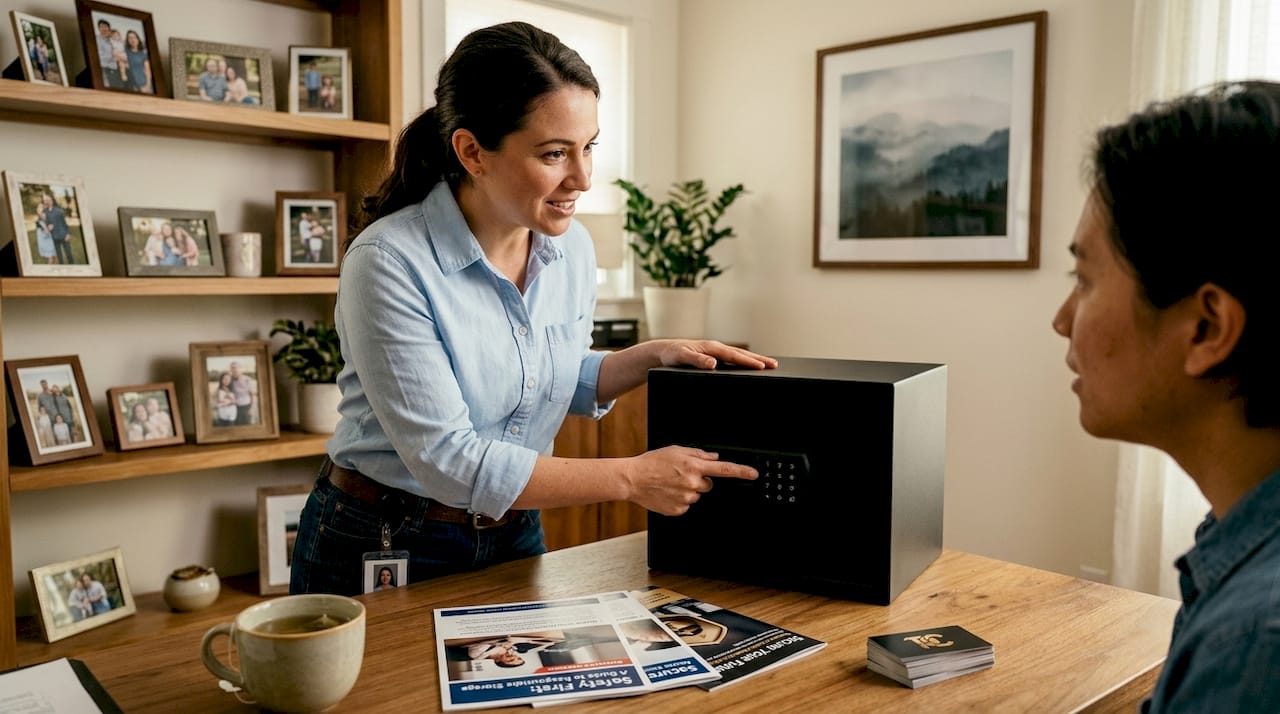
The third principle is safe storage advocacy. Recommending a quality safe or lock box at the point of sale is one of the simplest ways a retailer extends ethical responsibility past the transaction. It takes thirty seconds and it matters.
Pro Tip: Make safe storage part of your standard sales script, not an afterthought. Customers who buy a safe the same day they buy a firearm are far more likely to actually use it.
The fourth principle is creating a welcoming environment. Balancing non-interference with genuine support is something the best retailers do instinctively. A new shooter who feels judged or intimidated does not come back. They do not learn. They do not build good habits. An ethical retail floor treats every customer as someone worth educating, not evaluating.
Operationalizing ethics: practical steps and challenges
Good intentions do not protect a business. Documented practices do. Here is how ethical principles translate into daily operations.
Inventory security
Firearm theft from retailers is a direct pipeline into criminal use. Operation Secure Store has reduced burglaries significantly since its launch, showing that coordinated efforts between industry and regulators produce real results. Participating retailers receive security assessments, funding assistance, and best practice guidance. If your shop has not engaged with this program, that is an immediate gap to close.
ATF recordkeeping
Errors in Form 4473 compliance can result in license revocation regardless of intent. The administrative side of firearms retail is not the glamorous part, but it constitutes the backbone of ethical compliance. Treat every record as if it will be audited tomorrow.
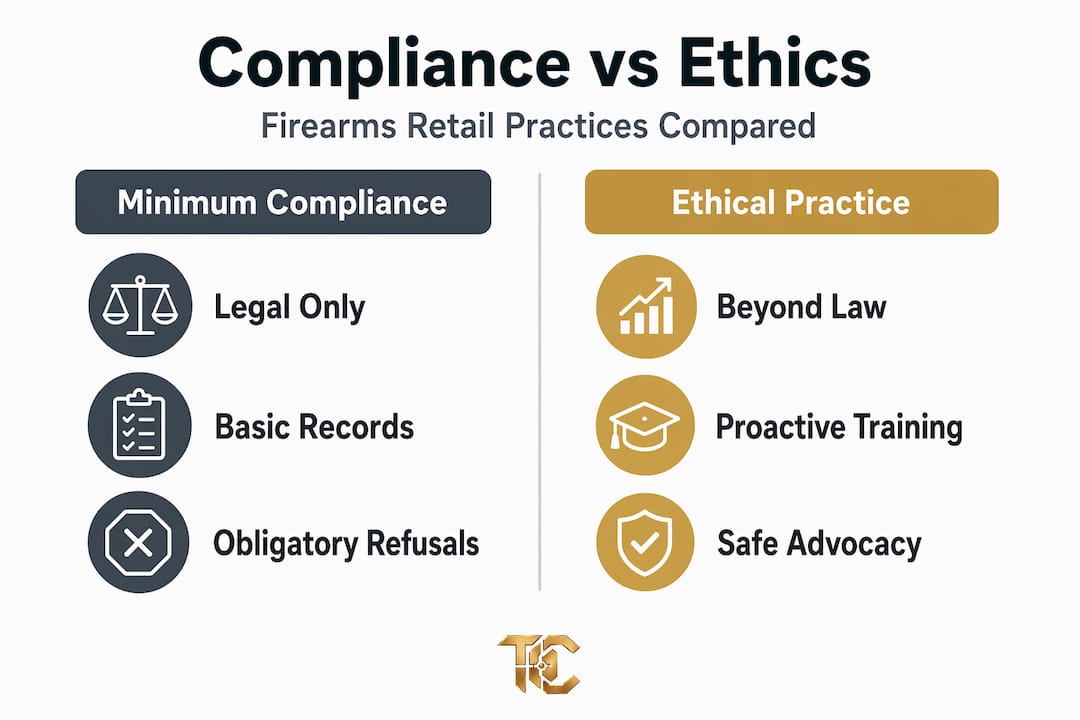
Comparison: minimum compliance vs. ethical practice
| Area | Minimum compliance | Ethical practice |
|---|---|---|
| Sale refusals | Deny sales prohibited by law | Refuse when red flags exist, even without legal obligation |
| Customer guidance | Provide basic product information | Educate on fit, use, and safe storage for each buyer |
| Recordkeeping | Complete Form 4473 accurately | Maintain additional internal records of refusals and incidents |
| Inventory security | Meet ATF storage standards | Participate in Operation Secure Store and conduct regular audits |
| Staff training | Basic compliance training | Ongoing training on red flags, de-escalation, and customer needs |
Pro Tip: Document every sale refusal with a brief note on the reason. This habit protects your license and builds an internal record that demonstrates ethical intent over time.
The toughest operational challenge is the ambiguous sale. A customer is not visibly in crisis. Nothing in the background check fails. But something is off. Maybe the questions they ask do not match the firearm they want. Maybe someone is waiting outside. Retailers with strong ethics cultures train staff to trust those instincts and give them authority to act on them. That is not a policy. That is a culture. You build it through repetition and leadership.
Ethics debates and the future of firearms retail
The morality in the firearms industry is not a settled question, and pretending otherwise would be dishonest.
The sharpest debate involves retailer liability for downstream use. Critics of laws like FIRA argue that holding a retailer accountable for what a buyer does after leaving the store undermines the basic principle of individual responsibility. That argument has real weight. A Virginia bill introduced in 2026 would expose gun shops to lawsuits whenever a firearm sold by that shop is used in a crime, creating a liability standard that many retailers argue is impossible to manage.
The counterargument is equally serious. When a shop repeatedly sells to obviously suspicious buyers and those guns consistently end up at crime scenes, the “individual responsibility” defense starts to look more like a shield for negligence.
Here are the key tensions shaping the future of gun retailer responsibilities:
- Second Amendment vs. social harm. Retailers genuinely believe in the right to keep and bear arms. Navigating that belief alongside expanding public health frameworks requires constant recalibration.
- Technology as a tool and a risk. Data systems can flag suspicious purchase patterns across multiple transactions. But who controls that data, and how is it used, raises privacy concerns that the industry has not resolved.
- Community engagement as a differentiator. Shops that run safety courses, partner with local ranges, and stay visible in community conversations about responsible firearm ownership are building something that a competitor cannot replicate with a sale price.
- Public expectations are outpacing legal requirements. Consumers, especially younger buyers, increasingly research retailers before purchasing. A shop’s reputation for ethical practice is becoming part of the buying decision.
The retailers who will define this industry in the next decade are the ones treating ethics not as a constraint but as a position. That is a choice you can make before any law requires it.
My perspective on ethics as a competitive asset
I have spent enough time in and around firearms retail to know that the ethical shops are rarely the ones that talk about ethics the loudest. They are the ones with the best-trained staff, the fewest returned customers, and the deepest ties to their local communities.
What I have observed is a clear shift. Retailers are moving, sometimes reluctantly, from being sales agents to being something closer to community stewards. That shift does not happen because of legislation. It happens because the best operators in this business understand that trust drives long-term revenue in a way that discounts never will.
The hard lesson I have seen play out repeatedly is this: the shops that treat every sale as purely transactional eventually face a transaction they cannot walk back. One bad sale, one overlooked red flag, one falsified record. The fallout from that single moment can cost a license, a reputation, and sometimes far more.
My take is that ethics in this industry is not about being cautious or restrictive. It is about being precise. A well-made firearm placed in the right hands, supported by honest guidance and proper education, is exactly what this industry should produce. That is not a limitation on commerce. It is the definition of responsible gun retailing done right.
— Brian
Explore responsible firearms and services at Tungstencreektactical
At Tungstencreektactical, ethical firearms sales are not a policy statement hanging on a wall. They are built into every product selection, every customer interaction, and every service offering on the floor and online.
If you are a retailer looking to build the kind of trust that outlasts any single transaction, or a customer who wants to buy from a shop that takes its responsibilities seriously, start by looking at what craftsmanship and accountability look like in practice. Tungstencreektactical’s custom-built firearms reflect exactly the kind of precision and intentionality that ethical ownership demands. For ongoing care and maintenance, the professional gunsmithing services keep your investment safe and functional. Explore the full range of resources on transparent gun sales to go deeper on the principles covered in this article.
FAQ
What does ethics in firearms retail actually mean?
Ethics in firearms retail refers to the responsibilities retailers hold beyond legal compliance, including refusing suspicious sales, educating customers on safe use and storage, and maintaining transparent records. It is the standard of practice that builds long-term trust and community safety.
Can a firearms retailer be held legally liable for how a gun is used?
Yes. Under laws like Washington’s FIRA, retailers can face wrongful death lawsuits if they sell to individuals who pose a substantial risk of harm. Philadelphia settlements in 2026 also demonstrated that facilitating straw purchases carries serious legal consequences.
What is the most common ethical failure in gun shops?
The most documented failure is knowingly or recklessly facilitating straw purchases, where a prohibited buyer uses another person to acquire the firearm. This single failure has resulted in shop closures, lawsuits, and license revocations across multiple states.
How can a retailer build an ethical culture beyond just following the rules?
Building an ethical culture requires consistent staff training on red flag recognition, documented procedures for sale refusals, active participation in security programs like Operation Secure Store, and a management approach that rewards good judgment over sales volume.
Does refusing a sale hurt a retailer’s business?
In the short term, yes. Over time, the retailers known for ethical judgment attract more loyal customers, face lower liability exposure, and build the kind of community reputation that sustains a business through regulatory changes and market shifts.
Recommended
Related Post

Discover the 5 ways
An introduction to Tactical Luxury Guns & Coffee We founded
Top 5 Best PCC’s
In 2026, the Pistol Caliber Carbine (PCC) market is no