
Why Muzzle Devices Matter for Firearm Performance
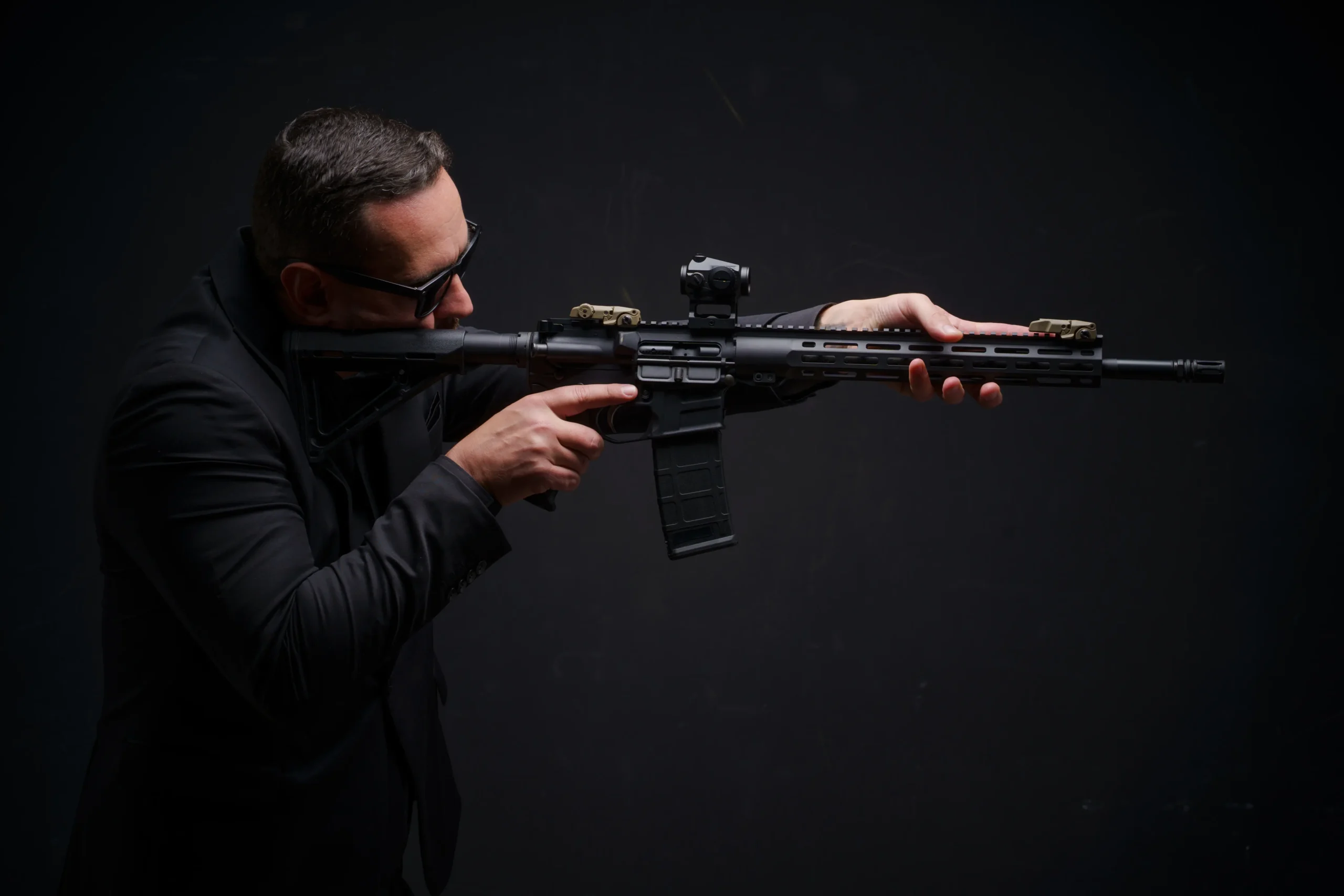
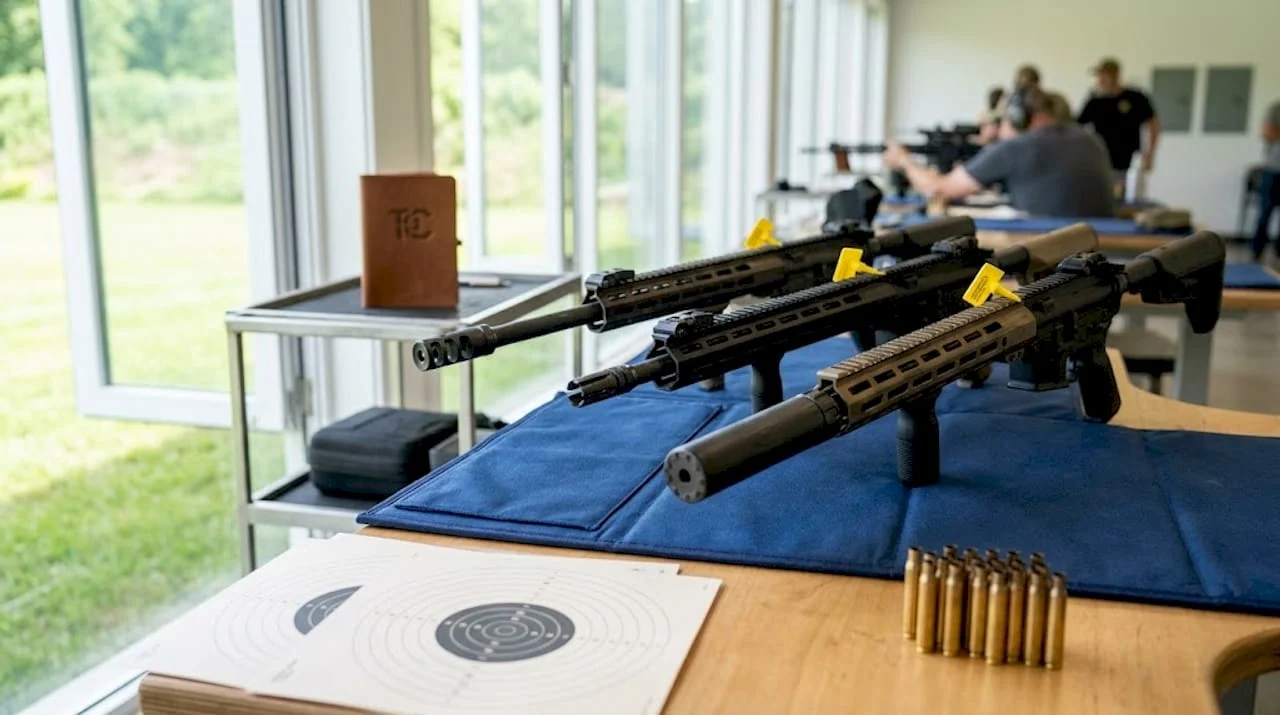
Most shooters spend hours debating caliber, barrel length, and trigger weight while giving almost no thought to what sits at the very end of their barrel. That oversight is costly. Understanding why muzzle devices matter goes far beyond aesthetics or a tactical look. The right device directly controls how much your muzzle climbs after each shot, how quickly you get back on target, and how much punishment your body absorbs over a long range session. This article breaks down the types, the physics, the real-world trade-offs, and exactly how to choose the device that fits your shooting life.
Table of Contents
- Key takeaways
- Why muzzle devices matter: the types explained
- The physics behind recoil and muzzle rise
- Performance impacts and real trade-offs
- How muzzle devices improve accuracy in real scenarios
- Choosing the right muzzle device
- My honest take on muzzle device selection
- Upgrade your shooting performance with Tungstencreektactical
- FAQ
Key takeaways
| Point | Details |
|---|---|
| Muzzle devices are functional tools | Each device type serves a specific performance purpose, from recoil reduction to flash elimination. |
| Physics drives device choice | Gas redirection and added mass change how your firearm behaves shot to shot, affecting speed and accuracy. |
| Aggressive brakes have real costs | Maximum recoil reduction comes with increased noise, side blast, and shooter fatigue trade-offs. |
| Suppressors build better shooters | Reduced concussion and noise stimuli improve trigger control, shot calling, and overall fundamentals. |
| Match device to your use case | Firearm type, shooting environment, and discipline should drive your selection more than raw specs. |
Why muzzle devices matter: the types explained
Before you can evaluate the importance of muzzle devices, you need a clear picture of what each category actually does. The broad label “muzzle device” covers several distinct tools, each engineered with a different primary goal.
Here is a breakdown of the main types:
- Muzzle brake: Redirects propellant gases through ports cut into the side or rear of the device. The escaping gas pushes back against the direction of recoil, reducing how far the rifle or pistol moves rearward after firing.
- Compensator: Routes gases upward through vents on the top of the device. The upward gas pressure counteracts the torque that drives muzzle rise, keeping the muzzle flatter shot to shot.
- Flash hider: Disrupts and disperses the burning gas at the muzzle to reduce the visible flash signature. This protects the shooter’s night vision and reduces their visual profile in low-light conditions.
- Suppressor mount or adapter: Threads onto the barrel to accept a suppressor. Some are simple thread protectors with alignment features; others are quick-detach interfaces built for speed and repeatability.
- Hybrid devices: Combine two or more of the above functions. A brake-compensator hybrid, for example, reduces both felt recoil and muzzle rise while still managing some of the flash signature.
The table below compares these devices across the features that matter most in the field:
| Device type | Recoil reduction | Muzzle rise control | Flash reduction | Noise impact |
|---|---|---|---|---|
| Muzzle brake | High | Moderate | Low | Increases |
| Compensator | Low | High | Low | Moderate increase |
| Flash hider | None | None | High | Neutral |
| Suppressor mount | None (alone) | None (alone) | None (alone) | Neutral |
| Hybrid device | Moderate to high | Moderate to high | Low to moderate | Increases |
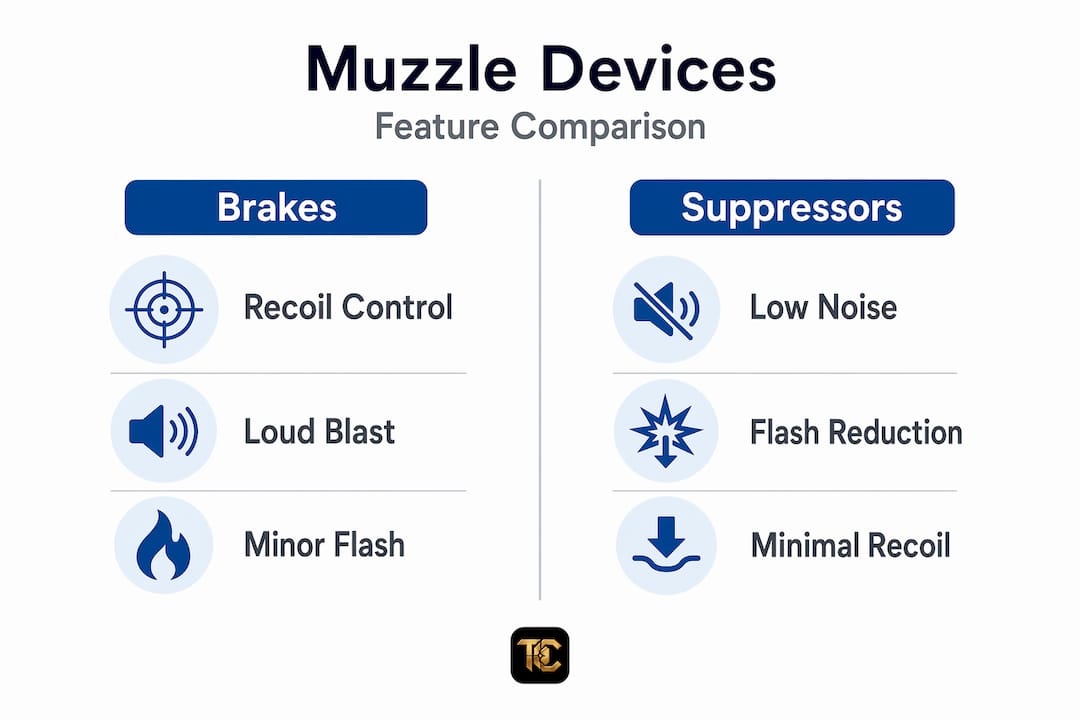
Most quality devices you encounter today lean hybrid. Pure function categories are useful for understanding, but the market has moved toward devices that address multiple problems at once.
The physics behind recoil and muzzle rise
Newton’s third law is the foundation here. When a round fires, expanding gases propel the bullet forward and push the firearm rearward with equal force. A muzzle brake intercepts a portion of those gases before they exit the barrel and redirects them sideways or rearward through ports. The redirected gas creates a counterforce that partially cancels the rearward momentum of the firearm.
Muzzle rise is a separate problem with its own physics. Muzzle rise is caused by the barrel’s centerline sitting above the shooter’s grip point. When the gun recoils, that offset creates rotational torque that flips the muzzle upward. A compensator addresses this by venting gas upward, generating downward pressure on the muzzle that counteracts the rotation.
The practical result of good gas management is a firearm that tracks more predictably between shots. Here is how that process works in sequence:
- The round fires and gas pressure spikes behind the bullet.
- The muzzle device intercepts gas before it exits freely into the air.
- Ports redirect that gas in the direction needed to counteract recoil or muzzle rise.
- The firearm returns to battery with reduced displacement.
- The shooter acquires the next sight picture faster because the muzzle stayed closer to the target.
There are side effects worth knowing. Muzzle brakes can increase noise levels by 5 to 10 dB, sometimes reaching 160 dB(A). That is well above the threshold where discomfort and hearing damage begin, around 120 to 125 dB(A). Gas redirected toward bystanders also creates a concussion wave that can be genuinely unpleasant on a shared firing line.
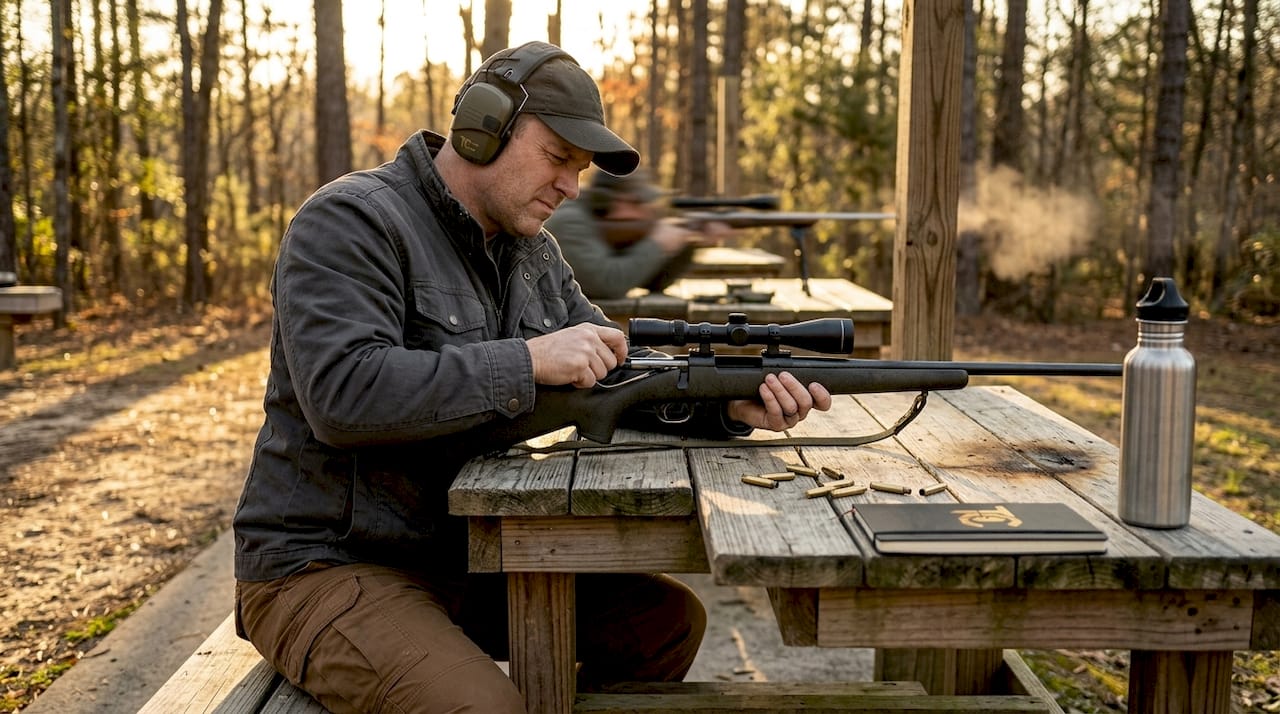
Pro Tip: Always wear double hearing protection when shooting a rifle with an aggressive muzzle brake. A foam plug under an electronic earmuff is not overkill. It is the standard for anyone who shoots regularly.
Performance impacts and real trade-offs
The benefits of muzzle devices are real, but so are the costs. Approaching this honestly will save you from a purchase you regret.
On the positive side, empirical testing shows that high-performance muzzle brakes can reduce recoil displacement by 12 to 13 inches on modular suppressor setups while adding only 3 to 4 ounces to the overall package. That is a significant mechanical gain for a modest weight penalty.
However, the downsides stack up when you push for maximum performance:
- Increased noise: Redirected gas makes the report louder for the shooter and anyone nearby. This matters in any shared shooting environment.
- Side blast: Aggressive muzzle brakes create severe side blast and concussion hazards. Shooting next to a person running a high-port brake without warning them is poor range etiquette and genuinely harmful.
- Dust signature: In prone or ground-level shooting positions, the side ports of an aggressive brake kick up a dust cloud that can reveal your position and disrupt your sight picture.
- Handling changes: Muzzle devices can add length, weight, and alter firearm handling, sometimes affecting where shots print if you remove the device and forget to re-zero.
- Flinch and fatigue: Counterintuitively, an overly aggressive brake that hammers the shooter with concussion can increase flinching over time, undermining the accuracy gains it was supposed to create.
The lesson here is that the most aggressive brake on the market is not automatically the best choice. Experienced tactical shooters often prefer less aggressive or hybrid devices precisely because they reduce dust signature, noise, and concussion risk while still delivering acceptable recoil control. Maximum numbers in a spec sheet rarely translate to maximum performance in the field.
How muzzle devices improve accuracy in real scenarios
This is where the benefits of muzzle devices move from mechanical theory to practical shooting results. Accuracy is not just about the mechanics of the firearm. It is about what your body does under stress, fatigue, and repeated stimulus.
Recoil and muzzle blast are stimuli. Every time your firearm fires, your nervous system processes a shock. When that shock is severe, your brain starts anticipating it before the trigger breaks. That anticipation is called a flinch, and it is one of the most common accuracy killers across all skill levels. Reducing the magnitude of the stimulus directly reduces flinching.
“A suppressor doesn’t just make the gun quieter. It removes the physiological triggers that degrade your shooting mechanics over time. Shoot suppressed for a month and your unsuppressed fundamentals will be better.”
Suppressor shooting improves accuracy by reducing the noise and concussion stimuli that disrupt trigger press and cheek weld. When you are not bracing for a blast, your grip relaxes appropriately, your trigger finger moves more cleanly, and your follow-through becomes consistent. Suppressors also eliminate concussion stimuli that disrupt trigger control and shooting fundamentals at the neurological level.
For beginners, the advantage is even more pronounced. Suppressors create a feedback loop that accelerates the development of solid shooting fundamentals because the student can focus on technique rather than managing discomfort. For experienced shooters, the reduced blast improves shot calling. You can hear and feel the shot break more clearly, which tells you immediately whether the round went where you intended.
In tactical contexts, reduced muzzle rise means faster follow-up shots on separate targets. In hunting, it means staying on target through the shot to call the hit. Look at how it plays out across contexts:
- Competitive shooting: A compensator keeps a pistol flat through rapid-fire strings, allowing a shooter to press the trigger again before the sights have fully re-indexed.
- Hunting: A suppressor on a bolt-action rifle lets the hunter see the animal’s reaction through the scope because the shot is quieter and the recoil more manageable.
- Home defense: A suppressed pistol preserves hearing in an enclosed space where a single unsuppressed shot can cause permanent damage.
Pro Tip: When testing a new muzzle device, shoot a controlled group at 100 yards before and after installation without changing anything else. You will see immediately whether the device is improving your split times and group size or introducing new variables.
Choosing the right muzzle device
Selecting a muzzle device the right way follows the same logic as selecting any quality tool. You match the tool to the job, not the other way around. Here is a practical framework:
- Define your primary use case. Competition, hunting, home defense, and general range use each have different priorities. A competitive shooter prioritizes muzzle rise control. A hunter often prioritizes suppressor compatibility and choosing the right firearm accessories to complement their setup.
- Assess your environment. Indoor ranges, outdoor ranges, and field use impose different noise and blast constraints. Never run an aggressive brake indoors without checking range rules.
- Consider your recoil tolerance honestly. A shooter who flinches under heavy recoil benefits more from a well-designed compensator than from grinning through a hard-kicking rifle with no device at all.
- Check legal and regulatory requirements. Suppressors require an NFA tax stamp and a waiting period in most states. Some localities restrict muzzle brakes on specific firearm types. Know your jurisdiction before you buy.
- Test before you commit. Borrow a device or attend a demo event. Shooting with a device for 50 rounds tells you more than any spec sheet can. Pay attention to how the gun feels, sounds, and how your groups look afterward.
- Plan for maintenance. Carbon buildup inside muzzle devices affects their function over time. Disassemble and clean your device on the same schedule you clean your barrel. Also be aware that devices can alter shot placement if removed and reinstalled inconsistently, which means re-zeroing after any change.
A well-matched muzzle device is like a well-selected cigar. The right one fits the moment, suits your taste, and makes the whole experience noticeably better. The wrong one just gets in the way.
My honest take on muzzle device selection
I have run everything from bare muzzle crowns to full suppressor setups, and if I had to give one piece of advice it would be this: stop chasing maximum recoil reduction numbers and start thinking about the total shooting experience.
In my experience, the shooters who bolt on the most aggressive brake available often end up developing the worst habits. The side blast batters them, the noise wears them down, and they start rushing shots to get the firing done. I have watched this happen repeatedly on the line. The person running a hybrid device or a suppressor next to them is shooting tighter groups by round 200 because they are not fighting discomfort.
What changed my perspective completely was switching to suppressed shooting for extended range sessions. The reduction in concussion stimulus was almost meditative. I could hear my trigger break. I could call my shots confidently. My groups tightened not because the gun changed mechanically but because I stopped flinching.
The mistake most shooters make is treating muzzle devices as a one-time decision. Your needs evolve. Your primary firearm changes. Your shooting environment shifts. Revisit your setup annually and match it to where you actually shoot and what you actually need. The shooter who gets this right performs consistently, not just impressively on a spec sheet.
— Brian
Upgrade your shooting performance with Tungstencreektactical

If this article made you rethink what is threaded onto the end of your barrel, Tungstencreektactical has the gear and the expertise to help you take the next step. The team carries a curated selection of muzzle brakes, compensators, suppressor mounts, and complete suppressor systems matched to real-world shooting applications. Whether you need a CMMG ZEROED suppressor for your rimfire setup or a full consultation on integrating a device into a defensive pistol build, the selection is built around performance that holds up in the field, not just on paper.
For shooters looking to go deeper, Tungstencreektactical’s custom gun services offer precision-built firearms with muzzle device integration planned from the start. Getting the threading, the balance, and the device right from day one eliminates the guesswork of retrofitting. Browse the full lineup and use the Tungstencreektactical mobile app to compare products, unlock VIP pricing, and get the configuration that actually fits your shooting goals.
FAQ
What is the main purpose of a muzzle brake?
A muzzle brake redirects propellant gases through side ports to create a counterforce against recoil, reducing how far the firearm moves rearward after each shot and helping the shooter stay on target faster.
Do muzzle devices reduce recoil significantly?
Yes. High-performance muzzle brakes have been shown to reduce recoil displacement by 12 to 13 inches in controlled testing, though the degree of reduction depends on the device design, caliber, and firearm platform.
What are the trade-offs of using an aggressive muzzle brake?
Aggressive brakes increase noise levels up to 160 dB(A), produce intense side blast that affects nearby shooters, and can cause a dust signature in prone positions, making them a poor fit for tactical or close-quarters use.
How do muzzle devices improve accuracy over time?
By reducing recoil and blast stimulus, muzzle devices lower the physiological triggers that cause flinching, allowing shooters to maintain consistent trigger press, cheek weld, and follow-through across long shooting sessions.
Are suppressors considered muzzle devices?
Suppressors are muzzle-mounted devices, but they require an NFA tax stamp in the United States and a waiting period in most states. They function by trapping and slowing expanding gases, which reduces both the sound signature and shooter concussion.
Recommended
Related Post

Discover the 5 ways
An introduction to Tactical Luxury Guns & Coffee We founded
Top 5 Best PCC’s
In 2026, the Pistol Caliber Carbine (PCC) market is no