
Top firearm upgrade options to boost performance and safety
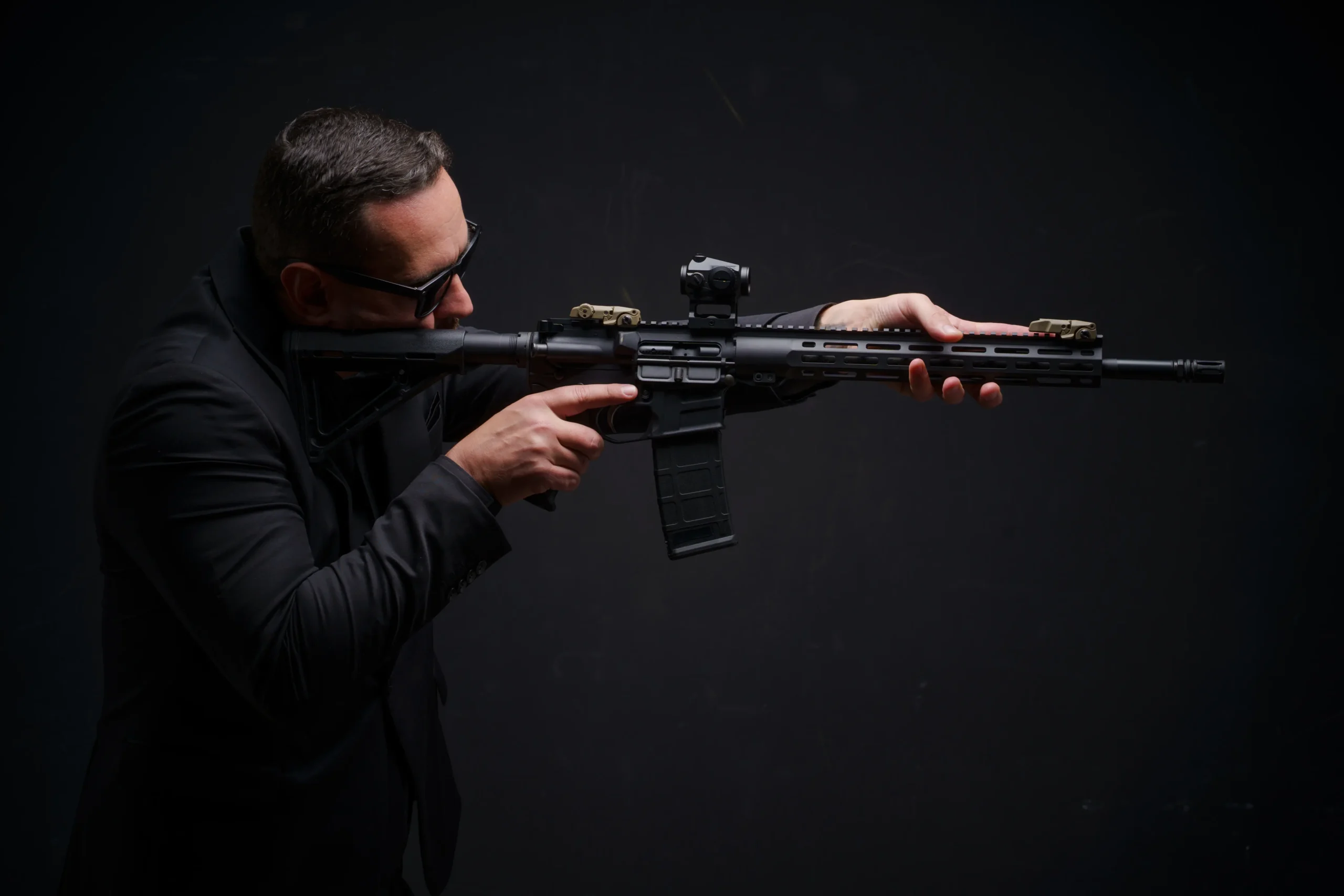
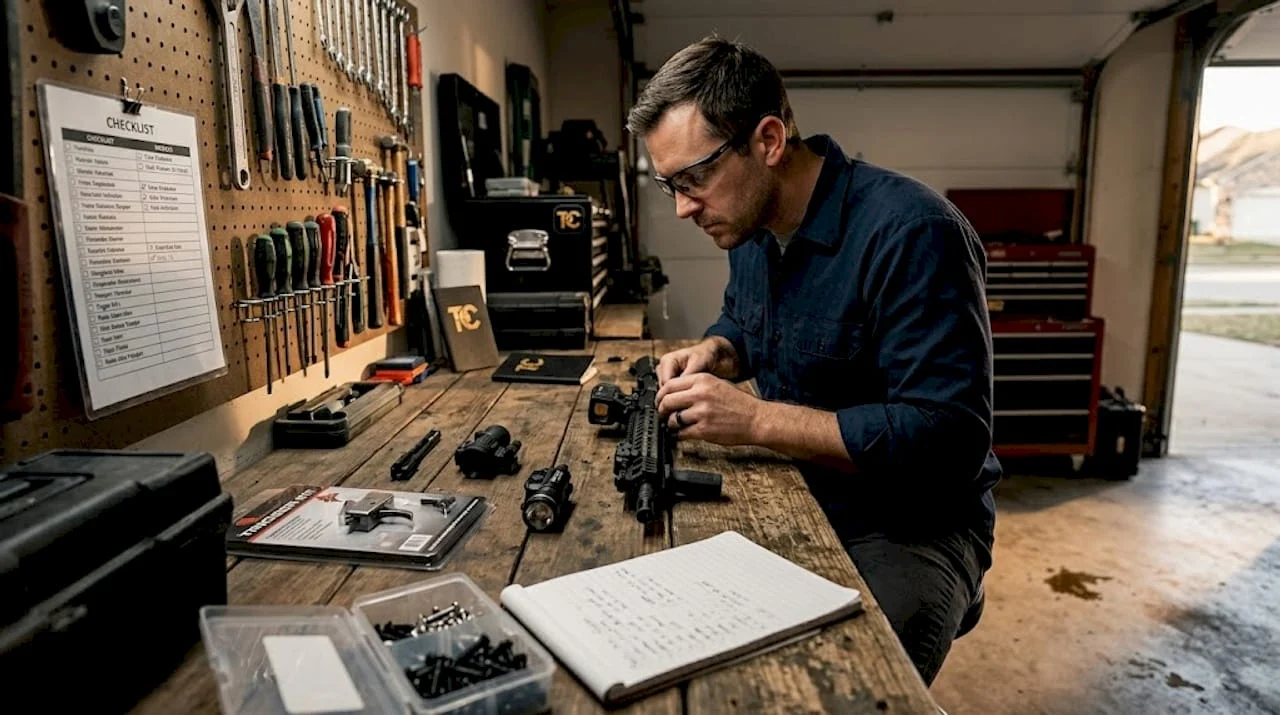
Choosing the right upgrades for your firearm involves far more than browsing a catalog and adding items to your cart. Every modification you select affects reliability, accuracy, ergonomics, and in some cases, your legal standing. The challenge is filtering out the marketing noise and focusing on changes that genuinely improve your capability and safety in real-world conditions. This guide gives you a practical, criteria-driven framework for evaluating your options, comparing the highest-impact upgrades, and making decisions grounded in both performance and responsible ownership.
Table of Contents
- How to evaluate and prioritize firearm upgrades
- High-impact upgrades: Triggers, optics, and weapon lights
- Storage and safety upgrades: Securing your investment
- Specialized upgrades: Suppressors, platform-specific parts, and legal considerations
- Our take: What really matters when upgrading your firearm
- Enhance your firearm with trusted options
- Frequently asked questions
Key Takeaways
| Point | Details |
|---|---|
| Evaluate upgrades systematically | Focus on reliability, fit, and legal impact before buying any upgrade part. |
| Prioritize key components | High-quality triggers, optics, and weapon lights offer the biggest gains for defense and performance. |
| Storage is essential | Invest in secure storage to keep your firearm both accessible and safe from unauthorized users. |
| Legal and fitment checks matter | Not all upgrades fit every gun and some modifications can have legal consequences. |
| Test before you trust | Always validate upgrades with hands-on testing and professional advice. |
How to evaluate and prioritize firearm upgrades
With this need for practical guidance in mind, let’s define exactly how to assess and prioritize which upgrades could make the biggest impact on your firearm’s effectiveness and safety.
Not every upgrade delivers equal value. Some add noticeable functional gains while others are purely cosmetic or, worse, introduce new failure points. To avoid wasting money or compromising your firearm’s reliability, apply a consistent evaluation framework before you buy anything.
Here are the core criteria every upgrade should pass:
- Reliability first. Does the modification maintain or improve the firearm’s ability to feed, fire, and eject consistently? Any upgrade that introduces malfunctions is worse than no upgrade at all.
- Fit and function. Does the part fit your specific platform and work with your existing components? Mixing parts that weren’t designed for each other is a common and costly mistake.
- Legal context. What are the laws in your state or jurisdiction? Certain modifications are restricted or prohibited depending on where you live and how you use your firearm.
- Intended purpose. A competition shooter’s priority list looks very different from a home-defender’s. Define your use case first, then select upgrades that directly serve it.
- Empirical validation. Can you actually measure the improvement? Review platforms that take a rigorous approach to best budget AR-15s typically use minimum round counts and group-size measurements at defined distances to evaluate accuracy and reliability before making any recommendation.
This last point is worth emphasizing. Anecdotal reviews and brand marketing are not benchmarks. Real validation means shooting defined round counts before and after a modification and measuring group size at consistent distances. If an upgrade doesn’t produce a measurable difference in your hands, it probably wasn’t the right upgrade for your setup.
Part of being a responsible owner is understanding that upgrades exist within a broader context of safe practices. A responsibility guide for firearm owners covers this broader picture well, including the legal and social obligations that come with ownership.
“The goal of any upgrade should be measurable improvement in the specific performance metric that matters for your intended use. If you can’t test it, you can’t verify it.”
Pro Tip: Keep a logbook for every range session. Record your baseline group sizes, any malfunctions, and your round counts. After an upgrade, run at least 200 rounds and compare the data. This approach separates real performance gains from wishful thinking.
You should also review solid firearm safety tips before making any significant changes to your setup, especially if you’re new to modifications.
High-impact upgrades: Triggers, optics, and weapon lights
Now that you can spot what makes an upgrade valuable, let’s break down the highest-impact options that appear on nearly every expert’s short list: triggers, optics, and weapon lights.
For defensive and competition use alike, these three categories consistently deliver the most meaningful return on investment. Mossberg 500/590 upgrades guidance and similar platform-specific resources repeatedly identify a quality trigger, an optic for speed and accuracy, and a weapon light for target identification as the highest-impact changes you can make to a defensive handgun or carbine.
Triggers
A better trigger improves practical accuracy by giving you a cleaner, more predictable break. Reduced take-up, a crisper wall, and a lighter pull weight all contribute to tighter shot placement, especially under the stress of a timed drill or a high-stakes situation. That said, trigger modifications carry legal implications in self-defense contexts that you cannot ignore. A dramatically lightened pull or a non-factory component can be used against you in court if a shooting occurs. Balance your performance goals with the legal risk before swapping internals.
Key considerations for trigger upgrades:
- Choose drop-in assemblies designed for your specific model to preserve reliability
- Avoid reducing pull weight below manufacturer safety recommendations
- Test extensively before carrying or staging the firearm for defense
Optics
Red dot sights and low-power variable optics (LPVOs) can significantly improve both speed and accuracy, especially at practical defensive distances. A red dot allows you to keep both eyes open, present the firearm quickly, and place the dot on the target without perfect sight alignment. For aging eyes, this is a game changer. Scopes are better suited for precision or hunting applications where distance is a factor.
Pro Tip: When evaluating optics, prioritize return-to-zero reliability and mounting security over glass quality alone. An optic that shifts zero after routine handling is worse than iron sights. For a deeper look at how magnification and reticle design affect real-world performance, explore our coverage of optics and shooting accuracy.
Weapon lights
In a home-defense scenario, you have a legal and moral obligation to identify your target before you fire. A weapon-mounted light gives you positive target identification in low-light conditions and also temporarily disrupts an intruder’s vision. Without one, you are operating with a significant liability. A quality weapon light rated at 500 lumens or higher is one of the most practical investments any defensive shooter can make.
| Upgrade | Primary benefit | Legal considerations | Best use case |
|---|---|---|---|
| Trigger | Improved accuracy, cleaner break | Lighter pulls may create liability in self-defense | Competition, precision shooting, defensive carry |
| Red dot optic | Faster target acquisition | Generally unrestricted; check suppressor-height sights if suppressor-ready | Home defense, duty use, competition |
| Weapon light | Target identification in low light | Generally unrestricted; check local ordinances | Home defense, low-light environments |
For more ideas on blending function with personal preference, browse through various customization ideas that span both performance and style.
Storage and safety upgrades: Securing your investment
With performance upgrades addressed, it’s equally important to consider how you’ll protect your investment and the people around you through secure storage.
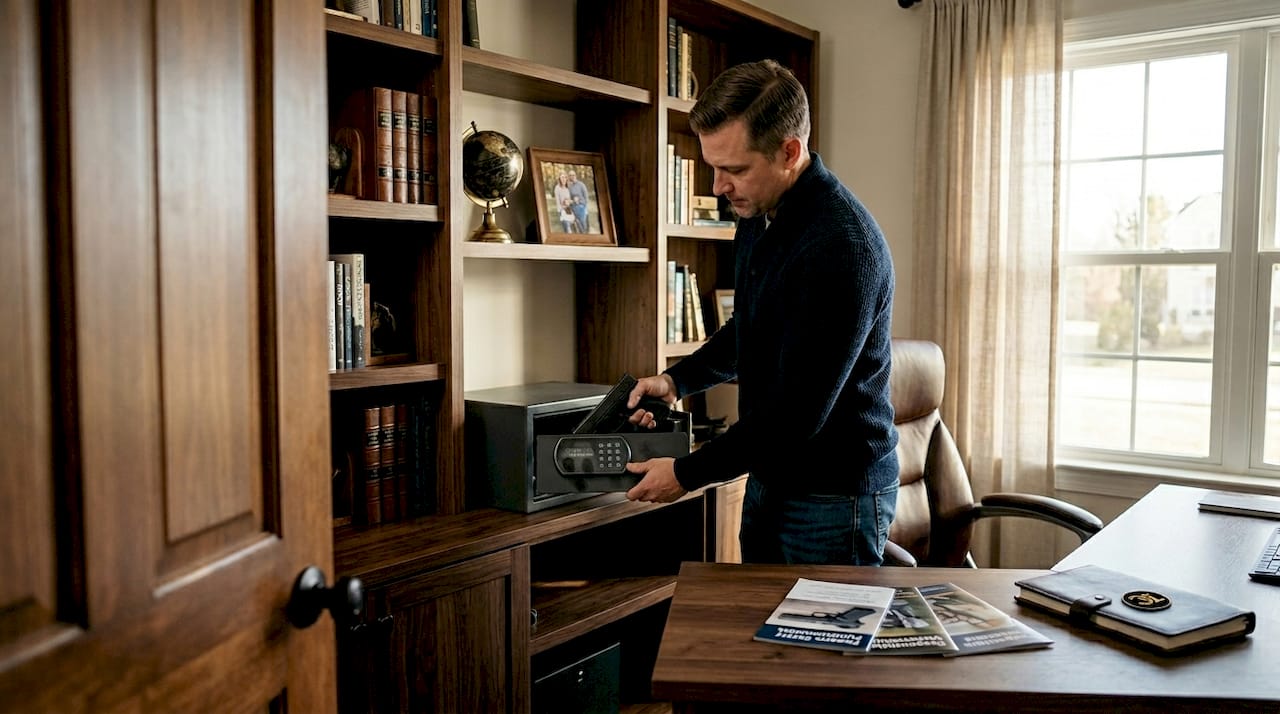
Storage isn’t glamorous, but it’s arguably the most consequential part of responsible ownership. An unsecured firearm in the wrong hands is a legal and moral liability. Gun Storage Check Week resources from the NSSF make clear that responsible owners should use storage devices that keep firearms inaccessible to unauthorized persons, including children, guests, and potential intruders.
“Securing your firearm when it’s not in use is not optional. It’s a core part of the ownership responsibility you accepted the moment you made your purchase.”
Here’s a breakdown of the primary storage upgrade categories:
Cable locks
- Pros: Inexpensive, portable, easy to use, good for transport compliance
- Cons: Minimal security, can be defeated with basic tools, slow to disengage under stress
Lock boxes and quick-access safes
- Pros: Fast access via keypad or biometric, decent protection against children and casual access
- Cons: Battery-dependent, biometric systems can be unreliable under stress or with wet hands
Full gun safes
- Pros: High security, fire resistance options, protects multiple firearms and valuables
- Cons: Expensive, heavy, not practical for quick defensive access
Hard-sided cases with locks
- Pros: Good for transport and storage compliance, reasonably priced
- Cons: Not suitable as a standalone home storage solution
| Storage type | Convenience | Security level | Avg. cost | Best for |
|---|---|---|---|---|
| Cable lock | High | Low | $10 to $30 | Temporary or transport use |
| Lock box/quick-access safe | Medium-high | Medium | $50 to $200 | Bedside defensive access |
| Full gun safe | Low | High | $300 to $2,000+ | Long-term multi-firearm storage |
| Hard-sided case | Medium | Medium | $40 to $150 | Transport and compliance |
For detailed guidance on the best available solutions and how to match them to your home setup, review top firearm storage solutions. Additional best practices are covered in our broader safety tips resource.
Think of storage as part of your overall personal protection system, not an afterthought. A high-performance firearm that gets accessed by an unauthorized person has failed its most important test.
Specialized upgrades: Suppressors, platform-specific parts, and legal considerations
Beyond universal upgrades, there are advanced and niche options, along with special cautions and legal issues, you should weigh carefully before diving in.
Platform specificity is one of the most misunderstood challenges in the upgrade space. What fits a Mossberg 500 does not fit a Remington 870, even though both are pump-action shotguns. Remington 870 upgrades guides specifically warn that many shotgun upgrade parts are not interchangeable across different receiver and action platforms. This is equally true for handguns, AR-pattern rifles, and bolt-action platforms. Always verify compatibility at the model level, not just the platform level.
Here are the key advanced upgrades to understand before purchasing:
- Suppressors. These reduce muzzle report and recoil impulse, making shooting more comfortable and protecting your hearing over time. However, they are regulated under the National Firearms Act (NFA) and require a federal tax stamp, background check, and a wait period that can stretch to several months. The First Shots suppressor course from the NSSF dispels common myths and walks new owners through safe use and the ownership process in states where suppressors are legal. If you’ve been curious about suppressors but unsure where to start, this is an excellent resource.
- Specialized handguards and forends. Free-floating handguards on AR-pattern rifles improve accuracy by eliminating contact with the barrel. Aftermarket forends on shotguns can add rail space for lights and other accessories. Verify that your chosen handguard clears your gas block and barrel profile before ordering.
- Stocks and grips. Adjustable stocks allow multiple users to shoot the same firearm comfortably. Improved grip textures and ergonomic shapes reduce fatigue during extended range sessions and improve control under recoil.
- Porting and compensators. Barrel porting and muzzle compensators reduce muzzle rise, which is valuable in competition. Be aware that they can also redirect hot gas and particulates toward your face in confined spaces, which matters in a defensive context.
The legal risk around trigger modifications and other internal changes is worth a specific note. Legal considerations for modified handguns in self-defense contexts have been well-documented, with attorneys warning that any non-standard modification can be scrutinized during post-incident investigation. A prosecutor can argue that a modified trigger demonstrates recklessness or intent. This does not mean you should never upgrade, but it means you should document your rationale, use reputable installer-grade parts, and consult with a legal professional if you have doubts.
For a broader overview of where platform-specific customization meets practical style, the customization options resource provides useful examples.
Pro Tip: Before any significant modification, especially one involving internal parts or regulated items like suppressors, consult both a certified gunsmith and a firearms attorney who practices in your state. The hour of consultation is far cheaper than the consequences of getting it wrong.
Our take: What really matters when upgrading your firearm
Having listed today’s most effective and responsible upgrade options, let’s pause for a candid, experience-based take on what actually moves the needle in real-world use.
The firearms industry does a very good job of making you feel like your setup is always one part away from being optimal. It isn’t. In our experience, a shooter with a stock firearm and 500 hours of training will outperform someone with a heavily upgraded build and 50 hours of training almost every single time. The hardware matters far less than the operator behind it.
We’ve seen it repeatedly: enthusiasts invest in premium triggers, high-end optics, and custom stocks before they’ve ever run a malfunction drill under time pressure. The result is a visually impressive firearm that the owner cannot operate confidently under stress. That’s not an upgrade. That’s a distraction dressed up as improvement.
The smarter approach is to build incrementally and validate every change through training. Add one upgrade, shoot a minimum of 200 to 300 rounds with it in varied conditions, and evaluate whether it actually improved your performance. If you can’t demonstrate measurable improvement in your group size, split times, or malfunction clearance speed, reconsider the change. This is how technology shapes firearm safety and precision ownership in a meaningful way rather than as a superficial layer over an unchanged skill set.
The upgrades most gun owners overlook are not mechanical at all. Reviewing your storage setup, re-evaluating your access control procedures, and staying current on your state’s legal landscape for modifications are consistently deprioritized in favor of new hardware. They shouldn’t be. A firearm that is securely stored, legally configured, and operated by a trained owner is genuinely upgraded in every way that matters.
Our honest recommendation: pick one high-impact hardware upgrade, train with it extensively, then evaluate your storage and legal configuration before moving on to the next item on your list.
Enhance your firearm with trusted options
If you’re now considering the next step for your firearm upgrade, Tungsten Creek Tactical offers both top-tier options and expert support for a safe, effective result.

At Tungsten Creek Tactical, we stock quality triggers, proven optics, weapon lights, and platform-specific parts selected for reliability, not just popularity. Our team can help you match the right upgrade to your specific firearm and use case, whether you’re building a defensive carbine, optimizing a competition pistol, or securing your collection with a proper storage solution. Use our mobile app to scan products, compare pricing, and access exclusive VIP benefits designed to make informed buying straightforward. Visit tungstencreektactical.com to browse our current inventory and connect with our team for personalized guidance you can trust.
Frequently asked questions
What are the safest upgrades for a home-defense firearm?
Weapon lights for target identification and quality triggers tested for reliability are considered the safest and most impactful upgrades, provided legal concerns are addressed first. Expert guidance on home-defense upgrade ordering consistently puts these two at the top of the list.
Do aftermarket triggers affect firearm reliability?
Some aftermarket triggers can impact reliability and may introduce legal risks if used in a self-defense incident, making professional installation and thorough testing essential. The risks of modified handguns in self-defense are well-documented and worth reviewing before you commit to any trigger swap.
How do I choose the right storage upgrade?
Cable locks, lock boxes, and gun safes each offer different balances of convenience and security, so match your choice to your household composition, access requirements, and budget. The NSSF’s storage guidance emphasizes selecting devices that keep firearms inaccessible to unauthorized persons as the core standard.
Is a suppressor a practical upgrade for most gun owners?
A suppressor can meaningfully reduce noise and improve shooting comfort, but ownership requires navigating NFA regulations, a federal tax stamp, and responsible use training. The NSSF First Shots suppressor course is a solid starting point for understanding the process where it is legal in your state.
Can any upgrade part fit my firearm platform?
No, many upgrade parts are platform-specific, and assuming cross-compatibility is one of the most common and costly mistakes buyers make. Always confirm exact model compatibility before purchasing, as platform fitment guides make clear that receiver and action differences create hard limits on interchangeability.
Recommended
Related Post

Discover the 5 ways
An introduction to Tactical Luxury Guns & Coffee We founded
Top 5 Best PCC’s
In 2026, the Pistol Caliber Carbine (PCC) market is no