
Step by Step Gun Storage: Your 2026 Safety Guide

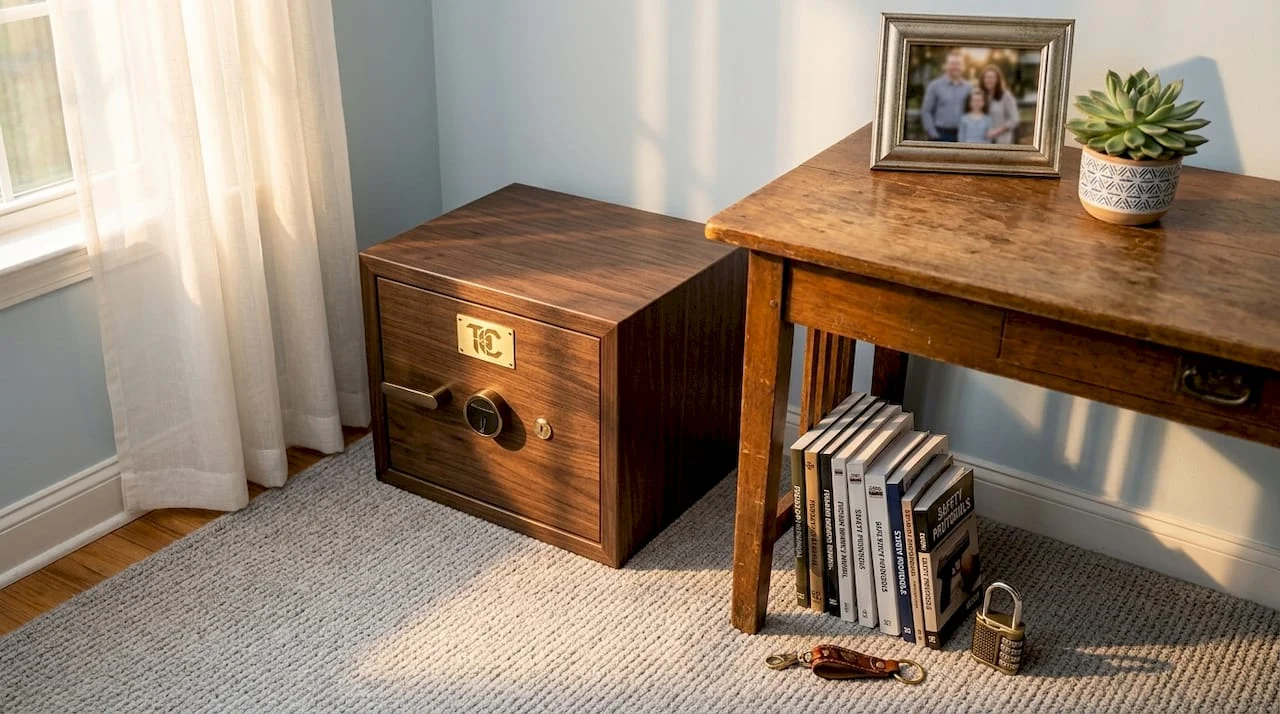
Proper gun storage is defined as securing all firearms unloaded, locked, and separated from ammunition to prevent unauthorized access, accidental discharge, and theft. This step by step gun storage guide draws on recommendations from HealthyChildren.org, the NSSF, Johns Hopkins Center for Gun Violence Solutions, and Gunvera to give you a clear, practical process for protecting your family and your investment. Whether you own one handgun or a full collection, the same core principles apply: lock it, unload it, and separate the ammunition. The tools you choose, from cable locks to biometric safes, determine how well those principles hold up in real life.
What tools and equipment do you need for secure gun storage?
The right storage device is the foundation of every effective firearm storage setup. Secure storage options range from basic cable locks to full-size biometric safes, and each serves a different combination of security level, accessibility, and household need.
Here is a breakdown of the most common options:
- Cable locks: Free through Project ChildSafe’s distribution program at thousands of law enforcement agencies nationwide. They thread through the action and prevent the firearm from cycling. They are a solid baseline but offer no protection against theft of the entire firearm.
- Lock boxes: Compact, portable, and lockable with a key or combination. Ideal for a single handgun kept accessible for home defense. Models like the Hornady RAPiD Safe and the Fort Knox PB1 are well-regarded for build quality.
- Biometric safes: Use fingerprint recognition for rapid access. GunVault and Vaultek both produce units that open in under two seconds. This technology removes the excuse that a safe slows you down in an emergency.
- Full-size gun safes and cabinets: Necessary for collections of three or more firearms. Liberty Safe and American Security (AMSEC) manufacture units rated for both burglary resistance and fire protection.
| Device | Security level | Best for | Approx. cost |
|---|---|---|---|
| Cable lock | Basic | Temporary or supplemental use | Free to $15 |
| Lock box | Moderate | Single handgun, quick access | $50 to $150 |
| Biometric safe | High | Home defense firearm, fast retrieval | $150 to $500 |
| Full-size gun safe | Maximum | Collections, long-term storage | $500 to $3,000+ |
Your choice should reflect your household composition, your residence type, and how quickly you may need to access a firearm. A single person in an apartment has different needs than a family with children in a house. For guidance on matching your situation to the right solution, Tungstencreektactical’s resource on choosing storage solutions walks through the decision in detail.
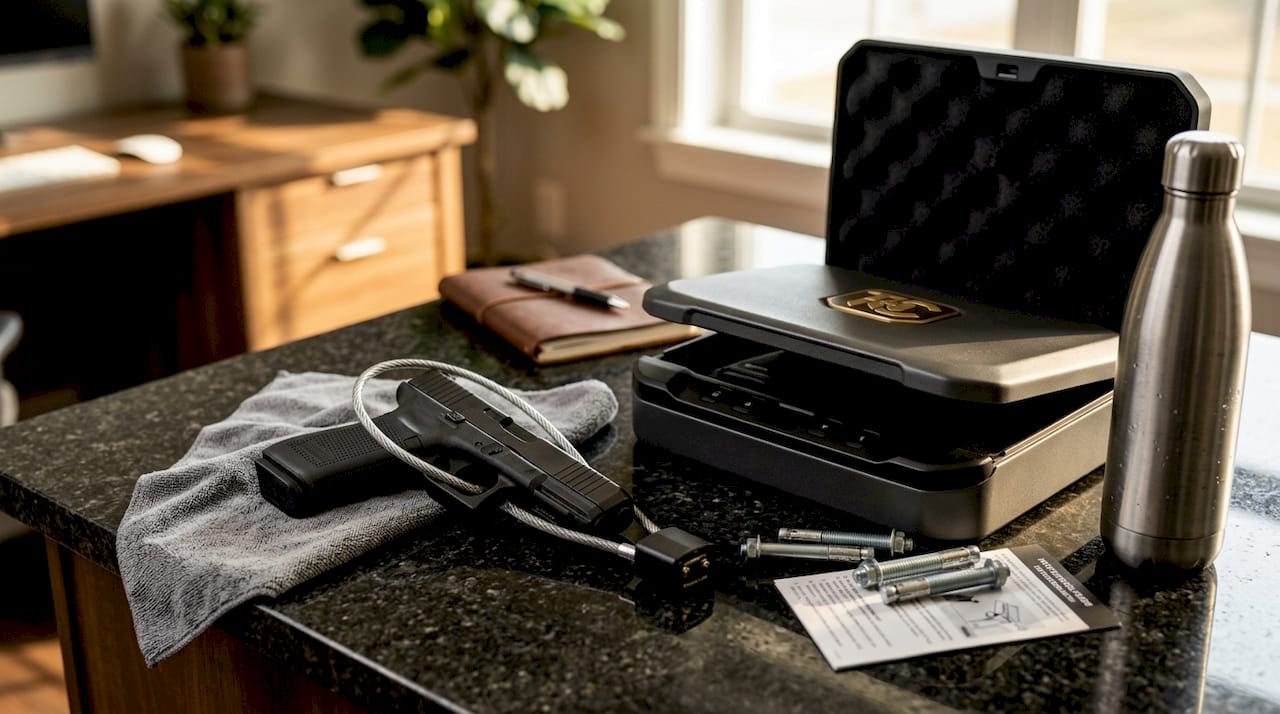
Pro Tip: Anchor any safe weighing under 750 pounds to a wall stud or concrete floor using the manufacturer’s bolt-down kit. An unanchored safe can be carried out of a home in under two minutes by two people.
What is the step by step process for storing guns safely?
Safe firearm storage follows a consistent sequence every time, without exception. Think of it like a pre-flight checklist: skipping one step compromises the whole system.
-
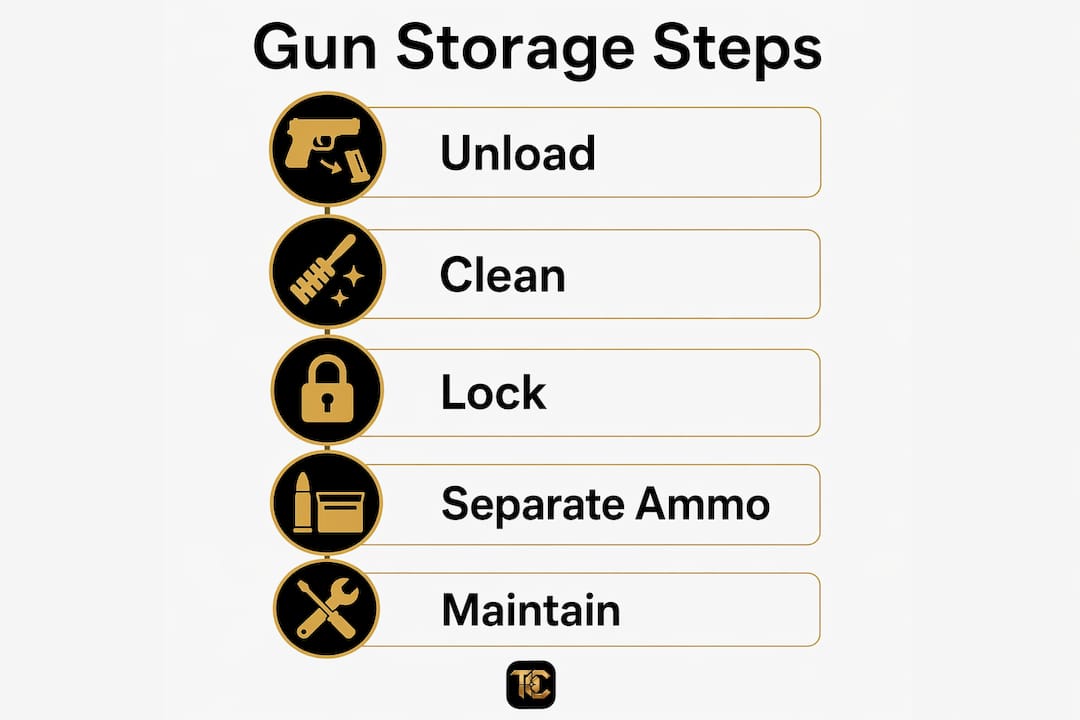
Verify the firearm is unloaded. Remove the magazine, lock the slide or bolt back, and visually and physically inspect the chamber. Do this even if you are certain the gun is already unloaded. Locking and unloading firearms is the recommended baseline for home safety, according to HealthyChildren.org.
-
Clean and oil the firearm if storing long-term. Carbon buildup and moisture cause corrosion inside the bore and on metal surfaces. A light coat of oil on metal parts and a clean bore protect the firearm’s function and value. For a detailed process, review a step by step gun cleaning routine before placing any firearm in long-term storage.
-
Place the firearm in your chosen storage device. Lock it. Confirm the lock is engaged by testing it. A lock that appears closed but is not fully latched offers no protection.
-
Store ammunition separately and locked. Ammunition stored separately from the firearm is a non-negotiable step. Use a separate locked container, not the same safe or drawer.
-
Secure keys and combinations away from children. Controlling access to lock keys is as critical as locking the firearm itself. A combination written on a sticky note on the safe defeats the entire purpose.
-
Inspect storage devices regularly. Check for mechanical wear, battery life on electronic locks, and any signs of tampering or corrosion on the firearm.
| Step | Purpose | Common mistake |
|---|---|---|
| Unload completely | Eliminate immediate discharge risk | Assuming it’s already unloaded |
| Clean and oil | Preserve condition during storage | Skipping for short-term storage |
| Lock the firearm | Prevent unauthorized access | Not confirming the lock engaged |
| Lock ammunition separately | Remove dual access risk | Storing ammo in the same safe |
| Secure access credentials | Maintain access control | Leaving keys visible or accessible |
| Inspect periodically | Catch degradation early | Treating setup as a one-time task |
Pro Tip: Tie your storage routine to an existing daily habit, such as locking up when you change clothes at the end of the day. Habits attached to existing triggers are far more consistent than standalone reminders.
How do legal requirements shape gun storage practices in 2026?
Legal storage requirements vary significantly by state, and 2026 has brought tighter mandates in several jurisdictions. Understanding where the law sets the floor helps you decide how far above it your own practices should reach.
The federal baseline is narrow. Federal law requires that handguns sold by licensed dealers include a trigger lock or be sold with a lock box, but there is no federal mandate requiring owners to actually use those devices. That gap is where state laws step in.
Key state-level requirements to know:
- California: California’s expanded 2026 laws require certified safety devices or gun safes for all firearms not under the direct control of the owner. Violations carry criminal penalties under child access prevention statutes.
- Massachusetts: Requires all firearms to be stored with a trigger lock or in a locked container when not in use. One of the strictest storage mandates in the country.
- Washington: Requires secure storage when minors or prohibited persons are present, with civil and criminal liability for violations.
Beyond legal compliance, best practices for gun storage from Gunvera recommend always keeping firearms locked regardless of whether children are present, because household visitors, service workers, and guests create access risks that owners often underestimate. The law sets a minimum. Your responsibility as a firearm owner extends further. Review your state’s current statutes annually, since storage laws are among the most actively updated areas of firearms legislation right now.
What are common mistakes that undermine long-term gun storage?
Even owners who set up a solid storage system can see it degrade over time. The most common failures are not dramatic. They are small, gradual lapses that accumulate into real risk.
Hiding instead of locking. Simply hiding a firearm is not safe storage, according to Johns Hopkins Center for Gun Violence Solutions. Children find hidden firearms at rates that consistently surprise parents. A locked device is the only reliable barrier.
Shared or compromised access credentials. Telling a teenager the safe combination “just in case” or leaving a key on a hook near the safe eliminates the security the device provides. Unsecured access nullifies every other precaution you have taken.
Neglecting device maintenance. Periodic audits of keys, combinations, and device integrity are recommended by NSSF’s Gun Storage Check Week program. Electronic locks need battery replacements. Mechanical locks can seize. Hinges corrode. A safe you cannot open quickly in an emergency is nearly as problematic as one that opens too easily.
Ignoring humidity and corrosion. Long-term storage requires cleaning, light oiling, and humidity control. Gunvera recommends quarterly inspections and the use of vapor phase corrosion inhibitors or a quality dehumidifier rod inside the safe. Golden Rod and Eva-Dry are two reliable options for in-safe humidity control.
Failing to adapt as circumstances change. A storage setup that worked when you lived alone may be inadequate after a child is born, a teenager moves in, or you relocate to a state with stricter laws. Revisit your entire setup whenever your household or legal situation changes.
Pro Tip: Smart and biometric safe technologies enhance security without hindering rapid access. If the friction of a combination lock is the reason you leave a firearm unsecured, a biometric safe removes that excuse entirely.
Key takeaways
Effective gun storage requires locking every firearm unloaded, storing ammunition separately, controlling all access credentials, and auditing the system regularly to keep it reliable over time.
| Point | Details |
|---|---|
| Lock and unload every time | Never store a loaded firearm; verify the chamber is clear before locking up. |
| Separate ammunition storage | Keep ammo in a distinct locked container, not the same safe as the firearm. |
| Control access credentials | Never share combinations or leave keys accessible; this is where most systems fail. |
| Match device to your situation | Choose between cable locks, lock boxes, or biometric safes based on household and access needs. |
| Audit and maintain regularly | Inspect locks, batteries, and firearm condition on a quarterly schedule to prevent silent failures. |
Why I treat gun storage like a non-negotiable daily discipline
Most firearm owners I talk to set up their storage once and consider the job done. That mindset is the single biggest vulnerability in home firearm safety. A safe that worked perfectly three years ago may have a dead battery, a corroded locking bolt, or a combination that a family member quietly memorized. Storage is not a one-time installation. It is an ongoing practice, like maintaining your carry pistol or keeping your coffee gear clean. The moment you treat it as finished is the moment it starts to degrade.
The statistic that stays with me is this: nearly 7 million children in the U.S. live in homes with unlocked, loaded firearms. That is not a failure of equipment. It is a failure of routine. The hardware exists. The knowledge exists. What breaks down is the daily discipline of following through.
My recommendation is straightforward. Build your storage routine around a trigger you already use, whether that is the end of your workday, your nightly security check, or a weekly review on Sunday morning. Combine that habit with a quarterly audit of every device, every credential, and every firearm’s condition. And if you have children or frequent visitors, read up on firearm safety practices that reinforce physical security with education. The two work together. Neither is sufficient alone.
Balancing security with accessibility is a real tension, and I respect that. A biometric safe resolves most of it. You do not have to choose between a firearm you can reach in three seconds and one that is genuinely secured from a curious child. Modern storage technology has closed that gap. Use it.
— Brian
How Tungstencreektactical can support your storage setup
At Tungstencreektactical, we work with firearm owners who take both their craft and their responsibility seriously. Whether you are building out a collection or looking for a precision-built firearm that deserves equally serious protection, we have the products and expertise to help.

Our custom firearms are precision-built for owners who want a firearm that performs exactly as intended, and that means pairing it with storage that matches that standard. Browse our full selection of firearms, accessories, and tactical gear in the Tungstencreektactical shop, where you will find options suited to every storage situation and ownership style. Our team is here to help you make informed decisions, not just transactions.
FAQ
What does step by step gun storage actually mean?
Step by step gun storage is the practice of following a consistent sequence: unload the firearm, clean it if storing long-term, lock it in an appropriate device, store ammunition separately in a locked container, and secure all access credentials away from unauthorized users.
How do I store a gun safely if I have children at home?
All firearms should be locked at all times in homes with children, with ammunition stored in a separate locked location and lock combinations never disclosed to minors. A biometric or combination safe that only adults can access is the most reliable solution.
Is hiding a gun under a mattress considered safe storage?
No. Johns Hopkins Center for Gun Violence Solutions confirms that hiding a firearm is not safe storage. Children locate hidden firearms far more often than parents expect, and concealment provides no protection against theft.
How often should I inspect my gun storage setup?
NSSF’s Gun Storage Check Week recommends periodic audits of storage devices including checking battery life on electronic locks, testing mechanical function, and verifying that access credentials remain secure. Quarterly inspections are a practical minimum.
Do I need a gun safe to comply with storage laws?
It depends on your state. California and Massachusetts require certified safety devices or locked containers for all firearms not under direct owner control. Federal law only mandates that a lock be included at point of sale, not that it be used. Check your state’s current child access prevention statutes annually, as these laws are updated frequently.
Recommended
Related Post

Discover the 5 ways
An introduction to Tactical Luxury Guns & Coffee We founded
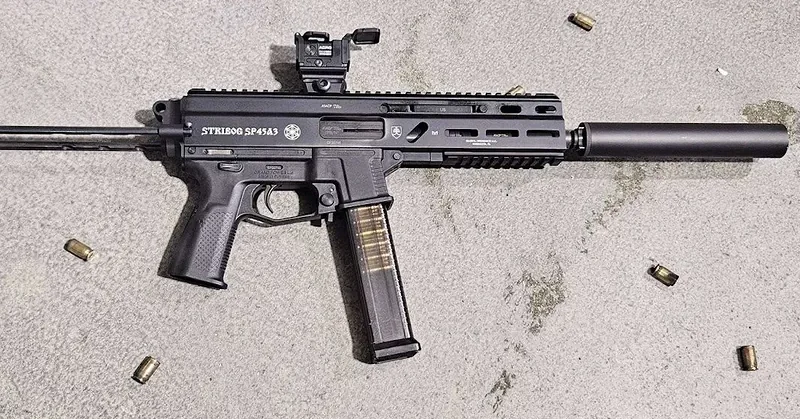
Top 5 Best PCC’s
In 2026, the Pistol Caliber Carbine (PCC) market is no